
What is a Butterfly Valve and Its Function
Struggling with bulky, expensive valves? They slow down your project and inflate costs. A simpler, more efficient solution exists for your flow control needs, saving you time and money.
So, what is a butterfly valve? It is a quarter-turn valve used to stop, start, and regulate flow. It has a disc mounted on a rotating shaft. When the valve is fully open, the disc is parallel to the flow. When closed, it is perpendicular, blocking the flow.
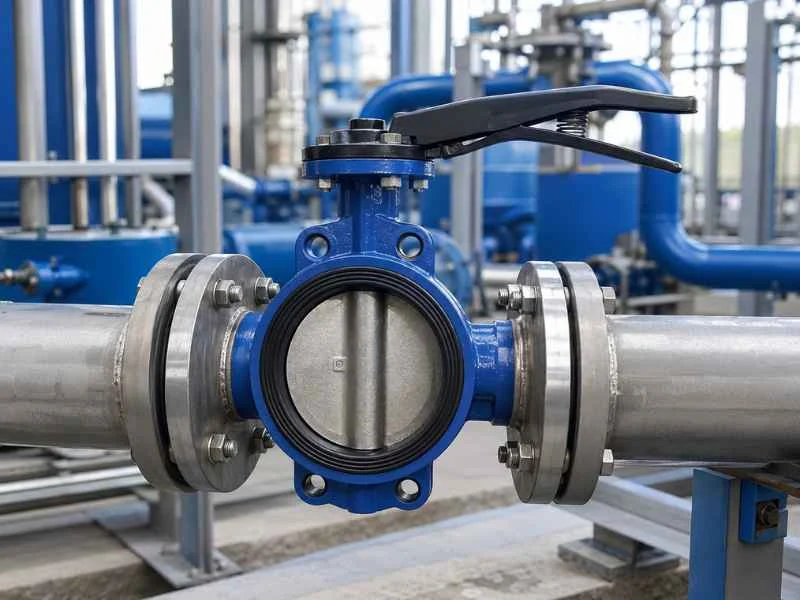
Now you know the basic definition. But understanding this valve goes beyond a simple description. To really choose the right one for your system, like my client Hassan does for his refineries, you need to know its parts, how it operates, and where it shines. Let’s look closer at the details that matter for reliable and efficient plant operation.
The Core Components of a Vanne papillon
Confused by valve terminology? A missing or incorrect part can lead to system failure. Understanding each component is the first step toward reliable operation and simpler maintenance for your team.
A butterfly valve consists of four main parts: the body, the disc, the stem, and the seat. The body houses the moving parts. The disc controls the flow. The stem connects the disc to the actuator. The seat provides a tight seal.
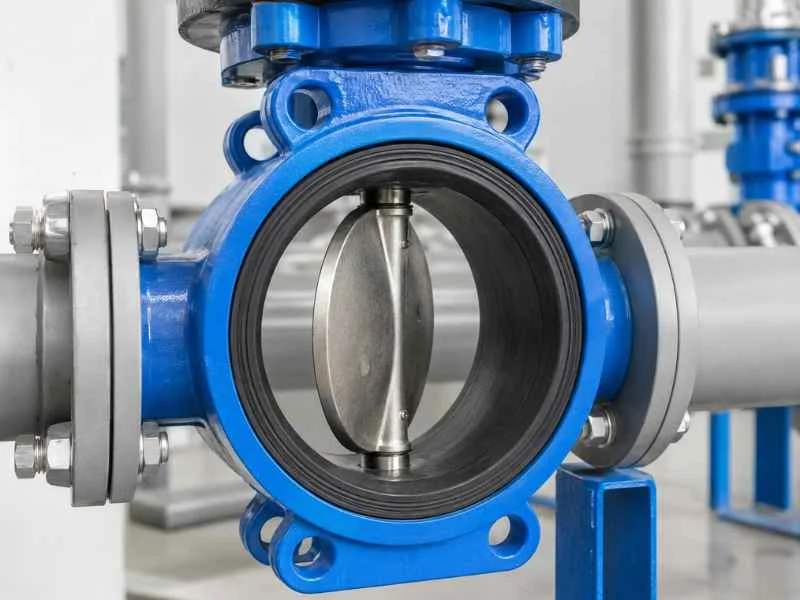
Key Butterfly Valve Components Explained
Let’s break down these parts in more detail. Each one is critical for the valve’s performance and longevity. For an engineer like Hassan, who designs entire chemical plants, knowing these details is crucial for specifying the right valve and ensuring long-term reliability in a demanding environment.
- The Body This is the main frame of the valve. It holds everything together. The body can be a wafer-style, which fits neatly between two pipe flanges, or a lug-style, which has threaded lugs for bolt connections. Your choice depends on your piping setup. For example, a lug-style body allows you to disconnect one side of the piping for maintenance while the other side remains under pressure. This is a feature many maintenance engineers appreciate.
- The Disc This is the “butterfly” that gives the valve its name. It’s the part that rotates inside the pipe to open or close the passage. The disc’s material is very important. It must be strong enough to resist the fluid’s pressure and temperature. It also needs to resist corrosion from the fluid it is controlling. Choosing the wrong disc material can lead to rapid failure and costly downtime.
- The Stem The stem is the shaft that connects the disc inside the valve to the handle or actuator outside. It transmits the turning force needed to open or close the valve. A strong, reliable stem is essential to prevent operational failures. In some designs, it is a single piece that goes through the disc, while in others, it is a two-piece design.
- The Seat This is the seal. It is typically a soft material like rubber or a polymer that lines the inside of the valve body. When the valve closes, the edge of the disc presses against the seat to create a tight shut-off. The seat material must be compatible with the fluid to prevent leaks and degradation over time. A worn-out seat is the most common cause of a leaking butterfly valve.
The Simple Mechanics of How a Butterfly Valve Works
Complex valve operations can cause costly delays on site. You need a valve that is simple and quick to operate for your process. A slow valve response can disrupt your entire system and impact production efficiency.
A butterfly valve works with a simple quarter-turn (90-degree) rotation. Turning the handle or actuator rotates the disc inside the pipe. A full turn from closed to open moves the disc from a perpendicular position (blocking flow) to a parallel one (allowing full flow).
How Butterfly Valves Operate in Flow Control Systems
The beauty of the butterfly valve is its simplicity and speed. This quick operation is a major advantage in many industrial settings. Let’s explore the mechanics more.
- Quarter-Turn Action Unlike a multi-turn valve like a gate valve, which requires several full rotations of a handwheel, a butterfly valve goes from fully closed to fully open in just 90 degrees. This is ideal for applications needing rapid shut-off or quick changes in flow direction. This speed can be a critical safety feature in emergency situations. It also makes them perfectly suited for automation with electric or pneumatic actuators, where fast response times are often required by the control system.
- Capacité d'étranglement You can also position the disc at any angle between 0 and 90 degrees. This allows you to regulate, or “throttle,” the flow rate. This makes the butterfly valve a versatile tool for both on/off and control applications. However, it’s important to know that throttling with a standard butterfly valve can cause disc flutter and accelerated wear, especially in high-pressure systems. For precise, long-term flow control, a globe valve is often a better choice. But for many general-purpose regulation tasks, a butterfly valve is perfectly fine and much more cost-effective. It is a trade-off that engineers must consider for each specific application.
Exploring the Different Types of Butterfly Valves
Choosing the wrong valve type leads to leaks, premature failure, and safety hazards. The high costs of downtime and replacement are a major concern for any plant manager. You need the right valve for your specific service conditions.
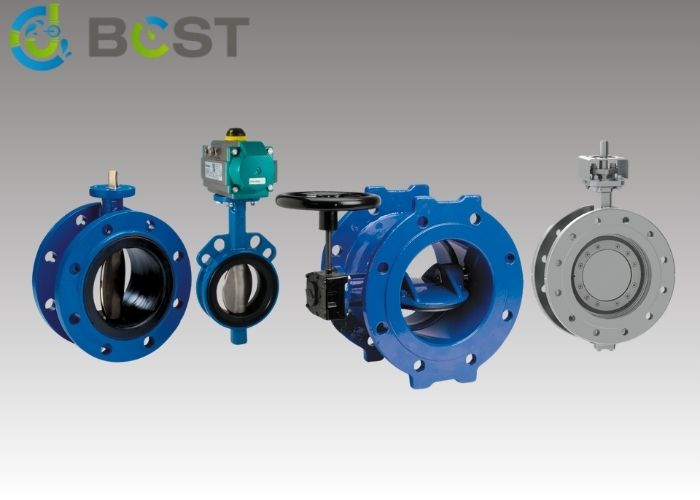
The main types are concentric (zero offset), double offset, and triple offset. Concentric valves are for general, low-pressure services. Double and triple offset valves are high-performance types designed for high-pressure, high-temperature, and abrasive applications, offering better sealing and longer life.
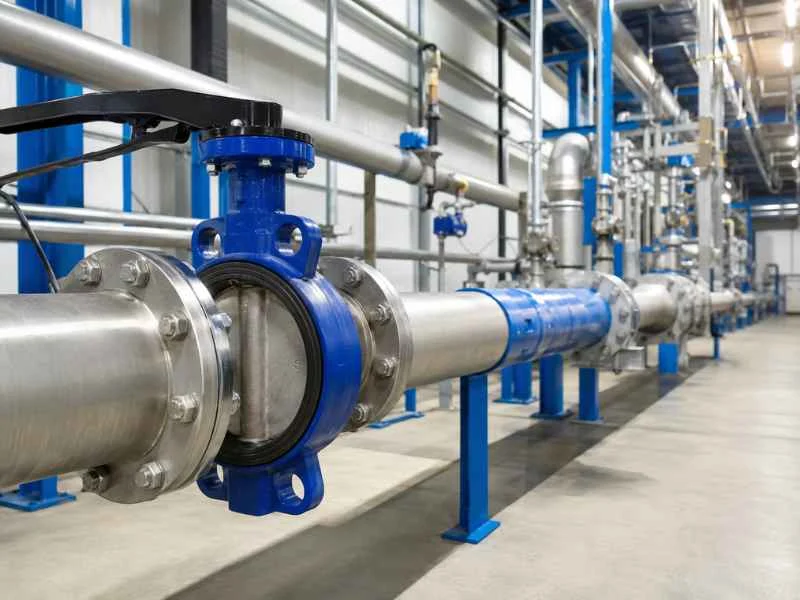
Main Butterfly Valve Types and Design Differences
Understanding these types is key to selecting the correct valve and avoiding costly mistakes. I’ve seen clients save thousands of dollars just by choosing the right type for their needs. Let’s compare them.
| Type de vanne | Key Feature | Meilleur pour |
|---|---|---|
| Concentric (Zero Offset) | The stem is centered in the disc, and the disc is centered in the bore. The seat is resilient (soft). | Low-pressure, low-temperature, general-purpose applications like water distribution, HVAC, and food processing. This is the most common and cost-effective type. |
| Double Offset | The stem is offset from the disc’s centerline and the bore’s centerline. | Higher pressure and temperature services. This design reduces the contact between the disc and seat during the opening/closing cycle, which significantly reduces friction and wear. This results in a longer service life and lower operating torque. |
| Triple Offset | Has a third offset on the seat-cone angle, creating a metal-to-metal, cone-in-cone sealing action. | Critical applications with very high pressures, high temperatures, and abrasive or corrosive media. It provides a bubble-tight, zero-leakage seal and has a very long, maintenance-free service life. This is the type of valve Hassan would specify for critical hydrocarbon process lines in one of his refinery projects. |
The Key Advantages of Butterfly Valves in Industrial Systems
Heavy, complicated valves increase installation time, structural support needs, and overall project costs. Your project budget is tight, and space in the pipe rack is always limited. There must be a more practical and economical choice.
Butterfly valves are compact, lightweight, and cost-effective compared to other valve types like gate or globe valves. They offer fast, quarter-turn operation and are available in very large sizes. Their simple design also means easier installation and less maintenance.
Why Butterfly Valves Are Widely Used in Industrial Systems
Let’s detail why so many engineers prefer butterfly valves for a wide range of services. Their benefits are significant and can have a real impact on your project’s bottom line and operational efficiency.
- Cost and Space Savings The simple design of a butterfly valve uses fewer materials compared to a gate or globe valve of the same size. This makes them less expensive to manufacture, especially in large pipe diameters. Their slim, wafer-style profile means they take up very little space in the pipeline and are much lighter. This reduces the need for expensive pipe supports and makes handling and installation on-site much easier and faster for your construction crew.
- Fast Operation The quarter-turn action is a huge advantage. It allows for rapid shut-off, which is critical in many emergency situations to protect equipment and personnel. It also makes them very easy to automate. Pairing a butterfly valve with an actuator provides a responsive and reliable solution for automated systems where quick changes in flow are needed.
- Versatility and Scalability With the right materials selected for the disc and seat, butterfly valves can handle a wide range of fluids, from clean water and air to aggressive chemicals and even slurries. The availability of high-performance double and triple offset designs extends their use into very demanding industrial processes. Furthermore, butterfly valves are available in extremely large sizes, up to several meters in diameter, making them the default choice for large-volume water transmission lines.
Common Industrial Applications for Butterfly Valves
Are you using the right valve for the job? A mismatch between the valve and the application can cause poor performance, inefficiency, and even safety risks. You need to know where each valve type performs best.
Butterfly valves are widely used in water treatment, chemical processing, food and beverage, and HVAC systems. They are excellent for handling large volumes of fluids or gases at low pressures. High-performance types are also used in power generation and petrochemical industries.
Common Butterfly Valve Applications Across Industries
Because they are so versatile, you can find butterfly valves almost everywhere in an industrial plant. When I started in my family’s factory, I was amazed at the diverse range of industries our valves were shipped to.
- Water and Wastewater This is a huge market for butterfly valves. Large-diameter concentric butterfly valves are the standard choice in municipal water distribution systems and treatment plants. They are used to control flow in main pipelines for raw water intake, filtration processes, and distribution networks. Their low cost and proven reliability make them perfect for these large-scale infrastructure projects.
- Systèmes CVC In heating, ventilation, and air conditioning (HVAC) systems for large commercial buildings, butterfly valves are used to control the flow of chilled or hot water in the piping loops. Their compact size is a big advantage here, where space is often tight. They are also used as dampers in large air ducts.
- Chemical and Petrochemical While basic concentric valves are used for utility lines (like cooling water and plant air), high-performance triple offset valves are absolutely critical in this industry. They handle corrosive chemicals, high temperatures, and high pressures in process lines, ensuring safety and reliability. For an engineer like Hassan, the answer to “what is a butterfly valve‘s role?” is simple: it is a critical control and isolation element that ensures the plant runs safely and efficiently. The right material selection is key in these applications to prevent dangerous failures.
How to Select the Right Butterfly Valve for Your Project
Making the wrong valve choice can be a costly mistake, leading to leaks, poor performance, and unplanned shutdowns. Project delays and performance issues are stressful and expensive. A systematic approach to valve selection is needed to ensure success.
To select the right butterfly valve, you must consider the fluid type, temperature, pressure, and required shut-off class. Also, think about the actuation method (manual or automated) and installation requirements (wafer vs. lug). Matching these factors ensures optimal performance and reliability.
How to Choose
Choosing a valve is a technical decision that requires careful thought. I often help clients walk through these steps to ensure they get exactly what they need for their specific system. Let’s go through a simple checklist.
- 1. Understand Your Service Conditions The first step is always to define the process. What is the fluid? Is it corrosive or abrasive? Does it contain solids? What is the minimum and maximum operating pressure and temperature? The answers to these questions will determine the required materials for the valve body, disc, and especially the seat. This is the most critical step.
- 2. Determine the Valve’s Function What do you need the valve to do? Is it for simple on/off isolation, or do you need to throttle the flow? For simple on/off, a low-cost concentric valve might be perfect. For frequent throttling, especially with a significant pressure drop, a high-performance double or triple offset valve is a much better choice to avoid premature wear and damage.
- 3. Choose the Right Valve Type Based on the pressure, temperature, fluid, and function, you can decide between a concentric, double offset, or triple offset design. Don’t over-specify; a triple offset valve is an excellent piece of engineering, but it’s expensive if a simple concentric valve will do the job perfectly well. Match the valve’s capability to the application’s demand.
- 4. Select the Actuation Method How will the valve be operated? Will it be opened and closed by hand with a simple lever or a gear operator for larger sizes? Or does it need an electric, pneumatic, or hydraulic actuator for remote or automated control as part of a larger system? This decision depends entirely on your plant’s control philosophy and operational needs.
Frequently Asked Questions (FAQ)
Q1: In simple terms, what is a butterfly valve?
A1: A butterfly valve is a simple on/off and throttling valve. It uses a rotating disc in the center of the pipe to control flow. A 90-degree turn moves it from fully closed to fully open, making it very fast to operate. It is lightweight, compact, and generally less expensive than other valve types of the same size.
Q2: What is a butterfly valve used for in plumbing?
A2: In plumbing and HVAC systems, butterfly valves are commonly used on large water lines for isolation. You will find them on the main water supply to a building or on lines connected to chillers, boilers, and cooling towers. Their compact size and quick operation make them ideal for these applications.
Q3: What is the main difference between a ball valve and a butterfly valve? A3: The main difference is the closing mechanism. A ball valve uses a rotating ball with a hole through it. It offers excellent, bubble-tight shut-off but can trap fluid in the ball when closed. A butterfly valve uses a disc that stays in the flow path, causing a slight pressure drop even when fully open. Butterfly valves are generally cheaper and lighter in large sizes (above 4 inches).
Q4: Why would you choose a lug-style butterfly valve?
A4: You would choose a lug-style butterfly valve for “end-of-line” service. The valve has threaded lugs that allow it to be bolted directly to one pipe flange. This means you can remove the piping on the downstream side of the valve for maintenance while the valve holds back pressure from the upstream side. A wafer-style valve cannot do this.
Q5: Can you explain what a butterfly valve does in a fire protection system?
A5: In a fire protection system, a butterfly valve acts as a control or isolation valve. It is often used to shut off the water supply to a specific zone or the entire sprinkler system for maintenance. These valves are typically equipped with a supervisory switch that sends a signal to the fire alarm panel if the valve is tampered with or closed, ensuring the system remains ready.
Q6: What is a butterfly valve’s main disadvantage?
A6: The main disadvantage is that the disc is always present in the flow path, even when fully open. This creates a pressure drop across the valve, which can be a concern in some systems. Also, standard concentric butterfly valves are not ideal for throttling high-pressure fluids, as this can cause disc damage and wear on the soft seat over time.
Dernière réflexion
In summary, butterfly valves are versatile, cost-effective, and simple flow control devices. Understanding their components, types, and best applications is key to leveraging their full potential. For your next project, choosing the right valve is critical. At BCST, we use our deep expertise to help you select the perfect butterfly valve.


 English
 Arabic
 Russian
 French
 Spanish