
Industrial Gas Isolation
Guillotine Damper Manufacturer
BCST manufactures industrial guillotine dampers for isolating air, flue gas and process-gas ducts. A sliding blade withdraws completely from the gas path when open and travels across the duct when closed, providing low flow obstruction and dependable isolation for demanding industrial systems.
- Round, square and rectangular duct configurations
- Single-blade and double-blade isolation designs
- Manual, electric, pneumatic and hydraulic operation
- High-temperature and dust-laden gas options
- Custom dimensions, materials, seals and accessories
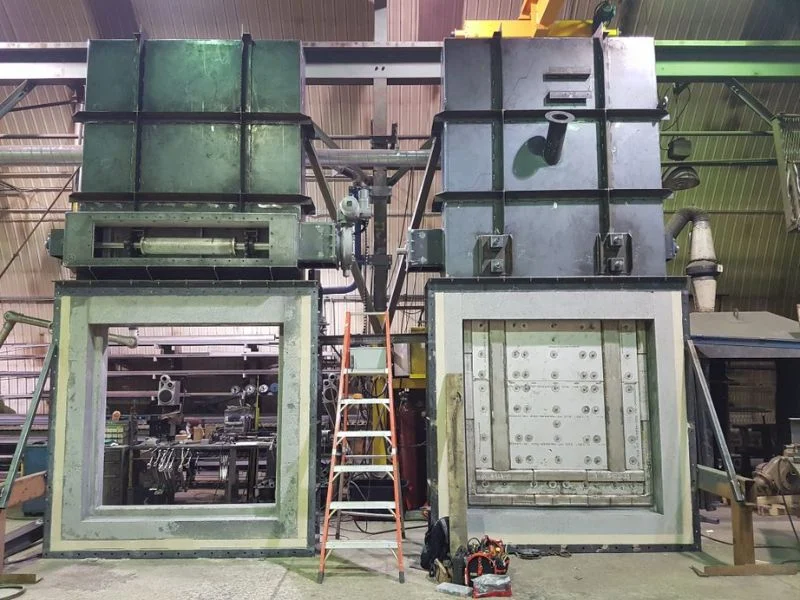
Positive Isolation
Separate equipment or duct sections for maintenance and process shutdown.
Clear Open Passage
The blade withdraws from the gas path to reduce obstruction when open.
Heavy-Duty Construction
Reinforced frames and blades support large ducts and demanding operating conditions.
Custom Manufacturing
Configure dimensions, materials, actuation and sealing for the project.
Product Collection
Guillotine Damper Configurations
Select the blade, frame and sealing arrangement according to the required isolation performance and installation conditions.
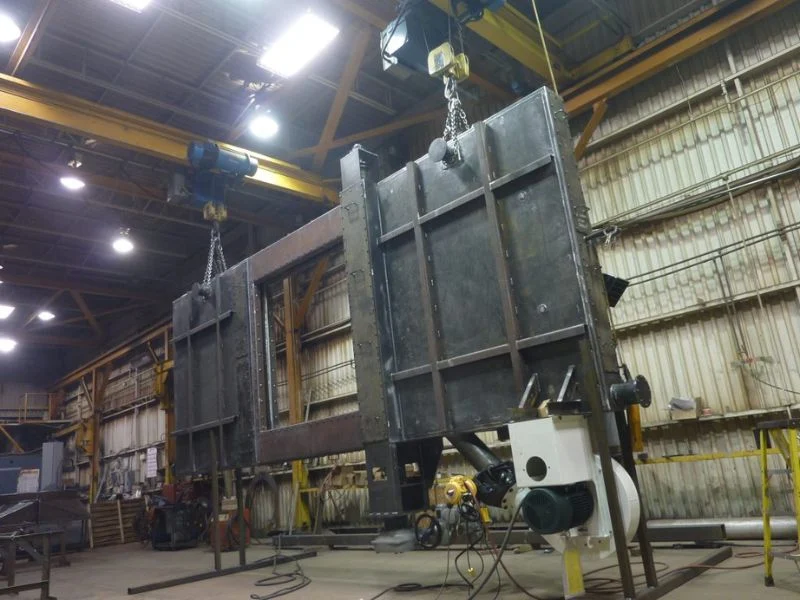
Single-Blade Guillotine Damper
A single sliding blade moves across the duct to provide compact and economical process isolation.
- Simple isolation arrangement
- Low obstruction in the open position
- Vertical or horizontal blade travel
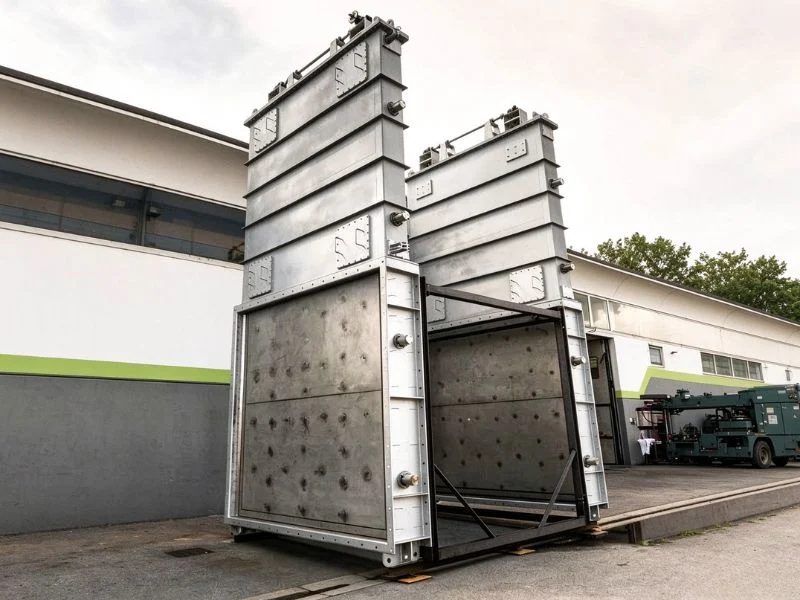
Double-Blade Guillotine Damper
Two separate blades create an intermediate cavity for sealing air or purge gas between isolated duct sections.
- Enhanced process isolation
- Purge or sealing-air connection
- Suitable for critical gas-path duties
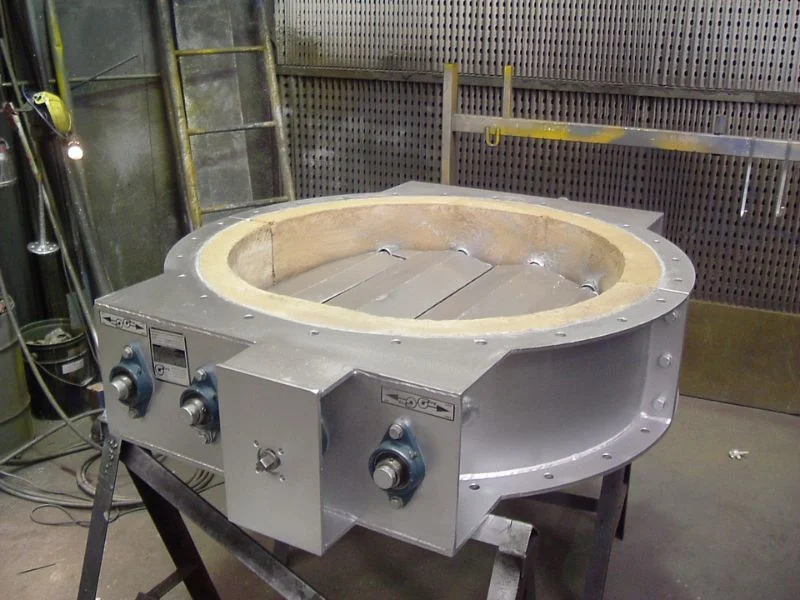
High-Temperature Guillotine Damper
Heat-resistant materials, external components and engineered clearances support elevated-temperature service.
- Thermal-expansion allowances
- Heat-resistant material options
- Insulation or refractory options
Product Comparison
Choose the Appropriate Isolation Design
| Damper Type | Isolation Arrangement | Typical Application | Main Advantage | Key Selection Factor |
|---|---|---|---|---|
| Single-blade guillotine damper | One sliding isolation blade | General industrial air and gas ducts | Simple, compact construction | Acceptable closed-position leakage |
| Double-blade guillotine damper | Two blades with intermediate cavity | Critical process and maintenance isolation | Supports purge-air sealing | Required isolation integrity |
| High-temperature guillotine damper | Heat-resistant sliding blade | Furnace, kiln and hot flue-gas systems | Engineered for thermal service | Maximum and transient temperature |
| Dust-service guillotine damper | Sliding blade with deposit-control features | Cement, mineral and particulate-laden gas | Handles dirty gas environments | Particle loading and accumulation |
Operating Principle
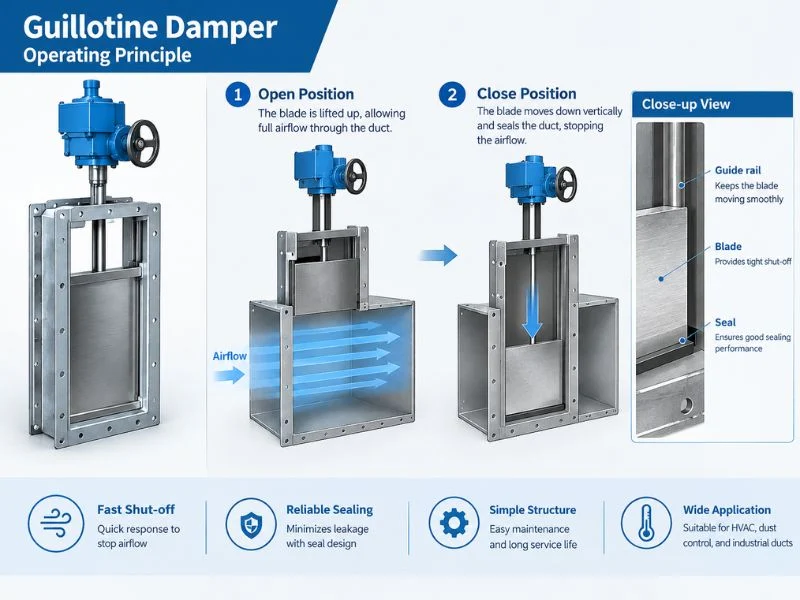
How a Guillotine Damper Works
- Open position: The blade retracts into the bonnet or supporting structure outside the gas path.
- Closing command: The actuator drives the blade toward the duct opening.
- Guided travel: Side guides maintain blade alignment as it crosses the gas path.
- Closed position: The blade enters the lower seat and engages the selected sealing system.
- L'isolement : The closed blade separates the upstream and downstream duct sections.
- Position confirmation: Limit switches or transmitters report blade position to the control system.
A guillotine damper is normally intended for isolation rather than continuous flow modulation. The required leakage rate and isolation method must be specified during selection.
Isolation Requirement
Define the acceptable leakage rate and whether purge-assisted isolation is required.
Installation Clearance
Allow sufficient space for full blade withdrawal, actuator access and maintenance.
Conditions de fonctionnement
Confirm temperature, pressure, gas composition and particulate concentration.
Engineering Options
Configurable Guillotine Damper Specifications
Final dimensions and operating limits depend on the selected design and approved project conditions.
| Paramètres | Available Engineering Options | Selection Basis |
|---|---|---|
| Duct shape | Round, square or rectangular | Existing duct geometry |
| Nominal size | Standard and project-specific dimensions | Flow, duct dimensions and installation space |
| Blade arrangement | Single blade or double blade | Required isolation performance |
| Blade orientation | Vertical, horizontal or engineered travel direction | Available installation clearance |
| Design pressure | Low-pressure and engineered gas-service designs | Maximum positive or negative duct pressure |
| Température de fonctionnement | Ambient to high-temperature construction | Normal, maximum and transient temperatures |
| Frame material | Carbon steel, stainless steel or specified alloy | Gas composition, corrosion and temperature |
| Blade material | Carbon steel, stainless steel or heat-resistant alloy | Pressure differential and thermal conditions |
| Connexion | Flanged, welded or project-specific duct connection | Duct standard and installation method |
| Fonctionnement | Manual, electric, pneumatic or hydraulic | Required thrust, cycle time and site utilities |
Isolation Performance
Single-Blade or Double-Blade Design?
Single-Blade Isolation
A single blade provides straightforward duct isolation where a defined amount of leakage is acceptable.
- Compact frame and bonnet arrangement
- Lower equipment complexity
- Reduced installation footprint
- Suitable for general isolation service
- Leakage depends on the selected sealing system
Double-Blade Isolation
Two blades create a cavity that can be pressurized with sealing air to improve process separation.
- Enhanced isolation capability
- Purge-air or sealing-air connection
- Suitable for critical maintenance isolation
- Supports monitoring of the intermediate cavity
- Requires additional installation space
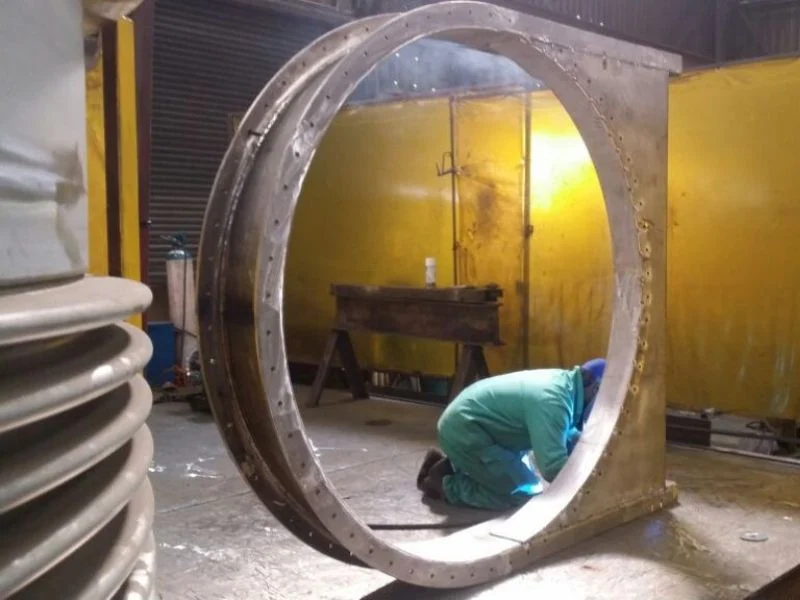
Sealing Design
Configure the Damper for the Required Leakage Level
The term “closed” does not define a leakage limit. The acceptable gas leakage and maintenance-isolation requirement should be stated before manufacturing.
- Clearance seal: Suitable where controlled leakage is acceptable.
- Metal contact seal: Improves isolation for compatible temperature and cycling conditions.
- Flexible seal: Supports lower leakage where the material is compatible with the gas and temperature.
- Double-blade cavity: Provides a chamber for sealing air or purge gas.
- Seat cleaning: Air purge or mechanical features may help manage particulate deposits.
Actionnement
Operating Options for Different Plant Conditions
Manual Operation
Handwheel, gearbox or chain-wheel operation for infrequent local isolation.
- Simple local control
- Suitable for lower cycle frequency
- Position indication available
Actionnement électrique
Motorized linear or rotary drive for remote open-close operation.
- Remote control capability
- Limit and torque switch options
- Project-specific voltage and enclosure
Actionnement pneumatique
Pneumatic cylinder operation for rapid and repeatable blade movement.
- Fast operating cycle
- Solenoid and switch accessories
- Fail-position options where applicable
Hydraulic Actuation
High-thrust operation for large blades and demanding differential-pressure conditions.
- High output force
- Controlled blade speed
- Suitable for heavy-duty service
Materials & Temperature
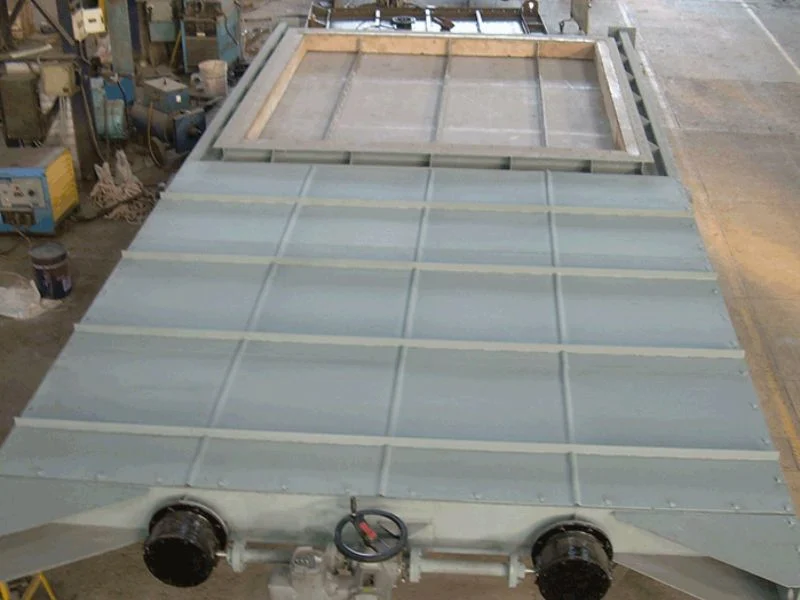
Materials Selected for the Gas Environment
- Carbon steel: Common for compatible air and moderate-temperature gas service.
- Acier inoxydable : Selected for corrosion resistance and elevated-temperature conditions.
- Heat-resistant alloy: Evaluated for furnace, kiln and demanding hot-gas applications.
- Reinforced blade: Provides stiffness against pressure differential and thermal distortion.
- External guides: Help separate operating components from hot or contaminated gas.
- Protective coating: Applied where required by the external or internal environment.
Material selection must consider gas chemistry, particulate abrasion, condensation, temperature and thermal cycling.
Application Matrix
Typical Guillotine Damper Applications
| Industry or System | Gas Service | Damper Function | Key Selection Concern |
|---|---|---|---|
| Production d'électricité | Flue gas and combustion air | Equipment and duct isolation | Temperature, ash and leakage requirement |
| Cement production | Hot, dust-laden process gas | Kiln, mill and fan isolation | Abrasion, deposits and thermal expansion |
| Steel and metallurgy | Furnace gas and exhaust gas | Process switching and maintenance isolation | High temperature and gas composition |
| Traitement chimique | Process gas and ventilation air | Equipment isolation | Corrosion resistance and external leakage |
| Raffinage | Combustion air and process exhaust | Gas-path and equipment isolation | Operating safety and sealing performance |
| Mining and minerals | Dust collection and process air | Duct switching and isolation | Abrasion and particulate accumulation |
| Waste treatment | Incineration and exhaust gas | Process isolation | Temperature and corrosive components |
Selection Checklist
Information Required for Damper Engineering
Process Conditions
- Gas composition and density
- Normal and maximum flow rate
- Operating and design temperature
- Positive or negative design pressure
- Particulate concentration and characteristics
- Corrosive, abrasive or sticky components
Mechanical & Control Data
- Duct shape and internal dimensions
- Connection and flange details
- Available blade-withdrawal clearance
- Maximum acceptable closed-position leakage
- Available electrical, pneumatic or hydraulic utility
- Required operating time and position signals
Manufacturer Support
From Duct Data to Final Damper Configuration
1. Application Review
We review the gas, temperature, pressure, duct dimensions and isolation requirements.
2. Mechanical Design
The frame, blade, guides, bonnet, seals and connection arrangement are configured for the service.
3. Actuator Selection
Required thrust, operating time, fail position and control accessories are evaluated.
4. Documentation
Approved drawings, technical data and inspection documents are prepared for the order scope.
Inspection Before Shipment
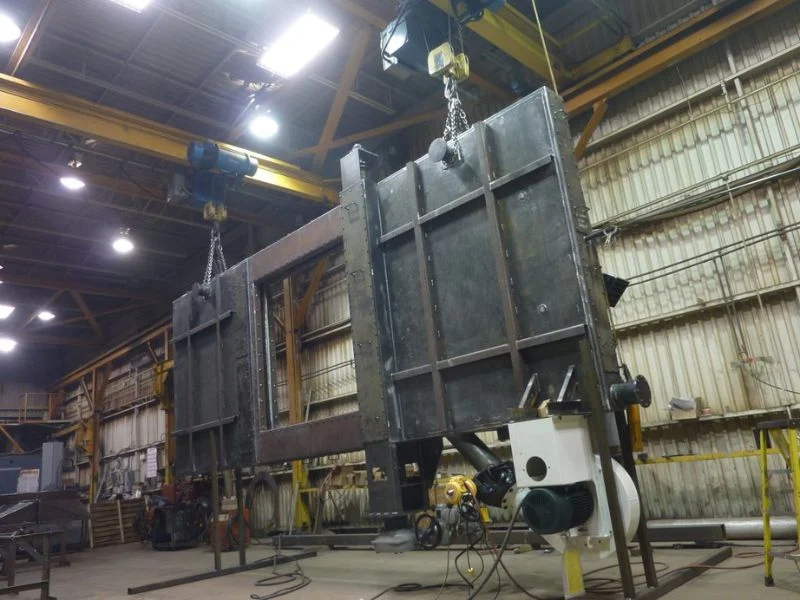
Inspection and testing are completed according to the approved specification, selected design and purchase-order requirements.
- Material and component verification
- Dimensional and visual inspection
- Frame, guide and blade alignment checks
- Full-stroke operational testing
- Actuator and position-feedback verification
- Seal and leakage testing where specified
- Coating, marking and packing inspection
- Final documentation review
Installation & Maintenance
Protect Blade Alignment and Travel
Installation
- Confirm the specified gas-flow direction
- Prevent duct loads from distorting the frame
- Provide full blade-withdrawal clearance
- Maintain access to guides and actuator
- Allow for thermal movement where required
Commissioning
- Remove construction debris from the duct
- Confirm smooth blade movement
- Set open and closed travel limits
- Verify actuator direction and feedback
- Test purge air where specified
Maintenance
- Inspect the blade, guides and seats
- Remove deposits that obstruct travel
- Check actuator mounting and fasteners
- Exercise infrequently operated dampers
- Investigate abnormal thrust or vibration
Send Us Your Guillotine Damper Data
Provide the duct dimensions, gas composition, flow rate, pressure, temperature, particulate conditions, leakage requirement, available clearance and actuator preference. Our engineers will help configure a suitable guillotine damper.
Questions fréquemment posées
Guillotine Damper FAQ
What is a guillotine damper?
It is a sliding-blade damper used to isolate air, flue gas or process-gas ducts. The blade withdraws from the flow path when the damper is open.
Is a guillotine damper suitable for flow control?
It is primarily intended for isolation rather than continuous modulation. A butterfly or louver damper is generally more suitable for regulating flow.
Can it provide zero leakage?
A standard single-blade design may permit some leakage. Enhanced isolation can require improved seals, a double-blade arrangement and sealing air.
What is the advantage of a double-blade damper?
Two blades create an intermediate cavity that can be pressurized or purged to improve isolation between upstream and downstream duct sections.
Can the damper handle dust-laden gas?
Yes, when blade guides, seats, clearances and purge arrangements are designed for the expected particle concentration and deposit behavior.
Can BCST manufacture high-temperature guillotine dampers?
High-temperature configurations are available. Materials, clearances, insulation and thermal expansion must be evaluated for the stated conditions.
How much installation clearance is required?
The damper needs enough space for complete blade withdrawal, actuator movement and maintenance access. Exact clearance depends on blade orientation and actuation.
What information is required for quotation?
Provide duct dimensions, gas composition, pressure, temperature, particulate loading, leakage requirement, installation orientation, available clearance and actuator preference.
 English
 Arabic
 Russian
 French
 Spanish