
Air & Gas Flow Control
Industrial Dampers for Air and Gas Flow Control
BCST Valve provides engineered industrial dampers for controlling, isolating, and diverting air, flue gas, exhaust gas, and other gaseous media in demanding process systems.
Our team evaluates gas composition, temperature, duct dimensions, pressure, leakage requirements, operating frequency, and actuation method to help select a suitable damper solution.
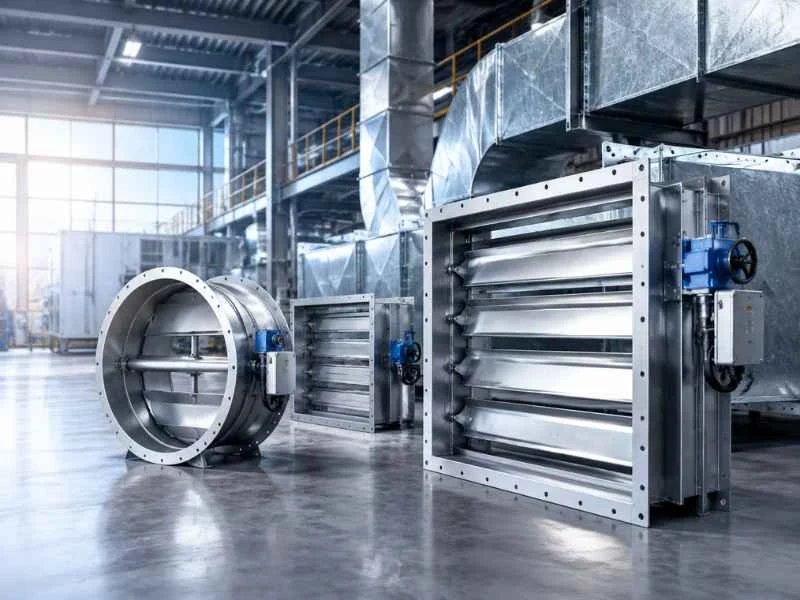
Product Collection
Industrial Damper Solutions
Dampers for flow regulation, process isolation, gas diversion, pressure control, and equipment protection.
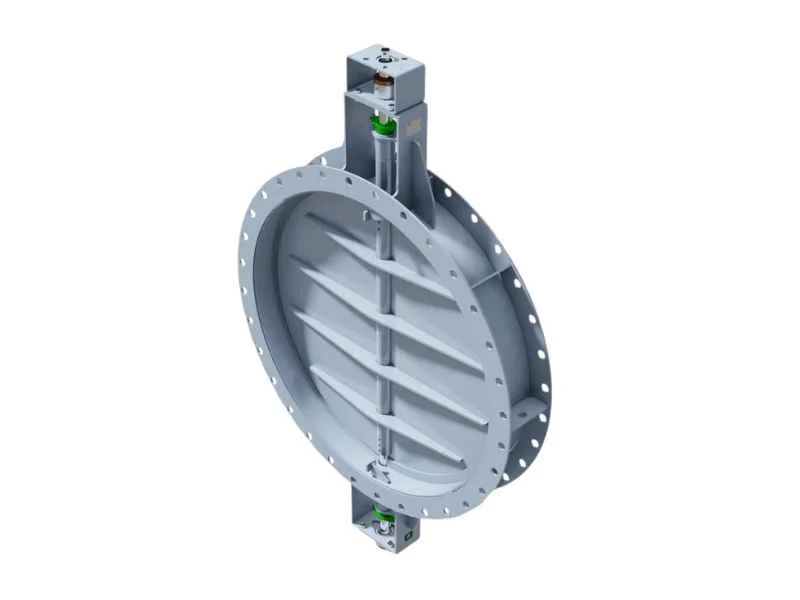
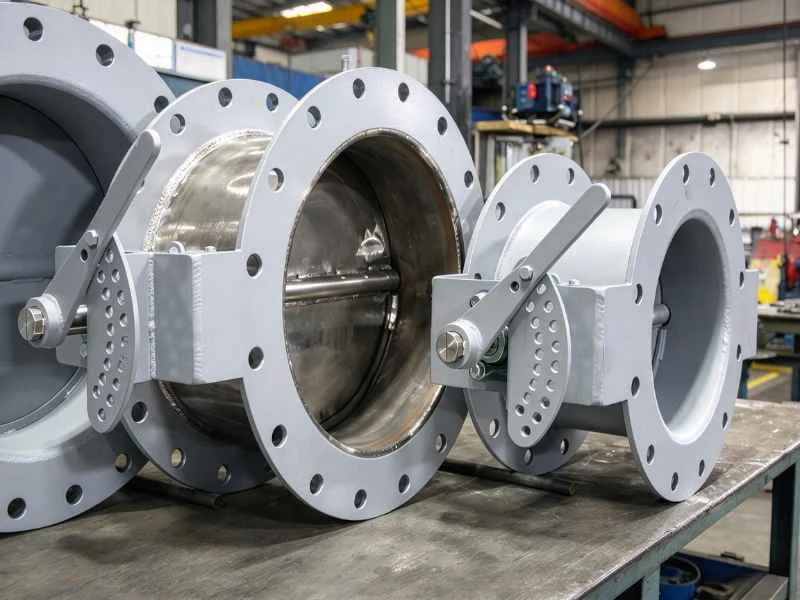
Butterfly Dampers
Compact rotary dampers for regulating or isolating air and gas in circular duct systems.
- Compact construction
- Fast quarter-turn operation
- Manual or automated actuation
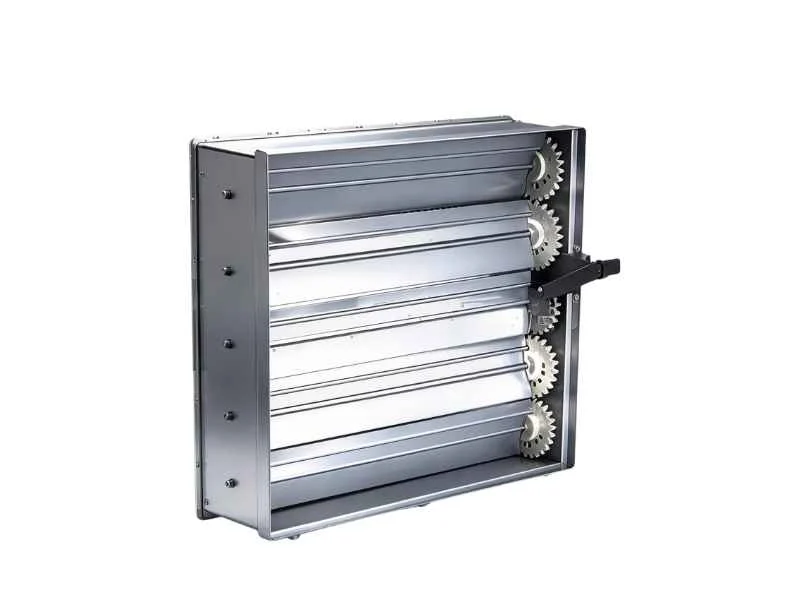
Louver Dampers
Multi-blade dampers for larger ducts and applications requiring controlled gas-flow regulation.
- Parallel or opposed blade designs
- Suitable for large duct dimensions
- Stable modulating performance
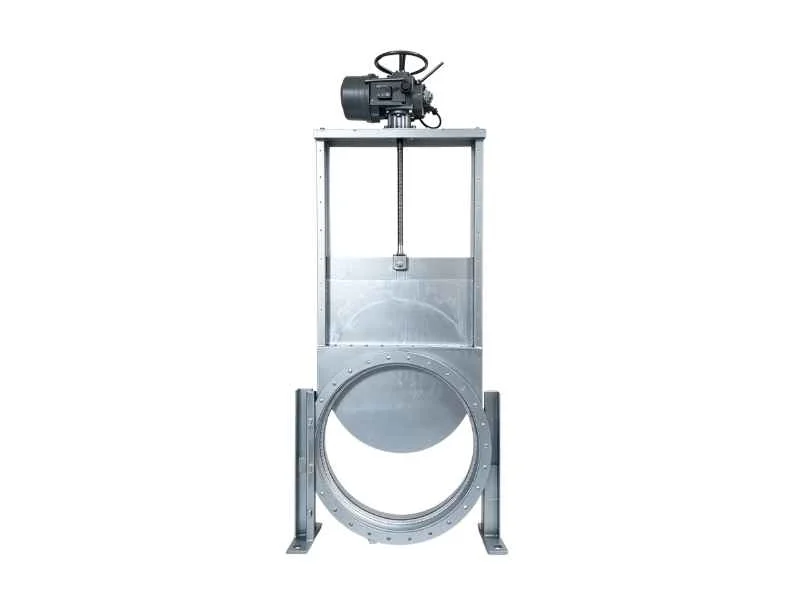
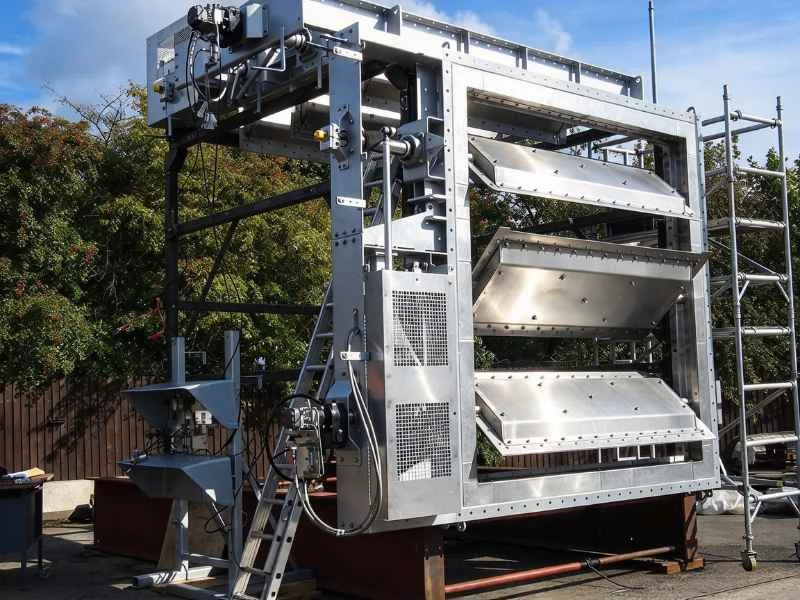
Guillotine Dampers
Sliding-blade dampers designed primarily for isolation in air, flue gas, and exhaust systems.
- Positive process isolation
- Suitable for larger duct sections
- Heavy-duty frame construction
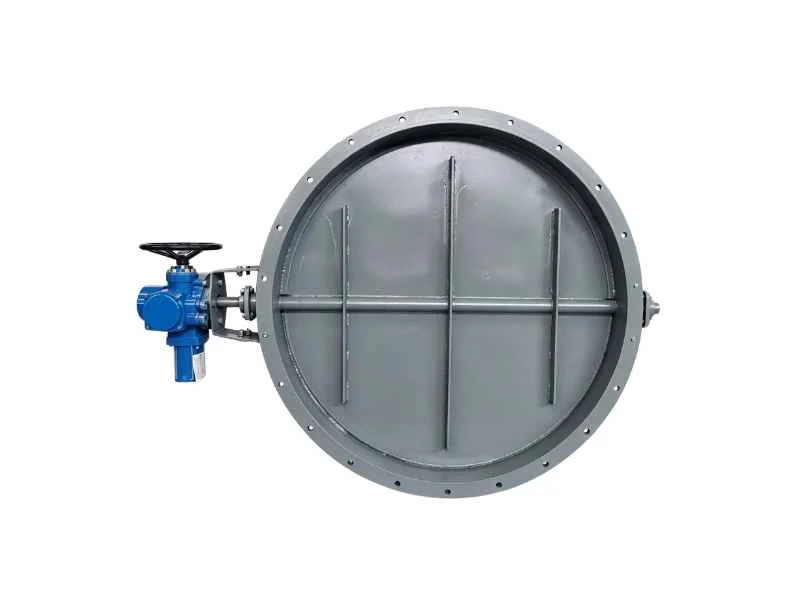
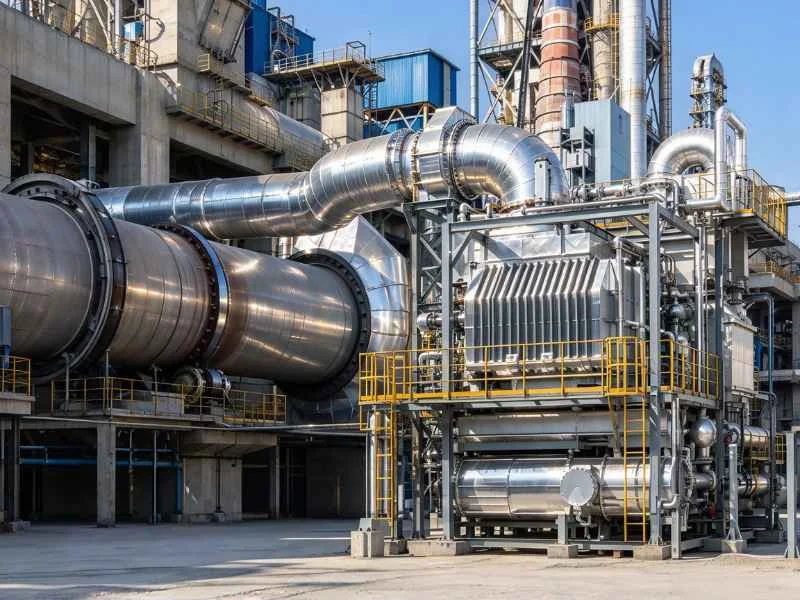
Flue Gas Dampers
Engineered dampers for boilers, furnaces, FGD systems, exhaust ducts, and other flue gas applications.
- High-temperature configurations
- Corrosion-resistant material options
- Application-specific sealing systems
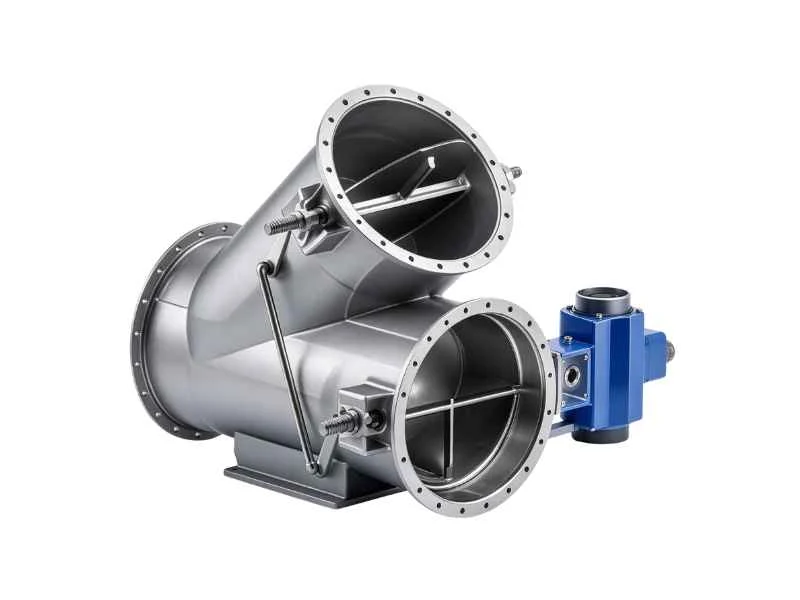
Diverter Dampers
Direct gas flow between alternative ducts, equipment trains, bypasses, or operating routes.
- Two-way or multi-way diversion
- Bypass and switching applications
- Coordinated actuator control
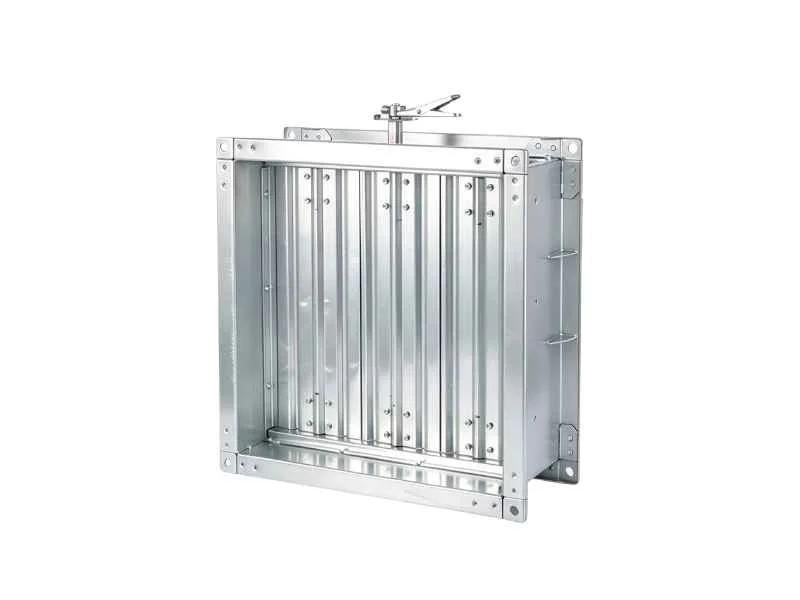
Isolation Dampers
Separate equipment or process sections for inspection, maintenance, shutdown, and safety requirements.
- Single or double isolation
- Seal-air system options
- Manual or powered operation
Product Comparison
Compare Industrial Damper Types
Use this table for initial comparison. Final selection should reflect the required function and actual operating conditions.
| Damper Type | Fonction principale | Typical Advantage | Common Application |
|---|---|---|---|
| Butterfly Damper | Regulation or isolation | Compact construction and fast operation | Air ducts, gas lines, and ventilation systems |
| Louver Damper | Régulation du débit | Controlled operation across large duct areas | Boilers, fans, kilns, and process ventilation |
| Guillotine Damper | Process isolation | Sliding blade clears the flow opening when retracted | Flue gas, dust collection, and exhaust ducts |
| Flue Gas Damper | Regulation or isolation | Engineered around temperature and gas composition | Power plants, furnaces, boilers, and FGD systems |
| Diverter Damper | Gas-flow diversion | Switches flow between alternative routes | Bypass ducts, heat recovery, and turbine exhaust |
| Isolation Damper | Equipment separation | Supports inspection and maintenance isolation | Fans, filters, scrubbers, and process equipment |
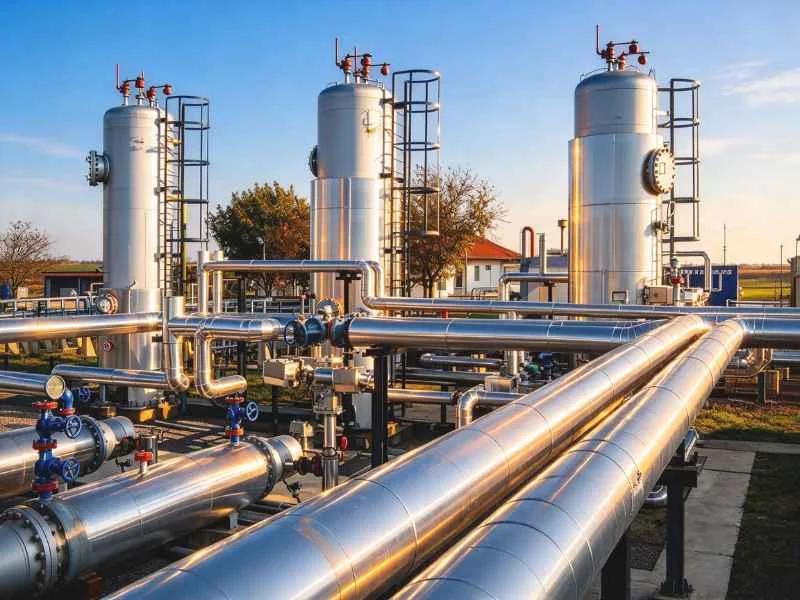
Process Functions
Control, Isolate, or Divert Gas Flow
An industrial damper should be selected around its required process function. A regulating damper, isolation damper, and diverter damper solve different operating problems.
- Regulate air or gas flow through a process system
- Balance flow between parallel ducts
- Isolate equipment for maintenance
- Divert gas into a bypass or alternative process route
- Control combustion air entering a boiler or furnace
- Manage high-temperature flue gas
- Protect downstream equipment during abnormal conditions
Selection Data
Information Required for Damper Selection
Complete process and duct data helps determine the damper type, geometry, material, sealing arrangement, actuator, and accessories.
Process Conditions
- Air or gas composition
- Normal and maximum flow rate
- Operating and design temperature
- Operating and design pressure
- Dust or particle concentration
- Corrosive components and moisture
- Normal and abnormal operating conditions
Mechanical Requirements
- Round or rectangular duct dimensions
- Required regulation or isolation function
- Allowable leakage rate
- Required opening and closing time
- Actuation and fail-position requirements
- Installation orientation and available space
- Applicable project specifications
| Selection Factor | Why It Matters |
|---|---|
| Gas Temperature | Affects body material, blade construction, shaft design, bearings, seals, insulation, and thermal expansion. |
| Gas Composition | Determines corrosion resistance, coating requirements, seal compatibility, and material selection. |
| Duct Dimensions | Determines damper geometry, blade arrangement, frame strength, actuator torque, and installation interface. |
| Leakage Requirement | Influences blade design, sealing system, double-damper arrangement, and possible seal-air requirements. |
| Operating Function | Determines whether the damper should regulate, isolate, divert, balance, or provide emergency operation. |
| Operating Frequency | Affects bearing selection, actuator sizing, linkage design, wear considerations, and maintenance planning. |
Actuation Options
Damper Operation and Automation
The actuation method should match damper size, required torque, operating speed, control signal, duty cycle, and fail-position requirements.
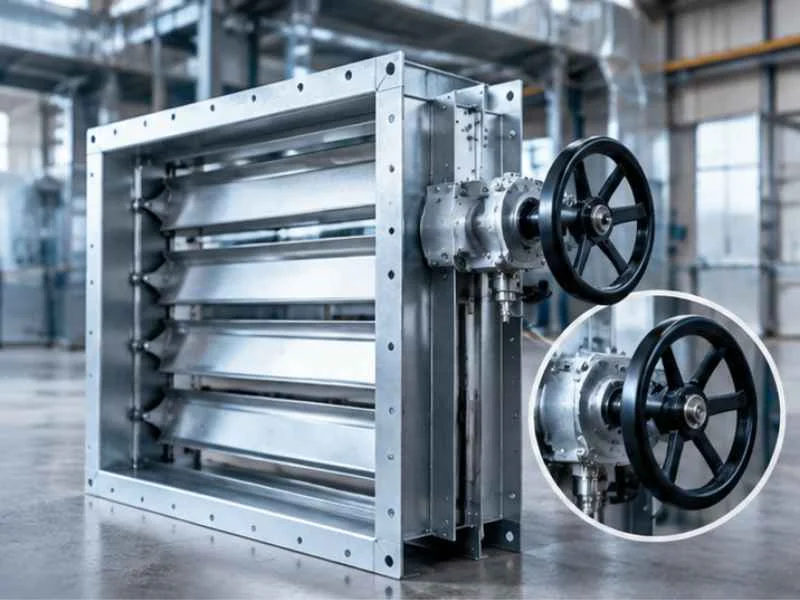
Manual Operation
Hand lever, gearbox, chain wheel, or handwheel operation for smaller dampers and infrequent adjustment.
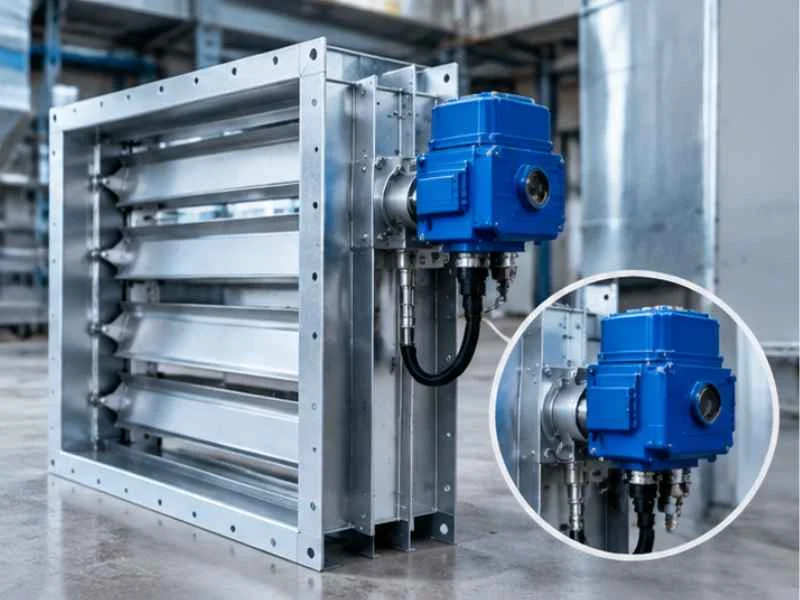
Actionnement électrique
On-off or modulating electric actuators for remote operation and process control integration.
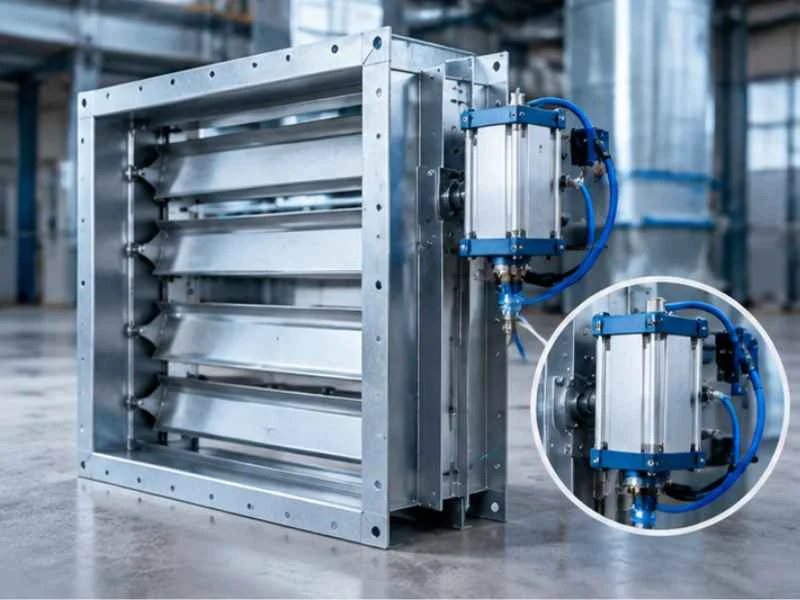
Actionnement pneumatique
Pneumatic cylinders or rotary actuators for rapid operation and defined fail-safe behavior.
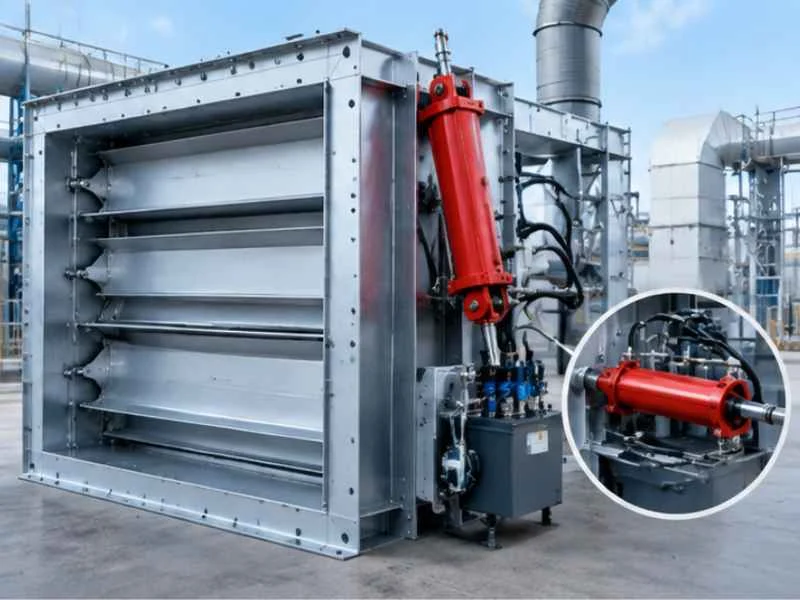
Hydraulic Actuation
High-force actuation for large, heavy-duty, or demanding isolation and diversion applications.
Temperature and Materials
Built Around the Gas and Operating Environment
Industrial dampers can experience high temperature, corrosive condensate, abrasive dust, thermal cycling, vibration, and large pressure forces. Material selection should reflect the complete operating environment.
- Carbon steel for suitable general industrial service
- Stainless steel for corrosion resistance
- Heat-resistant alloys for elevated temperatures
- Protective coatings for external environments
- Replaceable seals and wear components
- External bearings for demanding temperatures
- Insulation provisions where required
- Expansion allowances for thermal movement
Sealing Solutions
Select the Right Isolation Performance
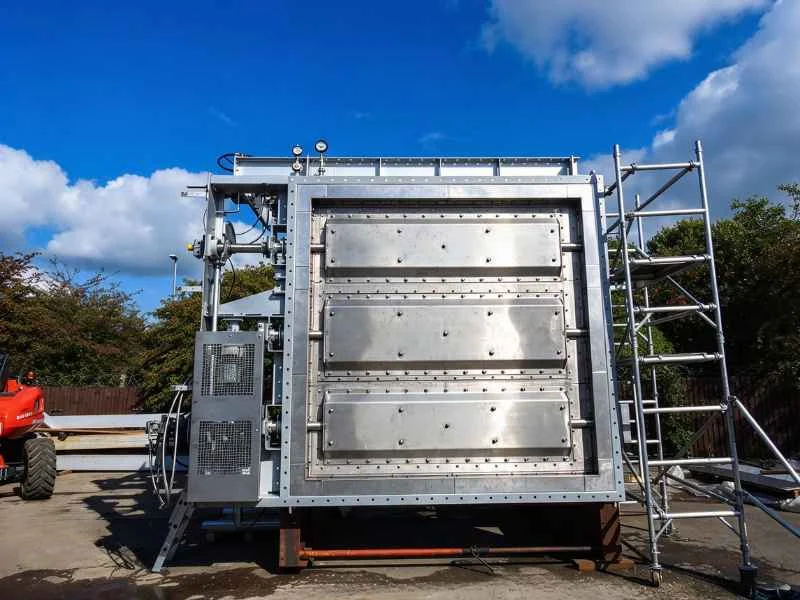
Damper leakage performance depends on blade design, seals, temperature, pressure differential, frame geometry, installation, and operating condition.
| Sealing Arrangement | Typical Purpose | Important Consideration |
|---|---|---|
| Metal-to-Metal Seal | General high-temperature isolation | Suitable where some controlled leakage is acceptable |
| Flexible Seal | Improved shutoff performance | Seal material must match temperature and gas composition |
| Double Blade | Enhanced equipment isolation | Space between blades can support additional isolation measures |
| Seal-Air System | Reduces gas passage across the isolation zone | Requires a suitable seal-air source and operating controls |
| Guillotine Isolation | Clear sliding-blade separation | Blade guides, deposits, temperature, and frame distortion must be considered |
Industries
Air and Gas Flow Control Applications
Production d'électricité
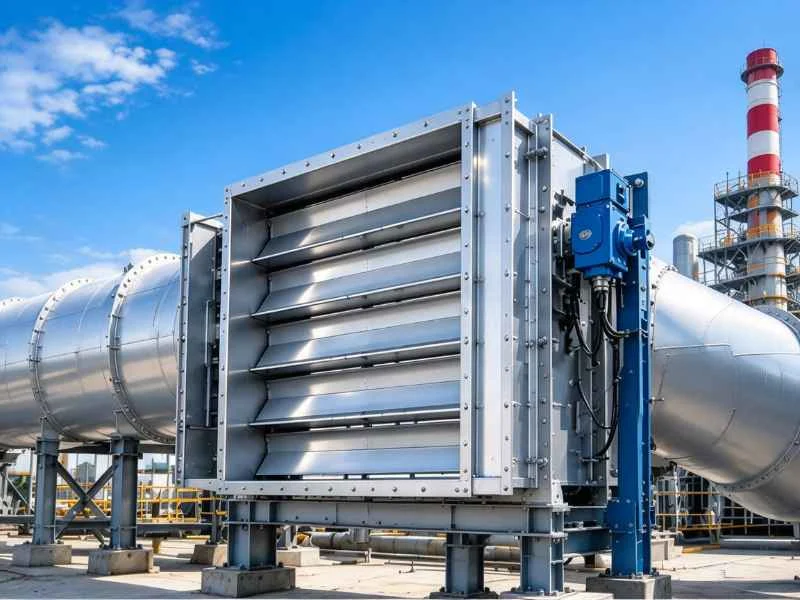
Dampers for boiler air, flue gas, FGD, SCR, fans, heat recovery, and exhaust systems.
Cement Plants
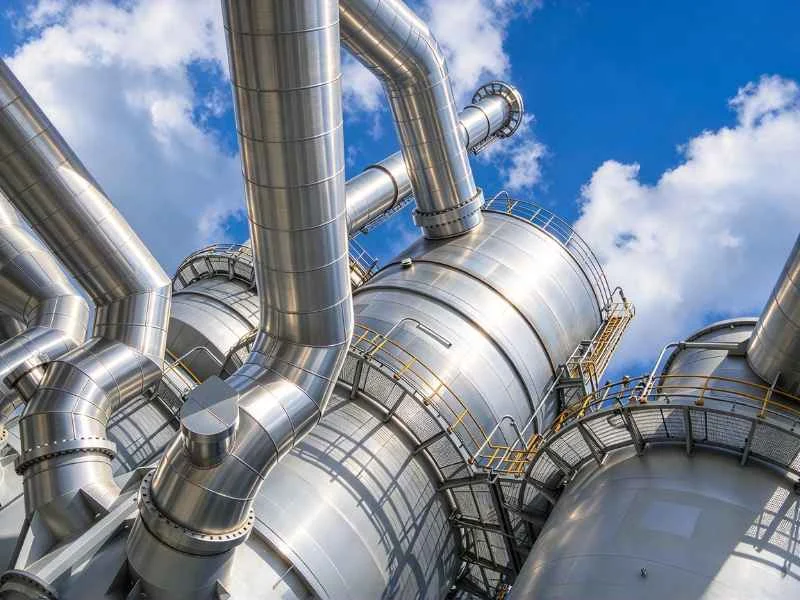
Flow control and isolation for kilns, preheaters, coolers, mills, fans, and dust collection systems.
Waste Incineration
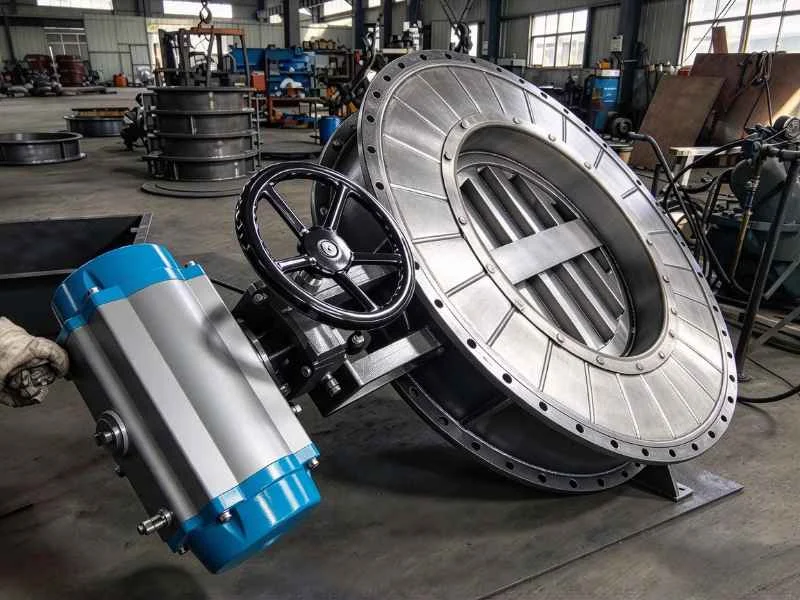
Dampers for combustion air, furnace gas, heat recovery, emissions control, and exhaust treatment.
Chaudières industrielles
Air and gas control for combustion systems, economizers, air preheaters, and boiler exhaust ducts.
Metals and Steel
Heavy-duty dampers for furnaces, reheating systems, dust extraction, and high-temperature exhaust.
Industrial Ventilation
Flow regulation, balancing, diversion, and isolation for large ventilation and process-air systems.
Engineering Workflow
From Duct Data to Damper Delivery
Application Review
We review the gas, flow, temperature, pressure, duct dimensions, leakage target, and operating function.
Damper Selection
We evaluate damper type, blade arrangement, material, sealing system, shaft design, and actuator.
Technical Confirmation
Drawings, interfaces, actuator data, inspection scope, documentation, and project requirements are confirmed.
Production and Delivery
Manufacturing, inspection, testing, packing, shipment, and installation support are coordinated.
Custom Engineering
Custom Dampers for Demanding Process Conditions
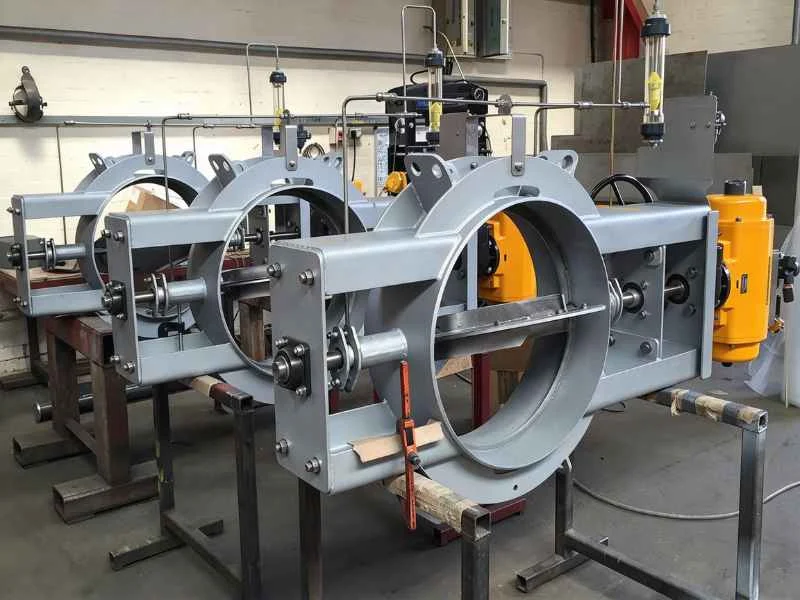
Industrial dampers are frequently engineered around specific duct dimensions, gas conditions, leakage requirements, installation interfaces, and actuator arrangements.
- Round and rectangular duct configurations
- Large and non-standard dimensions
- High-temperature construction
- Corrosion-resistant materials and coatings
- Single, double, or multi-blade arrangements
- Special sealing and seal-air systems
- Electric, pneumatic, or hydraulic actuation
- Position switches and control accessories
- Custom flange and mounting interfaces
Quality Support
Inspection, Testing, and Documentation
Inspection and documentation requirements can be coordinated according to the damper design, actuator, project specification, and agreed supply scope.
- Product datasheets
- General arrangement drawings
- Material certificates
- Dimensional inspection records
- Blade movement and operational checks
- Actuator function testing
- Leakage testing where specified and applicable
- Inspection and test plans
- Quality assurance plans
- Installation and maintenance manuals
Request a Selection
Send Us Your Air or Gas Flow Data
Provide the gas composition, flow rate, temperature, duct dimensions, pressure, leakage requirement, operating function, actuation method, and project specifications. Our team will review the application and recommend a suitable damper solution.
Questions fréquemment posées
Air and Gas Flow Control FAQ
What is an industrial damper?
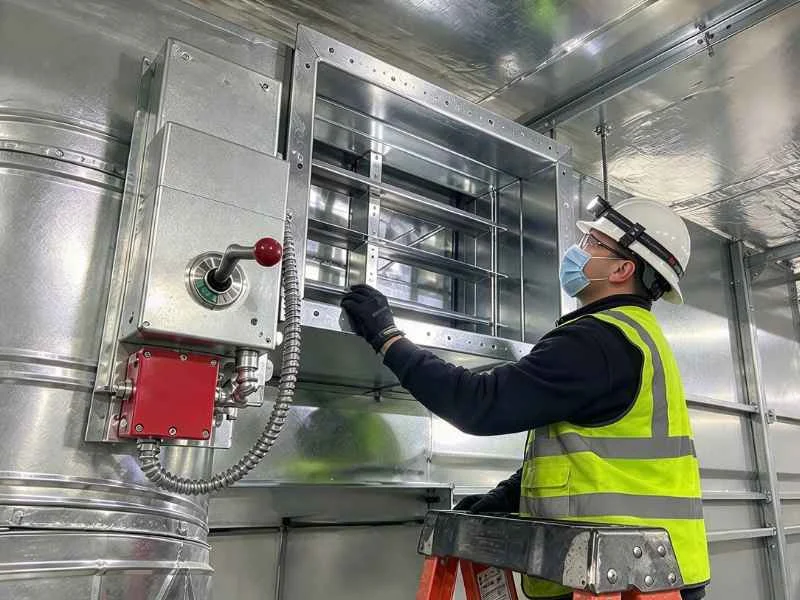
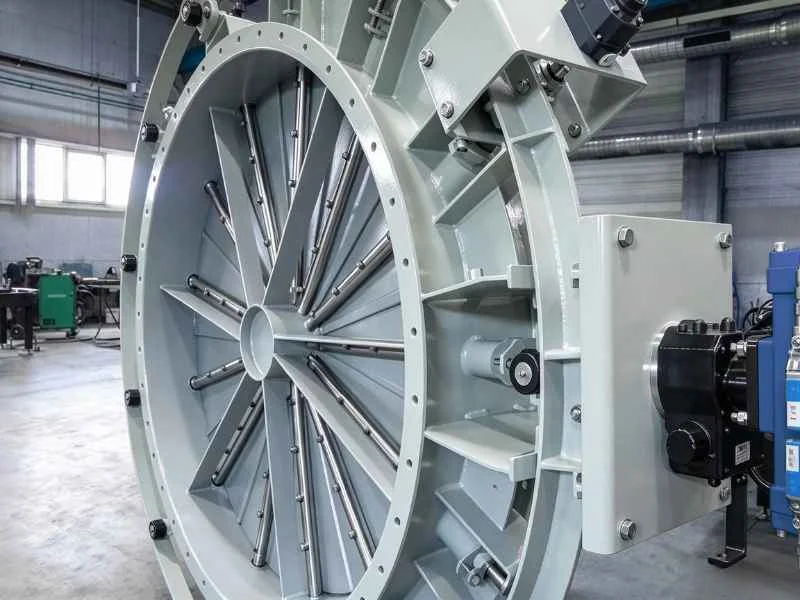
An industrial damper is a mechanical device installed in a duct or gas passage to regulate, isolate, balance, or divert air and gas flow within an industrial process.
What is the difference between a damper and a valve?
Dampers are generally used in air and gas ducts, often with larger flow areas and lower pressure differentials. Valves are commonly used in pressurized piping systems for liquids, gases, or steam.
What is the difference between a butterfly damper and a louver damper?
A butterfly damper normally uses one rotating blade and offers compact construction. A louver damper uses multiple linked blades and is often selected for large ducts or controlled flow regulation.
When should a guillotine damper be used?
A guillotine damper is typically used when process isolation is the main requirement. Its sliding blade retracts from the flow path when fully open.
How do I select a flue gas damper?
Selection should consider gas composition, temperature, flow, duct dimensions, pressure differential, dust loading, corrosion, leakage target, operating frequency, and actuator requirements.
Can industrial dampers handle high temperatures?
Yes. High-temperature dampers can use heat-resistant materials, external bearings, insulation provisions, thermal clearances, and application-specific seals. The actual temperature range must be confirmed during selection.
Can a damper provide zero leakage?
Leakage performance depends on damper type, blade and seal design, temperature, pressure differential, installation, and testing conditions. Very low leakage may require double isolation or a seal-air system.
How is a damper actuator selected?
Actuator selection depends on required torque or thrust, damper size, pressure forces, operating speed, control mode, duty cycle, power supply, and fail-position requirements.
Can dampers be used for flow control?
Yes. Butterfly and louver dampers are commonly used for flow regulation. Blade geometry and actuator control should be selected around the required operating range and process response.
What information is required for a quotation?
Please provide the gas medium, flow rate, temperature, duct dimensions, operating pressure, pressure differential, leakage requirement, damper function, actuator type, quantity, and project documentation requirements.
Can BCST Valve manufacture custom-size dampers?
Custom round and rectangular dampers can be evaluated for non-standard duct dimensions, materials, temperatures, seals, actuators, mounting interfaces, and project requirements.
What maintenance does an industrial damper require?
Maintenance may include inspecting blades, shafts, bearings, linkages, seals, fasteners, actuators, and accumulated deposits. Frequency depends on the medium, temperature, operating cycle, and plant conditions.
 English
 Arabic
 Russian
 French
 Spanish