
Pipeline Filtration Solutions
Basket Strainer Manufacturer
BCST Valve manufactures basket strainers for removing solid particles from liquid and gas pipelines. The large filtration area and removable basket support higher flow capacity, lower clean pressure drop and convenient maintenance.
Our basket strainer range includes simplex, duplex, temporary, jacketed and customized configurations for water, oil, chemical and industrial process systems.
- Simplex and duplex basket strainer designs
- Cast and fabricated body construction
- Flanged, threaded and welded connection options
- Perforated, mesh-lined and wedge-wire baskets
- Drain, vent and differential-pressure connections
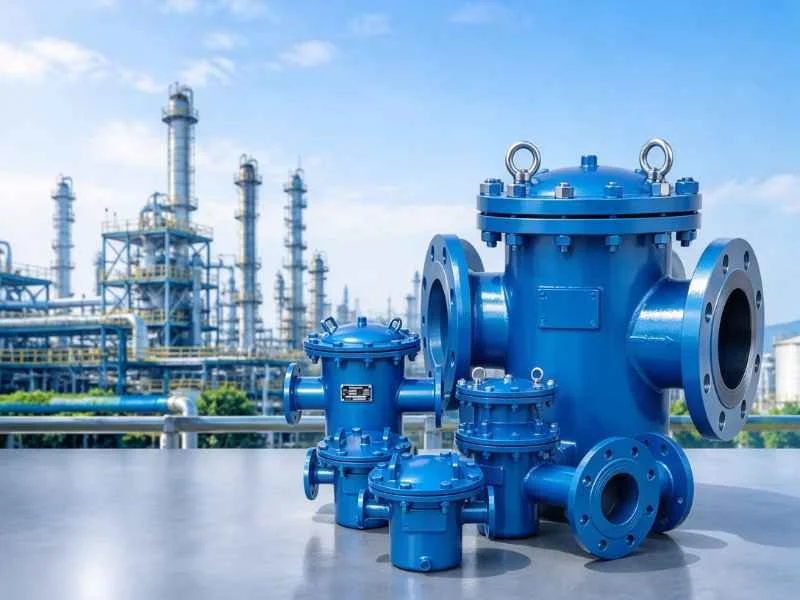
Large Screen Area
Supports higher flow and longer operating periods between cleaning.
Low Pressure Drop
A properly selected basket limits unnecessary pipeline resistance.
Entretien facile
The removable basket is accessible through the top cover.
Custom Filtration
Screen opening and construction can match the process requirement.
Product Collection
Basket Strainer Types
Select the body, basket and cover arrangement according to flow, contamination level and maintenance requirements.
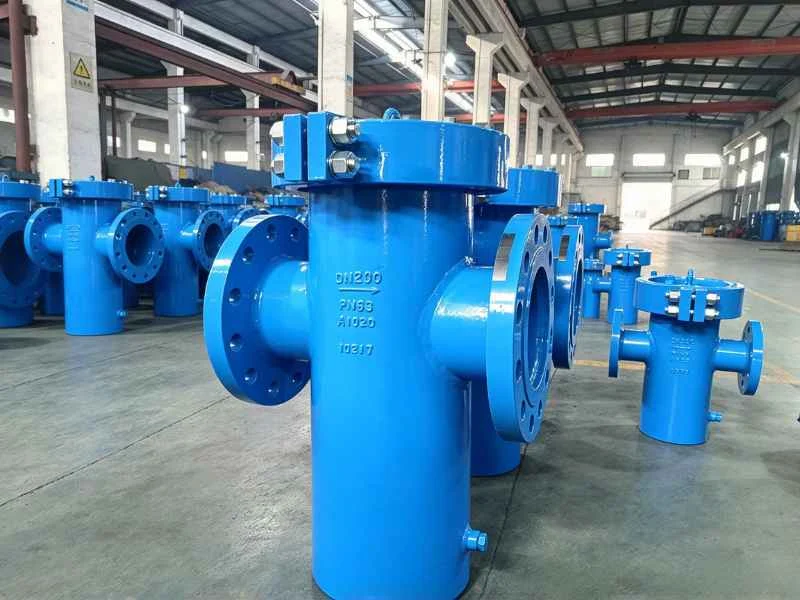
Simplex Basket Strainer
A single-chamber pipeline strainer for systems that can be isolated during basket cleaning.
- Single removable basket
- Bolted or quick-opening cover
- General industrial filtration
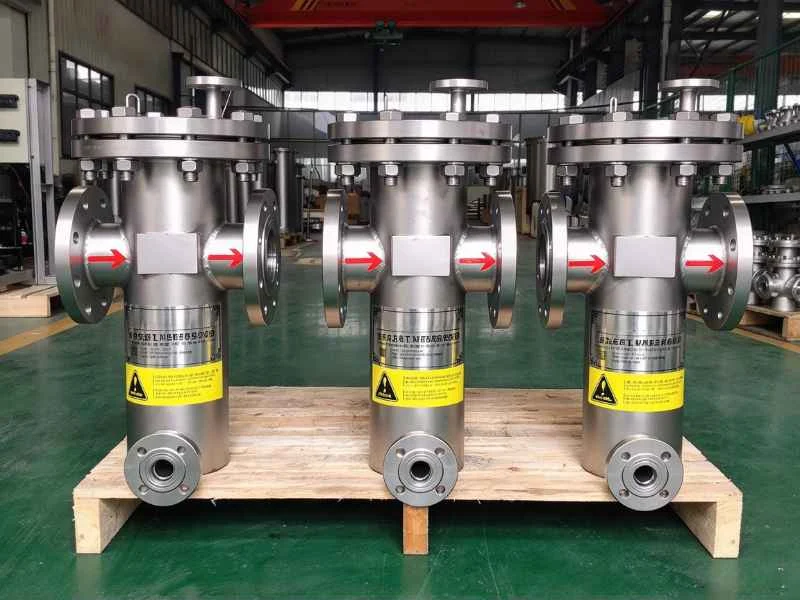
Duplex Basket Strainer
Two filtration chambers allow flow to be transferred while one basket is inspected or cleaned.
- Continuous-process filtration
- Two removable baskets
- Manual or actuated changeover options
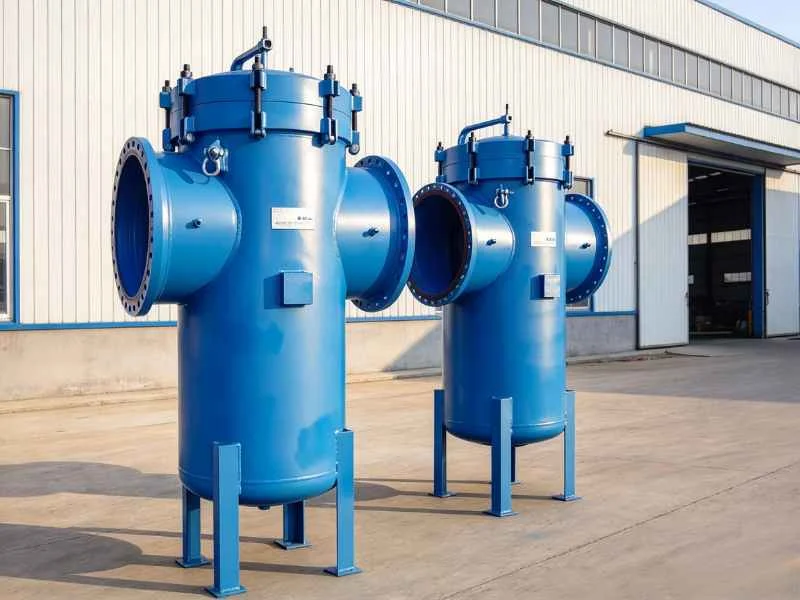
Fabricated Basket Strainer
A welded configuration for large pipelines, special dimensions or project-specific nozzle arrangements.
- Large-size capability
- Custom nozzle orientation
- Project-specific body dimensions
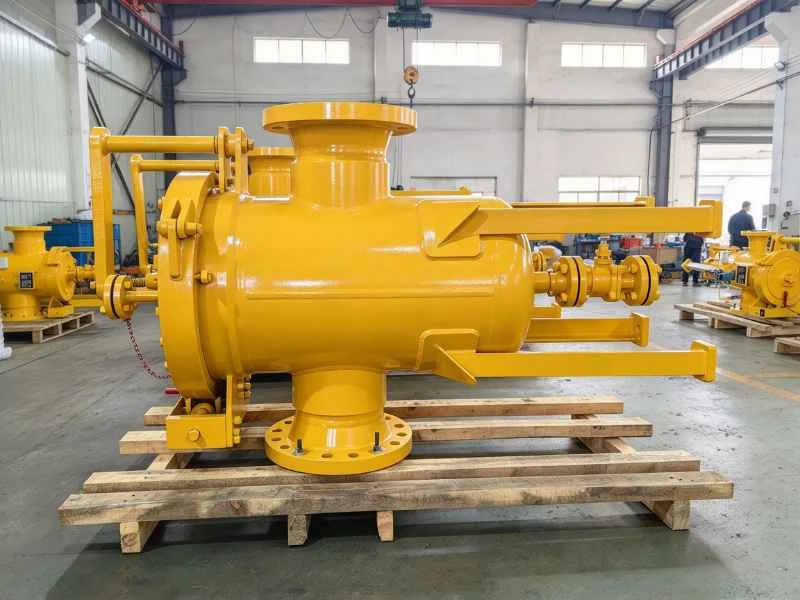
High-Pressure Basket Strainer
A reinforced configuration for pipelines with higher design pressure and demanding process conditions.
- Heavy-duty body construction
- Pressure-class flange options
- Engineered cover and bolting
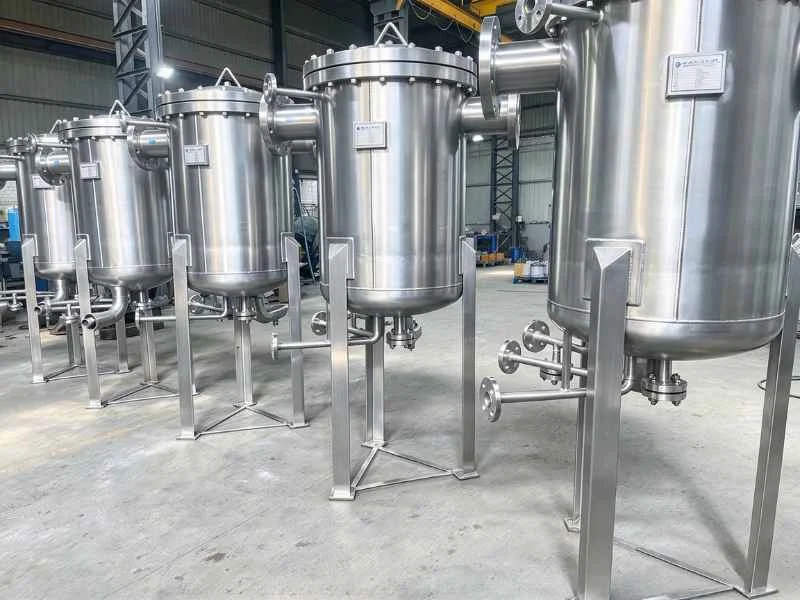
Jacketed Basket Strainer
A heated strainer for process media that can become viscous, crystallize or solidify as temperature falls.
- Full or partial jacket options
- Steam or heat-transfer medium
- Insulated process applications
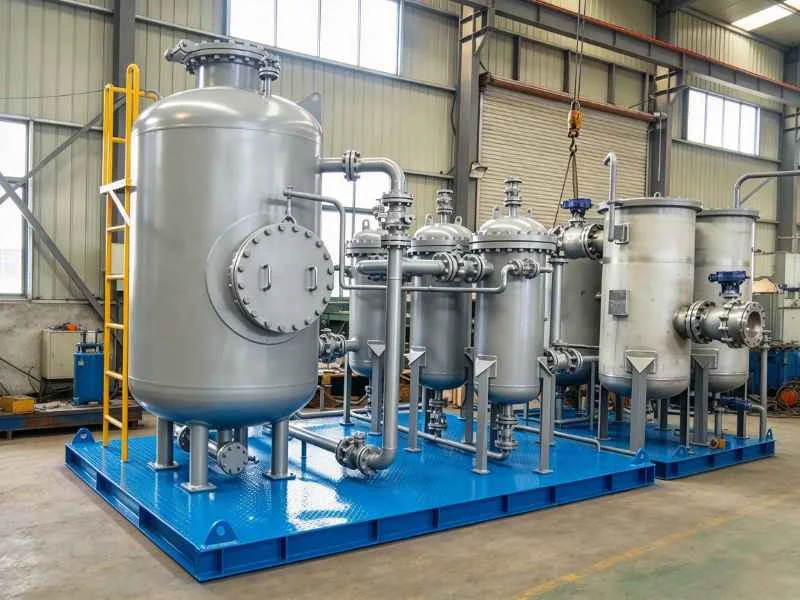
Custom Basket Strainer
A project-engineered solution for special media, screen openings, connections or installation limitations.
- Custom filtration area
- Special material combinations
- Alternative nozzle arrangements
Product Comparison
Select the Appropriate Basket Strainer
The correct configuration depends on whether the process can stop for cleaning, along with flow, pressure and contamination conditions.
| Strainer Type | Filtration Chambers | Cleaning Requirement | Typical Construction | Best Suited For |
|---|---|---|---|---|
| Simplex Basket Strainer | One | Pipeline isolation normally required | Cast or fabricated | Batch and intermittent processes |
| Duplex Basket Strainer | Two | One chamber can remain in service | Cast or fabricated | Continuous-process systems |
| Fabricated Basket Strainer | One or two | Configuration dependent | Welded plate or pipe | Large sizes and custom layouts |
| High-Pressure Basket Strainer | One | Pipeline isolation required | Heavy-duty construction | Higher-pressure process pipelines |
| Jacketed Basket Strainer | One | Pipeline isolation required | Cast or fabricated with jacket | Viscous or temperature-sensitive media |
| Custom Basket Strainer | Project dependent | Project dependent | Engineered construction | Special process requirements |
Operating Principle
How a Basket Strainer Works
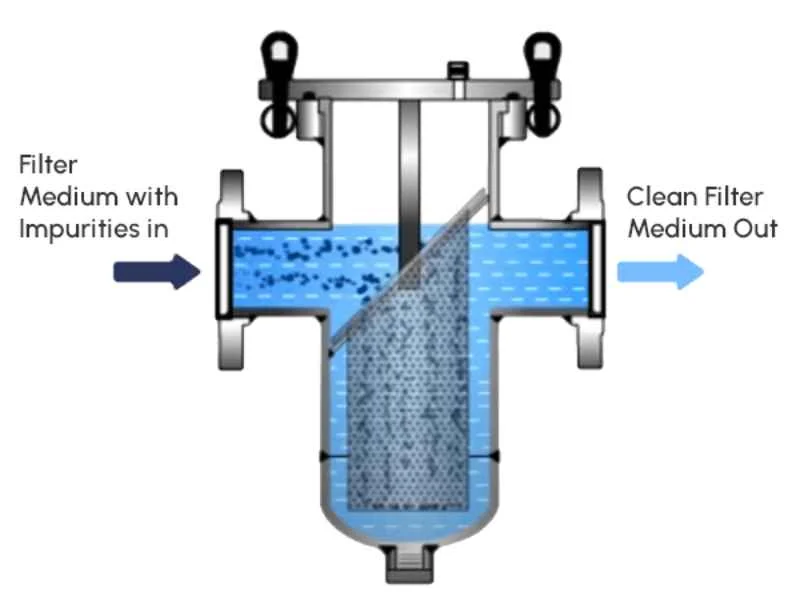
Process fluid enters the strainer body and flows through the removable basket. Particles larger than the basket opening are retained while filtered fluid continues through the outlet.
- Unfiltered fluid enters the strainer inlet.
- Flow is distributed across the basket surface.
- Solid particles remain inside the basket.
- Filtered fluid passes through the screen openings.
- Pressure differential rises as debris accumulates.
- The basket is removed, cleaned and returned to service.
Débit
Determines body size, connection size and required filtration area.
Screen Opening
Must protect downstream equipment without excessive restriction.
Dirt-Holding Capacity
Influences basket area and the interval between cleaning.
Chute de pression
Must remain acceptable in both clean and contaminated conditions.
Technical Options
Basket Strainer Configuration Guide
Available options depend on the selected series and project conditions. Confirm the complete specification before ordering.
| Paramètres | Typical Options | Information Required |
|---|---|---|
| Body Construction | Cast or fabricated | Size, pressure and project specification |
| Connexion | Flanged, threaded or welded | Pipeline standard and pressure class |
| Cover | Bolted, hinged or quick opening | Pressure and maintenance frequency |
| Basket Construction | Perforated, mesh lined or wedge wire | Particle size and mechanical strength |
| Screen Material | SS304, SS316 or project-specified alloy | Fluid compatibility and corrosion conditions |
| Drain and Vent | Plugged, flanged or valve connection | Cleaning and operating procedure |
| Monitoring | Pressure-gauge or differential-pressure connections | Maintenance and control requirements |
| Accessoires | Support legs, lifting devices or heating jacket | Installation and process requirements |
Sélection des paniers
Screen Opening and Construction
Basket design should balance downstream protection, available filtration area, mechanical strength and allowable pressure drop.
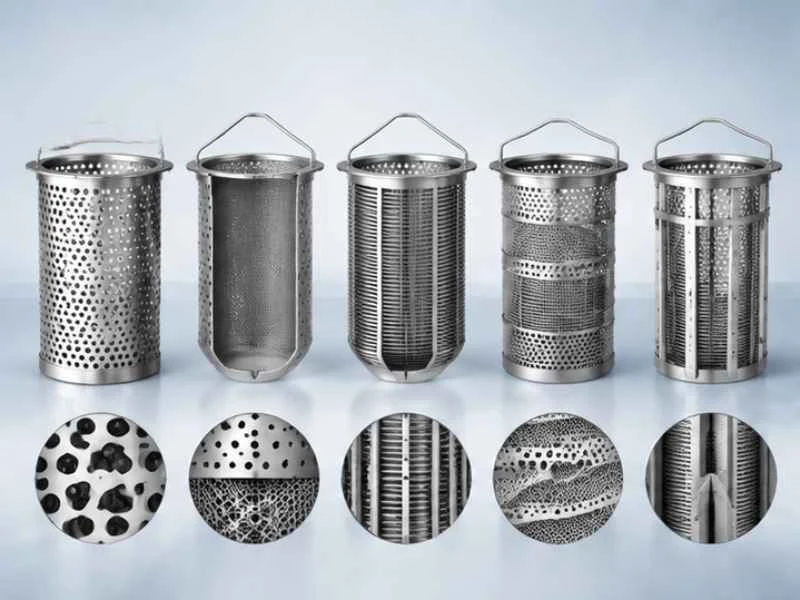
Basket Construction Options
- Perforated plate for coarse filtration
- Perforated support with woven wire mesh
- Wedge-wire basket for selected applications
- Single-layer or multi-layer construction
- Reinforced basket for higher differential pressure
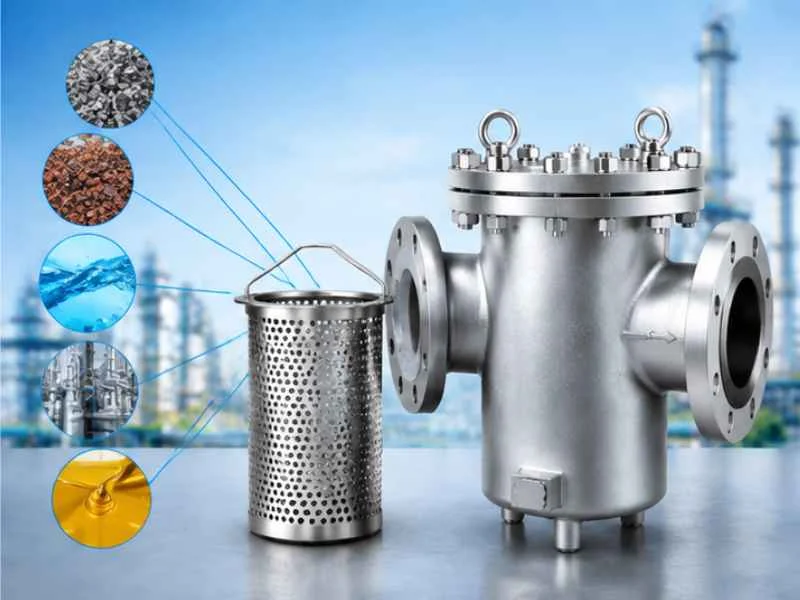
Selection Considerations
- Smallest particle that can damage downstream equipment
- Expected particle concentration and type
- Required flow rate and fluid viscosity
- Allowable clean and dirty pressure drop
- Required cleaning and replacement interval
| Screen Type | Filtration Characteristic | Relative Strength | Utilisation typique |
|---|---|---|---|
| Perforated Plate | Coarse filtration | Haut | Large debris and pipeline protection |
| Mesh-Lined Perforated Basket | Medium or fine filtration | Supported | Pumps, meters and control valves |
| Wedge-Wire Basket | Uniform slot opening | Haut | Water and process applications |
| Multi-Layer Basket | Project-specific filtration | Design dependent | Special process requirements |
Matériaux
Material Options for Different Media
Body, basket, gasket and bolting materials should be selected together according to the medium, temperature, pressure and corrosion conditions.
| Composant | Typical Material Options |
|---|---|
| Corps | Cast iron, ductile iron, carbon steel, SS304 or SS316 |
| Fabricated Housing | Carbon steel, SS304, SS304L, SS316 or SS316L |
| Filter Basket | SS304, SS304L, SS316 or SS316L |
| Cover Gasket | Graphite, PTFE or application-specific material |
| Bolting | Selected according to pressure, temperature and body material |
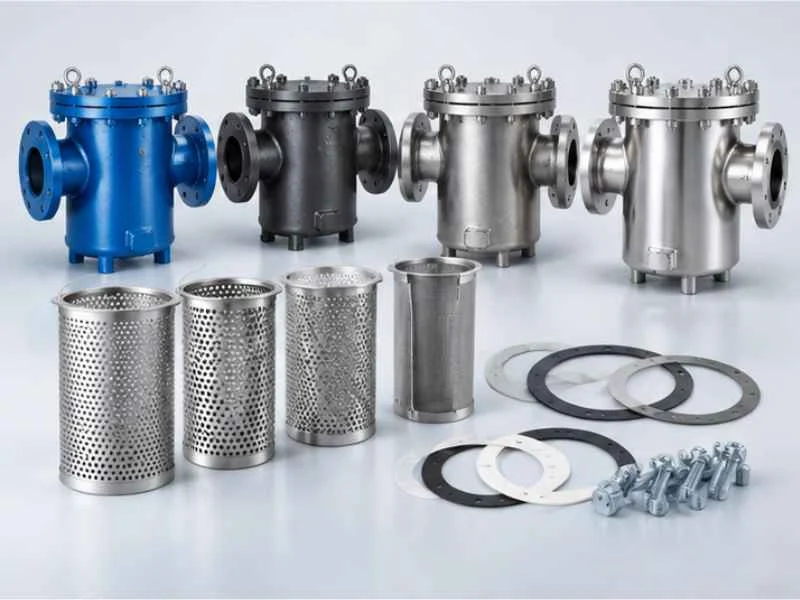
Simplex or Duplex
Choose According to Process Continuity
The ability to stop the process for maintenance is one of the most important basket strainer selection factors.
| Operating Requirement | Simplex Basket Strainer | Duplex Basket Strainer |
|---|---|---|
| Filtration Chambers | One | Two |
| Cleaning During Operation | Pipeline normally isolated | Flow transferred to the clean chamber |
| Installation Space | More compact | Requires additional space |
| Initial Equipment Cost | Plus bas | Plus élevé |
| Process Availability | Suitable where shutdown is acceptable | Suitable for continuous processes |
| Changeover Method | Not applicable | Manual or actuated, model dependent |
Selection Checklist
Information Required for Basket Strainer Selection
Complete operating data allows the manufacturer to review body size, basket area, screen opening and pressure-drop requirements.
Process Data
- Fluid name and composition
- Design pressure and temperature
- Operating pressure and temperature
- Normal and maximum flow rates
- Fluid density and viscosity
Filtration Data
- Required screen opening
- Particle type and concentration
- Perte de charge admissible
- Required filtration area
- Basket and mesh material
Piping Requirements
- Nominal pipe size
- Connection standard and pressure class
- Nozzle orientation
- Available installation space
- Drain, vent and monitoring requirements
Applications
Basket Strainer Applications
Basket strainers provide high-capacity pipeline filtration across process, energy and utility industries.
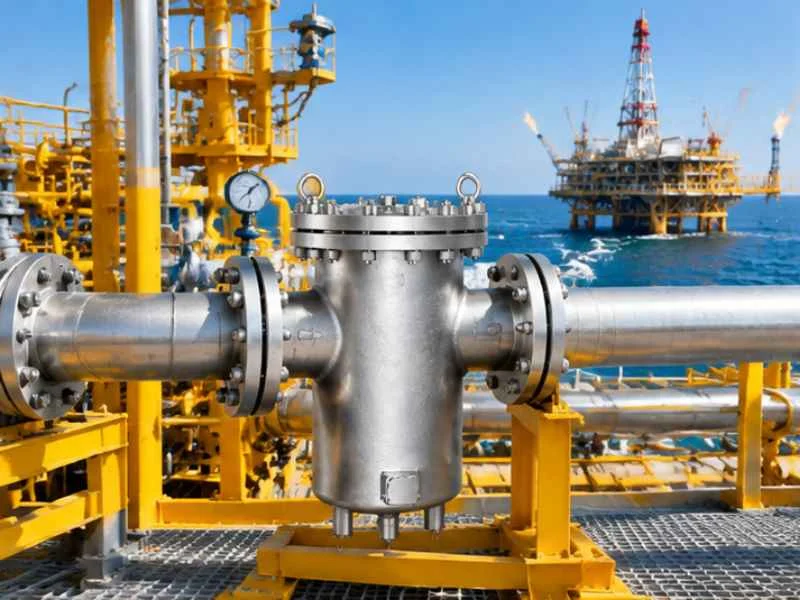
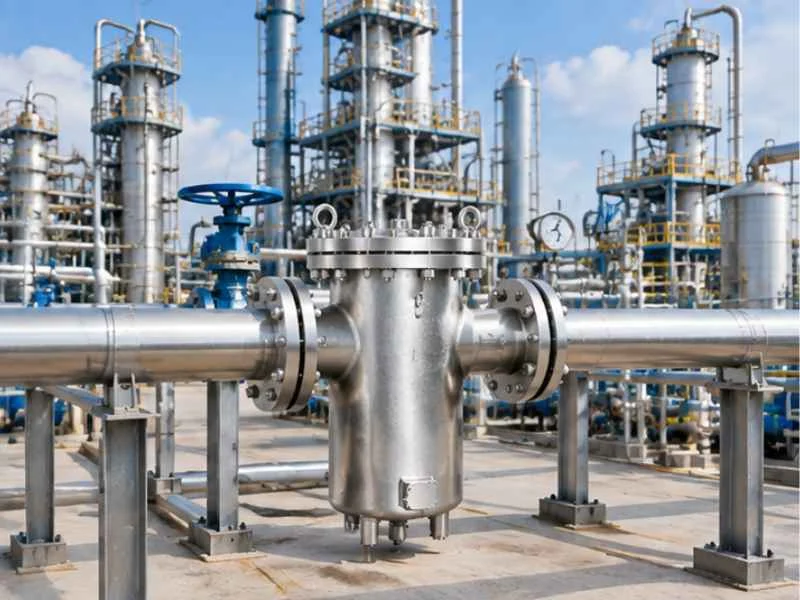
Pétrole et gaz
Protection for pumps, meters, valves and transfer equipment.
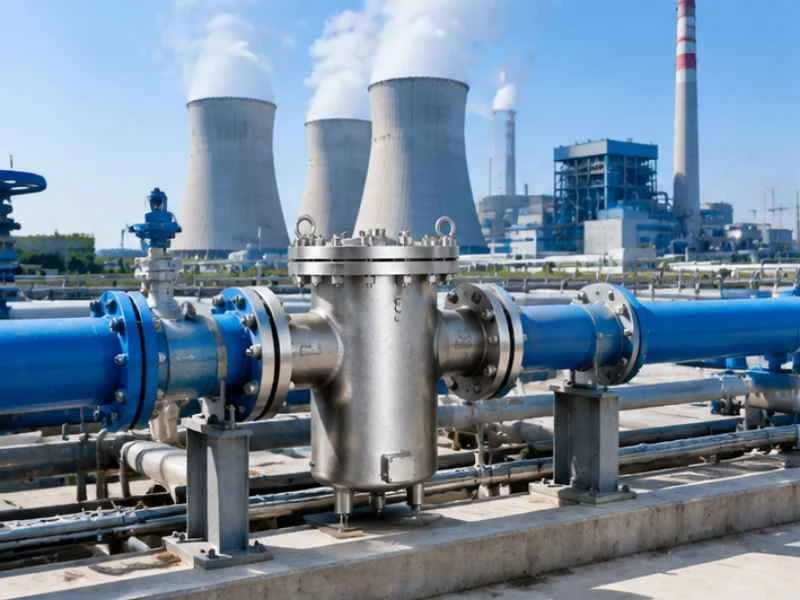
Traitement chimique
Material-compatible filtration for chemicals, solvents and process liquids.
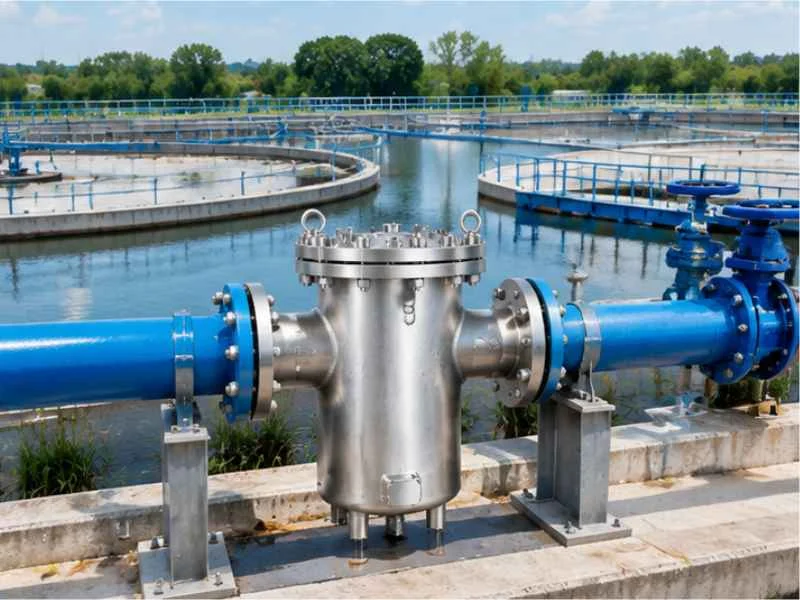
Production d'électricité
Filtration for cooling water, fuel, condensate and auxiliary systems.
Water & Mining
Debris removal from process water, raw water and slurry-support systems.
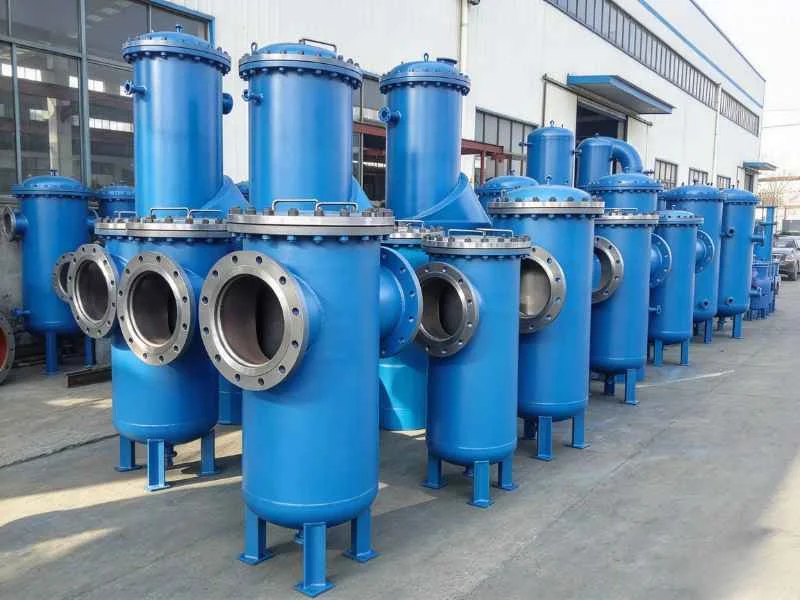
Manufacturer Quality Control
Inspection Before Delivery
The inspection scope depends on the selected basket strainer construction and agreed project requirements.
- Review the approved datasheet and product drawing.
- Verify body, basket, gasket and bolting materials.
- Inspect dimensions, nozzle orientation and connections.
- Check basket opening, construction and fit.
- Perform pressure and leakage testing where applicable.
- Review cleanliness, documentation and protective packing.
Installation & Maintenance
Maintain Reliable Filtration Performance
Correct installation and regular basket cleaning help control pressure drop and protect downstream equipment.
Installation Guidelines
- Match the body arrow to the pipeline flow direction.
- Provide sufficient clearance above the cover.
- Support the connected piping and larger strainer bodies.
- Install vents and drains in accessible positions.
- Provide differential-pressure monitoring where required.
- Flush the pipeline before commissioning.
Maintenance Guidelines
- Monitor differential pressure across the strainer.
- Isolate and depressurize the chamber before opening.
- Remove and clean the basket at suitable intervals.
- Inspect the basket for damage or deformation.
- Replace damaged cover gaskets before reassembly.
- Verify sealing after returning the strainer to service.
Send Us Your Basket Strainer Data
Provide the pipe size, flow rate, pressure, temperature, medium, screen opening and connection standard. BCST Valve will review the information and recommend a suitable basket strainer.
Questions fréquemment posées
Basket Strainer FAQ
Answers to common questions from engineers, operators and procurement teams.
What is a basket strainer?
A basket strainer is a pipeline filter that uses a removable basket to capture solid particles while allowing the process fluid to continue downstream.
What is the difference between a basket strainer and a Y strainer?
A basket strainer generally provides a larger filtration area and dirt-holding capacity. A Y strainer is more compact and often selected for smaller pipelines or lower debris loading.
When should I use a duplex basket strainer?
A duplex strainer is suitable when filtration must continue while one basket is isolated, removed and cleaned.
How do I select the basket opening?
Select an opening small enough to protect downstream equipment but large enough to maintain acceptable flow and cleaning intervals.
How is basket strainer size determined?
Selection considers pipe size, flow rate, fluid properties, screen opening, filtration area and allowable clean and dirty pressure drop.
How often should the basket be cleaned?
The interval depends on particle concentration and allowable pressure drop. Differential-pressure monitoring provides a practical indication of blockage.
Can the basket be customized?
Project-specific basket openings, materials, reinforcement and filtration areas can be reviewed against the process conditions.
When is a jacketed basket strainer required?
A jacket may be appropriate when the medium can become too viscous, crystallize or solidify as its temperature falls.
Can a basket strainer handle gas or steam?
Selected designs can handle compatible gas or steam service. Body construction, pressure drop, screen strength and drainage must be reviewed.
What information is required for a quotation?
Provide the pipe size, flow rate, pressure, temperature, medium, screen opening, body material, connection standard and maintenance requirements.
Need Help Selecting a Basket Strainer?
Send your pipeline and filtration data to BCST Valve for technical selection and quotation support.
 English
 Arabic
 Russian
 French
 Spanish