
Tank Protection Solutions
Pressure Vacuum Relief Valves for Storage Tank Protection
BCST Valve provides pressure vacuum relief valves for atmospheric and low-pressure storage tanks. These valves help protect tanks from excessive internal pressure and damaging vacuum during filling, emptying, and thermal breathing.
Our engineering team reviews tank design limits, venting capacity, stored medium, temperature, set points, materials, and installation conditions before recommending a valve configuration.
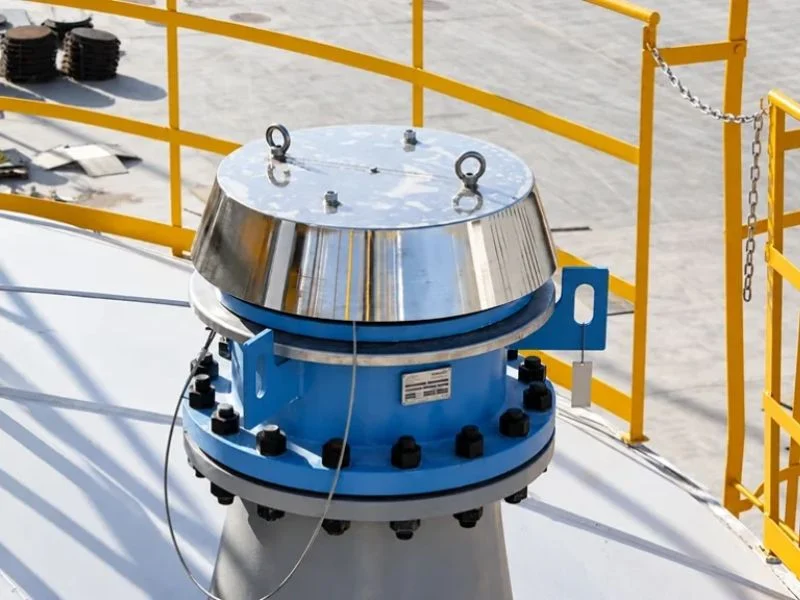
Outbreathing Protection
Relieves excessive pressure caused by filling or thermal expansion.
Inbreathing Protection
Allows air or gas to enter during emptying, cooling, or condensation.
Reduced Vapor Loss
Remains closed until the selected pressure or vacuum setting is reached.
Application Selection
Matches set points, capacity, materials, and connections to the tank.
Product Collection
Pressure Vacuum Relief Valve Configurations
Select from different operating mechanisms, installation arrangements, materials, and connection options.
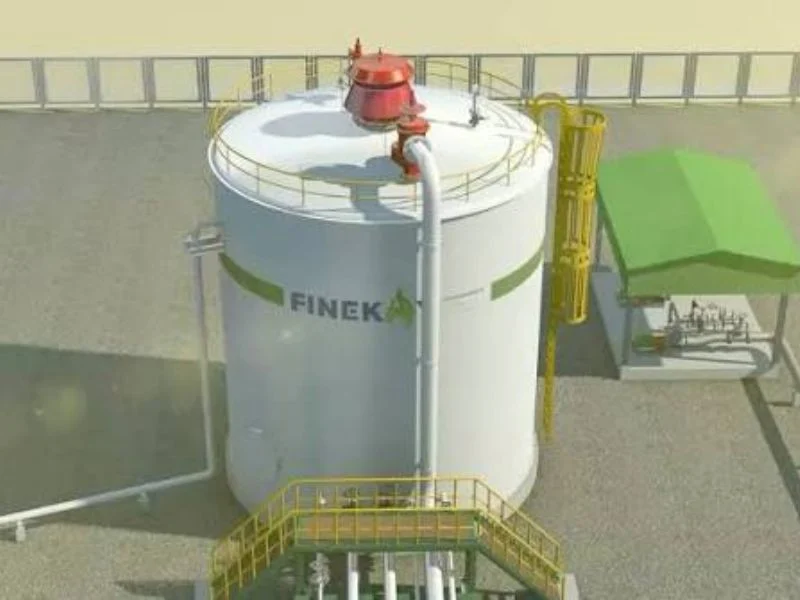
Weighted PVRV
Uses weighted pallets to establish pressure and vacuum settings for suitable low-pressure tank applications.
- Simple mechanical construction
- Pressure and vacuum pallets
- Multiple connection sizes
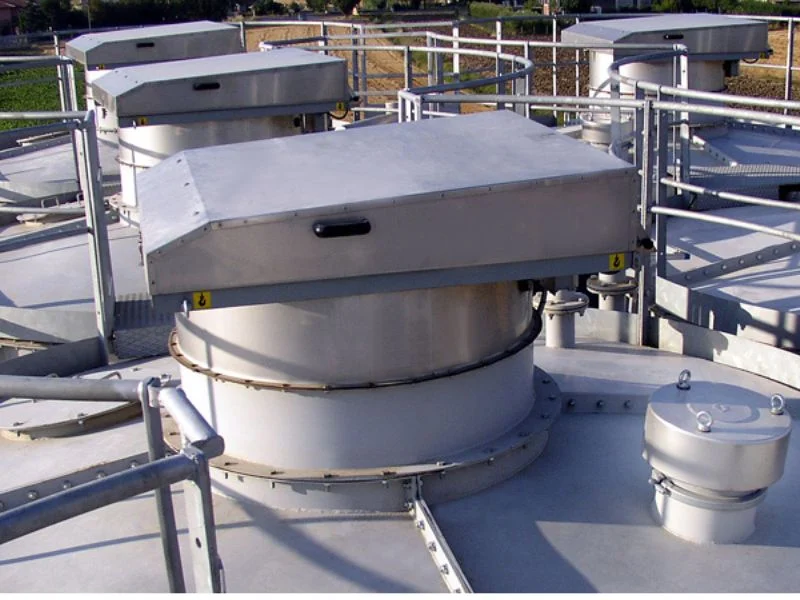
Spring-Loaded PVRV
Uses spring force to support selected pressure or vacuum settings beyond suitable weighted configurations.
- Spring-assisted operation
- Application-specific set points
- Compact configuration options

Pilot-Operated PVRV
Pilot-operated designs for selected applications requiring controlled operation near the specified set point.
- Controlled opening characteristics
- Selected low-pressure tank service
- Project-specific engineering review
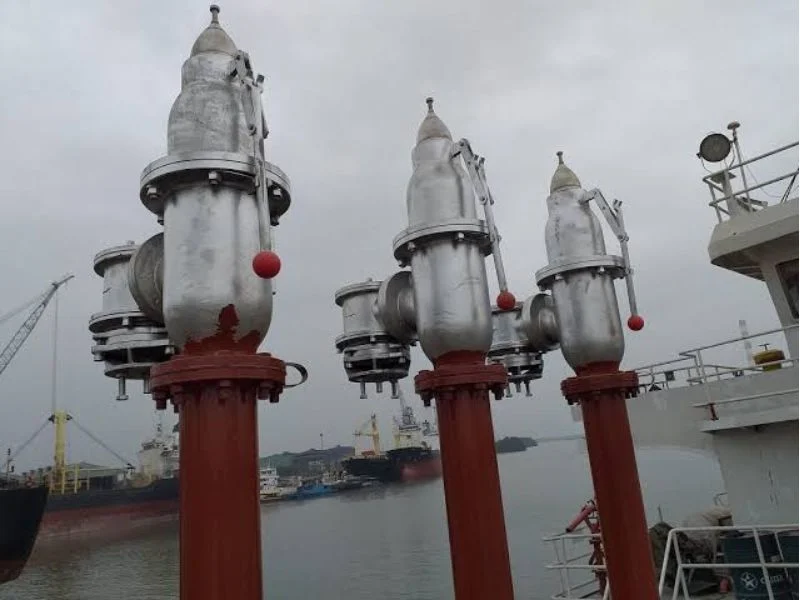
End-of-Line PVRV
Discharges directly to atmosphere through a weather-protected outlet at the tank vent connection.
- Tank-top installation
- Weather hood configuration
- Direct atmospheric discharge
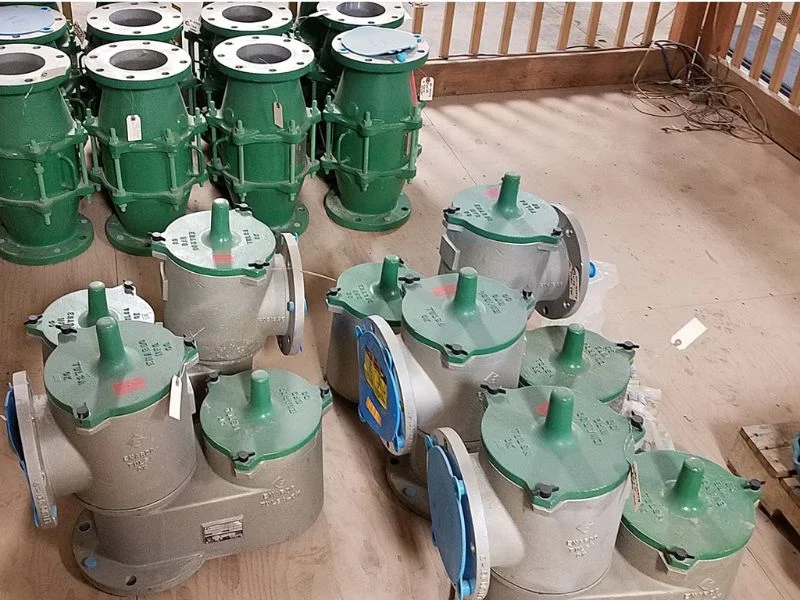
Pipe-Away PVRV
Provides a flanged outlet for routing discharged vapor into a recovery, collection, or treatment system.
- Flanged discharge connection
- Vapor routing capability
- Outlet pressure-loss review
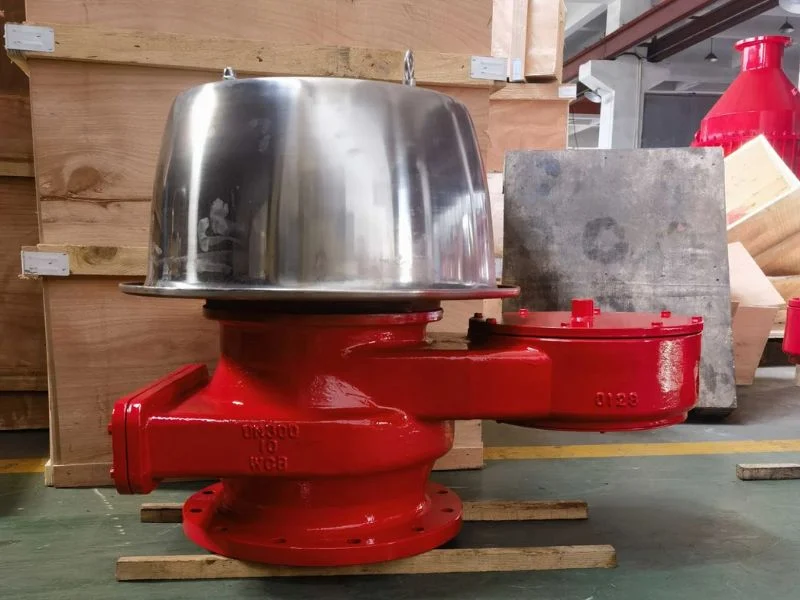
PVRV with Flame Arrester
Combined arrangements for applications requiring pressure vacuum relief and an evaluated flame-protection function.
- Integrated tank protection
- Reduced nozzle requirements
- Pressure-drop evaluation required
Product Comparison
Compare Pressure Vacuum Relief Valve Types
Use this table for initial comparison. Final selection should be based on complete tank and process data.
| Configuration | Operating Method | Typical Application | Key Selection Point |
|---|---|---|---|
| Weighted PVRV | Gravity-loaded pallets | Atmospheric and low-pressure storage tanks | Set point, pallet condition, and mounting orientation |
| Spring-Loaded PVRV | Spring-loaded pallets | Selected pressure or vacuum settings | Spring range, operating stability, and material |
| Pilot-Operated PVRV | Pilot-controlled main valve | Selected applications requiring controlled opening | Pilot compatibility, cleanliness, and operating conditions |
| End-of-Line PVRV | Direct atmospheric discharge | Tank roof venting | Weather protection and safe discharge location |
| Pipe-Away PVRV | Discharge through connected piping | Vapor recovery or treatment systems | Outlet backpressure and piping pressure loss |
| PVRV with Flame Arrester | Relief valve with flame element | Selected flammable vapor service | Vapor group, flame rating, pressure drop, and installation |
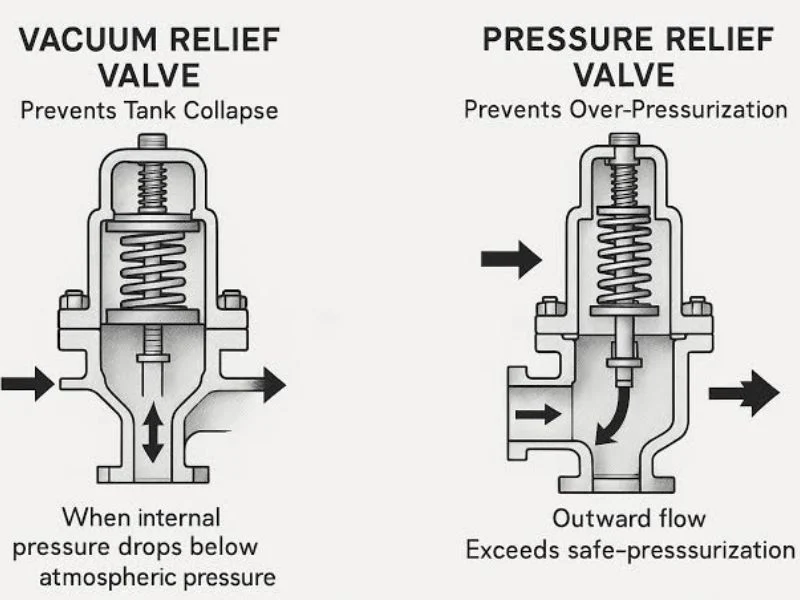
Principe de fonctionnement
How Does a Pressure Vacuum Relief Valve Work?
A pressure vacuum relief valve normally remains closed while tank pressure stays within the intended operating range. Separate pressure and vacuum pallets respond when their corresponding settings are reached.
- Tank filling or thermal expansion increases internal pressure.
- The pressure pallet opens when pressure reaches the selected setting.
- Vapor leaves the tank until pressure falls toward the normal range.
- Tank emptying, cooling, or vapor condensation creates vacuum.
- The vacuum pallet opens when vacuum reaches the selected setting.
- Air or inert gas enters until the vacuum condition is reduced.
Application Data
Information Required for PVRV Selection
Accurate tank and process data is essential for determining set points, capacity, materials, connection size, and valve configuration.
Tank and Process Conditions
- Tank type and dimensions
- Stored medium and vapor characteristics
- Tank design pressure
- Tank design vacuum
- Normal operating pressure
- Operating and design temperature
- Ambient operating conditions
Venting and Product Requirements
- Maximum filling rate
- Maximum emptying rate
- Required pressure-relief capacity
- Required vacuum-relief capacity
- Pressure and vacuum set points
- Connection size and flange standard
- Body, pallet, seat, and seal materials
| Selection Factor | Why It Matters |
|---|---|
| Tank Design Pressure | The pressure setting must protect the tank without interfering with normal operation. |
| Tank Design Vacuum | The vacuum setting must remain within the allowable vacuum limit of the tank. |
| Filling Rate | Influences the required pressure-relief or outbreathing capacity. |
| Emptying Rate | Influences the required vacuum-relief or inbreathing capacity. |
| Thermal Breathing | Temperature changes can expand or contract vapor inside the tank. |
| Stored Medium | Affects material compatibility, corrosion resistance, vapor behavior, and safety evaluation. |
Capacity and Sizing
PVRV Sizing Is More Than Matching the Tank Nozzle
The tank nozzle size does not automatically determine the required pressure vacuum relief valve capacity. The complete inbreathing and outbreathing demand should be evaluated.
- Maximum liquid filling rate
- Maximum liquid emptying rate
- Thermal outbreathing
- Thermal inbreathing
- Tank pressure and vacuum limits
- Selected pressure and vacuum settings
- Stored-medium vapor properties
- Inlet and outlet piping losses
- Additional flame arrester pressure drop
- Applicable tank and project requirements
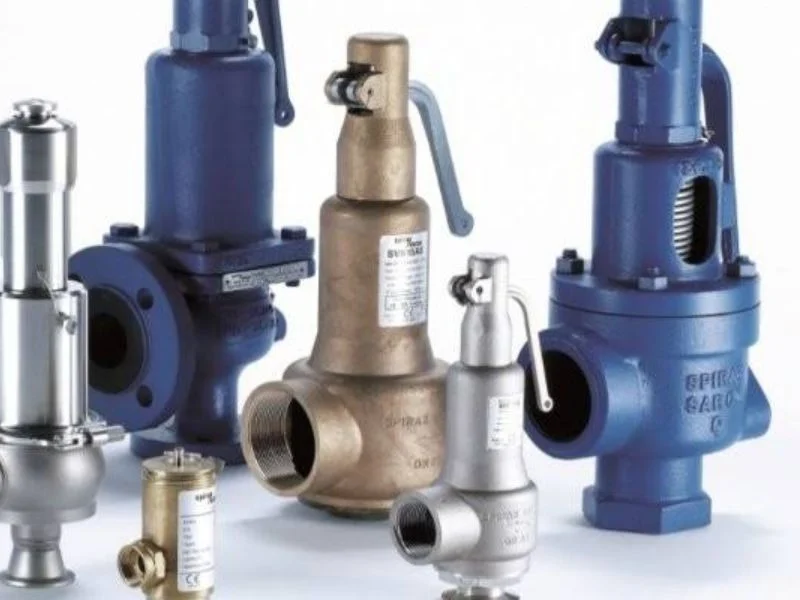
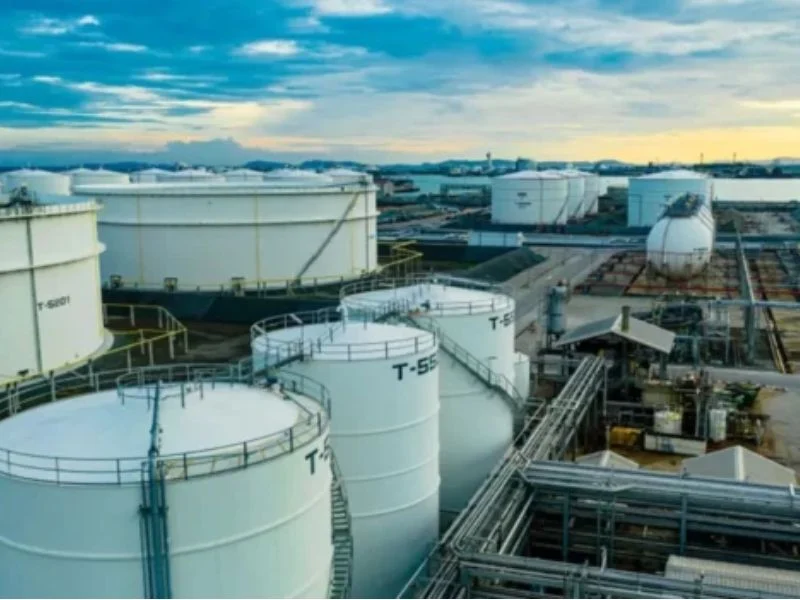
Vapor Conservation
Control Tank Breathing and Reduce Unnecessary Vapor Release
An open tank vent allows vapor to move freely as tank pressure changes. A correctly selected PVRV remains closed until the set pressure or vacuum is reached.
- Helps retain vapor during normal pressure fluctuations
- Reduces unnecessary atmospheric breathing
- Supports more controlled tank operation
- Helps limit product loss from normal venting
- Supports vapor collection through pipe-away designs
- Requires correctly selected set points and capacity
Matériaux
Material Options for Different Stored Media
Material selection should consider the stored medium, vapor concentration, corrosion, temperature, external environment, and project requirements.
| Material Option | Typical Consideration | Common Application |
|---|---|---|
| Acier au carbone | General industrial service where compatibility is confirmed | Fuel, oil, and general process storage |
| Acier inoxydable | Improved corrosion resistance and process cleanliness | Chemical, solvent, and corrosive vapor service |
| Aluminium | Lightweight construction for compatible conditions | Selected atmospheric storage applications |
| Duplex Stainless Steel | Higher strength and resistance in selected chloride environments | Marine, terminal, and demanding chemical service |
| Special Alloy | Application-specific resistance to aggressive media | Severe chemical and specialty process storage |
| Protective Coating | Additional external or internal surface protection | Corrosive plant and coastal environments |
Applications
Pressure Vacuum Relief Valve Applications

Oil and Fuel Storage
Pressure and vacuum protection for crude oil, diesel, fuel, and hydrocarbon storage tanks.

Refineries and Terminals
Tank breathing and vapor conservation for terminals, loading facilities, and refinery storage systems.

Chemical Storage
Material-compatible pressure and vacuum protection for chemicals, solvents, and process media.

Usines pétrochimiques
Breathing protection for feedstock, intermediate-product, and finished-product storage.

Traitement de l'eau
Tank venting for chemical dosing, treatment, wastewater, and utility storage applications.

EPC Tank Projects
Coordinated product selection, documentation, inspection, testing, packing, and delivery.
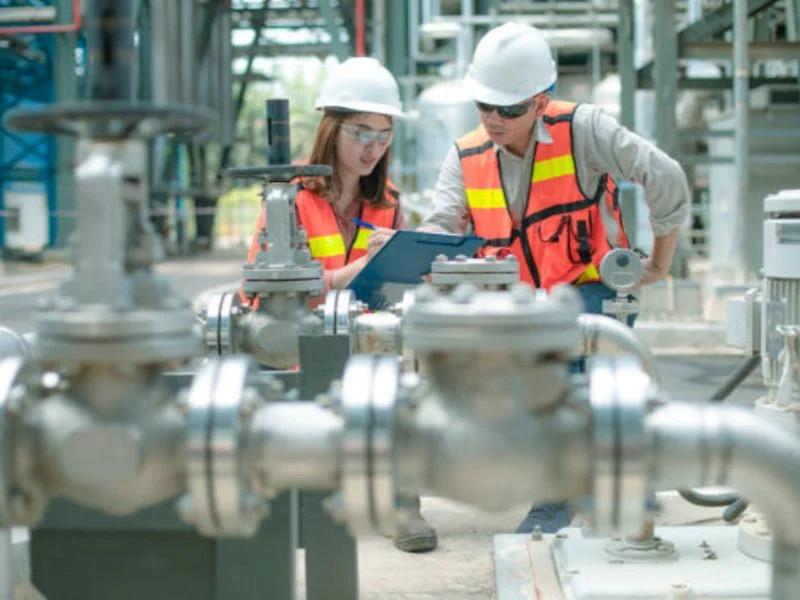
Inspection and Testing
Quality Support for PVRV Projects
Inspection, testing, and documentation requirements are confirmed according to the valve, application, project specification, and agreed supply scope.
- Material and certificate review
- Visual and dimensional inspection
- Pressure set-point testing where applicable
- Vacuum set-point testing where applicable
- Pallet movement and operational checks
- Leakage inspection where applicable
- Product marking and nameplate review
- Final documentation and packing inspection
Engineering Workflow
From Tank Data to PVRV Delivery
Review Tank Data
We review the tank, medium, design limits, temperature, filling rate, emptying rate, and installation.
Select the Valve
We evaluate operating method, set points, capacity, size, material, connection, and accessories.
Confirm the Scope
Datasheets, drawings, inspection, testing, documentation, quantity, and delivery are confirmed.
Produce and Deliver
Manufacturing, inspection, packing, shipment, installation guidance, and support are coordinated.
Custom Engineering
PVRVs for Project-Specific Requirements
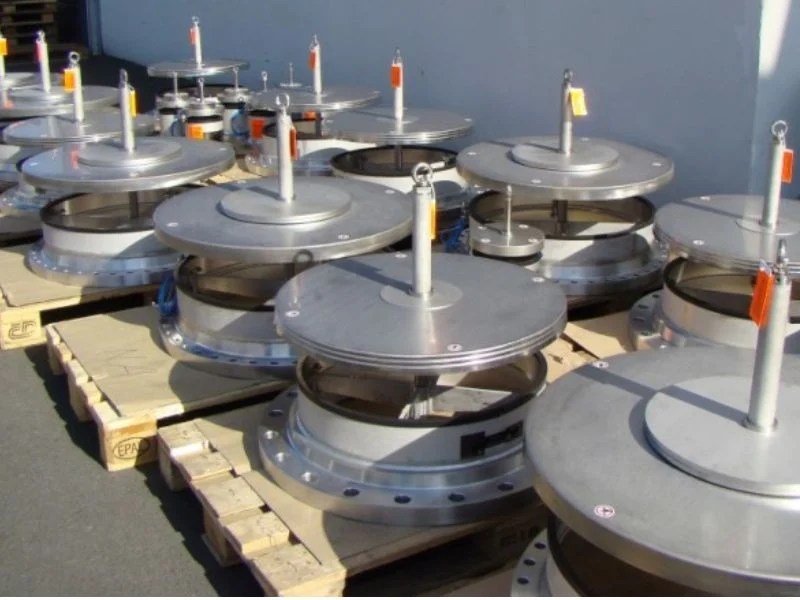
When a standard valve does not match the tank, medium, connection, set point, capacity, or installation conditions, BCST Valve can evaluate a customized configuration.
- Special pressure and vacuum settings
- Custom inbreathing and outbreathing capacities
- Special connection sizes and flange standards
- Carbon steel, stainless steel, and special alloys
- Special coatings, seats, seals, and internal materials
- End-of-line and pipe-away arrangements
- Combined flame arrester configurations
- Replacement compatibility review
- Project-specific documentation packages
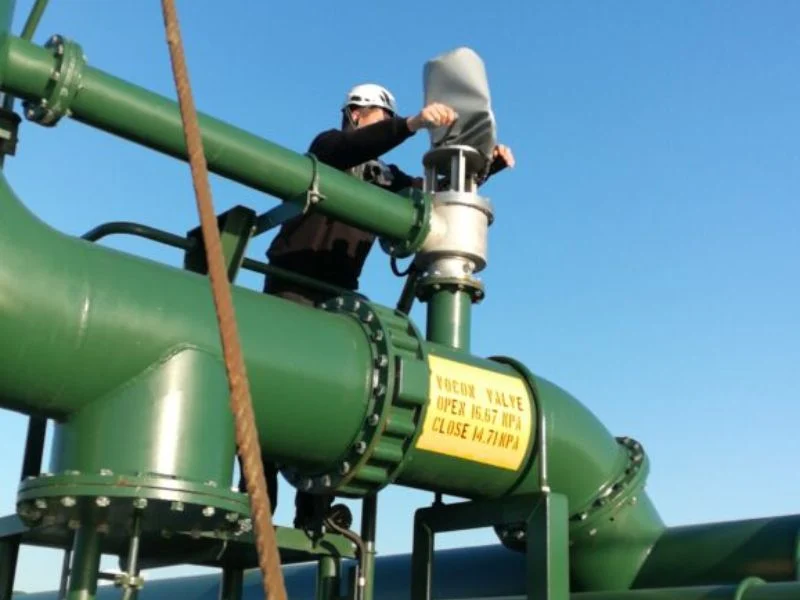
Request a Selection
Send Us Your Tank Data
Provide your tank dimensions, stored medium, design pressure, design vacuum, operating temperature, filling rate, emptying rate, set points, connection, material, and documentation requirements.
Questions fréquemment posées
Pressure Vacuum Relief Valve FAQ
What is a pressure vacuum relief valve?
A pressure vacuum relief valve is a tank-mounted device that opens at selected pressure and vacuum settings to protect a storage tank during normal filling, emptying, and thermal breathing.
Is a PVRV the same as a breather valve?
The terms are often used interchangeably. PVRV specifically describes a valve that provides both pressure-relief and vacuum-relief functions.
How does a PVRV protect a storage tank?
It releases vapor when internal pressure becomes too high and allows air or gas to enter when vacuum becomes excessive.
How is a pressure vacuum relief valve sized?
Sizing considers filling rate, emptying rate, thermal breathing, stored medium, tank design limits, valve set points, piping losses, and required capacity.
How should PVRV set points be selected?
Set points should remain within the tank design limits while allowing normal operation and providing sufficient margin between operating pressure and relief pressure.
What is the difference between a weighted and spring-loaded PVRV?
A weighted valve uses pallet weight to establish the setting. A spring-loaded valve uses spring force and may be suitable for selected settings or installation requirements.
What is the difference between a PVRV and an emergency vent?
A PVRV handles normal tank breathing. An emergency vent provides additional pressure-relief capacity during abnormal conditions such as external fire exposure.
Can a PVRV reduce vapor loss?
Yes. A correctly selected valve remains closed until its set point is reached, helping reduce unnecessary vapor release compared with an open vent.
Can a flame arrester be installed with a PVRV?
Yes, in selected applications. Vapor characteristics, flame-protection requirements, pressure drop, capacity, and installation arrangement must be evaluated.
What is a pipe-away PVRV?
A pipe-away PVRV has a connected outlet that routes discharged vapor to a recovery, collection, or treatment system instead of releasing it directly at the valve.
How often should a PVRV be inspected?
Inspection frequency depends on the medium, environment, deposits, corrosion, operating history, project procedures, and applicable maintenance requirements.
What information is required for a quotation?
Please provide the tank size, medium, design pressure, design vacuum, temperature, filling rate, emptying rate, set points, connection, material, quantity, and documentation requirements.
 English
 Arabic
 Russian
 French
 Spanish