
Representative Process Sampling
Sampling Valve Manufacturer
BCST manufactures industrial sampling valves for collecting controlled samples from pipelines, tanks, reactors and process vessels. Each valve is configured around the medium, pressure, temperature, sample volume, installation point, operator-safety requirements and cleaning procedure.
- Liquid, gas, slurry and powder sampling options
- Pipeline, vessel and tank-mounted configurations
- Manual, pneumatic and automated operation
- Flushing, purging and closed-sampling options
- Materials and seals selected for the process medium
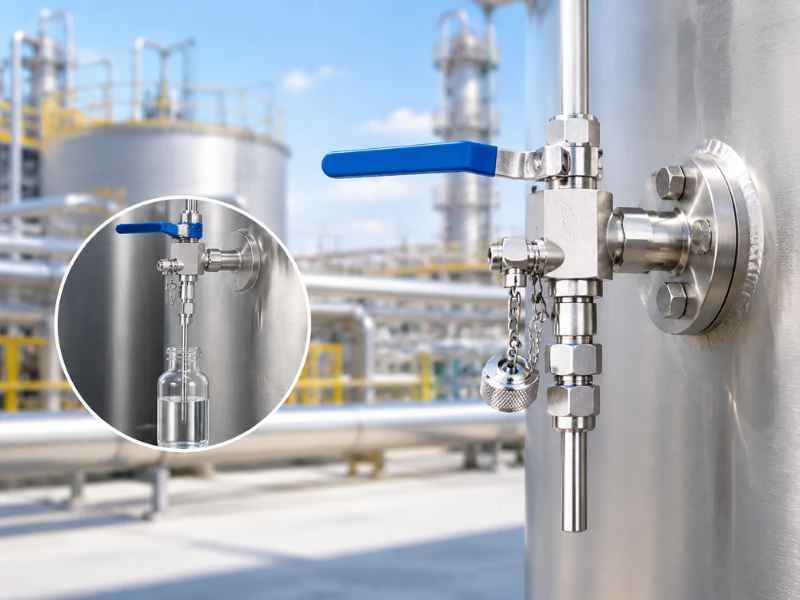
Representative Sampling
Position the sample inlet where process conditions can provide a meaningful sample.
Controlled Sample Volume
Configure the flow path for repeatable collection and manageable discharge.
Operator Protection
Evaluate closed collection, purging and remote operation for hazardous media.
Cleanable Design
Select flushing, draining or sterilization features for the process requirement.
Product Collection
Sampling Valve Configurations
Select the sampling method according to the process phase, hazard level, sample objective and installation location.
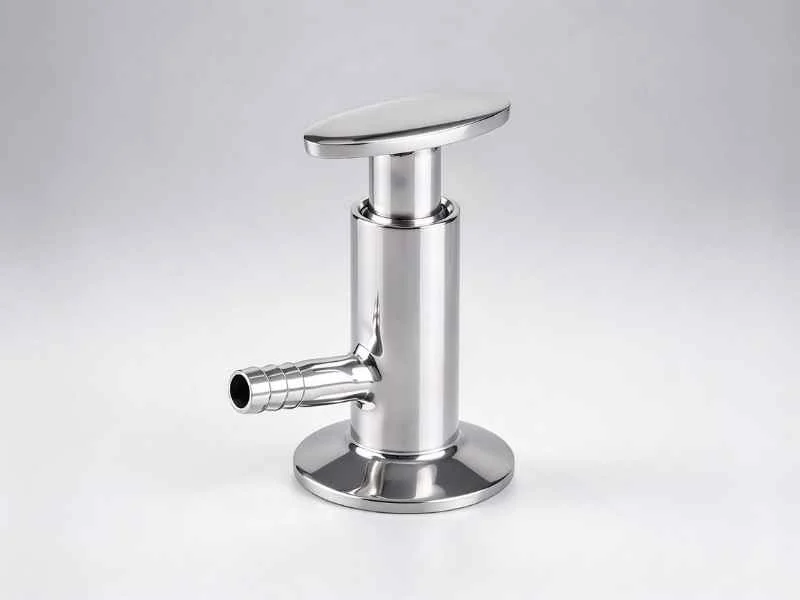
Liquid Sampling Valve
A compact flow path collects liquid samples from pipelines, tanks or process vessels.
- Manual or pneumatic operation
- Needle, piston or engineered closure
- Flushing connection options
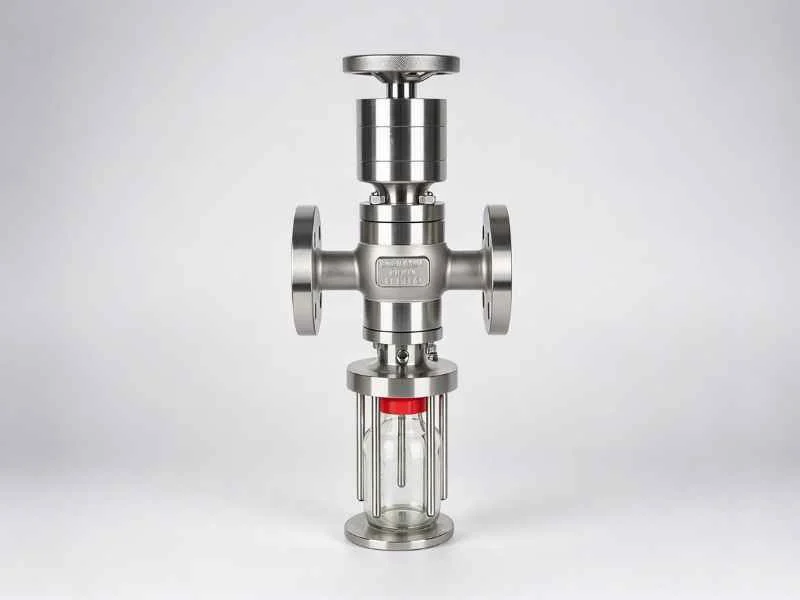
Closed-Loop Sampling Valve
A closed collection arrangement helps limit operator contact and uncontrolled process release.
- Closed sample container interface
- Purge and vent options
- Suitable for hazardous media review
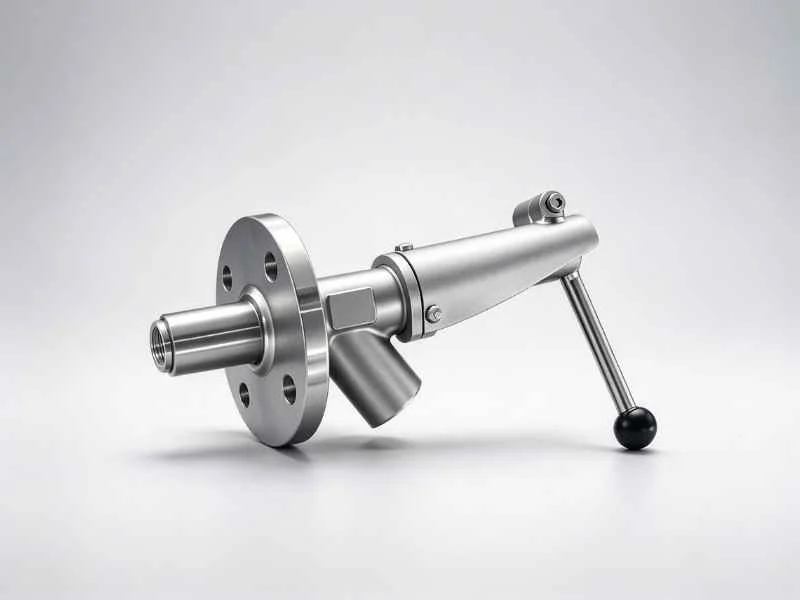
Slurry Sampling Valve
An enlarged or specialized flow path supports sampling of solids-bearing liquids and suspensions.
- Reduced internal restriction
- Flushing and cleaning options
- Wear-resistant material selection
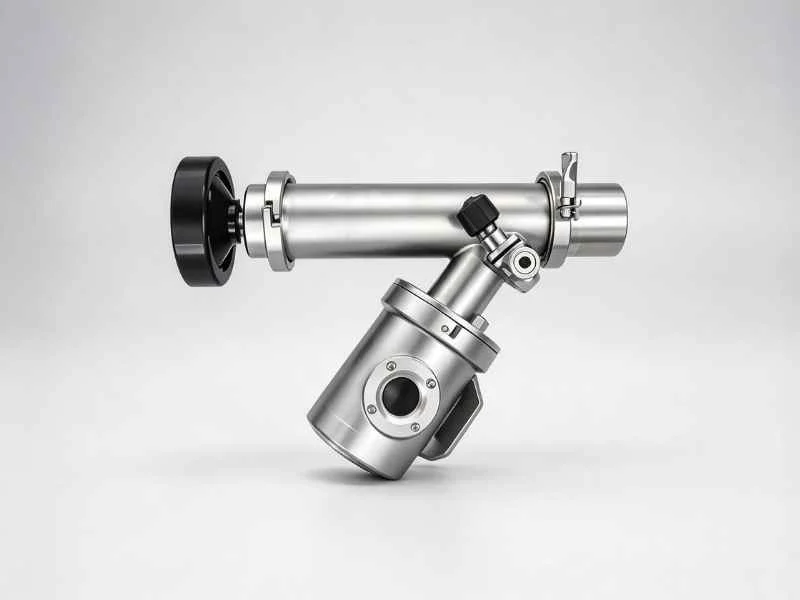
Powder Sampling Valve
A dedicated sampler withdraws a controlled quantity from dry powder or granular process equipment.
- Tank, chute or pipeline mounting
- Manual or automated operation
- Dust-containment options
Product Comparison
Choose the Appropriate Sampling Method
| Sampling Type | Typical Medium | Collection Method | Main Advantage | Selection Priority |
|---|---|---|---|---|
| Open liquid sampling | Compatible non-hazardous liquids | Direct discharge into an open container | Simple collection arrangement | Splash, temperature and operator exposure |
| Closed-loop sampling | Hazardous, volatile or valuable fluids | Sealed sample container and return or vent path | Reduced uncontrolled release | Container interface and purge sequence |
| Slurry sampling | Suspensions and solids-bearing liquids | Enlarged or flushable sample passage | Supports representative solids collection | Particle size, settling and blockage |
| Gas sampling | Process and utility gases | Controlled pressure reduction and collection | Managed gas sample flow | Pressure, toxicity and condensation |
| Powder sampling | Dry powder and granular material | Mechanical withdrawal from process equipment | Controlled solids sample volume | Flowability, dust and cross-contamination |
Sampling Principle
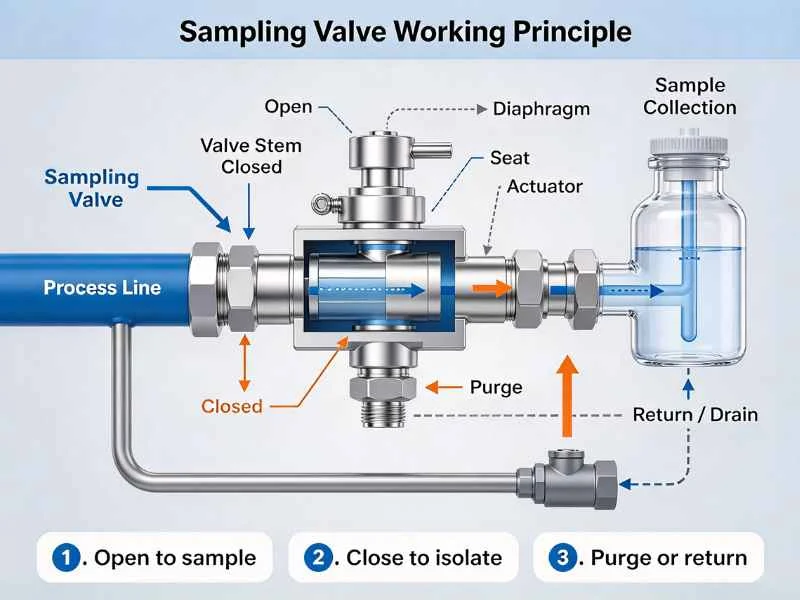
How a Sampling Valve Works
- Preparation: The operator confirms the sample container, protective measures and valve position.
- Purging or flushing: Stagnant material may be cleared according to the approved procedure.
- Valve opening: The closure element moves to connect the process with the sampling outlet.
- Sample collection: A controlled quantity enters the open or closed sample container.
- Valve closure: The sampling path is isolated from the live process.
- Depressurization: Trapped pressure is managed through the specified vent or return path.
- Nettoyage : The sample path is drained, flushed or purged for the next cycle.
Sample Representativeness
Choose a location and method that reflect actual process conditions.
Operator Safety
Assess pressure, temperature, toxicity, volatility and required containment.
Cross-Contamination Control
Define flushing, purging, draining and cleaning between sample cycles.
Technical Configuration
Configurable Sampling Valve Specifications
Available specifications depend on the sample method, medium and approved process conditions.
| Paramètres | Available Engineering Options | Selection Basis |
|---|---|---|
| Sample medium | Liquid, gas, slurry, powder or granular solid | Phase, viscosity and particle characteristics |
| Process connection | Flanged, threaded, welded or vessel-mounted | Pipeline or equipment interface |
| Pression nominale | Selected according to valve construction | Operating, design and sampling pressure |
| Plage de température | Material- and seal-dependent | Process, cleaning and sterilization temperature |
| Wetted material | Stainless steel, alloy or engineered option | Chemical compatibility and cleanliness |
| Seat and seal | Metallic or compatible soft-seal options | Pressure, temperature and leakage requirement |
| Sampling outlet | Tube, threaded, hose, bottle or closed-container interface | Sample vessel and containment method |
| Fonctionnement | Manual, pneumatic or automated | Sampling frequency and operator accessibility |
| Cleaning features | Flush, purge, drain or steam connection where applicable | Residue and cross-contamination requirements |
| Accessoires | Cooler, regulator, gauge, interlock or position feedback | Temperature, pressure and plant-control requirements |
Closed Sampling
Reduce Exposure and Uncontrolled Release
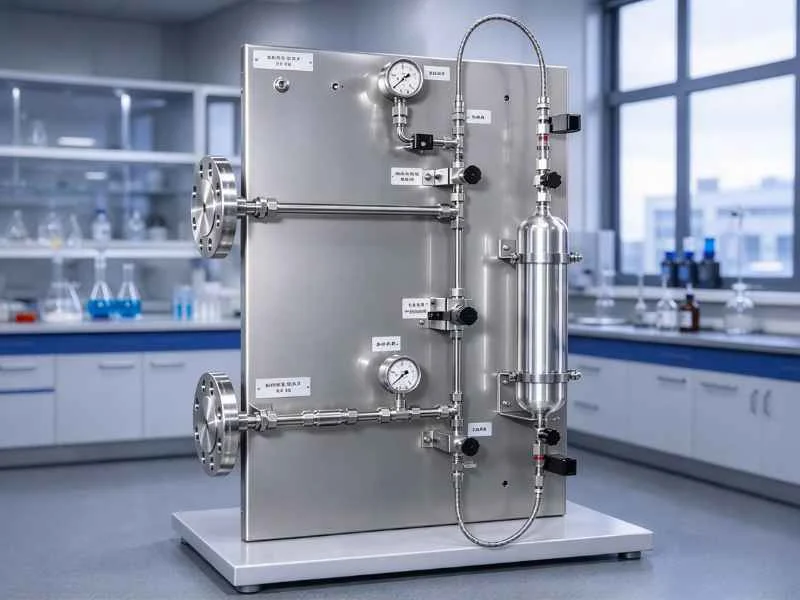
A closed sampling system connects the process to a compatible sealed container and can include purge, vent or return paths. The complete arrangement must be reviewed as one system.
- Compatible sample bottle or cylinder interface
- Controlled process inlet and sample outlet
- Vent, return or pressure-equalization connection
- Purging arrangement for the sample path
- Defined operating sequence and interlocks
- Containment for residual liquid or gas
- Operator access and ergonomic review
Sampling Location
Choose a Representative Installation Point
| Installation Point | Potential Advantage | Important Consideration |
|---|---|---|
| Horizontal pipeline | Accessible installation and maintenance | Phase separation and sample inlet orientation |
| Vertical pipeline | May support mixed flow in selected processes | Flow direction and solids distribution |
| Tank side wall | Sampling at a defined liquid level | Stratification and internal tank conditions |
| Tank bottom | Access to settled or lower-layer material | Solids accumulation and blockage |
| Reactor or vessel | Direct sample from batch equipment | Agitator clearance, pressure and temperature |
| Bypass sampling loop | Controlled sample conditioning and accessibility | Loop residence time and representative flow |
Sample Conditioning
Options for Challenging Process Conditions
Sample Cooling
A sample cooler may reduce collection temperature where required by the operating procedure.
- High-temperature liquid applications
- Cooling-water connection
- Outlet-temperature evaluation
- Drain and cleaning considerations
Pressure Reduction
A suitable restriction or pressure-control arrangement can manage high-pressure sampling.
- Controlled sample flow
- Downstream pressure review
- Flashing and phase-change evaluation
- Operator-safety assessment
Purging & Flushing
A compatible purge or flush medium can clear residue from the sampling path.
- Reduces stale sample material
- Supports cleaning between batches
- Requires a defined disposal route
- Must be chemically compatible
Materials & Cleanliness
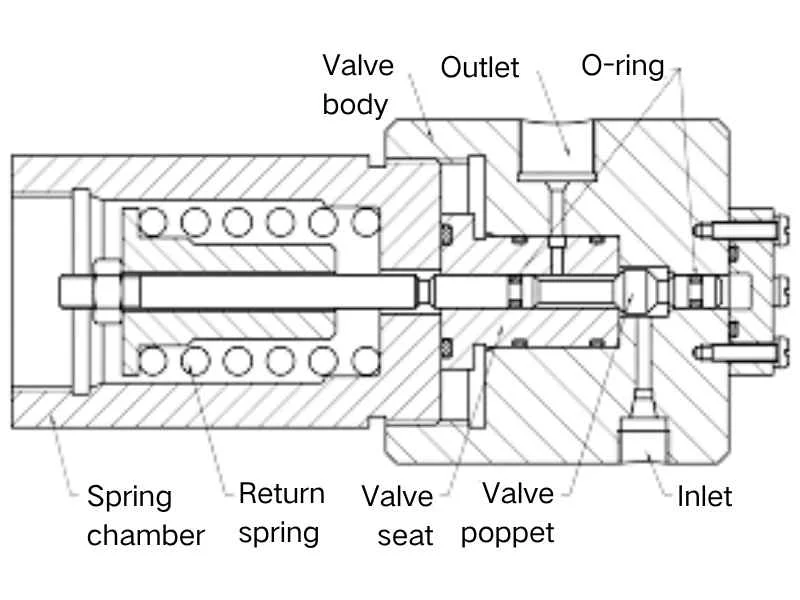
Materials Matched to the Sample Medium
- Acier inoxydable : Common for corrosion resistance and clean process applications.
- Special alloy: Evaluated for aggressive chemicals or demanding temperature conditions.
- Compatible soft seals: Selected for chemistry, pressure, temperature and cleaning media.
- Metal seating: Considered for compatible high-temperature or demanding service.
- Internal finish: Specified where cleanliness or residue control is important.
- Low-retention flow path: Helps reduce stale material and cross-contamination.
Final material and surface requirements should be confirmed using complete process, cleaning and sample-quality data.
Application Matrix
Typical Sampling Valve Applications
| Industry or System | Typical Sample | Sampling Objective | Key Selection Concern |
|---|---|---|---|
| Traitement chimique | Acids, solvents and process intermediates | Composition and reaction monitoring | Corrosion, toxicity and containment |
| Raffinage | Hydrocarbons and process liquids | Quality and operating-condition verification | Pressure, volatility and exposure |
| Tank farms | Stored liquids and blended products | Inventory quality confirmation | Stratification and sample location |
| Production d'électricité | Boiler water, steam condensate and chemicals | Water-chemistry monitoring | Temperature, pressure and cooling |
| Traitement de l'eau | Treated water, sludge and dosing chemicals | Process and discharge verification | Solids, contamination and cleaning |
| Mining and minerals | Slurry and process suspension | Solids and composition analysis | Particle distribution and blockage |
| Powder processing | Dry powder and granular material | Batch and product-quality verification | Flowability, dust and representative sampling |
Selection Checklist
Information Required for Sampling Valve Selection
Process & Sample Data
- Medium name and complete composition
- Liquid, gas, slurry, powder or mixed phase
- Operating and design pressure
- Operating, cleaning and sterilization temperature
- Viscosity, solids content and particle size
- Required sample volume and frequency
Installation & Safety Data
- Pipeline, tank or vessel connection
- Open or closed sample collection
- Required purge, flush, vent or return path
- Hazardous, toxic, volatile or hot-medium conditions
- Sample bottle or cylinder connection
- Manual or automated operating sequence
Manufacturer Support
From Sampling Objective to Final Configuration
1. Process Review
We review the medium, pressure, temperature, phase, solids and sampling objective.
2. System Selection
The valve, collection method, materials, purge and conditioning features are evaluated together.
3. Control Selection
Manual or automated operation, interlocks, feedback and sequence requirements are configured.
4. Documentation
Approved drawings, technical data and inspection documents are prepared for the order scope.
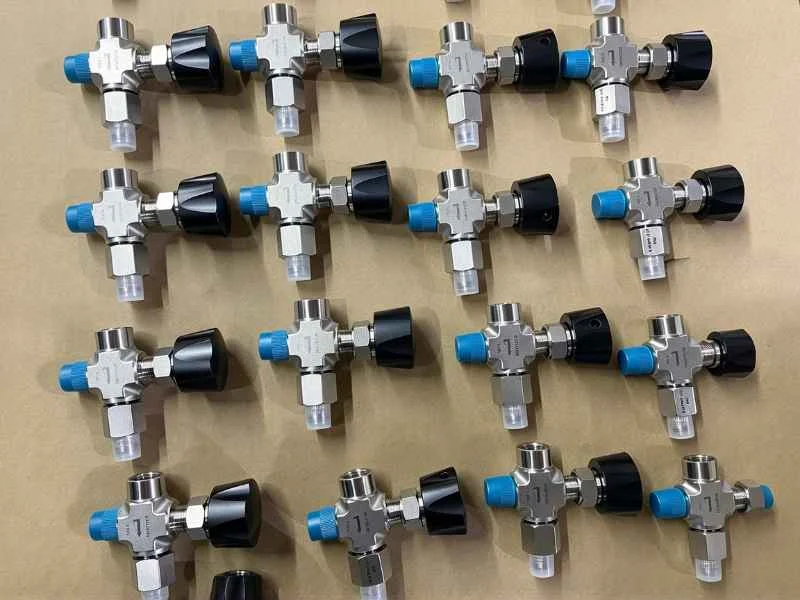
Quality Control
Inspection Before Shipment
Inspection and testing are completed according to the selected model, approved specification and purchase-order requirements.
- Material and component verification
- Dimensional and visual inspection
- Internal flow-path inspection
- Valve opening and closing checks
- Pressure and leakage testing where specified
- Purge, flush and vent function checks
- Actuator and feedback verification where required
- Cleaning, marking and packing inspection
Installation & Operation
Build a Safe and Repeatable Sampling Procedure
Installation
- Select a representative sampling point
- Maintain safe operator access
- Support connected tubing independently
- Connect vent and drain paths correctly
- Confirm sample-container clearance
Commissioning
- Confirm valve and tubing cleanliness
- Verify the operating sequence
- Test flushing and purging functions
- Check sample flow and pressure
- Train operators on the approved procedure
Maintenance
- Inspect seats, seals and sample tubing
- Remove residue from the sample path
- Verify vent and purge connections
- Monitor leakage and operating force
- Replace service parts at planned intervals
Send Us Your Sampling Data
Provide the medium, pressure, temperature, phase, solids conditions, required sample volume, collection method, installation point and cleaning procedure. Our engineers will help configure a suitable sampling valve.
Questions fréquemment posées
Sampling Valve FAQ
What is a sampling valve?
It is a valve designed to withdraw a controlled sample from a live pipeline, tank, reactor or process vessel.
What makes a sample representative?
The sampling location, process mixing, flow conditions, purge volume and collection procedure must reflect the material being evaluated.
When is closed-loop sampling recommended?
It should be considered when uncontrolled exposure, emissions, contamination or product loss must be reduced. A process-safety review remains necessary.
Can a sampling valve handle slurry?
Suitable designs can be evaluated using viscosity, solids concentration, particle size, settling behavior and flushing requirements.
How can a high-temperature sample be collected?
A compatible sample cooler may be required. Process pressure, cooling duty, phase change and safe discharge temperature must be evaluated.
Why are purging and flushing important?
They can remove stale process material, reduce cross-contamination and clean the sampling path between collection cycles.
Can BCST provide automated sampling valves?
Yes. Pneumatic operation, switches, solenoids, interlocks and position feedback can be evaluated for automated sampling sequences.
What information is required for quotation?
Provide the medium, phase, composition, pressure, temperature, solids data, sample volume, sampling frequency, installation point, container connection and cleaning method.
 English
 Arabic
 Russian
 French
 Spanish