
Imagine this: a critical line fails. You rush to the warehouse for the backup gate valve, the one that’s supposed to save the day, only to find its handwheel is seized solid with rust.
Making sure your backup gate valves actually work means following a clear plan. You need a clean, dry spot, the right storage position, and a simple but regular check-up routine. This stops problems like rust and seizing before they start.
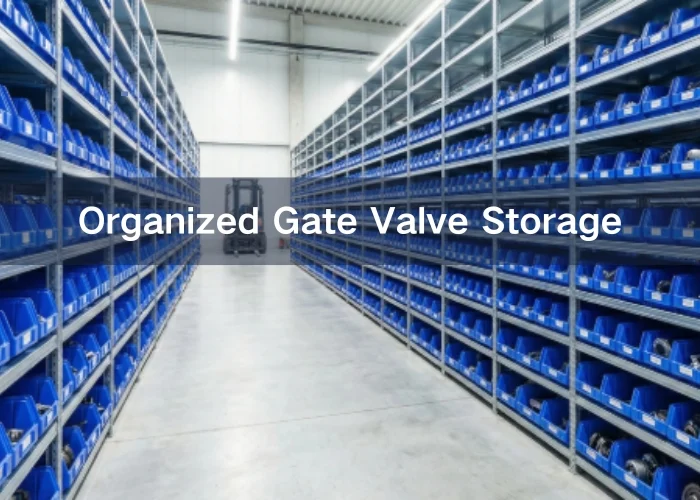
My father, who started this valve company, always said that a valve’s life begins in the warehouse, not in the pipeline. Its first job is just to be ready. I’ll never forget a client who lost a shocking amount of money because of one simple mistake. Their backup valve was stored on its side in a damp corner. When an emergency shutdown happened, the stem was so corroded it wouldn’t open. That experience stuck with me. It’s why I want to share these practices, so you can make sure your backup plan actually works when you need it most.
Proper Storage and Maintenance of Vannes à guillotine Is Critically Important.
Those valves on the warehouse shelf look fine. But out of sight, moisture and dust are working away. They create rust and seizure, problems you won’t find until you’re in an emergency.
Proper care does three things: it protects the money you spent, keeps you running without expensive shutdowns, and makes sure you pass safety inspections. It makes a stored valve a true safety net for your plant, and it all comes down to knowing how to properly store and maintain backup gate valves.
A colleague of mine, Hassan, is a Chief Engineer who designs entire petrochemical plants. He has a great saying: “The moment we neglect a spare, we introduce an unknown risk into our safety plan.” He’s absolutely right. The safety of your whole operation depends on every single part, especially the ones waiting on the shelf. Here’s a breakdown of why this is so important for your budget and your people.
Protecting Your Financial Investment
A gate valve, particularly a large or special-alloy one, costs a lot of money. Leaving it unprotected is like leaving cash out in the rain. Rust eats away at the flange faces, creating leak paths. Pitting creates weak spots in the valve’s body, and dirt gets inside and scratches up the internal seals until they no longer close properly. A valve that should have served you for years is ruined by a few months of bad storage. When you invest in a quality valve, a little effort to protect it in storage pays for itself by making sure you don’t have to buy the same valve twice.
Ensuring Operational Readiness
Nobody wants downtime. When a valve in the line fails, every minute of shutdown costs you money in lost production. Your backup gate valves are meant to be the quick fix that gets you back online fast. But if you grab a valve from the warehouse and find it’s stuck or damaged, your quick fix just became a big headache. You will lose hours, or even days, trying to find a working replacement. Good storage and maintenance mean your backup is ready to install and operate perfectly, turning a potential crisis into a small hiccup. This focus on readiness is a core part of how to properly store and maintain backup gate valves.
Maintaining Safety and Compliance
In plants that handle chemicals or oil and gas, a valve failure is a major safety issue. A backup valve that fails to open or close during an emergency has catastrophic consequences. This leads to spills, damaged equipment, or worse, injuries to personnel. Safety regulators have firm rules about equipment being in good working order, and that includes your spares. Having a clear, documented program for storing and maintaining your backup gate valves shows you are serious about safety. It’s not just for compliance; it’s about protecting your team.
| Aspect | Cost of Proper Storage (Annual) | Potential Cost of Failure (Per Incident) |
|---|---|---|
| Financial | Low (Cost of desiccants, shelving, labor for checks) | High (Cost of a new valve + emergency shipping) |
| Operational | Negligible (A few hours of labor per year) | Very High (Lost production revenue from downtime) |
| Sécurité | Minimal (Cost of safety check procedures) | Catastrophic (Fines, cleanup costs, potential litigation) |
Here Are the Key Steps for Properly Storing Backup Gate Valves.
You have the backup valve, but just putting it in the warehouse isn’t enough. An incorrect position or a damp environment is silently ruining its internal components, setting you up for failure.
Get your valve into a clean, dry room with a stable temperature. Before you store it, clean and lubricate it. Stand it upright, put the flange covers on, and keep it away from moisture and impacts.
This topic always takes me back to my first years working in our factory. I used to watch our quality control team get valves ready for long-term storage or shipment. They handled each one with such care. It wasn’t just about wrapping it up; it was a checklist of steps to protect the valve’s integrity. They knew it would sit for years before being needed, and they prepped it to be perfect on that day. Let’s go through the same professional process.
Step 1: Create the Ideal Storage Environment
It all starts with where you put the valve. Never store your backup gate valves outside where they’re exposed to the elements. The right place is a warehouse that is secure from rain, sun, and big temperature changes.
- Propreté : Keep the area free of excess dust and chemicals. Fine dust gets into the packing around the stem and acts like sandpaper when the valve is finally used.
- Humidity Control: Moisture is the enemy. Keep the relative humidity below 50%. In very humid areas, a dehumidifier or large desiccant packs placed near the valves make a huge difference in preventing rust.
- Température : A stable temperature is best. Big swings between hot and cold cause metal parts to expand and contract, which stresses the valve and makes seals and gaskets brittle.
Step 2: Prepare the Gate Valve for Storage
Prepping the valve before it goes on the shelf is a critical step. Do not skip it.
- Nettoyage : The valve needs to be spotless, inside and out. Any leftover grease, dirt, or moisture from shipping must be wiped away. Use a light to look inside the valve ports to make sure they are clear.
- Lubrification : Follow the manufacturer’s guide to apply the right lubricant to the stem threads and any other external moving parts. For the inside, especially with carbon steel valves, a light coating of a rust-inhibiting oil offers great protection.
- Positioning: Put the valve in the fully closed position before storing it. This pulls the gate up tight and shields the delicate sealing surfaces from the air and from getting bumped or scratched.
Step 3: Ensure Correct Positioning and Protection
How you set the valve on the shelf matters a lot.
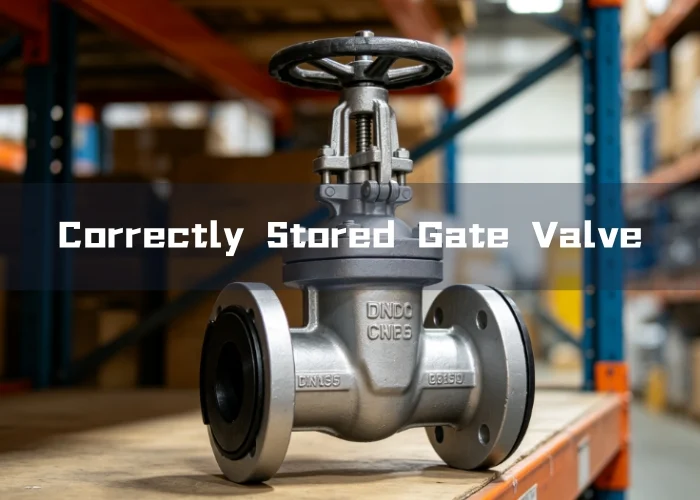
- Orientation: Always store gate valves upright, with the handwheel pointing up. Never lay them on their side. When a valve is on its side, its own weight puts stress on the stem and bonnet gasket. It also causes the internal gate to shift and get damaged.
- Bride Protection: Use strong flange protectors that fit snugly. These plastic or wood covers are not just for shipping; they keep the sealing face of the flange from getting nicked or scratched, and they block dirt from getting inside the valve.
- Stem and Handwheel: The stem is a critical and surprisingly fragile part. Storing the valve upright keeps it safe, but also make sure it’s not in an aisle where a forklift will hit it.
| Do’s of Gate Valve Storage | Don’ts of Gate Valve Storage |
|---|---|
| DO store indoors in a clean, dry warehouse. | DON’T store valves outside or in damp conditions. |
| DO store the valve upright on a pallet or shelf. | DON’T lay the valve on its side or on the ground. |
| DO keep the valve in the fully closed position. | DON’T store the valve partially or fully open. |
| DO use sturdy flange covers and protect the stem. | DON’T stack valves on top of each other without proper structure. |
| DO apply lubricant & rust inhibitors before storage. | DON’T assume the factory coating is enough for years of storage. |
Follow This Ultimate Maintenance Checklist for Stored Gate Valves.
Your valve is stored correctly, so you can just forget about it, right? Wrong. In storage, gaskets dry out, lubricant degrades, and hidden corrosion starts to form.
You need a simple maintenance routine. Regularly look for rust, turn the handwheel a little to keep it from sticking, check the lube, and make sure the protective covers are still doing their job. This guarantees the valve is ready to go.
A simple routine makes sure nothing is missed. My friend Hassan set up a great system in his plant. He used color-coded tags on all the spare equipment. A new color for each quarter. This let his team see at a glance when a valve was last inspected. A system like that takes out the guesswork and ensures every backup is ready to perform. A checklist is your best tool for building this habit. It is the most practical part of how to properly store and maintain backup gate valves.
Quarterly Checks (Every 3 Months)
Do these quick visual checks to catch problems early.
- Inspection visuelle : Walk by and look at each valve. Look for any new spots of rust on the body or handwheel. Check if the paint is peeling or chipped. Look for any stains around gaskets that signal a degrading seal.
- Environment Check: Double-check that the storage area is still clean and dry. If you use desiccant packs, see if they’ve changed color, which means they are full of moisture and need to be replaced.
- Protector Check: Make sure the flange covers are on tight and aren’t broken. If the valve is wrapped in plastic, make sure it’s not torn or trapping visible moisture inside.
Bi-Annual Checks (Every 6 Months)
Every six months, you need to get a little more hands-on.
- Operate the Valve: This is the most important step. Turn the handwheel to move the gate about 25% of its way open, and then turn it back to fully closed. If it takes 20 turns to fully open the valve, just turn it 5 times and then back. This does two things: it keeps the packing material from getting hard and seizing the stem, and it makes sure the gate isn’t stuck. Do not open it all the way unless you’re about to install it.
- Lubrification : Add a fresh coat of lubricant to the stem threads and the yoke sleeve. This keeps the valve easy to operate and stops rust on the most important moving parts.
Annual / Pre-Deployment Checks
Once a year, or right before you plan to install a valve, do a more thorough check.
- Full Cycle Operation: Turn the handwheel to open the valve all the way, then close it all the way. You should feel smooth, consistent resistance. This confirms nothing is blocking it internally.
- Packing Gland Check: As you turn the handwheel, look closely at where the stem comes out of the valve body. If you see a leak, gently tighten the packing nuts on either side (just a quarter-turn at a time) until it stops. Do not crank them down, or you will make the valve too hard to turn.
- Detailed Inspection: Take off a flange cover and use a good flashlight to look inside. Check for any debris, rust, or moisture. If you find anything, the valve needs to be cleaned out and prepared for storage all over again.
| Maintenance Task | Frequency | Key Purpose |
|---|---|---|
| Visual Inspection for Corrosion | Quarterly | Catch early signs of environmental damage. |
| Check/Replace Desiccants | Quarterly | Ensure humidity control is effective. |
| Partial Cycle (25% travel) | Bi-Annually | Prevent packing seizure and sticking. |
| Re-lubricate Stem & Yoke | Bi-Annually | Ensure smooth operation and prevent corrosion. |
| Full Cycle Operation | Annually / Pre-Deployment | Confirm full mechanical functionality. |
| Check Packing Gland | Annually / Pre-Deployment | Prevent leaks upon installation. |
Of course, a good maintenance plan works best when you start with a great valve. My father built our business, BCST Valve, on the principle that quality comes first. We make our gate valves with high-quality materials and precise engineering so they can stand up to years of service and years of storage. Investing in a BCST valve is an investment in reliability.
Questions fréquemment posées
What’s the single most important thing when storing a gate valve?
Keeping it clean and dry is the most important thing. Moisture is the number one enemy because it causes rust, which seizes a valve and damages the seals. An indoor, controlled space is a must.
Can I store gate valves outside if they are wrapped in plastic?
No, you must not. Wrapping a valve and leaving it outside makes things worse. The plastic traps moisture and humidity, creating a small greenhouse that actually speeds up corrosion.
How much should I turn the handwheel during maintenance checks?
For the six-month check, turn the handwheel just enough to move the gate about 25% of its total travel, then close it again. This is enough to keep things moving without fully unseating the gate.
Why is storing the valve in the “closed” position so important?
Storing a gate valve closed protects the most important parts—the internal sealing surfaces. It shields them from air, dust, and any accidental damage, keeping them pristine until the valve is needed.
Dernière réflexion
Think of your storage and maintenance plan not as a cost, but as insurance for your plant’s safety and production. Following these steps means you’re always ready. When you need valves built for that kind of reliability, we at BCST are here to help.


 English
 Arabic
 Russian
 French
 Spanish