
Your production line stops. A soupape failed. Every minute costs money. Your team scrambles to fix it. Management wants answers. This happens when you pick the wrong valve technology.
Pneumatically operated valves use compressed air to open and close automatically. They control fluid flow in pipelines fast and reliably. These valves handle simple on/off switching or precise flow control in automated systems.
My father started our valve business from scratch. I grew up watching him solve flow control problems for clients. After university, I spent months on the factory floor learning how valves are made. Now I help facilities worldwide pick the right technology. Let me show you why pneumatic valves might be what you need.
Why does every process need proper valve control?
Walk through any plant. You’ll see pipes everywhere. Water, chemicals, steam, gases – they all flow through these pipes. Valves control that flow. Without them, you can’t start production. You can’t stop safely. You can’t regulate anything.
Manual valves worked fifty years ago. An operator walked to the valve. Turned a handwheel. Simple. But modern processes can’t wait for someone to walk across the plant. You need instant response. You need automation.
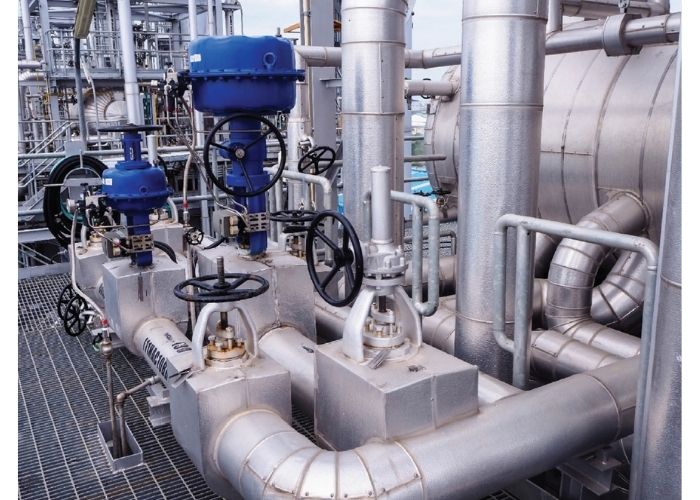
Pneumatically operated valves give you automation. Compressed air powers an actuator on the valve. The actuator moves the valve open or closed on command. Response time? Under two seconds.
I visited a food plant last year. They had manual valves on ingredient lines. Operators kept adjusting them. Trying to maintain recipe proportions. Batch consistency was terrible. We installed pneumatically operated control valves. Tied them to the recipe system. Batch variation dropped from 8% to under 1%. Product quality jumped.
Safety drives many valve decisions. When something goes wrong, valves must close instantly. Pneumatic actuators slam valves shut in under a second. That speed stops small problems from becoming disasters.
Oil and gas learned this decades ago. They use pneumatically operated emergency shutdown valves everywhere. One client told me their ESD valves prevented a major release. Heat exchanger failure. The valves closed in 0.8 seconds. That difference matters when flammable material escapes.
How do these valves work?
Simple concept. Two main parts. The valve body and the pneumatic actuator.
The valve body sits in your pipeline. Inside is a closure element. Could be a ball. A butterfly disc. A plug. A gate. This element moves to control flow.
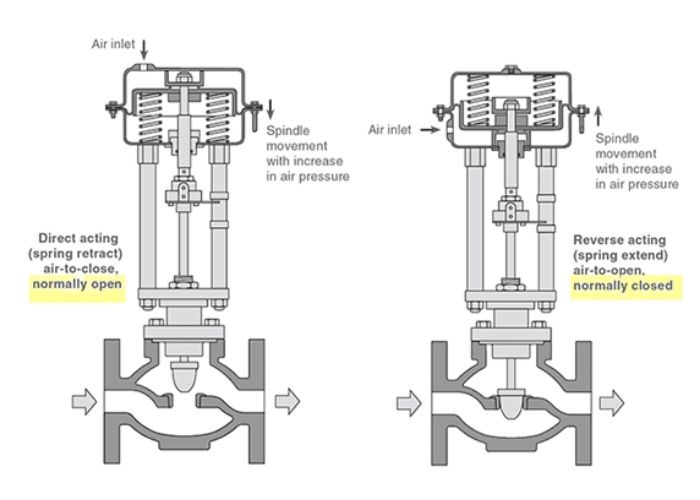
The pneumatic actuator bolts on top. It’s a cylinder. Piston or diaphragm inside. Compressed air enters one side. Air pressure pushes the piston down. The piston connects through a stem to the closure element. Piston moves. Valve opens or closes.
You control the air two ways. Solenoid valve for simple on/off. Positioner for precise control. Solenoid switches air on or off. Air on – valve opens. Air off – spring returns valve to closed. Positioner regulates air pressure based on a control signal.
Spring-return actuators include a spring. Pushes the valve to a safe position if you lose air. You choose fail-closed or fail-open. Based on what’s safer for your process. This built-in safety is why chemical plants prefer pneumatic valves.
Air supply needs are modest. Most actuators work with 60-80 PSI. Larger valves might need 100-120 PSI. Your existing plant air usually handles this.
What types should you choose?
Different designs do different jobs. Pick wrong and you get problems.
Vanne à billes use a sphere with a hole through it. Rotate 90 degrees. Goes from fully open to fully closed. They seal tight. Almost zero leakage. I recommend these for reliable isolation. Perfect for emergency shutdown. Anywhere tight shutoff matters.
Vannes papillon cost less. Weigh less. A disc rotates quarter-turn. Opens and closes. They’re compact. Fit between flanges easily. Large butterfly valves cost a fraction of gate valves. Use these for water systems. HVAC. Low-pressure services where some leakage is okay.
Robinets à soupape excel at flow regulation. The plug moves up and down. Perpendicular to flow. Gives you excellent throttling control. Trade-off is higher pressure drop. Choose globe valves when you need precise flow control.
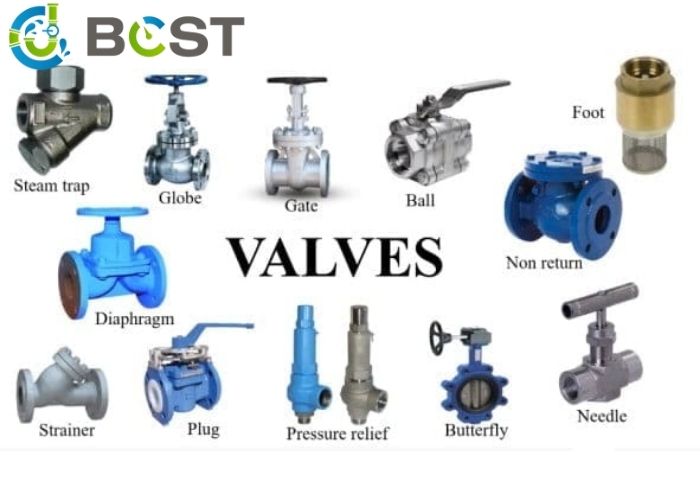
Vannes à guillotine provide straight-through flow when open. Minimal pressure drop. Ideal for main line isolation. They’re for infrequent operation. Either fully open or fully closed. Never throttle with gate valves. The gate edge erodes quickly.
Vannes à membrane isolate the actuator completely. Flexible diaphragm does it. No stem packing. Zero leakage potential. They handle slurries. Corrosive chemicals. Dirty fluids. Pharmaceutical and food plants love these. Easy to clean and sterilize.
Vannes de contrôle are built for precise regulation. Include a positioner for accurate positioning. Special trim designs handle different flow characteristics. These are what you need for automated process control.
| Type de vanne | Best Application | Main Advantage |
|---|---|---|
| Soupape à bille | Isolation, ESD | Tight shutoff, fast operation |
| Vanne papillon | Large lines, low pressure | Low cost, compact |
| Robinet à soupape | Régulation du débit | Precise throttling |
| Vanne à guillotine | Main line isolation | Perte de charge minimale |
| Vanne à membrane | Corrosive fluids, slurries | Zero stem leakage |
| Valve de contrôle | Process automation | Accurate modulation |
What makes pneumatique valves so popular?
Good reasons drive their popularity.
Efficacité énergétique. Most facilities already have compressed air. You’re not adding new infrastructure. Air compressors that run other equipment supply your valve actuators too.
Safety is built in. Air is non-flammable. Non-toxic. In explosive atmospheres like refineries, pneumatic actuation eliminates spark risks. A leak sprays harmless air. Not flammable hydraulic oil.
Fast response protects your process. Emergency requires immediate action. Pneumatic actuators respond in under a second. One refinery had a heat exchanger tube rupture. Their pneumatically operated emergency valves isolated the unit in 0.9 seconds. Contained the release before it got serious.
Maintenance stays simple. Most repairs use basic o-rings and seals. Any technician can replace them. Many repairs happen inline. Don’t even remove the valve. One chemical plant told me maintenance hours dropped 40% after switching to pneumatic actuators.
Rentabilité over years. Initial costs run moderate. Operating costs stay low. Compressed air is inexpensive. Simple design keeps maintenance costs down. Total ownership cost beats alternatives.
Versatile. Works with any control system. Simple on/off uses solenoid valves. Precise control uses positioners. Accepts standard 4-20mA signals or digital protocols.
Where do industries use these valves?
Different industries have different needs.
Oil and gas uses them for pipeline control. Emergency shutdown. High-pressure lines need large valves. Must close quickly. Offshore platforms choose pneumatic over electric. Inherently safe in explosive atmospheres.
Traitement chimique needs precise control. Reactive materials. Pneumatically operated control valves handle corrosive services. One specialty chemical manufacturer reduced batch rejects from 5% to under 1%. After upgrading to pneumatic control valves.
Water and wastewater facilities run thousands of valves. Pneumatically operated butterfly valves control flow economically. Diaphragm valves handle sludge. Don’t clog. Remote locations benefit. Pneumatic systems are simpler to maintain.
Alimentation et boissons has strict hygiene. Pneumatically operated diaphragm valves with sanitary connections meet these needs. CIP and SIP systems depend on automated valves. Won’t harbor bacteria.
Fabrication de produits pharmaceutiques requires sterile handling. Pneumatically operated valves with electropolished surfaces. Minimal dead space. Prevent contamination. Positioner feedback provides validation documentation. Regulatory agencies demand it.
Production d'électricité uses pneumatic valves for steam control. Safety. Boiler feedwater. Turbine bypass. Extraction steam. All rely on fast-acting pneumatic valves. Harsh environment demands robust actuators. They keep working.
| L'industrie | Key Applications | Why Pneumatic Works |
|---|---|---|
| Pétrole et gaz | Pipeline isolation, emergency shutdown | Fast response, intrinsically safe |
| Chimique | Batch control, ingredient dosing | Precise positioning, corrosion resistant |
| Traitement de l'eau | Process control, sludge handling | Handles dirty fluids, low maintenance |
| Alimentation et boissons | CIP/SIP, product transfer | Hygienic design, easy cleaning |
| Pharmaceutique | Sterile processing, validation | Documentation capability, no contamination |
| Production d'électricité | Steam control, safety systems | High temperature capability, reliable |
How do you select the right valve?
Evaluate your specific conditions.
Fluid characteristics come first. What are you controlling? Liquid, gas, or slurry? Corrosiveness determines materials. Water works with stainless steel. Aggressive acids need exotic alloys. Maybe plastic construction.
Conditions de fonctionnement define your envelope. Maximum pressure? Temperature range? Standard actuators handle up to 300°F with direct mounting. Higher temperatures need extended bonnets.
Flow control requirements matter. Simple start/stop? Ball or butterfly valve works. Need to regulate within 2%? You need a control valve with positioner.
Actuation speed matters for safety. Emergency shutdown might need closure under one second. Normal control can accept 2-5 seconds.
Safety requirements determine fail-safe setup. Would valve failure create a hazard? Choose fail-closed or fail-open. Based on what’s safer.
Industry standards often dictate requirements. Food applications need 3-A sanitary certification. Hazardous areas require ATEX or IECEx certification. Make sure your selection meets standards.
Why quality and durability matter
Quality soupapes protect your operation. You don’t see it until something breaks.
Quality valves maintain flow characteristics over years. Cheap valves wear quickly. Change their flow curves. Throw off your control. I’ve troubleshot process problems. Traced to worn valve trim. No longer matched control algorithms.
Service life impacts your budget. Quality pneumatically operated valves run 15-20 years. Minimal maintenance. Budget valves need replacement in 3-5 years. One client calculated savings. $120,000 over ten years. By specifying quality valves initially.
Safety depends on reliable operation. A failed isolation valve during maintenance exposes workers to hazards. A stuck relief valve provides no protection. Quality construction prevents these failures.
Downtime costs dwarf valve costs. An unplanned shutdown might cost $50,000 per hour. Lost production. A $5,000 quality valve prevents this. Pays for itself immediately.
For reliable pneumatically operated valves backed by technical expertise, THINKTANK offers proven solutions. All industrial applications. Wide product range. Experienced engineering support. Commitment to quality. You get valves that perform reliably for years.
Conclusion
Pneumatically operated valves provide automated flow control. Modern industrial processes demand it. Fast response. Inherent safety. Reliable performance. This makes them the choice across oil and gas. Chemical processing. Water treatment. Food production. Pharmaceuticals. Power generation. Choose the right valve type for your application. Specify quality components. Work with experienced suppliers. Your operation runs efficiently and safely.


 English
 Arabic
 Russian
 French
 Spanish