
You need to control flow in a massive, high-pressure line. A standard valve would be enormous, slow to respond, and demand a hugely powerful actuator. The entire approach feels impractical and clumsy.
A pilot operated valve solves this by using the system’s own pressure as the muscle. A small, sensitive pilot valve acts as the brains, telling this powerful fluid force exactly what to do to control a much larger main valve, turning brute force into precisely controlled power.
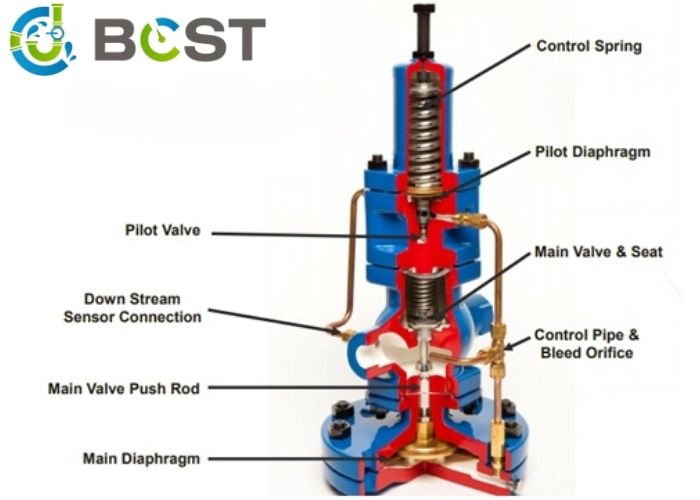
How Does a Tiny Pilot Tell a Giant Valve What to Do?
You look at the size difference between the pilot and the main valve, and it just doesn’t seem possible. How can a small part create enough force to move a huge piston against massive system pressure?
The pilot doesn’t provide the force. Think of it as a strategic gatekeeper. It opens or closes small passages that direct the high-pressure fluid. This fluid either builds up on, or vents from, the main valve’s actuator, creating a powerful pressure imbalance that does all the heavy lifting.
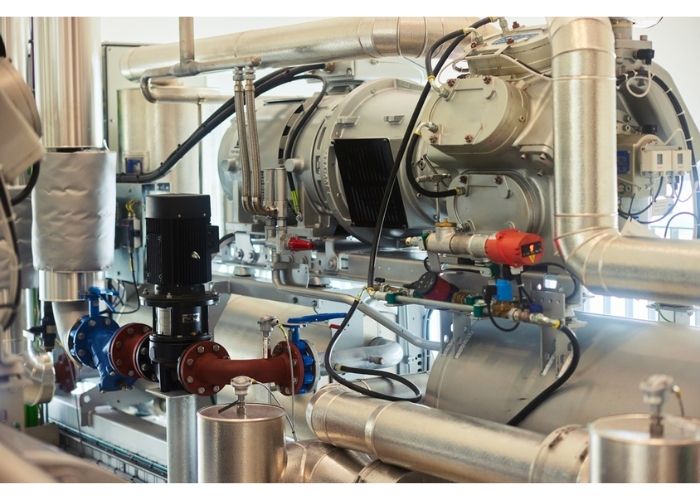
Harnessing System Pressure: The Core Mechanism
To get it, stop thinking of the pilot as a muscle and start thinking of it as a signal director. The real power comes from the pressure difference across the main valve’s internal piston or diaphragm.
The Key Players
- Main Valve: The large body with an internal piston or diaphragm that opens or closes the main flow path.
- Pilot Valve: A small valve (like a solenoid) mounted on the main valve.
- Control Chamber: The area above the piston or diaphragm.
- Pilot Channels: Tiny passages connecting the inlet, outlet, and the control chamber through the pilot valve.
How it Works: The Step-by-Step (on a Normally-Closed Valve)
- Closed: With the pilot closed, a channel lets high inlet pressure fill the control chamber. Since the top of the diaphragm has more surface area than the valve seat, this pressure creates a strong downward force, sealing the valve shut.
- Signal: The pilot gets a signal (like an electric current) and opens.
- Venting: The pilot instantly opens a new path, connecting the control chamber to the low-pressure outlet. The pressure trapped in the chamber immediately escapes.
- Imbalance: Now, high pressure is pushing up from below the diaphragm, and there’s low pressure above it. This creates a massive upward force that lifts the diaphragm and opens the main valve.
- Closing: The signal stops, the pilot closes the vent, and high pressure once again fills the control chamber, pushing the main valve smoothly shut.
This is why pilot operated valves are so effective. They cleverly use the energy already in the pipeline instead of fighting against it with a brute-force actuator.
| Pilot Action | Fluid Path Change | Main Valve Result |
|---|---|---|
| Pilot Receives ‘Open’ Signal | Vents the control chamber to the low-pressure outlet. | Pressure imbalance lifts the piston, valve opens. |
| Pilot Receives ‘Close’ Signal | Seals the vent and pressurizes the control chamber from the inlet. | Forces equalize and push the piston shut, valve closes. |
Are Direct-Acting Valves Ever Better Than Pilot Operated Ones?
You have a choice for your application: a simple direct-acting valve or a more complex pilot operated one. You’re tempted by the lower price, but you’re worried about performance.
Absolutely. Direct-acting valves are the clear winner for low-flow applications, smaller pipe sizes, or in systems with very little or zero pressure difference. A pilot operated valve is superior for high-flow, high-pressure systems where its stable control is worth the initial cost.
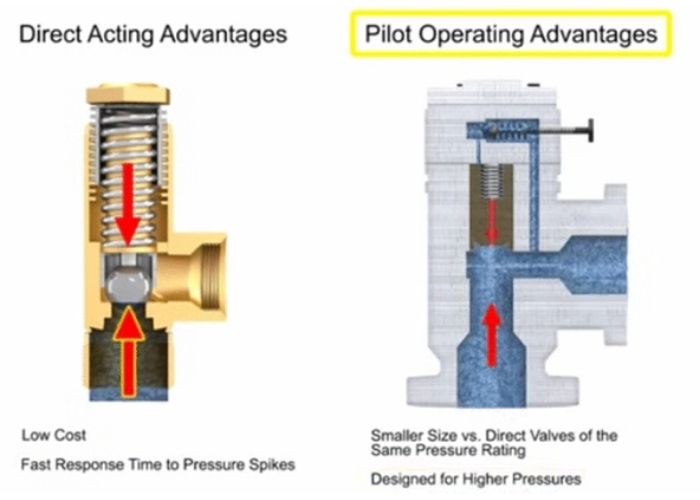
Selecting the Right Tool for the Right Job
Choosing between these two is a fundamental decision. They work on completely different principles, so picking the wrong one leads to poor performance or system failure.
Direct-Acting Valves: Simple and Direct
The actuator (solenoid coil or handwheel) provides 100% of the force needed to fight the system pressure and open the valve.
- The Good: They are simple, with few parts, making them reliable and cheap. Most importantly, they work with zero pressure difference—perfect for vacuum or gravity-fed lines.
- The Bad: Their power is limited. To control high pressure or a large opening, the actuator must be huge, consume a lot of power, and becomes very expensive.
Pilot Operated Valves: Powerful and Efficient
These valves use the system’s own energy. The actuator only needs to be strong enough to open the tiny pilot hole.
- The Good: They control enormous flow rates and high pressures with a small, energy-efficient actuator. They are more cost-effective for larger pipe sizes (typically over 1 inch). They also provide smoother, more stable control.
- The Bad: They require a minimum pressure difference to work. If there is no pressure drop, there is no energy for the pilot to harness, and the valve won’t open. Their small internal passages can also clog with dirty fluids.
| Fonctionnalité | Direct-Acting Valve | Pilot Operated Valve |
|---|---|---|
| Operating Principle | Actuator directly overcomes line pressure. | Actuator controls a pilot; line pressure moves the valve. |
| Min. Pressure Required | Zero. Works anywhere. | Yes. Needs a minimum pressure drop (e.g., 5 PSI). |
| Meilleur pour | Small lines (<1″), low flow, low pressure. | Large lines (>1″), high flow, high pressure. |
| Coût | Cheaper for small sizes. | More economical for large sizes. |
| Complexity | Very simple. | More complex internal passages. |
Why Do Pilot Operated Valve Installations Fail?
You’ve installed a new pilot operated valve, but it isn’t working. It vibrates, won’t open fully, or responds slowly. Before you blame a defective valve, stop. The problem isn’t the valve; the problem is a simple mistake made during selection.
Most failures come down to three simple mistakes: ignoring the minimum pressure drop, oversizing the valve, and picking the wrong materials.
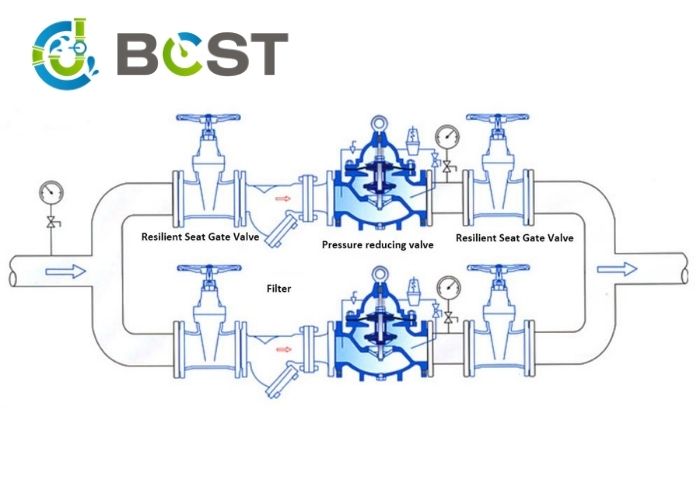
How to Avoid the 3 Common Selection Failures
A pilot operated valve is a precision instrument. To get the performance you paid for, you have to respect its technical requirements.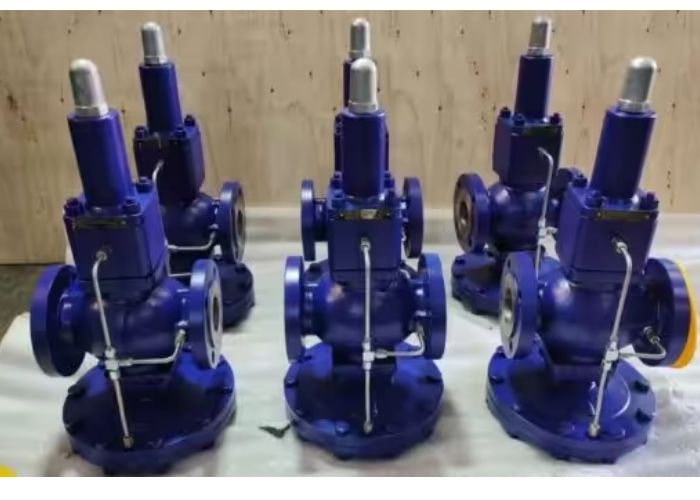
1. The Minimum Pressure Trap
This is, without a doubt, the number one mistake. Every pilot operated valve has a “Minimum Operating Pressure Differential” on its datasheet. If your system pressure drop is below this number, the valve will fail to open or will flutter weakly.
- How to Avoid: Check your system’s lowest possible pressure drop. Ensure it is higher than the valve’s minimum requirement. If it’s not, you must use a direct-acting valve.
2. Sizing is Not Just About the Pipe
Everyone’s first instinct is to match the soupape size to the pipe size (e.g., a 4-inch valve for a 4-inch pipe). This is a trap. An oversized valve trying to control a low flow rate will barely crack open. This creates instability, causing the diaphragm to vibrate loudly against the seat—a “chattering” noise that will destroy the valve.
- How to Avoid: Size the valve based on the flow rate (Cv), not the pipe size. Choose a valve where your normal flow rate falls in the middle of its capacity. It is always better to use a smaller, correctly sized valve than an oversized one.
3. The Devil in the Details: Fluid Compatibility
The fluid touches every internal part. The wrong material for the body or the seals (diaphragms, O-rings) will lead to a swift failure.
- How to Avoid: Check a chemical compatibility chart. Specifically, look at:
- Chemicals: Will the fluid corrode the metal body or eat the rubber seals?
- Température : Can the seal materials handle the heat without getting brittle or soft?
- Debris: If the fluid isn’t clean, install a strainer upstream. Debris will clog the tiny pilot passages and cause the valve to fail.
| Enjeu | Common Selection Mistake | The Fix |
|---|---|---|
| Valve Won’t Open | System pressure drop is below the valve’s minimum. | Choose a valve with a lower minimum, or use a direct-acting valve. |
| Loud Chatter/Vibration | Valve is oversized for the flow rate. | Recalculate Cv and select a smaller, correctly sized valve. |
| Valve Leaks/Fails | Incorrect body or seal material for the fluid. | Consult a compatibility chart and replace with the correct materials. |
Frequently Asked Questions (FAQs)
1. What is the “pilot” in a pilot operated valve?
The pilot is a small, complete valve that controls the pressure signal going to the main valve’s actuator.
2. Do all pilot operated valves need electricity?
No. Only if the pilot is a solenoid. The pilot can also be a self-contained pressure regulator that uses no external power.
3. What happens if the pilot orifice gets clogged with debris?
The main valve will fail in its last position. If it was open, it stays open. If it was closed, it stays closed.
4. Why is minimum pressure drop so important?
It is the energy source the pilot uses. Without a pressure difference, there is no force to shift the main valve’s piston.
Conclusion
In short, pilot operated valves are a clever solution. They use a system’s own power to provide precise, stable control over demanding flows and pressures, making them essential in modern industrial systems.


 English
 Arabic
 Russian
 French
 Spanish