
A prematurely failed Class 2500 control valve tells a story—not of simple wear, but of specific, destructive forces. For maintenance managers, correctly interpreting these valve plug erosion patterns or the tell-tale signs of cavitation damage is crucial. This isn’t just about replacing a part; it’s about identifying the root cause of failure to implement a lasting solution and prevent future downtime.
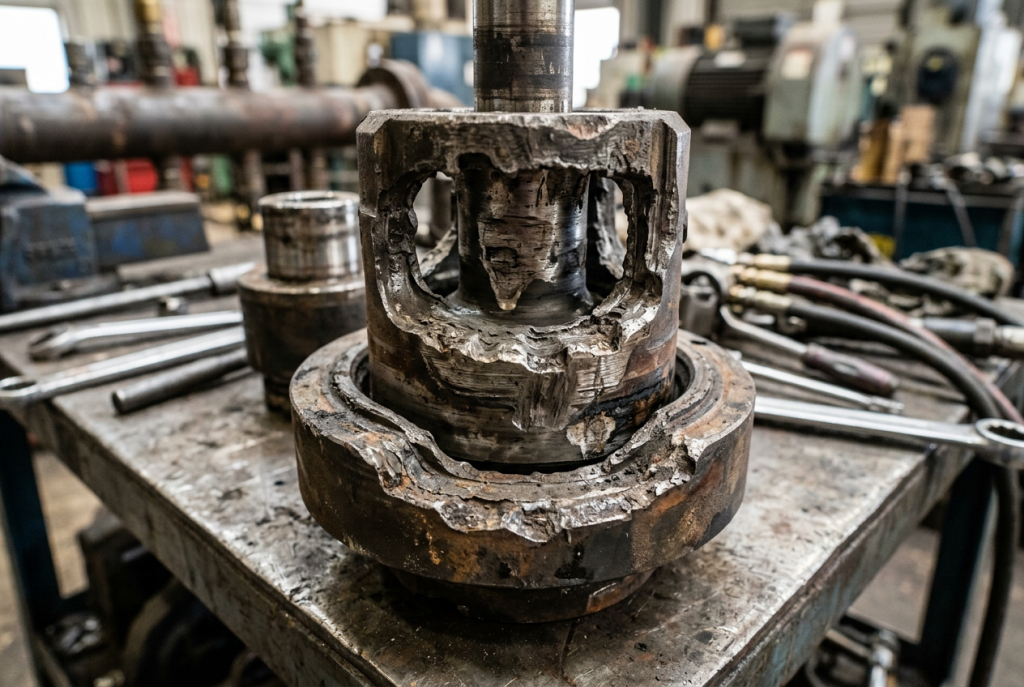
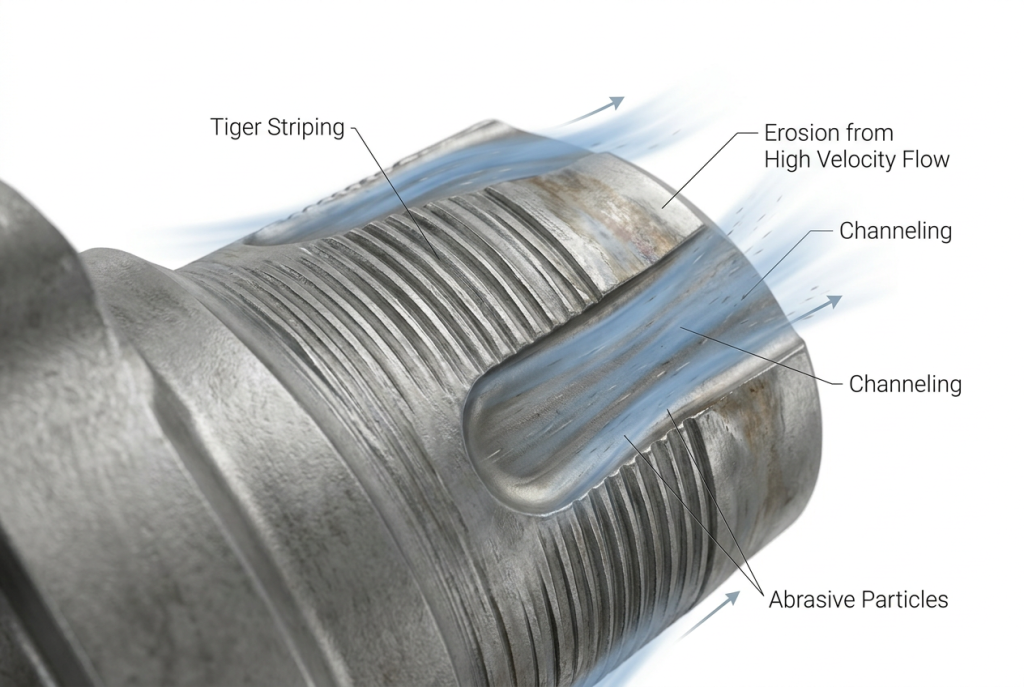
The Hallmarks of Erosion: “Tiger Striping” and Channeling
Erosion is a mechanical wear process caused by the continuous impact and scouring of abrasive particles entrained in the fluid stream, or by high-velocity impacts of the fluid itself. It’s particularly prevalent in Class 2500 valve wear applications handling slurries, dirty gases, or flashing liquids.
Causes and Visual Identification of Erosion Damage
- Supports abrasifs : Hard particles (e.g., sand, rust, catalyst fines) act like sandpaper, grinding away material.
- High Velocity Flow: Even clean fluids can cause erosion at extreme velocities, particularly at the valve plug and seat faces.
- Key Patterns:
- "Tiger Striping“: Distinct, parallel grooves or channels etched into the plug surface, often in the direction of flow.
- Washout/Channeling: Enlargement of the flow area, often appearing as smoothed, U-shaped troughs, especially on the downstream side of the plug or seat.
- Thinning & Perforation: Over time, sections of the trim can wear completely through.
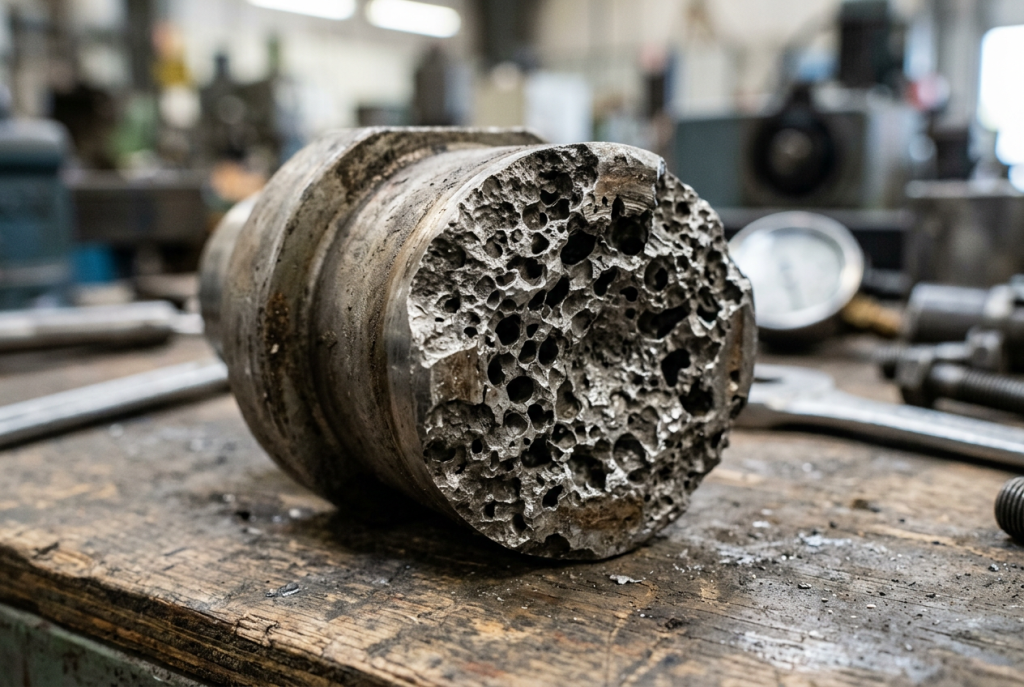
Cavitation’s Signature: Pitting, Craters, and Rough Surfaces
Cavitation occurs when the static pressure of a liquid falls below its vapor pressure, causing localized vaporization (bubble formation). As these vapor bubbles are swept downstream into an area of higher pressure, they rapidly collapse or “implode.” This implosion creates miniature shockwaves that hammer the adjacent surfaces, causing localized fatigue and material removal.
The Cavitation Cycle and Its Destructive Patterns
- Conditions: High differential pressure, liquid close to boiling point, insufficient downstream pressure.
- Key Patterns:
- Pitting & Craters: Small, often circular, deep holes in the metal surface, giving it a honeycombed or “sponge-like” appearance.
- Rough, Spongy Texture: Unlike the smooth wear of erosion, cavitation creates a distinctly irregular, abrasive-feeling surface.
- Material Loss at Exit: Damage is typically concentrated on the downstream side of the restriction (plug, seat, or valve body outlet).
- Audible “Gravel” Sound: In severe cases, a distinctive noise resembling gravel passing through the valve can be heard.
Understanding Pressure: Cavitation is directly linked to the pressure recovery factor (FL) of the valve. A low FL value indicates a high pressure recovery, increasing the likelihood of cavitation. Choosing valves with high FL or multi-stage designs is key to preventing cavitation in high pressure valves.
Engineering Solutions: Material & Design for Service Life
Once the damage pattern is identified, selecting the correct mitigation strategy—through material selection or design changes—is paramount.
Abrasion Resistance: Stellite 6 vs. Tungsten Carbide
For applications where valve trim erosion is the primary concern, hard-facing materials are critical investments. These materials significantly extend service life in abrasive conditions.
| Hard-Facing Material | Composition & Properties | Primary Use for Erosion | Hardness (HRC) |
|---|---|---|---|
| Stellite 6 valve trim | Cobalt-chromium alloy; good high-temp resistance | Clean steam, moderate abrasion, high temps | 40-48 |
| Tungsten Carbide valve trim | Tungsten + Carbon matrix; ceramic-like hardness | Severe abrasion, slurries, flashing dirty service | >70 |
Conquering Cavitation: The Role of Caged-Guided Trims
To effectively prevent cavitation in high pressure valves, especially Class 2500 control valves, specialized trim designs are essential. The caged-guided valve cavitation prevention design isolates the high-velocity, low-pressure zones from the main body and sealing surfaces.
These trims use tortuous flow paths, multiple restrictive stages, or internal diffusers to manage pressure drops gradually, keeping the liquid pressure above its vapor pressure throughout the valve. This prevents bubble formation and the destructive implosions of cavitation.
Conclusion: Enhancing Service Life Through Data-Driven Solutions
Understanding the specific valve plug erosion patterns and cavitation damage signatures in your Class 2500 control valves is the first step towards significantly improving service life and reducing operational expenditure. Through diligent forensic valve analysis, engineers can apply targeted solutions from selecting advanced materials like Tungsten Carbide valve trim for abrasive service to implementing caged-guided valve cavitation prevention designs.
BCST Valve specializes in engineering high pressure valves with optimized trim designs and material specifications to withstand the harshest industrial conditions. Our goal is to provide reliable solutions that extend the operational life of your control valves, turning unpredictable failures into predictable, manageable maintenance cycles.
Diagnose Your Valve Failures with Expert Insight.
Submit photos of your damaged valve trim for a preliminary assessment, or request a consultation on engineered solutions.


 English
 Arabic
 Russian
 French
 Spanish