
High Pressure Control Valves For Severe Service & Cavitation Control
Hardened stainless steel trim, multi-stage anti-cavitation cages, and erosion‑resistant construction for boiler feedwater, let‑down stations, pump recirculation, and high‑ΔP applications up to 2500 psi.
- Iso 9001 certified
- Fast Global Delivery
Our Core Products
A high pressure control valve is a specialized flow regulation device engineered to withstand extreme differential pressures, cavitation, flashing, and erosive media that would quickly destroy standard globe or ball valves. The hardened stainless steel trim and multi-stage pressure reducing cages dissipate energy across multiple controlled pressure drops, preventing trim erosion, damaging vibration, and excessive noise. Unlike conventional control valves that suffer from cavitation damage and short service life under high ΔP conditions, high pressure control valves maintain stable throttling, tight shut-off, and long-term reliability in boiler feedwater recirculation, pump minimum flow protection, let-down stations, and high-pressure chemical injection systems.
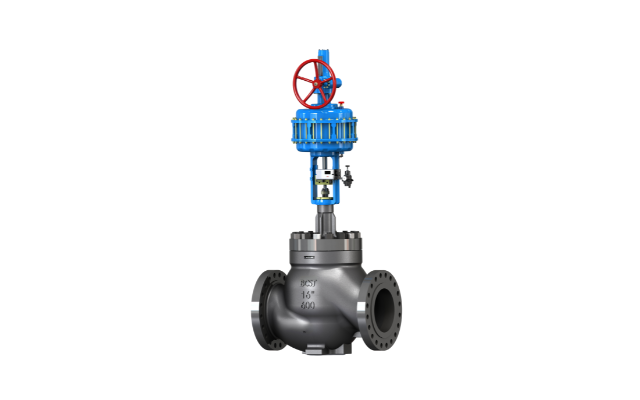
Vannes de régulation à soupape
Unbalanced Plug Tight Shutoff Technology
Single-seated globe valves utilize a single valve plug that seats against one sealing surface, providing exceptional shutoff capability with metal-to-metal or soft-seated contact that achieves bubble-tight closure in small-to-medium flow applications. These precision-engineered control valves feature unbalanced plug designs where full line pressure acts on the closed plug area, requiring higher actuator forces but delivering superior leak-tightness (ANSI Class IV, V, or VI) compared to balanced alternatives. Single-seated globe valves excel in critical isolation service, precision throttling applications, and processes where zero leakage is mandatory for safety, environmental compliance, or product quality requirements.
Key Features
- Bubble-tight shutoff capability
- Single sealing surface design
- Exceptional leak-tightness (Class VI)
- Contrôle précis du débit
- Metal or soft seat options
Applications typiques
- Critical isolation service
- Small-to-medium flow control
- Zero-leakage requirements
- Safety instrumented systems
- Precise throttling applications
Vannes papillon
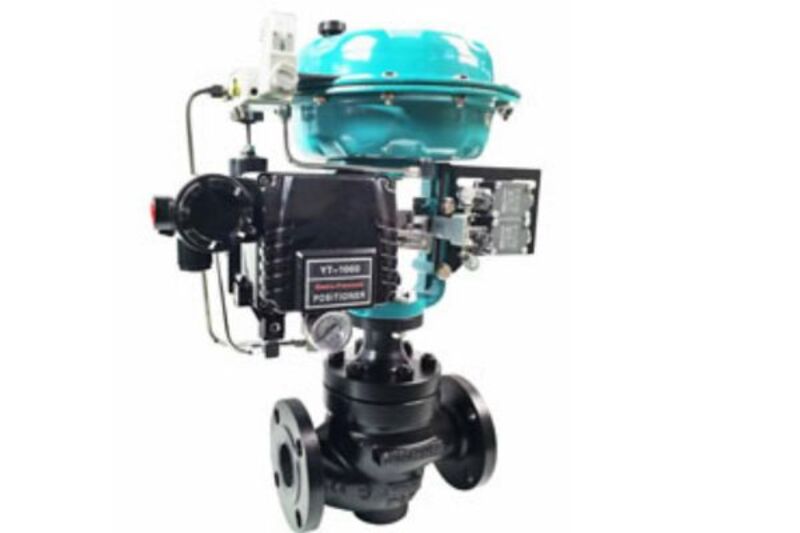
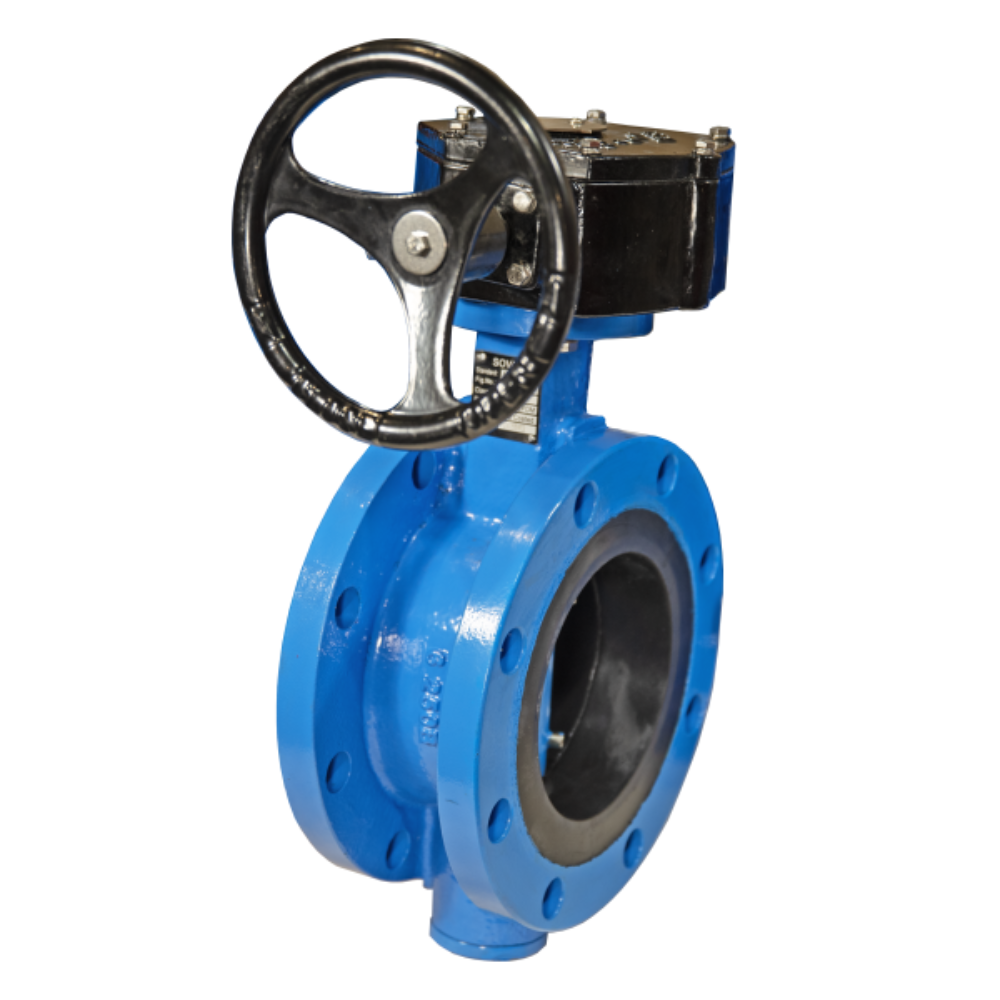
Eccentric Disc Design for High Flow & Tight Shutoff
High-performance butterfly valves use a double-offset or triple-offset eccentric disc design that lifts off the seat immediately upon opening, minimizing friction and wear while enabling bubble-tight shutoff even after thousands of cycles. The disc rotates 90 degrees from fully closed to fully open, providing unobstructed flow path with very low pressure drop and high flow capacity (Cv) relative to valve size. Unlike concentric designs, eccentric butterfly valves eliminate seat rubbing, making them suitable for higher pressures and temperatures up to 500°F with metal seats. These valves offer a compact, lightweight alternative to globe or gate valves in large pipe diameters, delivering reliable bidirectional shutoff and modulating control for utility and process services.
Key Features
- Eccentric disc eliminates seat wear
- 90-degree rotary operation for fast actuation
- High flow capacity with low pressure drop
- Bidirectional bubble-tight shutoff
- Compact, lightweight body design
Applications typiques
- Large-diameter water and air handling
- HVAC and cooling water systems
- Steam isolation (triple-offset designs)
- Chemical and slurry services
- Pump and compressor discharge isolation
Vannes à bille
Floating or Trunnion-Mounted Sealed Shutoff Technology
Ball valves employ a spherical disc with a cylindrical bore that rotates 90 degrees to start or stop flow, providing instantaneous shutoff with minimal pressure drop when fully open. Floating ball designs allow the ball to move slightly against downstream seats under pressure, ensuring tight sealing even at low differentials, while trunnion-mounted balls use fixed stem supports for high-pressure, large-bore applications. The quarter-turn operation enables fast, reliable actuation with pneumatic, electric, or manual operators. Ball valves excel in on-off isolation and diverter services where tight shutoff, minimal maintenance, and high cycle life are required. Full-port designs offer unrestricted flow, while reduced-port versions provide economical flow control.
Key Features
- Quarter-turn full open/close operation
- Floating or trunnion ball configurations
- Zero leakage with soft or metal seats
- Full-port or reduced-port options
- Low torque and long cycle life
Applications typiques
- On-off isolation in pipelines
- Gas and liquid distribution systems
- Emergency shutdown (ESD) services
- Diverting and mixing (multi-port designs)
- Corrosive or abrasive media with lined bodies

What Is A High Pressure Control Valve?
A high pressure control valve is a precision-engineered flow regulation device designed to withstand extreme differential pressures, cavitation, flashing, and erosive media that would quickly destroy standard control valves. These valves feature hardened stainless steel trim, multi-stage pressure reducing cages, and robust body constructions that safely dissipate energy across multiple pressure drops, preventing trim erosion, vibration, and excessive noise. High pressure control valves are essential for boiler feedwater recirculation, pump minimum flow protection, let-down stations, high-pressure chemical injection, and severe service throttling applications where reliability, tight shut-off, and long service life under extreme conditions are critical.
Multi-Stage Cavitation & Flashing Control
Erosion-Resistant Construction
High-Capacity Pressure Seal Bonnet
Trusted for Material Handling Across All Industries
Our High Pressure Control Valves are trusted across diverse industries for their reliability, precision and durability under extreme conditions.

Chimie et pétrochimie
Controlling high-pressure, high-temperature, and corrosive media. Our valves are widely used in ammonia, urea, and polyethylene plants for precise regulation. They also excel in severe petrochemical applications like hydrocracking, reforming, and coking, where standard valves quickly fail
Pétrole et gaz
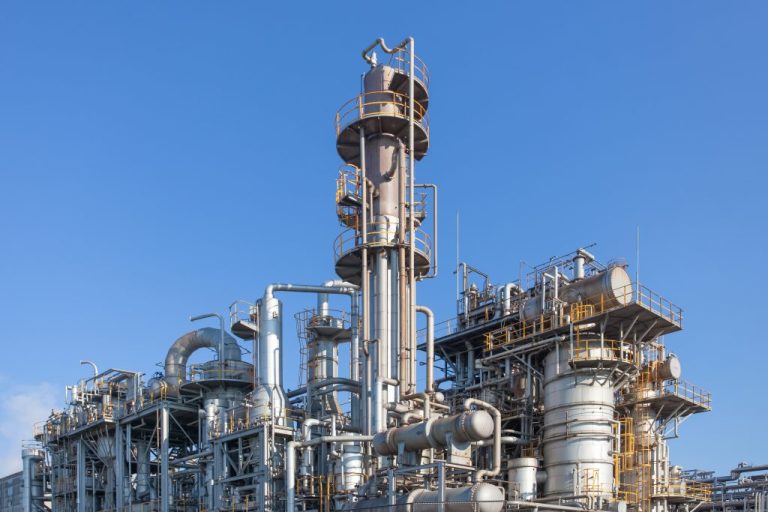
Optimizing pressure management in demanding environments. Use our valves for wellhead choke control, high-pressure separator level control, chemical injection for flow assurance, and gas let-down stations where pressures exceed 600 bar (8,700 psi) and precise pressure reduction is critical for safety and production efficiency.
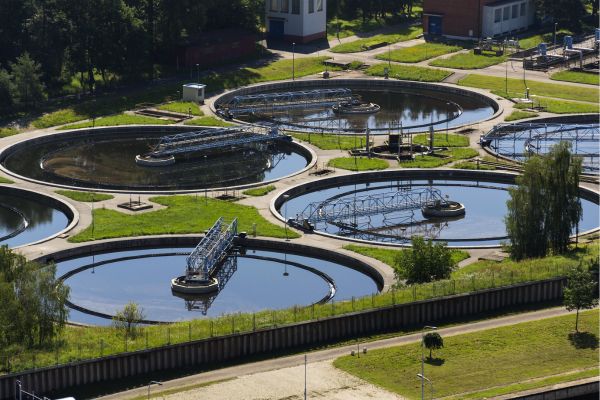
Water & Desalinatio
Use our valves for seawater reverse osmosis (SWRO) membrane feed control, high-pressure pump discharge regulation, and brine let-down where pressures reach 50–80 bar and corrosion-resistant materials (duplex, 316L) are required to protect against saltwater corrosion and ensure membrane safety.
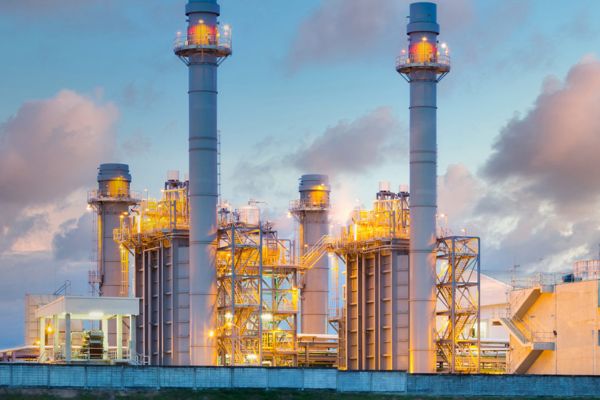
Production d'électricité
Ensuring reliable steam and water flow control. Our valves are trusted for boiler feedwater regulation, feedpump recirculation (minimum flow protection), deaerator level control, and high-pressure steam let-down stations where differential pressures are extreme and cavitation control is essential.
Vous êtes prêt à trouver la solution de robinetterie idéale pour votre projet ?
Contactez notre équipe d'experts dès aujourd'hui pour discuter des exigences de votre projet et découvrir comment BCST peut fournir des solutions fiables et efficaces adaptées à vos besoins.
Certified Performance: BCST High Pressure Control Valve Quality Control
In critical applications across oil and gas, chemical, and power generation, an industrial on-off valve must meet stringent safety and quality standards. As your trusted manufacturer, BCST holds key international certifications, including ISO 9001, CE, and SIL (Safety Integrity Level), to ensure our products meet global requirements for hazardous and demanding environments. This commitment to certified quality, direct from our factory, provides the assurance you need for safe and compliant operations..

Conception
- Calcul du logiciel technique
- Réunion de l'équipe technique
- Confirmation du dessin CAO
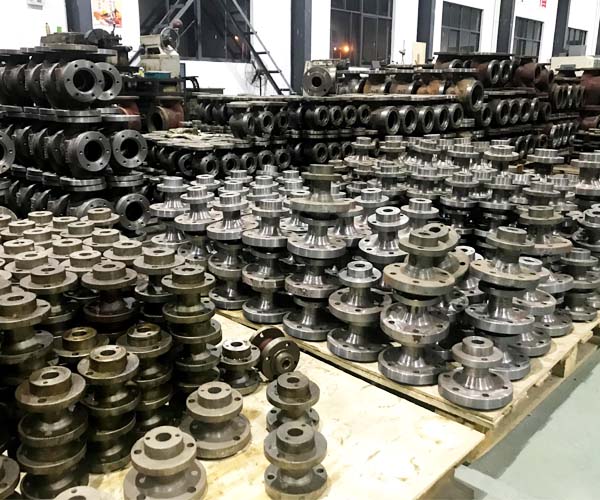
Inspection des matières premières
- Analyse chimique
- Propriété mécanique
- dimension Contrôles
- Contrôles visuels
- Examen de non-destruction
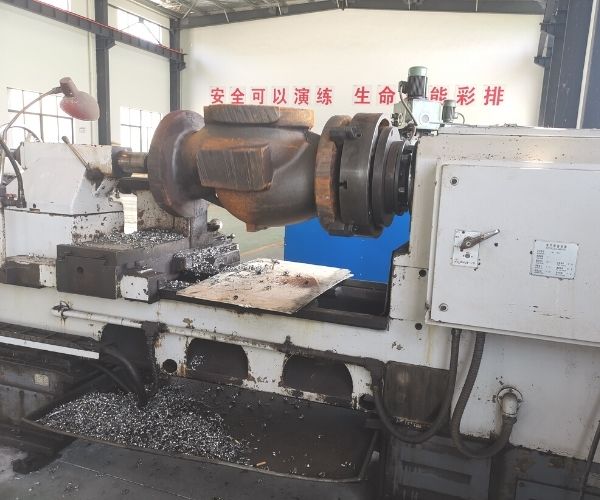
Usinage
- Usinage CNC
- Contrôles visuels
- Contrôles dimensionnels
- Test de pénétration des liquides
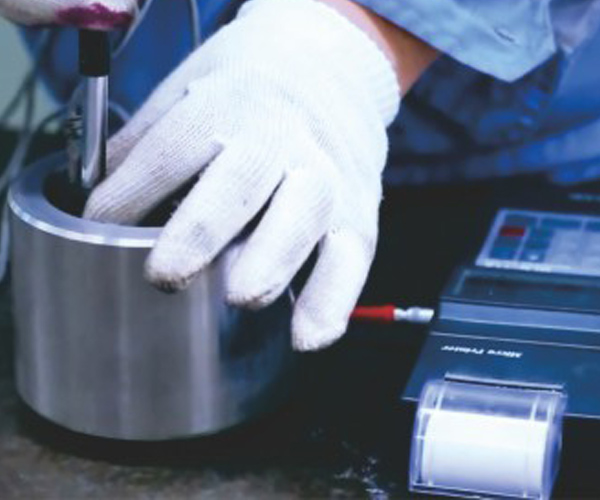
Test de la partie spartiate
- Contrôles visuels
- Pénétration des liquides
- Test
- Essai de dureté
- Rodage
- Contrôles dimensionnels
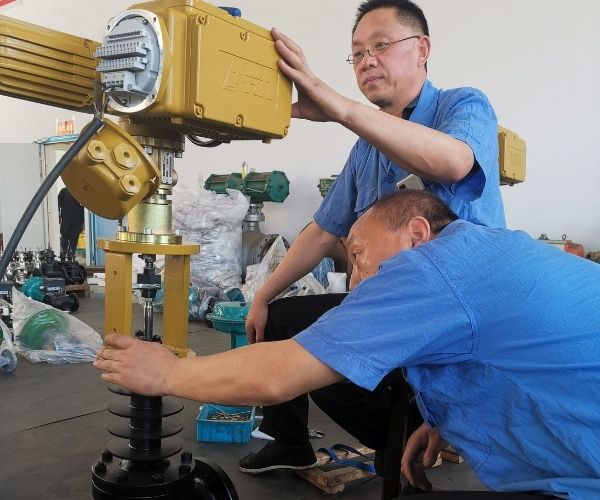
Assemblée
- Installation
- Calibrage
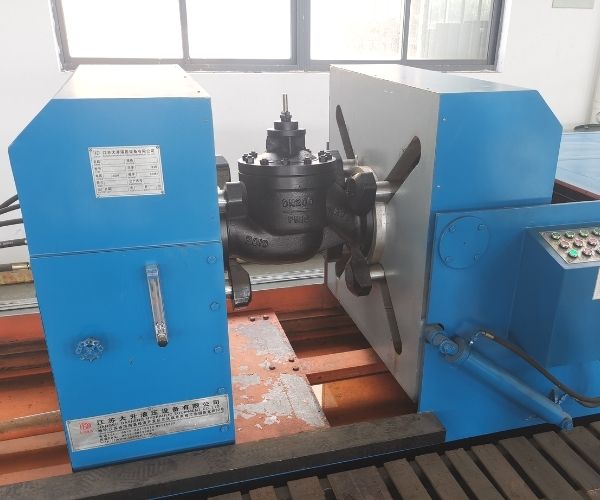
Test hydrostatique
- Essai de carapace
- Test d'étanchéité
- Essai d'étanchéité
- Test à l'air
- Test de fonctionnement
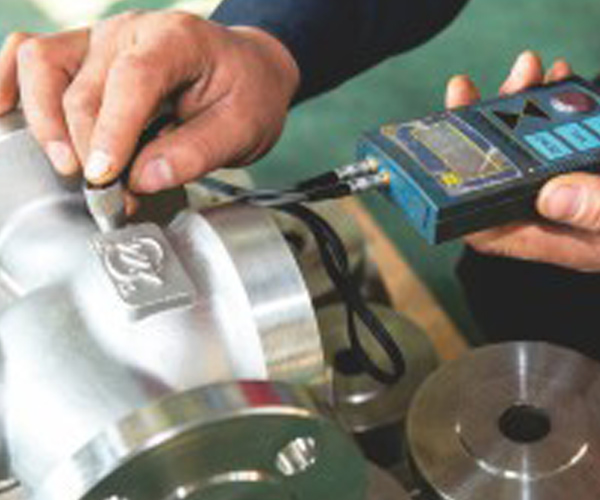
Traitement des perspectives
- Polissage de surface
- Peinture
- Inspection visuelle
- Contrôles d'épaisseur
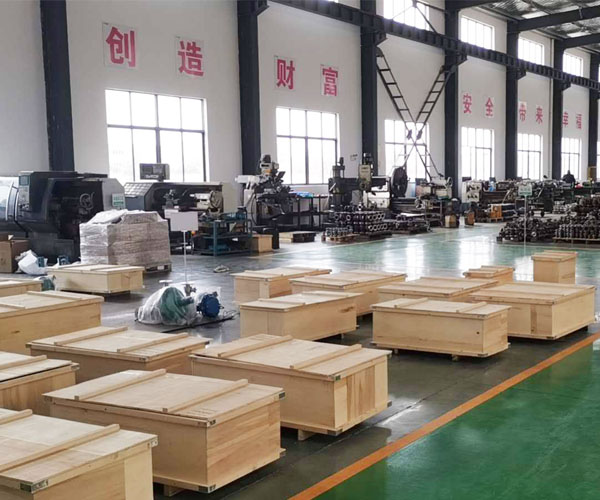
Emballage
- Marquage
- Boîte en bois exportée
Globe, Butterfly, or Ball? How to Choose the Right High Pressure Control Valve
You need a reliable valve for high pressure, severe service, or cavitation‑prone applications, but the choice between globe, butterfly, and ball valves can be overwhelming. The wrong selection leads to trim erosion, poor shut‑off, or dangerous failures. Here’s exactly when to pick each type – backed by industry standards and field experience.
✅ For precision throttling, tight shut‑off, and severe pressure drops → Vanne de régulation à soupape (cage‑guided or multi‑stage trim).
✅ For large pipe diameters, high flow, and moderate pressure control → High Performance Butterfly Valve (double/triple offset).
✅ For fast on/off isolation, zero leakage, and high cycle life → Robinet à tournant sphérique (metal or soft seat).
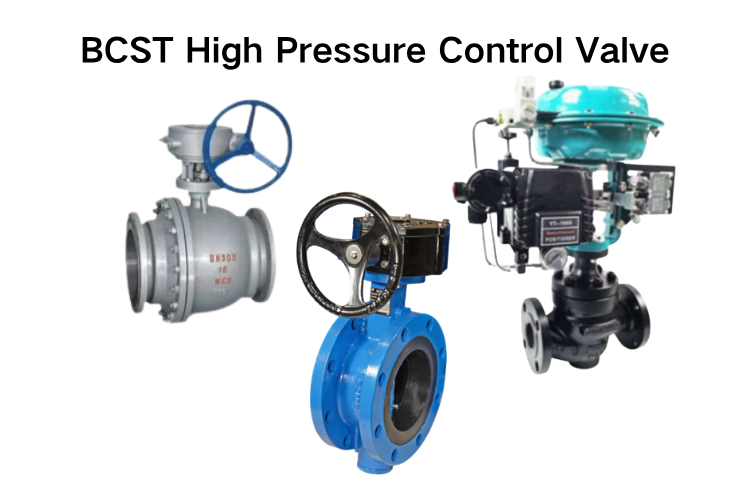
Figure 1: Three main high pressure control valve configurations – each optimized for different operating windows.
💡 Real‑world lesson: A refinery once installed high‑performance butterfly valves on a high‑pressure steam let‑down station to save weight and cost. Within three months, severe cavitation eroded the disc and seat, causing a plant trip. They replaced them with multi‑stage globe valves with hardened trim – problem solved. Never compromise on valve type for severe service; match the technology to the duty.
What You Really Need to Know Before Choosing
Your decision rests on four pillars: shut‑off integrity (leakage class per FCI 70‑2 / IEC 60534‑4), flow characteristic and Cv, differential pressure and cavitation potentialet actuation speed (modulating vs. on/off). Also consider fluid type (clean, dirty, corrosive, two‑phase), temperature, and required cycle life. Below we break down each valve family with technical depth and application‑specific advice.
1. Globe Control Valve: The Precision Throttling Workhorse for Severe Service
Comment ça marche
A globe valve uses a linear‑moving plug (or disc) that seats against a fixed ring. For high pressure applications, cage‑guided or multi‑stage trims are essential: a perforated cylindrical cage surrounds the plug, breaking the pressure drop across several small orifices. This staged pressure reduction prevents cavitation, lowers noise, and protects trim from erosion. Unbalanced single‑seat designs provide tight shut‑off (Class IV–VI), while balanced (e.g., cage‑guided) reduce actuator thrust. Standards: ISA‑75.01.01, ASME B16.34, API 623.
When I Recommend It
Choose a globe valve when you need precise modulating control under high differential pressure (ΔP) and tight shut‑off is critical. You’ll find them in:
- Boiler feedwater recirculation – protecting pumps from low‑flow conditions with pressure drops > 2000 psi.
- High pressure let‑down stations – reducing steam or gas from 2500 psi to 500 psi.
- Cavitation‑prone liquid services – pump recirculation, high‑pressure chemical injection.
- Hydrocarbon processing – reactor effluent control, high pressure separator level regulation.
Where It Falls Short
Globe valves are heavier, larger, and more expensive than equivalent butterfly valves. Their linear motion requires larger actuators, and flow capacity (Cv) per inch of size is lower than ball or butterfly valves. For very large pipe diameters (≥16 inch) and clean, low‑ΔP services, they are often over‑specified.
2. High Performance Butterfly Valve: Compact, High Flow, and Surprisingly Capable
Comment ça marche
Butterfly valves use a rotating disc that seals against a seat. For high pressure (up to Class 1500) and high temperature, double‑offset et triple‑offset designs are mandatory. The offsets eliminate seat rubbing, enabling metal‑to‑metal sealing with low torque, and allow bidirectional shut‑off. Triple‑offset valves add a third offset that creates a cam‑action seal, achieving zero leakage (Class VI) even at high temperatures. Standards: API 609 (Category B for double‑offset, Category A for triple‑offset), ISO 17292.
When You Want This One
Reach for a high performance butterfly valve when you need high Cv per dollar, compact footprint, and tight shut‑off in moderate‑to‑high pressure applications (≤ 1500 psi).
- Large diameter gas and steam isolation – compressor suction/discharge, turbine bypass.
- High pressure water and oil pipelines – mainline isolation and control (≤ 1500#).
- Desalination and seawater lift – corrosion‑resistant duplex or super duplex materials.
- Refinery and petrochemical unit isolation – where space is tight and weight matters.
The Trade‑Off
Butterfly valves are not ideal for extreme pressure drops (ΔP > 500 psi) or highly erosive slurries – the disc and seat can wear quickly. They also have lower rangeability (turndown) than globe valves for modulating duty. For precise throttling at low openings, a globe valve is superior.
⚠️ Critical: Do not use a conventional concentric (rubber‑lined) butterfly valve for high pressure or high temperature. Always specify double‑offset or triple‑offset designs with metal seats for pressures above 300 psi or temperatures exceeding 200°C.
3. Trunnion Ball Valve: Unbeatable for On/Off Isolation and High Cycle Life
Comment ça marche
A trunnion‑mounted ball valve has the ball supported by fixed bearings (trunnions) at the top and bottom, eliminating the ball’s movement against the seats. Upstream line pressure forces the seat against the ball, creating a tight seal. This design handles very high pressures (up to 2500 psi and beyond) with low operating torque. Full‑bore versions offer unrestricted flow, while reduced‑bore (regular port) provide economic control. For modulating duty, characterized ball trims can be used, but globe valves are generally preferred. Standards: API 6D, ISO 14313, ASME B16.34.
When You Absolutely Need This Valve
Choose a trunnion ball valve when your priority is zero‑leakage isolation, fast quarter‑turn operation, and high cycle life in high pressure services.
- Emergency shutdown (ESD) systems – must close bubble‑tight in seconds.
- High pressure gas pipelines – mainline block valves, pig launcher/receiver isolation.
- Wellhead and manifold isolation – oil & gas production up to 15,000 psi (special designs).
- Severe chemical service – where fugitive emissions must be near zero (API 622, ISO 15848).
One Limitation
Standard ball valves are not designed for continuous throttling – the ball and seat will wear quickly due to high‑velocity flow through a partially open port. For modulating duty, use a globe valve or a specially designed V‑port ball valve with hardened trim. Also, trunnion valves are heavier and more expensive than floating ball valves.
Quick Comparison Table: High Pressure Control Valves
| Fonctionnalité | Globe (Cage/ Multi‑stage) | High Performance Butterfly (Triple‑offset) | Robinet à tournant sphérique |
|---|---|---|---|
| Utilisation principale | Precision throttling, severe ΔP, cavitation control | On/off & moderate throttling, large diameters, tight spaces | Fast isolation, zero leakage, high cycle life |
| Shut‑Off Class (FCI 70‑2) | Class IV – VI (metal/soft seat) | Class IV – VI (triple‑offset metal seat) | Class VI (soft seat) / Class V (metal seat) |
| Max Pressure (Class) | Up to Class 4500 (ASME B16.34) | Up to Class 1500 (API 609) | Up to Class 2500+ (API 6D) |
| Flow Capacity (Cv per inch) | Low to moderate | High (up to 30x globe Cv) | Very high (full bore) |
| Actuation Speed | Linear, slower (multi‑turn) | Quarter‑turn, fast | Quarter‑turn, very fast |
| Meilleures applications | Boiler feedwater, let‑down stations, chemical injection | Large gas/steam lines, seawater, HVAC, compressor stations | ESD, pipeline block valves, wellhead isolation, high cycle services |
Making the Right Choice – A Practical Framework
✅ Need precise throttling, cavitation control, or extreme ΔP (>1000 psi)? → Globe control valve with multi‑stage cage trim.
✅ Working with large diameters (≥12″), moderate ΔP, and need compact design? → Triple‑offset butterfly valve (metal seat).
✅ Requiring fast, bubble‑tight shut‑off, high cycle life, and minimal maintenance? → Robinet à boisseau sphérique à tourillon (soft or metal seat).
✅ Dirty or abrasive media, high temperature, and on/off duty? → Trunnion ball valve with metal seat ou cage‑guided globe with hardened trim.
Always validate your selection against ASME B16.34 pressure‑temperature ratings, calculate required Cv using ISA‑75.01.01, and specify the correct leakage class. For two‑phase or flashing services, consult a valve engineer – I’ve seen well‑intended selections fail within weeks due to hidden cavitation.
Pro tip: For high pressure control valves, always request a cavitation analysis (sigma ratio) from your supplier. If the sigma is below 0.5, you need anti‑cavitation trim. Also, verify the fugitive emissions standard (ISO 15848 or API 622) for valve stem seals – especially in hydrocarbon or hazardous fluid service.
Questions fréquemment posées
What is the maximum pressure rating for your high pressure control valves?
Our high pressure control valves are manufactured to ASME B16.34 standards, with pressure classes ranging from Class 150 to Class 4500. For severe service, we offer trunnion ball valves up to 15,000 psi and globe valves with multi‑stage trim up to Class 2500. Always verify the nameplate and material temperature derating per ASME B16.34 Table 2-2.2.
How do I prevent cavitation and erosion in high pressure drop applications?
Cavitation occurs when local pressure falls below vapor pressure. The solution is multi‑stage anti‑cavitation trim – a cage with small, tortuous passages that drop pressure in controlled steps. For liquids, specify staged pressure reduction (e.g., 4‑stage or 6‑stage trim). For gases and steam, use low‑noise cages to break turbulent jets. Hardened materials (Stellite 6, tungsten carbide) on seat and plug surfaces further extend life. Per ISA‑75.01.01, calculate the cavitation index (sigma); if sigma < 0.5, anti‑cavitation trim is mandatory.
What is the difference between a globe valve and a trunnion ball valve for high pressure control?
A globe valve is designed for continuous throttling and precise modulation, especially under high differential pressure. It can incorporate anti‑cavitation and low‑noise trims. A trunnion ball valve is optimized for on/off isolation with zero leakage, fast quarter‑turn operation, and high cycle life. Trunnion ball valves are not recommended for sustained partial opening because the ball and seat will erode quickly. For modulating duty above 10% opening, always choose a globe or a characterized V‑port ball valve.
What leakage class can I expect from a high pressure control valve?
Per FCI 70‑2 / IEC 60534‑4, our valves meet the following classes: Class IV (1×10⁻⁴ × valve Cv) for metal‑seated globe and butterfly valves; Class V (5×10⁻¹² m³/s per bar differential) for precision metal seats; Class VI (bubble‑tight) for soft‑seat ball and globe valves. For critical emissions control, ask for ISO 15848‑1 certification for fugitive emissions.
What materials are recommended for high pressure, high temperature, or corrosive services?
Standard bodies: WCB/WCC for non‑corrosive up to 425°C; CF8M (316 SS) for mild corrosion; duplex/super duplex for seawater and chlorides; Hastelloy C‑276 for aggressive chemicals. Trim: Stellite 6 or tungsten carbide on seat and plug surfaces for erosion resistance. For high temperature (>400°C), use graphite packing and inconel bellows seal for zero emissions. Always refer to NACE MR0175/ISO 15156 for sour service.
 English
 Arabic
 Russian
 French
 Spanish