
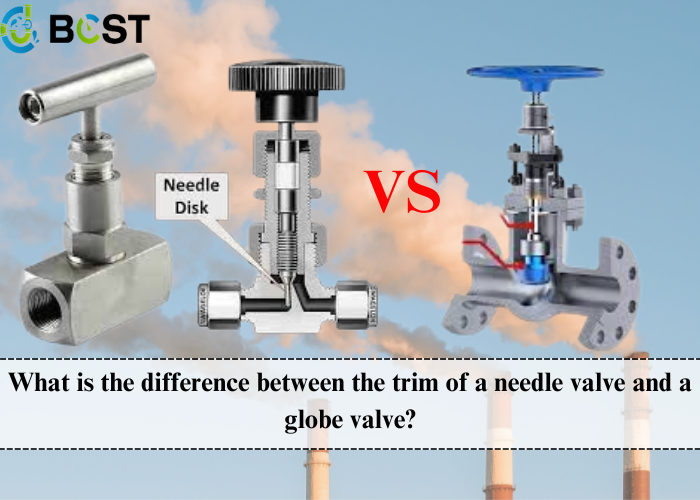
Les vannes sont des dispositifs importants pour contrôler le débit des fluides dans les systèmes de tuyauterie industriels, et les vannes à pointeau et les vannes d'échantillonnage sont deux types de vannes courants. Bien qu'elles présentent certaines similitudes en termes de structure et d'utilisation, il existe des différences significatives dans la conception interne des vannes, qui déterminent leurs caractéristiques de performance et leur champ d'application dans différents scénarios de mise en œuvre.
1. Caractéristiques de la conception de la garniture de la vanne à pointeau
    La vanne à pointeau est une vanne de petit calibre dotée d'une capacité de réglage précis. Elle est principalement utilisée pour contrôler de petits débits ou pour régler avec précision des fluides à haute pression. La conception interne de la vanne présente les caractéristiques suivantes :
        1.1 Caractéristiques des valves
    The valve core is usually needle-shaped with a pointed front end, which is suitable for precise regulation and control of the fluid.
The needle type design can achieve a high degree of flow change in a small degree, which is suitable for harsh working conditions.
1.2 Performance de la régulation linéaire
The small contact area of the sealing surface between the valve needle and the valve seat allows for a more linear and controllable flow regulation.Suitable for laboratory equipment, instrumentation and gas systems where hazardous conditions are required.
1.3 Diversité des choix de matériaux
Needle valve trim is usually made of stainless steel, copper or alloy materials, which has good corrosion resistance and wear resistance.Some high-end needle valves use special alloy coatings to increase their service life in corrosion-resistant or high-pressure environments.
1.4 Excellente étanchéité
The valve seat is mostly designed with metal-to-metal or metal-to-soft seal to ensure reliable sealing under high pressure environment.Since liquid needle valves are often used for gas or precision flow control, their valve seats are usually precision machined to ensure zero leakage.
1.5 Taille réduite, adaptée aux espaces complexes
    Les vannes à pointeau sont de conception compacte et conviennent à l'installation dans des équipements d'instrumentation ou dans des espaces restreints.
        2. Caractéristiques de conception des garnitures de vannes
    La vanne qui relie le mouvement linéaire de la vanne pour ouvrir ou fermer le canal du fluide est largement utilisée dans les systèmes de tuyauterie industriels pour contrôler la marche et l'arrêt des liquides ou des gaz. La conception des composants internes de la vanne présente les caractéristiques suivantes :
        2.1 Avantages du cœur de la vanne
    The valve core is usually a flat, conical or spherical structure to meet the sealing requirements under different working conditions.
Flat or tapered designs are better suited for fully open or fully closed situations, but are not suitable for precise adjustment.
2.2 Conception générale de l'itinéraire
The sealing surface between the valve core and the valve seat is enlarged, which can provide a full-diameter flow channel when opened, and is suitable for large-flow pipelines.Compared with the needle valve, the existing valve has weaker regulation performance but stronger flow passing capacity.
2.3 Les matériaux sont davantage axés sur la durabilité
The valve trim of the valve is usually made of high-strength metal materials such as cast steel, stainless steel and alloy steel.Under high temperature, high pressure and corrosive media, the valve core and valve seat need to be treated with wear resistance or corrosion resistance.
2.4 Une meilleure étanchéité
Usually a hard seal structure or metal-to-metal seal is used, which is suitable for high temperature and high pressure working conditions.Some valves also adopt soft sealing design to ensure zero leakage in low pressure situations.
2.5 S'adapter aux différentes exigences en matière de contrôle du débit
Le même type de vannes peut être utilisé pour les gaz, les liquides, la vapeur et d'autres fluides, et offre une plus large gamme d'applications.
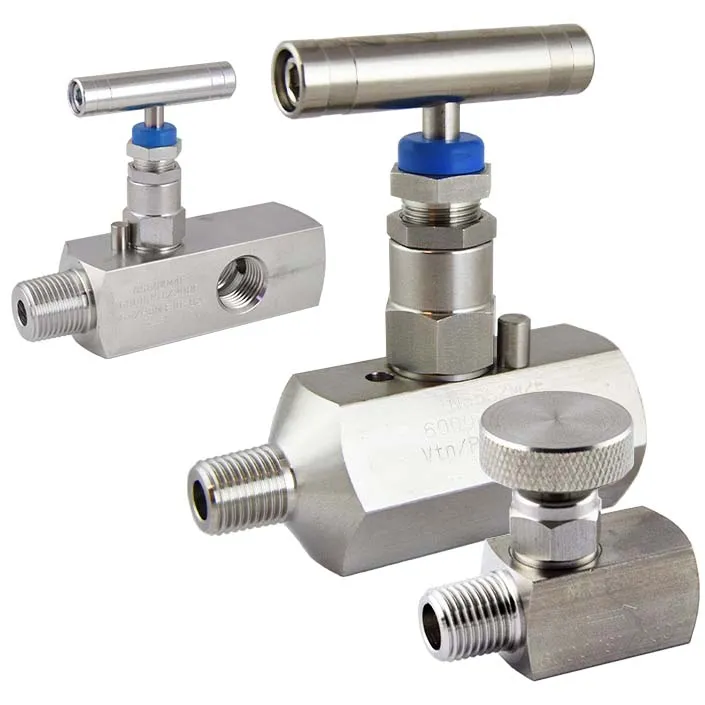
3. Principale différence entre la soupape à pointeau et la même garniture de soupape
3.1 Différences de conception structurelle
La différence essentielle entre les vannes à pointeau et les vannes apparentées au niveau de la conception structurelle se reflète principalement dans la forme du noyau et le principe de fonctionnement.
3.1.2 Robinet à pointeau
Valve core shape: The valve core of the needle valve is needle-shaped, usually with a conical or elongated tip. This shape can provide flow regulation capabilities in the passage.Valve seat design: The inner diameter of the valve seat matches the needle valve core, with a small contact area, which reduces the resistance during adjustment.
3.1.3 Vanne d'arrêt
Valve core shape: First of all, the valve core design layout of the valve, the common ones are flat type, conical type, spherical type, etc. Compared with the needle valve, the valve core of the valve core at this time pays more attention to the control effect of full opening or full closing, and less precise flow regulation.Valve seat design: The contact area between the valve seat and the valve core is large, which can provide good sealing performance and is suitable for high temperature, high pressure and corrosive media occasions.
3.2 Performances d'étanchéité de la vanne à pointeau
        3.2.1 Scellement de haute précision
    En raison de la faible surface de contact entre le pointeau et le siège de la soupape, la soupape à pointeau fonctionne bien dans des conditions de haute pression et de faible débit, et permet d'obtenir des émissions nulles ou très faibles.
        3.2.2 Joint métal/métal ou joint souple
    Les vannes à pointeau utilisent principalement des joints métal-métal, qui présentent une meilleure stabilité dans les environnements à haute pression. En outre, des matériaux d'étanchéité souples tels que le polytétrafluoroéthylène (PTFE) sont également utilisés pour assurer l'étanchéité des vannes d'arrêt.
        3.2.3 Une large application
    Le noyau et le siège de la vanne ont une grande surface de contact et une forte capacité d'étanchéité, ce qui convient au contrôle des fluides à haute température, à haute pression et aux fluides chimiques.
        3.2.4 Combinaison de joints durs et de joints souples
    Les méthodes courantes d'étanchéité des vannes comprennent le joint dur métal-métal et le joint souple métal-matériau élastique. Différentes conceptions d'étanchéité peuvent être sélectionnées en fonction des conditions de travail spécifiques.
        3.3 Différences dans les conditions de travail applicables
        3.3.1 Robinet à pointeau
    Precision flow controlNeedle valves are often used in situations where precision control is required, such as laboratory equipment, gas analysis instruments, metering systems, etc.High-pressure occasionsDue to their improved sealing properties, needle valves are suitable for working in high-pressure environments, such as pressure regulation in oil and gas pipelines.Small flow controlThe needle valve is designed to maintain stability at low flow rates, making it an ideal choice for small-diameter systems.
        3.3.2 Vanne d'arrêt
    Medium switch controlSpecial valves are suitable for medium opening and closing operations in industrial pipeline systems, especially in situations where gap switches are required.
Large flow pipeline: allows the full-bore design of the valve to pass a larger flow, so it is suitable for the mainHigh temperature and high pressure environmentThe matching valves are widely used in the piping and control of high temperature steam, hot oil towers and high pressure pipelines.Conveying mediumThe valve internals of some matching valves have been treated with anti-corrosion and can be used for acid and alkali media in pipelines in chemical, petroleum and other industries
3.4 Durabilité et durée de vie
    Il s'agit d'un indicateur clé de la performance des soupapes rapides, et la différence entre les soupapes à aiguille et les soupapes en termes de durabilité et de suivi est à peu près la même.
        3.4.1 Durabilité de la vanne à pointeau
    High wear-resistant designThe valve core and valve seat of the needle valve are usually made of wear-resistant materials, such as stainless steel, hard alloy, etc., which can run for a long time under high pressure conditions without being easily worn.Users are affected by the adjustment frequencySince the needle valve is mainly used for precise adjustment, if the adjustment switch is turned off, slight wear may occur between the valve core and the valve seat, affecting the long-term sealing effect.
        3.4.2 Durabilité de la vanne d'arrêt
    High-strength materialsFirst of all, the valve trim is usually made of high-strength metal materialsStrong corrosion resistanceFor chemical media, the valve core and seat can be treated with anti-corrosion coatings, such as nickel-based alloy coatings, to extend the service life.Suitable for gap opening and closingThe operating valve design pays more attention to the gap opening and closing in industrial pipelines
        3.5 Différences dans les capacités de contrôle de flux
    La différence de capacité de contrôle du débit entre les vannes à aiguille et les vannes ordinaires détermine directement leurs domaines d'application.
        3.5.1 Capacité de régulation du débit de la vanne à pointeau
    Adjustable: The structural characteristics of the needle valve can linearly adjust the flow rate within a smaller opening range, which is particularly suitable for working conditions that require adjustment.Large fluid resistance: The needle valve has a small flow path and is therefore not suitable for large flow pipes.Quick opening and closing: First of all, the design of the valve focuses more on the ability to open and close quickly, and its adjustment performance is better than that of the needle valve.Low fluid resistance: In the fully open state, the fluid resistance of the valve is at the lower part, which is suitable for high flow media in the pipeline.
        3.6 Coûts et différences économiques
        3.6.1 Soupape à pointeau
    High production cost: Since the needle valve has high valve processing precision requirements, especially the matching part between the needle valve and the valve seat, its production cost is higher.Complex maintenance: Once the needle valve is worn or worn, it will cost more to repair or replace the parts.
        3.6.2 Vanne d'arrêt
    Low production cost: First, the valve structure is simple, the manufacturing process is relatively mature, and its cost is usually lower than that of needle valves.Maintenance facilities: The valve trim of the matching valve is easy to replace.
        4. Résumer
    Although both needle valves and sequence valves are industrial valves, the difference in the design of their internal components has significant differences in function and application. Needle valves are good at precise adjustment and are suitable for small flow and productivity conditions; while designated valves focus on fluid on-off control and are more suitable for large flow and high temperature and high pressure industrial environments.When actually selecting the valve, the appropriate valve type should be selected according to the working conditions, fluid properties and control accuracy requirements to ensure stable operation and efficient control of the system.
 English
 Arabic
 Russian
 French
 Spanish