
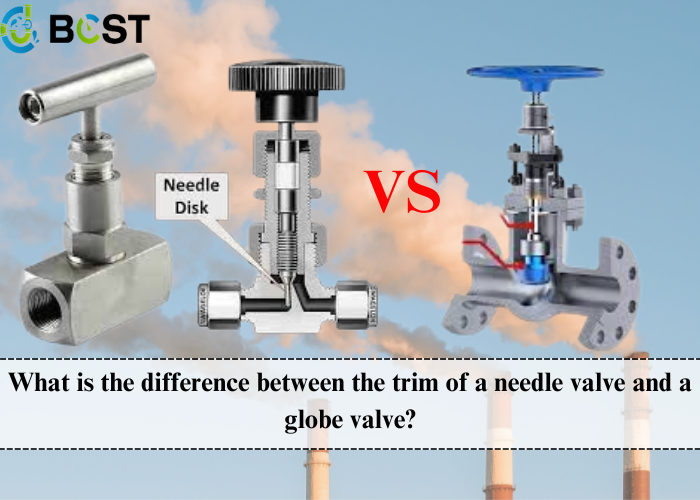
Valves are important devices for controlling fluid flow in industrial piping systems, and needle valves and sampling valves are two common types of valves. Although they have certain similarities in structure and use, there are significant differences in their internal valve designs, which determine their performance characteristics and applicable scope in different application scenarios.
1. Needle valve trim design features
    Needle valve is a small-caliber valve with precise adjustment capability, mainly used to control small flow or precise adjustment of high-pressure media. Its valve internal design has the following features:
        1.1 Valve characteristics
    The valve core is usually needle-shaped with a pointed front end, which is suitable for precise regulation and control of the fluid.
The needle type design can achieve a high degree of flow change in a small degree, which is suitable for harsh working conditions.
1.2 Linear Regulation Performance
The small contact area of the sealing surface between the valve needle and the valve seat allows for a more linear and controllable flow regulation.Suitable for laboratory equipment, instrumentation and gas systems where hazardous conditions are required.
1.3 Diverse material choices
Needle valve trim is usually made of stainless steel, copper or alloy materials, which has good corrosion resistance and wear resistance.Some high-end needle valves use special alloy coatings to increase their service life in corrosion-resistant or high-pressure environments.
1.4 Strong sealing performance
The valve seat is mostly designed with metal-to-metal or metal-to-soft seal to ensure reliable sealing under high pressure environment.Since liquid needle valves are often used for gas or precision flow control, their valve seats are usually precision machined to ensure zero leakage.
1.5 Small size, suitable for complex spaces
    Needle valves are compact in design and are suitable for installation in instrumentation equipment or tight spaces.
        2. Valve trim design features of valves
    The valve that connects the valve linear motion to open or close the fluid channel is widely used in industrial piping systems to control the on and off of liquids or gases. The design of the valve internal components has the following characteristics:
        2.1 Valve core advantages
    The valve core is usually a flat, conical or spherical structure to meet the sealing requirements under different working conditions.
Flat or tapered designs are better suited for fully open or fully closed situations, but are not suitable for precise adjustment.
2.2 Overall route design
The sealing surface between the valve core and the valve seat is enlarged, which can provide a full-diameter flow channel when opened, and is suitable for large-flow pipelines.Compared with the needle valve, the existing valve has weaker regulation performance but stronger flow passing capacity.
2.3 Materials focus more on durability
The valve trim of the valve is usually made of high-strength metal materials such as cast steel, stainless steel and alloy steel.Under high temperature, high pressure and corrosive media, the valve core and valve seat need to be treated with wear resistance or corrosion resistance.
2.4 Higher sealing
Usually a hard seal structure or metal-to-metal seal is used, which is suitable for high temperature and high pressure working conditions.Some valves also adopt soft sealing design to ensure zero leakage in low pressure situations.
2.5 Adapt to various flow control requirements
The same type of valves can be used for gas media as well as liquids, steam and other media, and have a wider range of applications.
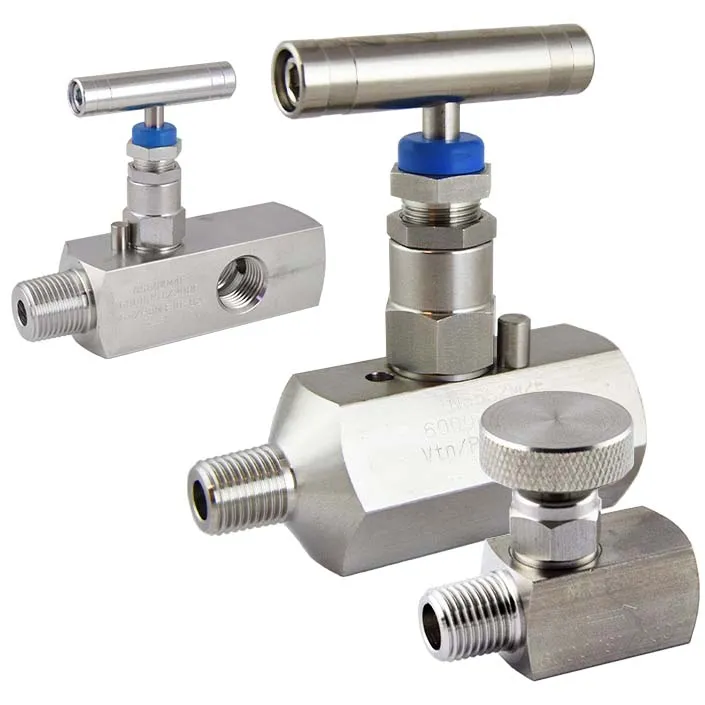
3. The main difference between needle valve and the same valve trim
3.1 Structural design differences
The core difference between needle valves and related valves in structural design is mainly reflected in the shape of the core and the working principle.
3.1.2 Needle valve
Valve core shape: The valve core of the needle valve is needle-shaped, usually with a conical or elongated tip. This shape can provide flow regulation capabilities in the passage.Valve seat design: The inner diameter of the valve seat matches the needle valve core, with a small contact area, which reduces the resistance during adjustment.
3.1.3 Stop valve
Valve core shape: First of all, the valve core design layout of the valve, the common ones are flat type, conical type, spherical type, etc. Compared with the needle valve, the valve core of the valve core at this time pays more attention to the control effect of full opening or full closing, and less precise flow regulation.Valve seat design: The contact area between the valve seat and the valve core is large, which can provide good sealing performance and is suitable for high temperature, high pressure and corrosive media occasions.
3.2 Sealing performance of needle valve
        3.2.1 High-precision sealing
    Due to the small contact area between the valve needle and the valve seat, the needle valve performs well under high pressure and low flow conditions, and can achieve zero or very low emissions.
        3.2.2 Metal-to-metal seal or soft seal
    Needle valves mostly use metal-to-metal seals, which have better stability in high-pressure environments. In addition, soft seal materials such as polytetrafluoroethylene (PTFE) are also used for Sealing performance of stop valve
        3.2.3 Wide applicability
    The valve core and valve seat have a large contact area and strong sealing performance, which is suitable for fluid control of high temperature, high pressure and chemical media.
        3.2.4 Combination of hard seal and soft seal
    Common valve sealing methods include metal-to-metal hard seal and metal-to-elastic material soft seal. Different sealing designs can be selected according to specific working conditions.
        3.3 Differences in applicable working conditions
        3.3.1 Needle valve
    Precision flow controlNeedle valves are often used in situations where precision control is required, such as laboratory equipment, gas analysis instruments, metering systems, etc.High-pressure occasionsDue to their improved sealing properties, needle valves are suitable for working in high-pressure environments, such as pressure regulation in oil and gas pipelines.Small flow controlThe needle valve is designed to maintain stability at low flow rates, making it an ideal choice for small-diameter systems.
        3.3.2 Stop valve
    Medium switch controlSpecial valves are suitable for medium opening and closing operations in industrial pipeline systems, especially in situations where gap switches are required.
Large flow pipeline: allows the full-bore design of the valve to pass a larger flow, so it is suitable for the mainHigh temperature and high pressure environmentThe matching valves are widely used in the piping and control of high temperature steam, hot oil towers and high pressure pipelines.Conveying mediumThe valve internals of some matching valves have been treated with anti-corrosion and can be used for acid and alkali media in pipelines in chemical, petroleum and other industries
3.4 Durability and service life
    This is a key indicator of fast valve performance, and the difference between needle valves and valves in durability and follow-up is roughly the same.
        3.4.1 Durability of needle valve
    High wear-resistant designThe valve core and valve seat of the needle valve are usually made of wear-resistant materials, such as stainless steel, hard alloy, etc., which can run for a long time under high pressure conditions without being easily worn.Users are affected by the adjustment frequencySince the needle valve is mainly used for precise adjustment, if the adjustment switch is turned off, slight wear may occur between the valve core and the valve seat, affecting the long-term sealing effect.
        3.4.2 Durability of stop valve
    High-strength materialsFirst of all, the valve trim is usually made of high-strength metal materialsStrong corrosion resistanceFor chemical media, the valve core and seat can be treated with anti-corrosion coatings, such as nickel-based alloy coatings, to extend the service life.Suitable for gap opening and closingThe operating valve design pays more attention to the gap opening and closing in industrial pipelines
        3.5 Differences in flow control capabilities
    The difference in flow control capability between needle valves and common valves directly determines their application areas.
        3.5.1 Flow control capability of needle valve
    Adjustable: The structural characteristics of the needle valve can linearly adjust the flow rate within a smaller opening range, which is particularly suitable for working conditions that require adjustment.Large fluid resistance: The needle valve has a small flow path and is therefore not suitable for large flow pipes.Quick opening and closing: First of all, the design of the valve focuses more on the ability to open and close quickly, and its adjustment performance is better than that of the needle valve.Low fluid resistance: In the fully open state, the fluid resistance of the valve is at the lower part, which is suitable for high flow media in the pipeline.
        3.6 Cost and Economic Differences
        3.6.1 Needle valve
    High production cost: Since the needle valve has high valve processing precision requirements, especially the matching part between the needle valve and the valve seat, its production cost is higher.Complex maintenance: Once the needle valve is worn or worn, it will cost more to repair or replace the parts.
        3.6.2 Stop valve
    Low production cost: First, the valve structure is simple, the manufacturing process is relatively mature, and its cost is usually lower than that of needle valves.Maintenance facilities: The valve trim of the matching valve is easy to replace.
        4. Summarize
    Although both needle valves and sequence valves are industrial valves, the difference in the design of their internal components has significant differences in function and application. Needle valves are good at precise adjustment and are suitable for small flow and productivity conditions; while designated valves focus on fluid on-off control and are more suitable for large flow and high temperature and high pressure industrial environments.When actually selecting the valve, the appropriate valve type should be selected according to the working conditions, fluid properties and control accuracy requirements to ensure stable operation and efficient control of the system.
 English
 Arabic
 Russian
 French
 Spanish