

The Ultimate Guide to Push Connect Ball Valves
In the fast-paced world of plumbing and home improvement, efficiency and reliability are paramount. Traditional pipe connections often involve soldering, crimping, or gluing—methods that require specialized tools, skill, and time. Enter the push connect ball valve, a revolutionary fitting that has transformed how both professionals and DIY enthusiasts approach plumbing tasks. These innovative valves promise a secure, watertight connection with nothing more than a simple push.
This comprehensive guide from BCST Valve is your foundational resource for understanding push connect ball valves. We’ll demystify their internal mechanics, highlight their immense benefits, and explore their widespread applications. Whether you’re a seasoned plumber, a busy maintenance technician, or a homeowner tackling a renovation, this article will equip you with everything you need to know about this game-changing plumbing solution.
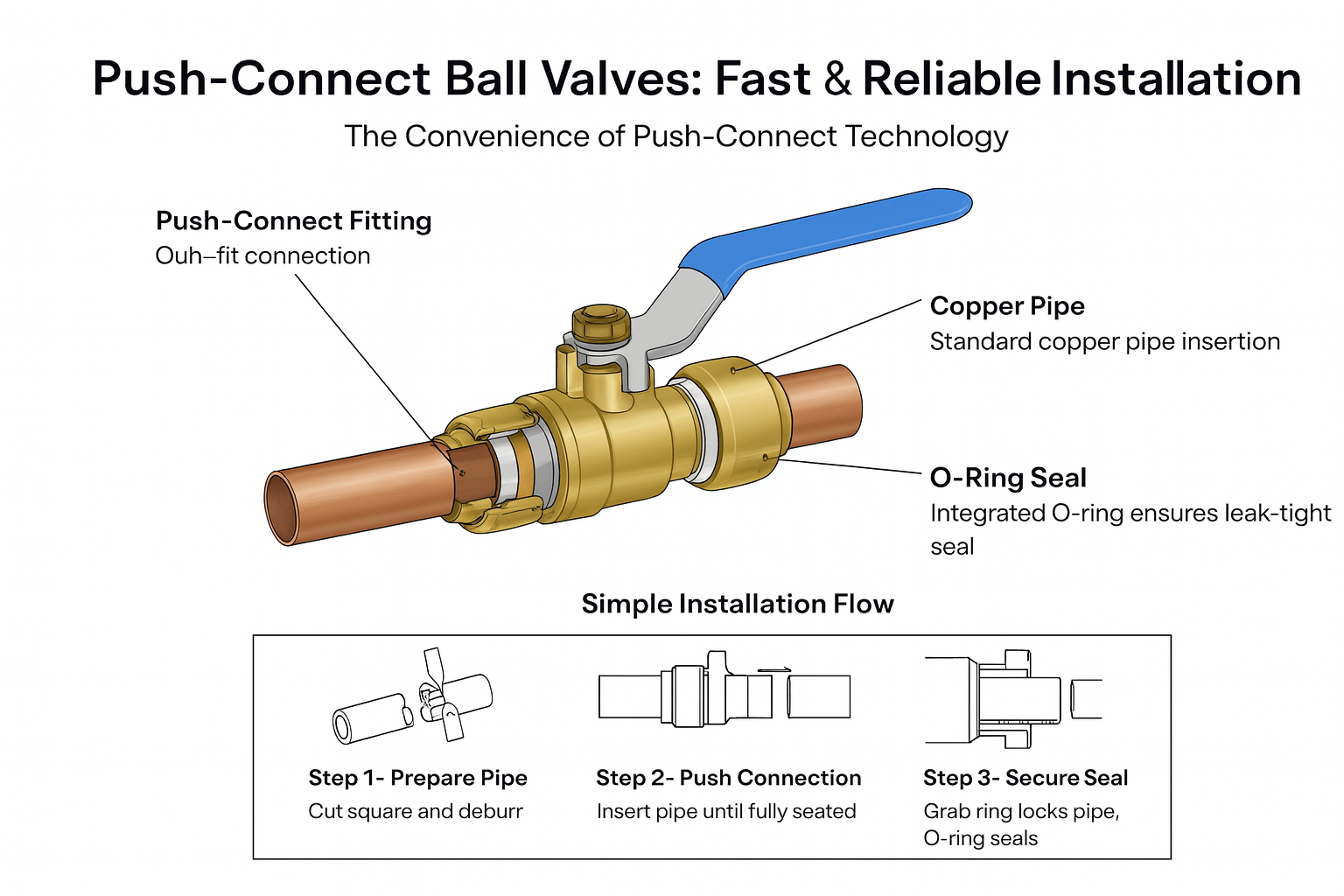
What is a Push Connect Ball Valve? The Genius Behind “Push-n-Seal”
A push connect ball valve, often referred to as a “push-fit” or “push-to-connect” valve, is a type of plumbing fitting that allows for a quick and secure connection to various pipe types (copper, PEX, CPVC) without the need for traditional joining methods like soldering, crimping, or solvent welding. Unlike standard ball valves that require threaded or sweat connections, these valves feature internal mechanisms that grip and seal the pipe in a single, simple push.
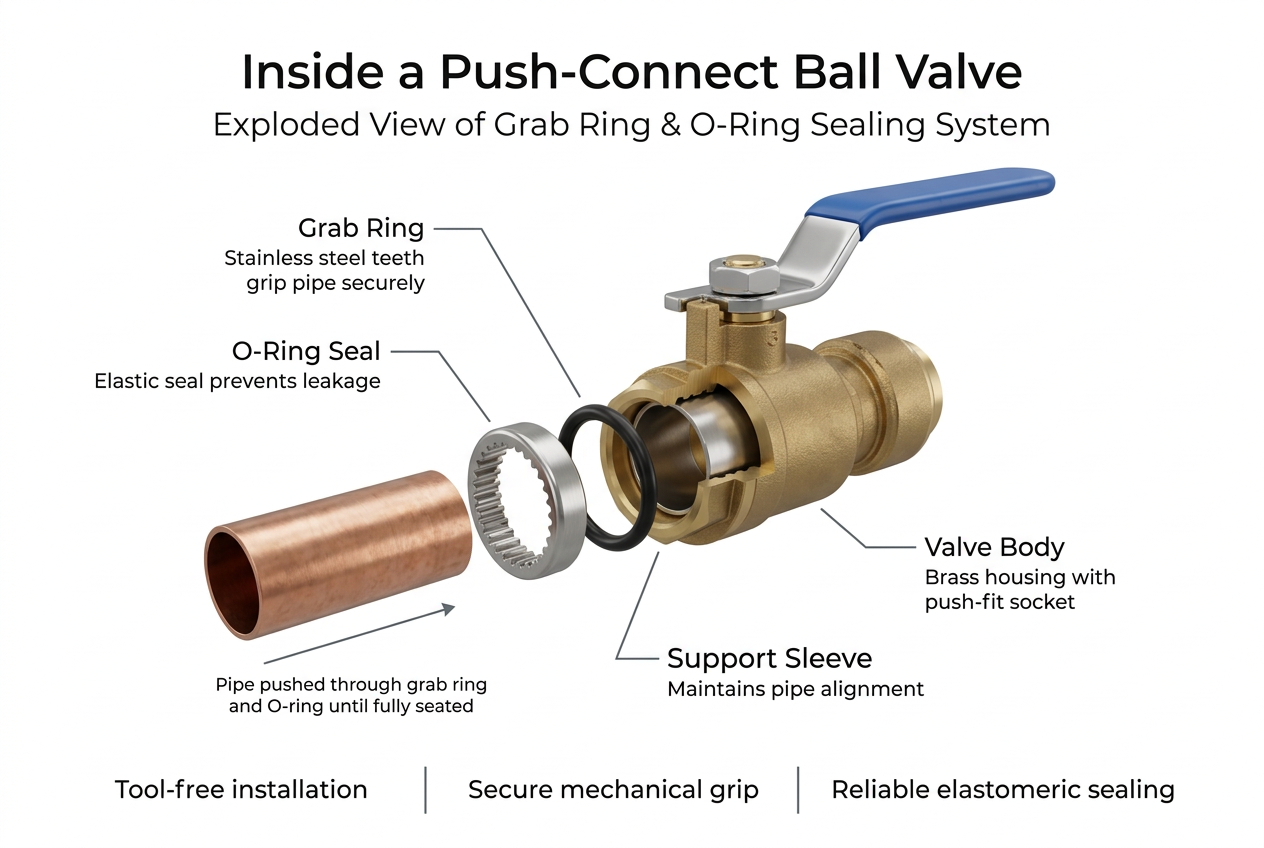
The Internal Mechanics: How a Secure Connection is Made
The magic of a push connect valve lies in its cleverly engineered internal components. While designs can vary slightly between manufacturers, the core elements ensure a reliable, leak-free seal:
- Grab Ring (Collet): Typically made of stainless steel teeth, this component firmly grips the outside of the inserted pipe, preventing it from pulling out. The teeth are angled to allow the pipe to easily push in but resist any backward force.
- O-Ring Seal: A high-quality EPDM or other elastomer O-ring creates a watertight seal around the outer surface of the pipe, preventing leaks. This is the primary sealing mechanism.
- Spacer (or Guide Ring): This component helps compress the O-ring and ensures proper alignment of the pipe as it’s inserted, preventing damage to the seal.
- Pipe Stiffener/Support Ring: For softer pipes like PEX, a small plastic or brass insert slides into the end of the pipe. This prevents the pipe from collapsing when the grab ring teeth engage and ensures the O-ring maintains its seal.
Unpacking the Benefits: Why DIYers and Pros Love Them
The simplicity of push connect technology translates into a host of significant advantages:
Speed and Simplicity: Game-Changers in Installation
- No Special Tools Required: Forget soldering torches, crimpers, or messy glues. A clean, deburred pipe, a measuring tape, and the valve itself are often all you need.
- Instant Connection: Just push the pipe firmly into the fitting until it bottoms out. The grab ring securely locks, and the O-ring seals instantly.
- Reduced Labor Time: This speed dramatically cuts down on installation time, making projects quicker and more cost-effective, especially for multiple connections.
While the concept is simple, a perfect, leak-free connection requires a few critical steps. We walk you through the entire process in our visual guide: How to Install a Push Connect Ball Valve in 5 Easy Steps.
Versatility and Flexibility
- Multi-Material Compatibility: Most high-quality push connect valves are designed to work seamlessly with copper, PEX, and CPVC pipes, reducing the need for multiple types of fittings.
- Wet Connections Possible: Unlike soldering, push connect valves can be installed on wet pipes, a massive advantage in emergency repair situations.
- Repositionable/Removable: For minor adjustments or system changes, many push connect valves can be disconnected using a simple removal tool.
Unlike permanent connections, these valves can be removed and repositioned. This process requires a simple tool, which we explain in: Yes, You Can Remove It: A Guide to Taking Off Push Connect Valves.
Durability and Performance
- High-Quality Materials: Reputable manufacturers like BCST Valve use lead-free brass bodies, stainless steel grab rings, and durable EPDM O-rings for long-lasting performance.
- Certifications: Look for valves that meet industry standards (e.g., NSF/ANSI 61, CSA B125.3, UPC) for potable water safety and performance.
- Robust Seals: When installed correctly, the seals are designed to withstand typical household water pressures and temperatures.
A common question is about long-term performance. We tackle this head-on by exploring the technology’s track record and best practices in: Are Push Connect Ball Valves Reliable? A Pro’s Take on Longevity.
Where Do Push Connect Ball Valves Shine? Common Applications
Their ease of use and versatility make push connect ball valves suitable for a wide range of plumbing applications:
- Water Heater Installation/Replacement: Quickly connect and disconnect hot and cold supply lines.
- Under-Sink Plumbing: Ideal for connecting garbage disposals, dishwashers, and water filtration systems.
- Toilet and Faucet Supply Lines: A quick and reliable shut-off point.
- Emergency Repairs: Critical for stopping leaks quickly without needing to fully drain the system or wait for pipes to dry.
- Remodeling Projects: Offers flexibility when relocating fixtures or reconfiguring pipe runs.
- PEX Plumbing Systems: A natural fit for the flexibility and ease of PEX.
These valves are ideal for many situations, but not all. Understand the perfect scenarios for their use in our guide, When (and When Not) to Use a Push Connect Ball Valve.
Key Considerations Before You Connect
While push connect ball valves offer incredible convenience, ensuring a successful and long-lasting installation requires attention to a few details:
- Pipe Preparation is Crucial: Always cut the pipe squarely and deburr both the inside and outside edges. A smooth, clean pipe surface is essential for the O-ring seal.
- Insertion Depth: Mark the pipe to ensure it’s pushed in to the correct depth (usually indicated by the manufacturer). Insufficient depth can lead to leaks.
- Pipe Compatibility: Double-check that the valve is compatible with your specific pipe type and size (e.g., PEX-A, PEX-B, copper type M, L, K).
- Pression et température nominales : Ensure the valve’s specifications match or exceed your system’s operating pressure and temperature.
- Not for All Scenarios: While versatile, they might not be suitable for high-vibration applications or exposed outdoor use where extreme temperature fluctuations could affect materials.
Conclusion: The Future of Fast, Reliable Plumbing Connections
Push connect ball valves represent a significant leap forward in plumbing technology, offering a perfect blend of speed, simplicity, and reliability. They’ve empowered homeowners to tackle projects with confidence and provided professionals with a highly efficient tool for streamlined installations and emergency repairs.
At BCST Valve, we are committed to engineering push connect ball valves that embody these benefits. Our valves are designed with precision manufacturing, high-grade materials, and rigorous testing to ensure every connection is as secure and long-lasting as it is easy to make. Embrace the efficiency and peace of mind that comes with using BCST push connect solutions for your next plumbing project.
Ready to experience the simplicity and reliability of push connect?
“`


 English
 Arabic
 Russian
 French
 Spanish