
When (and When Not) to Use a Push Connect Ball Valve
Push connect ball valves have rapidly gained popularity for their unparalleled ease of installation, transforming plumbing tasks from intricate soldering jobs to simple push-and-seal operations. They save time, reduce complexity, and eliminate the need for specialized tools like torches or crimpers. But despite their widespread acceptance and proven reliability in many applications, knowing their ideal use cases—and, more importantly, when to avoid them—is key to a truly successful and lasting plumbing system.
At BCST Valve, we believe in empowering both professionals and DIY enthusiasts with the knowledge to make smart product choices. This comprehensive guide will outline when a push connect ball valve is your best friend and when a traditional approach might be more appropriate, ensuring optimal performance and longevity for your plumbing.
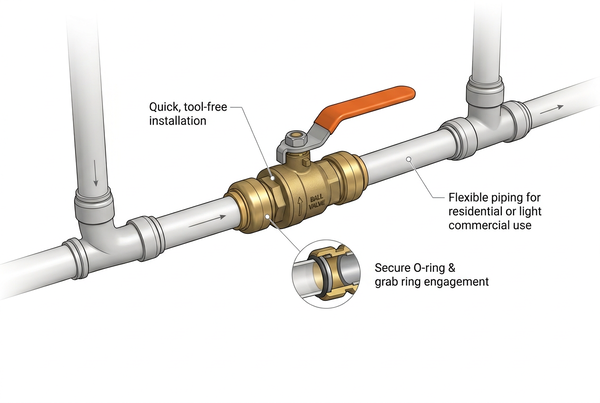
When to Confidently Use a Push Connect Ball Valve
Push connect technology truly excels in situations where speed, flexibility, and ease of installation are paramount, without compromising on a secure seal.
Ideal Scenarios & Applications:
- Quick Repairs & Emergency Fixes: When a pipe bursts or a component fails, a push connect valve can provide an incredibly fast, temporary, or even permanent solution to restore water flow with minimal downtime.
- DIY Plumbing Projects: Homeowners can tackle many plumbing tasks confidently, such as installing a new faucet, connecting a water heater, or adding a shut-off valve, without needing specialized plumbing skills.
- Working in Tight Spaces: The compact nature of push connect valves and the absence of bulky tools make them perfect for cramped areas under sinks, behind walls, or in crawl spaces where soldering or crimping would be difficult or impossible.
- Connecting Dissimilar Pipe Materials: Many push connect valves are designed to work seamlessly with copper, PEX, and CPVC pipes, making transitions between different materials simple and reliable.
- Water Heater & Appliance Connections: Ideal for supply lines to water heaters, dishwashers, refrigerators with ice makers, and washing machines. Their ease of removal () also aids in appliance maintenance.
- Outdoor Spigots & Frost-Free Sillcocks: Excellent for situations where a quick shut-off or connection point is needed and temperature fluctuations are within the valve’s rating.
- Dedicated Supply Stops: For isolating individual fixtures like toilets and sinks, offering straightforward installation and replacement.
- Temporary or Test Connections: Their reusability and ease of disconnection make them great for setting up temporary water lines or pressure testing new plumbing sections.
When to Think Twice: Situations to Avoid Push Connect Valves
While highly versatile, push connect valves do have limitations. Understanding these can prevent potential issues and ensure you choose the right plumbing solution for every unique scenario.
Scenarios Where Alternatives May Be Better:
- High Vibration or Movement: In industrial settings or areas where pipes are subject to constant, significant vibration or mechanical stress (e.g., connected directly to large, vibrating machinery), other connection types might offer a more robust, long-term solution.
- Extreme Temperatures Outside Manufacturer Specs: While rated for a wide temperature range, push connect valves are not suitable for excessively hot steam lines or extreme cryogenic applications. Always check the specific valve’s temperature limits. Freezing conditions in an unheated area can also degrade the O-rings over time if left unprotected.
- Harsh Chemical Environments: For lines carrying highly corrosive industrial chemicals or other aggressive fluids that could degrade the EPDM O-ring seal or brass body, specialized chemical-resistant valves and joining methods are required.
- Direct Burial in Corrosive Soil: While many are approved for underground use, direct burial in certain types of soil (e.g., highly acidic or alkaline) without proper protective wrapping or conduit can accelerate corrosion of the brass body, even DZR brass, over many years. Always follow manufacturer’s guidelines for underground installation.
- Damaged or Poorly Prepped Pipes: A push connect valve will undoubtedly leak if the pipe end is not perfectly clean, round, free of burrs, and inserted to the correct depth. Always follow proper installation steps.
- Non-Standard or Undersized/Oversized Pipes: These valves are precision-engineered for specific pipe sizes and materials. Using them on non-compatible or out-of-spec pipes will result in leaks and potential failure.
- Aesthetics for Highly Visible Areas: In some high-end custom homes where all plumbing is meant to be a design feature, the visible collar of a push connect valve might be considered less aesthetically pleasing than a perfectly soldered copper joint.
| Facteur | Good for Push Connect | Better with Traditional/Specialized |
|---|---|---|
| Installation Speed | ✅ Excellent (minutes) | ❌ Slower (requires soldering/crimping) |
| DIY Friendliness | ✅ High (minimal tools/skill) | ❌ Lower (requires specific tools/skills) |
| Tight Spaces | ✅ Ideal | ❌ Challenging/Dangerous (open flame) |
| High Vibration | ⚠️ Limited tolerance | ✅ Better (e.g., threaded, welded) |
| Extreme Temps/Chemicals | ❌ Not recommended (outside specs) | ✅ Specialized valves/materials |
Making the Right Choice: Key Considerations
To ensure optimal performance and longevity for any plumbing installation, consider these key points:
- Always Use a Quality Brand: Not all push connect valves are created equal. Invest in reputable brands like BCST Valve that adhere to strict manufacturing standards and hold relevant certifications (NSF/ANSI, ASSE, UPC).
- Verify Pipe Compatibility: Ensure the valve is specifically designed for the type and size of pipe you are using (copper, PEX, CPVC). Always use PEX stiffeners with PEX pipes.
- Vérifier les valeurs nominales de pression et de température : Never exceed the valve’s specified operating pressure and temperature limits.
- Master Installation Technique: The vast majority of push connect leaks stem from improper pipe preparation or insufficient insertion depth. Take the time to make clean cuts, deburr thoroughly, and push the pipe fully into the valve.
- Plan for Accessibility: While approved for in-wall use, easy access for future maintenance or removal is always a good practice, especially around critical shut-off points.
Conclusion: Smart Plumbing with the Right Valve for the Job
Push connect ball valves are an invaluable innovation in modern plumbing, offering remarkable convenience and reliability in a wide array of applications. They are robust, highly certified solutions for most common residential and light commercial needs, particularly where speed, ease of use, and versatility with different pipe materials are prized.
However, like any specialized tool, understanding their limitations is just as important as knowing their strengths. By thoughtfully selecting where and when to deploy a push connect ball valve, and always prioritizing quality and correct installation, you can build a plumbing system that is both efficient to install and reliably durable for years to come. Trust BCST Valve to provide the dependable products and expert guidance for all your plumbing needs.
Ready to choose the ideal valve for your project?


 English
 Arabic
 Russian
 French
 Spanish