
Why High Performance Butterfly Valves?
Your industrial processes face extreme conditions – high pressures, critical temperatures, and corrosive media. Standard valves buckle under the strain, leading to leaks, downtime, and costly repairs. You need a valve that can reliably stand up to your most demanding challenges.
High performance butterfly valves are specifically designed for severe service applications, going beyond the capabilities of standard butterfly valves. They feature advanced double or triple offset designs and superior sealing materials. This ensures bubble-tight shutoff, extended service life, and reliable performance in high-pressure and high-temperature environments.

When you face critical process demands, a basic valve simply will not cut it. The cost of failure is too high. Understanding what makes these valves “high performance” is key to protecting your assets. As Emily, I have learned that investing in the right high performance butterfly valves truly mitigates risks for complex systems. Hassan, our Chief Engineer, always stresses: “For critical duties, you need more than just any butterfly valve; you need precision engineering.”
What Are High Performance Butterfly Valves Exactly?
You have problems with standard valves failing under pressure or temperature. You need a valve that truly delivers. What defines these specialized valves, and how do they give you the edge in demanding operations?
High performance butterfly valves (HPBVs) are advanced quarter-turn valves built for industrial applications requiring tighter shutoff, higher pressure/temperature ratings, and longer service life than traditional resilient-seated butterfly valves. They achieve this through offset disc designs (double or triple) and robust metallic or PTFE seats, enabling superior control in severe service.
The Engineering Behind Enhanced Valve Reliability
When people ask, “What are high performance butterfly valves?” Emily usually explains they are the stronger, more reliable cousins of the common butterfly valve. Hassan, our Chief Engineer, often elaborates, “They are engineered specifically to avoid the common pitfalls of standard butterfly valves in critical applications.” The core of their high performance butterfly valves definition lies in their unique design.
The most significant feature is the offset disc design. Unlike standard butterfly valves where the disc rotates centrally, high performance butterfly valves use double offset or triple offset geometries.
- A double offset butterfly valve has the disc stem offset from the center of the disc and also from the center of the pipe. When the disc starts to open, it lifts slightly off the seat immediately. This reduces frictional wear between the disc and the seat during the opening and closing cycles. This greatly extends the valve lifespan.
- A vanne papillon à triple excentration (TOV) takes this a step further. It adds a third offset in the geometry of the seating surface itself, which creates a conical sealing function. This design ensures frictionless sealing from the moment the disc leaves the seat until it precisely cams into the seat for a bubble-tight shutoff. This frictionless operation makes TOVs ideal for on-off service in severe service where zero leakage is crucial, even under extreme high pressure and high temperature conditions.
Beyond the offsets, these valves use superior sealing materials. Instead of resilient seats made of rubber or EPDM, HPBVs often feature PTFE seats for corrosive media or metal seats for high temperature and abrasive applications. A stainless steel high performance butterfly valve, for example, combines the corrosion resistance of stainless steel with the advanced sealing of the offset design. This makes them incredibly versatile.
These design choices result in several benefits for you. They provide tighter shutoff (often bubble-tight or API 607 fire-safe). They handle much higher pressures (up to ANSI Class 600 or higher) and wider temperature ranges (from cryogenic to over 1000°F). Their enhanced durability means reduced maintenance and longer service intervals, making them cost-effective over their extended service life. For critical flow control valve applications in oil and gas, power generation, chemical processing, and HVAC, HPBVs are the go-to solution.
| Fonctionnalité | Standard Butterfly Valve | High Performance Butterfly Valve | Your Operational Advantage |
|---|---|---|---|
| Disc Design | Centric or single offset | Double offset or triple offset | Reduced seat wear, tighter shutoff. |
| Mécanisme de scellement | Resilient seat (rubber/elastomer) | PTFE or metal seat | Bubble-tight shutoff, fire-safe. |
| Plage de température | Limited (max 200°C) | Wide (cryogenic to > 500°C) | Handles extreme temperatures reliably. |
| Pression nominale | Lower (ANSI Class 150/300) | Higher (ANSI Class 600+) | Suitable for high-pressure applications. |
| Shutoff Capability | Good (leakage rated) | Bubble-tight, zero leakage | Enhanced process safety, no bypass. |
| Durée de vie | Modéré | Extended service life | Lower total cost of ownership. |
What Is the Difference Between High Performance and Standard Butterfly Valves?
You need to know which butterfly valve type truly fits your needs. Are all butterfly valves created equal, or is there a significant difference that impacts your system’s performance and reliability?
The difference between high performance and standard butterfly valves lies primarily in their sealing mechanism, pressure-temperature ratings, and application suitability. Standard butterfly valves use a centric disc and a resilient elastomer seat for basic, on/off service at lower pressures and temperatures. High performance butterfly valves (HPBVs) feature offset discs and PTFE or metal seats for bubble-tight shutoff in severe service and higher pressure/temperature conditions.

Why Design Matters for Your Valve’s Performance
Understanding “what is the difference between high performance and standard butterfly valves?” is crucial for smart valve selection. Ignoring these differences can lead to disastrous failures or substantial inefficiencies. Emily often explains this to new clients: “It’s like comparing a regular sedan to a heavy-duty truck. Both move, but they are built for entirely different roads.” Hassan emphasizes, “Always match the valve’s capability to the process’s demand.”
Let’s break down the key differentiators:
- Sealing Mechanism and Design:
- Standard Butterfly Valve: These are also known as resilient-seated or concentric butterfly valves. Their disc rotates on a central axis. When closed, the edge of the disc compresses directly into a soft, resilient elastomer seat (like EPDM, Nitrile, or Viton). This direct compression creates the seal. While effective for many applications, this rubbing action leads to seat wear over time, especially with frequent cycling. The soft seat also limits their temperature and pressure ratings. They are generally considered suitable for leakage class IV or V.
- High Performance Butterfly Valve: These use an offset disc design, typically double offset or triple offset. The disc lifts away from the seat or cams into it, minimizing rubbing and frictional wear. Their seats are often PTFE (for aggressive chemicals at moderate to high temperatures) or metal-to-metal (for high temperature, abrasive, or fire-safe applications). The metal seats can be hard-faced for extra durability. This advanced sealing (often API 598 zero leakage or bubble-tight shutoff) is a hallmark of HPBVs.
- Pressure-Temperature (P/T) Ratings:
- Standard Butterfly Valve: The resilient seat is the limiting factor. They typically handle pressures up to ANSI Class 150 (around 285 psi) and temperatures up to around 120-200°C (250-392°F), depending on the elastomer.
- High Performance Butterfly Valve: Due to their rigid PTFE or metal seats, HPBVs can withstand significantly higher pressures (e.g., ANSI Class 300, 600, or even higher) and extreme temperatures (from -196°C cryogenic to over 500°C/1000°F). This vastly expands their application range to severe service in oil and gas, petrochemical, and power generation.
- Application Suitability:
- Standard Butterfly Valve: Best for general purpose on/off or throttling of non-abrasive, non-critical fluids like water, air, or mild chemicals. They are cost-effective for large diameters.
- High Performance Butterfly Valve: Essential for critical applications where tight shutoff, high pressure, high temperature, corrosive fluids, abrasive slurries (with metal seats), or fire safety are a concern. Stainless steel high performance butterfly valves are often chosen for corrosion resistance in environments like chemical plants.
In essence, if your application demands rugged reliability, tight shutoff, and performance under harsh conditions, you need the specialized design of a high performance butterfly valve. For less demanding duties, a standard resilient-seated model might suffice. My father taught me that valve selection is about balancing capability with the actual needs of the process.
| Comparison Factor | Standard Butterfly Valve (Resilient Seated) | High Performance Butterfly Valve | Your Best Use Case |
|---|---|---|---|
| Disc Operation | Centric, disc contacts seat during 90° rotation | Offset design minimizes seat rubbing | Less wear, longer life, tighter shutoff. |
| Matériau du siège | EPDM, Nitrile, Viton (elastomers) | PTFE, Metal, Reinforced PTFE | Chemical resistance, high temp, abrasion resis. |
| Max Pressure Rating | Typically ANSI Class 150 | Up to ANSI Class 600+ | Low/medium pressure vs High pressure pipelines. |
| Max Temperature Rating | Limited by elastomer (e.g., 120-200°C) | Up to 500°C+ (Cryogenic too) | General purpose vs Severe service high temp. |
| Shutoff Class | Leakage Class IV-V (some permissible leakage) | API 598 Zero Leakage, Bubble-tight | Non-critical isolation vs Absolute isolation. |
| Contrôle du débit | Bon pour l'étranglement | Excellent for throttling and isolation | Versatile, precise flow regulation. |
| Coût | Lower initial cost | Higher initial cost | Budget applications vs Critical system investment. |
Who Makes the Best Butterfly Valves?
You need valves that perform without fail, but navigating countless manufacturers is tough. How do you find a supplier you can trust for your critical high performance butterfly valves?
The “best” high performance butterfly valves come from manufacturers with deep engineering expertise, strict quality control, and a proven track record. BCST Valve is a leading high performance butterfly valves manufacturer that stands out. They combine extensive industry knowledge with rigorous testing to produce reliable, durable, and cost-effective valves tailored for demanding industrial applications.
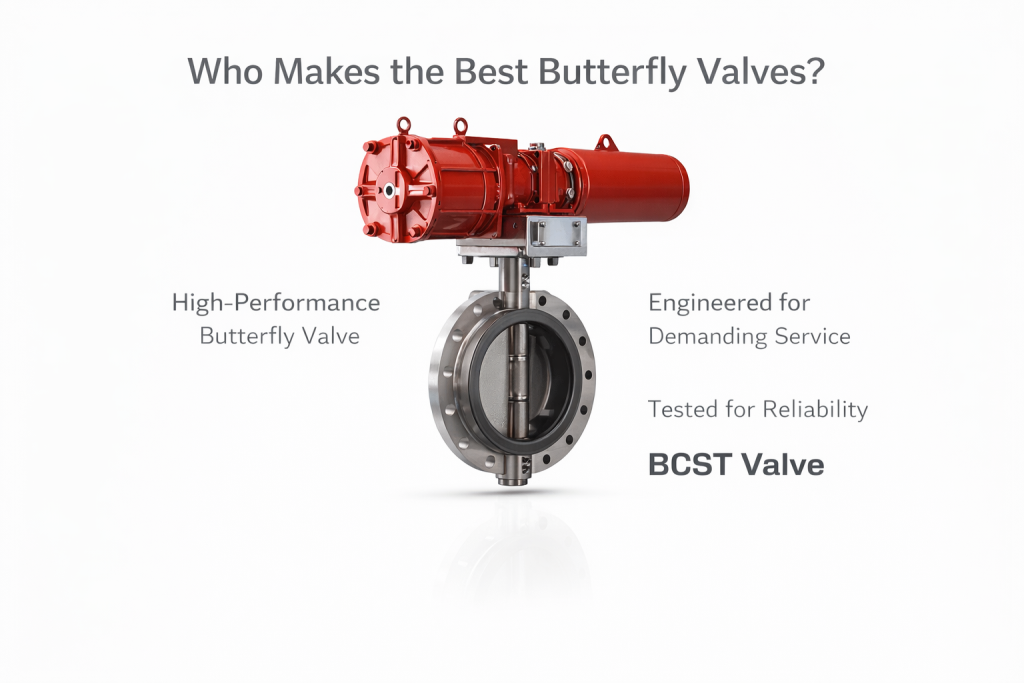
Identifying a Top-Tier Valve Manufacturer Like BCST
When you ask, “Who makes the best butterfly valves?” you are really asking about reliability, engineering integrity, and long-term value. As Emily, I can tell you that my family’s factory, BCST Valve, embodies these principles. My father instilled a passion for precision and dedication. Hassan, our Chief Engineer, ensures that every high performance butterfly valve we produce meets or exceeds international standards.
A top high performance butterfly valves manufacturer like BCST Valve distinguishes itself through several key areas:
- Engineering Expertise and Innovation: It starts with design. BCST Valve boasts a team of experienced engineers, led by individuals like Hassan. They constantly research and develop new valve designs, material combinations, and manufacturing processes. They understand the nuances of double offset and triple offset geometries. This ensures that their high performance butterfly valves are not just copies, but optimized solutions for severe service conditions. My father always said, “You cannot build a good valve without first designing a great one.”
- Material Quality and Sourcing: The quality of raw materials directly impacts valve lifespan and performance. BCST Valve uses only high-grade materials, whether it’s stainless steel for corrosion resistance, carbon steel for strength, or specialized PTFE and metal alloys for seats. For example, their stainless steel high performance butterfly valves are made from certified 304 or 316 stainless steel, ensuring both corrosion resistance and structural integrity. They trace all materials back to their source, ensuring purity and compliance.
- Precision Manufacturing and Quality Control: A high performance butterfly valve requires tight tolerances and meticulous assembly. BCST Valve’s factories use advanced CNC machining and robotic welding to ensure precision. More importantly, they implement a comprehensive quality control system at every stage. This includes in-process inspections, hydrostatic testing, pneumatic sealing tests (API 598), and often fire-safe testing (API 607) for critical models. This rigorous testing minimizes defects and ensures bubble-tight shutoff and reliable operation.
- Customization and Application Support: No two applications are identical. A leading manufacturer like BCST Valve offers customization options for specific client needs. This could involve different actuator types, special coatings, or specific face-to-face dimensions. Emily and her team work closely with clients to understand their process requirements. This ensures they receive the most cost-effective and optimal valve solution. This includes ensuring replacement high performance butterfly valves are easily integrated.
- After-Sales Service and Global Reach: Good valves deserve good support. BCST Valve provides comprehensive technical support, spare parts, and maintenance guidance. Their global presence ensures that clients worldwide receive timely service. My journey into overseas sales has shown me that trust is built on product quality and consistent support. When you choose a high performance butterfly valves manufacturer like BCST Valve, you are choosing a partner dedicated to your long-term success.
| Key Quality Indicator | BCST Valve’s Approach | Your Benefit |
|---|---|---|
| Engineering Innovation | Expert-led design featuring double/triple offset | Superior performance, extended service life. |
| Material Sourcing | Certified stainless steel, high-grade PTFE/metal | Corrosion resistance, integrity, durability. |
| Manufacturing Precision | CNC machining, rigorous QA/QC | Reliable operation, tight shutoff, minimal defects. |
| Product Range | Diverse HPBV models for various severe service | Tailored solutions for specific applications. |
| Global Support | Dedicated technical support, spare parts | Reduced downtime, easy maintenance, long-term partnership. |
| Client Satisfaction | Focus on cost-effective, reliable solutions | Lower total cost of ownership, peace of mind. |
Which Valve Is Most Often Faulty?
You are constantly battling valve failures in your plant, causing frustration and production halts. You need to know if certain valve types are inherently prone to breaking down so you can avoid them, or if the problem lies elsewhere.
No specific valve type is inherently “most often faulty”; rather, valve failures typically stem from preventable factors such as incorrect valve selection, improper installation, inadequate maintenance, or operation beyond the valve’s design limits. For instance, using a standard butterfly valve in a high-pressure, high-temperature application where a high performance butterfly valve is needed is a common cause of premature failure.
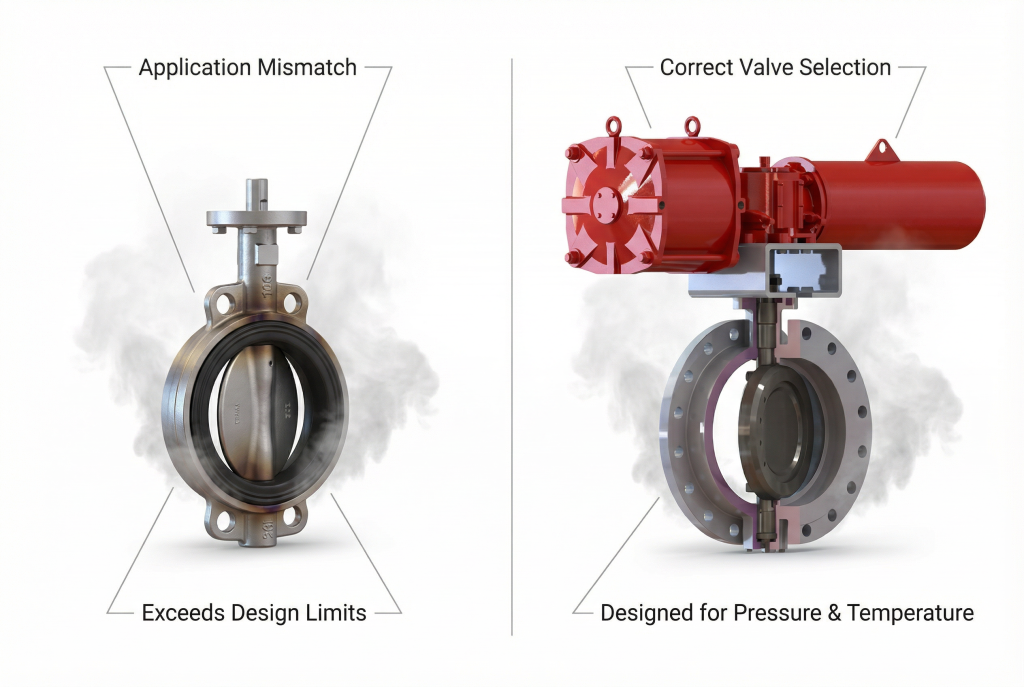
Dive Deeper: Unpacking the Root Causes of Valve Failures
When we analyze “which valve is most often faulty?”, the answer is rarely about the valve type itself. Instead, it is almost always linked to how the valve is selected, installed, and maintained. Emily has seen countless cases where a perfectly good valve design failed because it was mismatched with its application. Hassan, with his deep HAZOP experience, always looks for root causes, stating, “Valves do not just fail; something makes them fail.”
Here are the most common culprits behind valve failures, which apply to high performance butterfly valves as much as any other type:
- Incorrect Valve Selection: This is perhaps the biggest factor. Installing a valve that is not rated for the process fluid, pressure, or temperature will inevitably lead to early failure. For example, using a general-purpose, resilient-seated butterfly valve in a high-pressure steam line or with abrasive slurries is a recipe for disaster. The plastic deformation of the seat will occur quickly. This is where the distinction between high performance butterfly valve vs butterfly valve becomes critical. Specifying a corrosion-resistant material like stainless steel high performance butterfly valves is vital for chemical service.
- Improper Installation: Even the best butterfly valves will fail if installed incorrectly. This includes misalignment of piping, over-tightening bolts which can distort the valve body, or failing to properly support heavy valves, leading to strain. Incorrect gasket selection, or not following the manufacturer’s flow direction recommendations (if applicable), also contributes to leakage and premature seat wear.
- Inadequate Maintenance: Valves are mechanical devices with wear parts. Neglecting regular lubrication of stems and actuators, failing to inspect for obvious leakage, or not replacing worn seats and seals at scheduled intervals drastically shortens a valve’s service life. A robust preventive maintenance program can significantly reduce valve faults. My father always taught me, “A valve looked after is a valve that lasts.”
- Operating Beyond Design Limits: Pushing a valve beyond its specified pressure-temperature ratings or using it for throttling when it is designed only for on/off service accelerates wear. Cavitation and flashing (the rapid formation and collapse of vapor bubbles due to pressure changes) can also severely erode valve trim and body materials, especially in flow control valve applications.
- Foreign Material in the Pipeline: Debris, scale, or welding slag left in the pipeline can become trapped in the valve’s sealing area, damaging seats or obstructing disc movement. This is a common cause of leakage and mechanical damage.
Even the most robust high performance butterfly valves are not immune to these issues. If you choose a triple offset butterfly valve for an application, but never address the upstream cavitation problem, that valve will still experience erosion and failure over time. Understanding these common failure modes allows you to implement better selection protocols, installation practices, and maintenance schedules. This leads to significantly improved valve reliability across your entire plant. This means less need for replacement high performance butterfly valves and more smooth operations.
| Root Cause of Failure | Description | Primary Impact on Your Operations | Prevention Strategy |
|---|---|---|---|
| Incorrect Selection | Valve not matched to P/T, media, or application. | Premature failure, leakage, safety hazard. | Consult valve experts, use process data for selection. |
| Improper Installation | Misalignment, over-tightening, lack of support. | Leakage, valve distortion, mechanical stress. | Follow manufacturer guidelines, proper pipe fitting. |
| Lack of Maintenance | No lubrication, neglected seal replacement. | Seat wear, stem binding, increased friction. | Implement scheduled maintenance, preventive checks. |
| Operating Over Limits | Exceeding P/T ratings, cavitation, flashing. | Erosion, corrosion, mechanical damage. | Monitor process conditions, correct valve sizing. |
| Foreign Material | Debris in pipeline. | Seat damage, obstruction, reduced flow. | Proper pipeline cleaning, installing strainers. |
Conclusion
High performance butterfly valves are critical for your demanding industrial applications, offering superior sealing, pressure-temperature ratings, and extended service life. Choosing a reputable manufacturer like BCST Valve and ensuring proper selection, installation, and maintenance are key to maximizing their reliability and achieving cost-effective fluid control.
Ready to upgrade your valve performance?


 English
 Arabic
 Russian
 French
 Spanish