
Are you looking for a simple on/off valve but worried about leaks or pressure loss? Choosing the wrong one causes real headaches. The gate valve is a time-tested solution for straightforward, reliable shutoff.
A gate valve is a type of valve designed to either start or stop the flow of a fluid completely. It’s not made for adjusting flow levels. Its job is to provide a wide-open path for fluid to move through, creating very little pressure drop, which makes it perfect for isolation tasks.
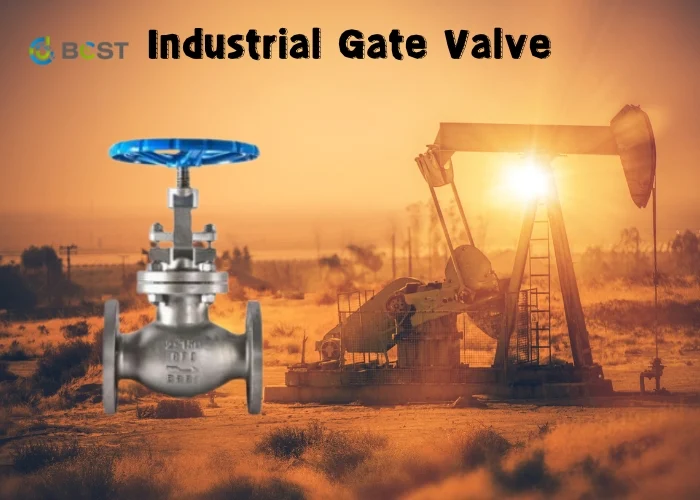
When I was younger, my father would unroll these giant blueprints on our dining room table. To me, they were just a maze of lines and strange symbols. But he’d point to one simple symbol and say, “Emily, start here. This is a gate valve. If you understand this, you understand the backbone of a robust piping system.” That simple lesson has been my guide ever since. Before we dive into what a gate valve is used for, let’s make sure we’re on the same page about what it is.
An Introduction to the Vanne à guillotine
Do you ever feel a bit lost looking at a complex piping and instrumentation diagram (P&ID)? You’re not alone. Let’s start by getting to know one of the most common valves you’ll see on those charts.
A gate valve is named for its core component: a solid, flat gate. This gate moves straight up and down, much like a small sluice gate inside the pipe. It slides down to block the flow and pulls up to let it pass through. It is a very direct way to control the flow.
To truly grasp what a gate valve is used for, you need to know its main parts. The handwheel is what an operator turns. This connects to a long rod called the stem, which moves the gate up or down. The body is the main housing that connects to the pipes, and the bonnet is the cap that seals the top.
One of the first big distinctions you learn is between a rising stem and a non-rising stem. A rising stem moves up and down externally as you turn the handwheel, so you can see if the valve is open or closed from a distance. It’s a great visual check. A non-rising stem stays put, which is perfect for tight spaces or underground pipes where you don’t have extra room. I learned this when a client almost installed the wrong type in a cramped pump room; having that rising stem would have blocked an accessway. It’s a small detail that has big consequences.
Here’s a simple way to compare them:
| Fonctionnalité | Robinet-vanne à tige montante | Non-rising Stem Gate Valve |
|---|---|---|
| Visual Indication | You see the stem is up, so the valve is open. | You can’t tell its position by looking; an indicator is needed. |
| Besoin d'espace | Needs extra vertical space for the stem to rise. | Very compact, ideal for small spaces or buried lines. |
| Stem Protection | Stem threads are outside, easy to lubricate and clean. | Stem threads are inside, touching the fluid, which causes wear. |
| Utilisation courante | Anywhere an operator needs a quick visual confirmation. | Best for underground use or in tight, enclosed areas. |
Even the gate itself has variations, from a solid piece of metal to a more flexible design that seals better under high pressure. When choosing a gate valve, these details about its design and materials—like cast iron for water or stainless steel for chemicals—are what ensure it will do its job properly for years to come.
How a Gate Soupape Operates
The inside of a valve is a black box to many people. If you’re the one picking it, that uncertainty isn’t good. Let’s pull back the curtain and see exactly what’s happening inside.
A gate valve works simply by lifting its gate clear out of the fluid’s path. When you turn the handwheel, the stem lifts the gate, opening up a straight, clear passage. A fully open gate valve creates negligible resistance to flow.
The beauty of a gate valve is its simplicity. When you want flow, you turn the handwheel counter-clockwise. This twists the stem and smoothly lifts the gate. When fully open, the valve is just an open port in the line. The fluid moves straight through without much turbulence. This is a massive plus in systems where you must not lose pressure, like in long-distance pipelines. When I talk with engineers like Hassan, who design entire chemical plants, they tell me they use gate valves for exactly this reason on their main isolation lines—they need maximum flow with minimum fuss.
To close it, you turn the handwheel clockwise. The gate slowly travels down until it presses tight against the valve seats, creating a strong seal and cutting off the flow. This slow, multi-turn operation is a built-in safety feature. It prevents a dangerous pressure surge called “water hammer,” which happens if you stop a high-velocity flow too suddenly and damage the pipes.
The ‘Don’t’ of Gate Valves: Throttling
Here is the single most important rule I share with every client and new engineer: never use a gate valve to adjust or throttle flow. While it’s tempting to open it halfway, this is a quick way to destroy the valve. When a gate valve is partially open, the fluid is forced through a small space at very high speed. This causes the gate to vibrate violently, and the high-speed flow acts like a sandblaster, eating away at the surfaces of the gate and seats. This damage, called erosion, will quickly ruin the valve’s ability to seal tightly, leading to leaks and failure. A gate valve has only two jobs: be fully open or be fully closed.
Common Applications for a Gate Valve
Picking the perfect valve for a specific job is everything. One wrong choice means a damaged pump or even a plant shutdown. Let’s talk about where the gate valve is the undisputed champion.
A gate valve is the go-to choice for on/off service that doesn’t happen frequently. You’ll find it on main water lines, at equipment isolation points, and in systems moving thick or slurry-like fluids, thanks to its clear, straight flow path.
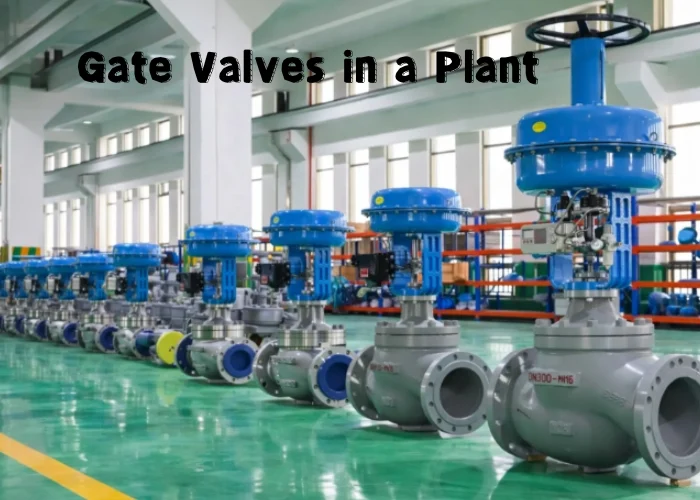
Now that you know how a gate valve works, let’s look at where you’ll find them in the real world. Their simple, tough design makes them a staple in heavy industry, where they perform the same critical role over and over.
Primary Isolation Duties
The number-one job for a gate valve is as a block or isolation valve. Think about a pump that needs repair. To work on it safely, you must completely cut off all fluid going to and from it. You install a gate valve on the pipe before the pump and another one on the pipe after it. By closing both gate valves, you create a safe, isolated work zone. Since this is an infrequent task, the slow, deliberate action of the gate valve is perfectly fine.
Applications Across Industries
The gate valve is a true workhorse you’ll find in every heavy industrial sector.
- Water and Eaux usées: Big gate valves are used on the main lines that bring water into a city and in the distribution system. Their ability to open fully is key to moving massive volumes of water efficiently.
- Oil and Gas: This industry relies heavily on them. From remote pipelines to sprawling refineries, gate valves are used to isolate huge sections of pipe. Their design is great at handling thick crude oil.
- Production d'électricité : In power plants, you’ll find special gate valves on steam lines that operate under incredible pressure and heat. They are built from strong alloys to handle these tough conditions safely.
- General Industrial and Traitement chimique: If a fluid has solids mixed in, like a slurry, a gate valve is the best choice. The gate powers through the thick liquid to close, and the straight path when open prevents clogging.
From my first days learning on the factory floor to helping clients all over the world, I’ve seen firsthand how important a reliable valve is. Knowing that an engineer is counting on our valve to keep their process running and their team safe is a huge responsibility. It’s why at Groupe BCST, we put so much care into every gate valve we produce. We know it has a critical job to do.
Frequently Asked Questions (FAQs)
Q: What is the main difference between a gate valve and a ball valve?
A: A gate valve uses a sliding gate for slow, deliberate on/off control and gives you a clear, straight path for flow. A ball valve uses a rotating ball for fast, quarter-turn shutoff and is more compact.
Q: Can a gate valve be used for throttling?
A: Absolutely not. Trying to regulate flow with a gate valve causes severe vibration and rapid wear, leading to leaks and valve failure. They are designed only to be fully open or fully closed.
Q: Why choose a rising stem gate valve?
A: A rising stem gives you an instant visual sign of the valve’s position. When the valve is open, the stem is up and visible. This is a simple but important safety feature for operators in a busy plant.
Dernière réflexion
To sum it up, the gate valve is an industry standard for on/off control, especially when you can’t afford pressure loss and need a clear flow path. For isolating equipment or controlling a main line, it is a tough, reliable choice. When you need a gate valve built to last, trust the experts at BCST.



 English
 Arabic
 Russian
 French
 Spanish