
Which Small Ball Valve Is Safe for Your Steam Line?
Are you specifying a small ball valve for a steam line? Using a standard water or air valve is a dangerous mistake. The intense heat and pressure of steam can cause the valve seats to fail and the body to weaken, leading to catastrophic leaks, equipment damage, and serious safety hazards for your team.
For any steam service, you must use a valve specifically rated for steam. This means it must have high-temperature seats, like PEEK or Reinforced PTFE, and a body material like Stainless Steel 316. Crucially, it must also feature a blow-out proof stem for safety.

I’ve seen it happen too many times: an engineer sees a high WOG (Water, Oil, Gas) pressure rating and assumes the valve is strong enough for steam. But that rating is for ambient temperatures. Steam is a completely different challenge. Understanding this difference is the first step to ensuring the safety and reliability of your system. Let’s explore what makes a valve truly “steam rated.”
Why Do Standard Ball Valves Fail in Steam Service?
Your new ball valve, rated for 600 WOG, just failed after a month on a 150 PSI steam line. You’re frustrated because you thought the pressure rating was more than enough, and now you have an unexpected shutdown.
The problem lies in not understanding the difference between WOG and WSP/SWP ratings. A WOG rating is for cold, non-shock pressure. The Working Steam Pressure (WSP) or Steam Working Pressure (SWP) rating, which is much lower, is the only one that matters for steam applications.
Dive Deeper: The Destructive Power of Temperature
Steam service isn’t primarily a pressure challenge; it’s a température challenge. High temperatures attack every part of a valve, but they are most destructive to the soft seats that create the seal.
The Weakest Link: Valve Seats
Standard PTFE (Teflon) seats, common in general-purpose valves, begin to soften and deform significantly around 350°F (177°C). Saturated steam at just 120 PSI is already at 350°F. This is why standard valves fail so quickly. For steam, you need advanced seat materials.
- Reinforced PTFE (RPTFE): Glass or carbon fibers are added to standard PTFE to increase its strength and temperature resistance, often pushing its limit up to 450°F (232°C). It is a good, cost-effective choice for many low to medium-pressure steam applications.
- PEEK (Polyetheretherketone): This is a high-performance polymer that is the gold standard for demanding applications. It maintains its strength and sealing ability at temperatures up to 500°F (260°C) and higher, making it ideal for saturated and even some superheated steam services.
| Matériau du siège | Max Temperature (Approx.) | Meilleur pour |
|---|---|---|
| Standard PTFE | 350°F (177°C) | Not for Steam |
| RPTFE | 450°F (232°C) | Low to Medium Pressure Steam |
| PEEK | 500°F+ (260°C+) | Saturated & Superheated Steam |
The Safety-Critical Component: The Stem
Steam pressure actively tries to push the valve stem out of the body. A “blow-out proof stem” is designed with a shoulder or collar on the inside, so even if the packing fails, the stem cannot be ejected by the line pressure. This is a non-negotiable safety feature for any steam valve.
Is Stainless Steel or Brass Better for Steam Valves?
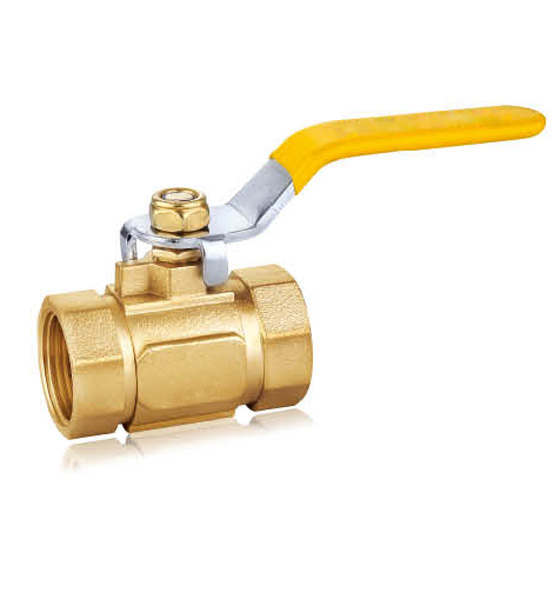
You’re trying to choose between a more affordable brass valve and a pricier stainless steel one for your steam tracing lines. You want to save on costs, but you’re worried about the long-term reliability and safety of using brass.
The answer depends on your steam quality, but Stainless Steel (SS316) is the superior and safer choice for almost all steam applications. Brass can be used for low-pressure saturated steam, but it is vulnerable to corrosion from boiler water treatment chemicals, leading to premature failure.
Dive Deeper: Matching Materials to Steam Conditions
The body material must contain the pressure at temperature without corroding.

1. Brass
Brass is an alloy of copper and zinc. It’s often used for low-pressure utility steam.
- Limitation: If boiler water contains amines or ammonia for pH control (which is common), it can cause “dezincification,” where the zinc leaches out of the brass alloy. This weakens the material, making it porous and brittle, which can lead to sudden failure. I only recommend brass for clean, untreated, low-pressure steam, which is rare in industrial settings.
2. Stainless Steel (SS316)
This is the go-to material for small steam ball valves.
- Benefit: SS316 offers excellent corrosion resistance to boiler feedwater chemicals and condensate. It also maintains its mechanical strength very well at the temperatures typical for saturated steam. It provides the best balance of performance, safety, and cost for the vast majority of steam applications up to 3″.
3. Carbon Steel (A216 WCB)
For very high-pressure and superheated steam (above 450°F), you might see carbon steel valves.
- Benefit: Carbon steel retains its strength at higher temperatures better than stainless steel.
- Limitation: It has poor corrosion resistance to wet steam or condensate and is generally used only in steam systems that are guaranteed to be dry and superheated.
How to Select a Small Ball Valve for Steam: A Checklist
You have all this information, but you need a simple process to make sure you don’t miss a critical detail. Ordering a valve with the wrong end connection or seat material can cause major project delays.
Follow this checklist: First, define your exact steam conditions (pressure and temperature). Then, use that data to select your seat and body material. Finally, specify your size, end connections, and confirm it has a blow-out proof stem and a WSP rating.
Dive Deeper: Your 5-Step Selection Guide
Follow these steps every time you specify a small steam valve to ensure you get the right product.
1. Identify Your Steam Conditions:
- What is the maximum operating pressure (PSI)?
- What is the maximum operating temperature (°F or °C)?
- Is it Saturated Steam (wet) or Superheated Steam (dry)? This is critical for material selection.
2. Select the Seat Material:
- Refer to the temperature chart above. For most saturated steam up to 150-250 PSI, RPTFE is a viable option. For higher pressures or for an extra margin of safety, PEEK is the superior choice.
3. Select the Body and Trim Material:
- For nearly all small process steam lines (steam tracing, trap isolation, instrumentation), SS316 is the correct and safest choice. Avoid brass unless it’s a non-critical, low-pressure, clean steam application.
4. Specify Size and End Connections:
- What is the pipe size? (e.g., 1/4″, 1/2″, 3/4″, 1″)
- How does it connect? For small steam valves, Threaded (NPT) or Socket Weld are the most common. Ensure the connection type is rated for the steam pressure.
5. Confirm Safety and Quality:
- Does the valve have a clear WSP/SWP rating stamped on the body?
- Does the spec sheet confirm a blow-out proof stem design?
- Does it have a locking handle for LOTO (Lockout-Tagout) if required for your safety procedures?
- Ask your supplier for Material Test Reports (MTRs) to verify the materials are authentic.
By following this process, you move from guessing to making an informed engineering decision.
Conclusion
Choosing the right small ball valve for steam is about prioritizing temperature resistance and safety. Always select a valve with a clear WSP rating, high-temperature seats like PEEK, a stainless steel body, and a blow-out proof stem.


 English
 Arabic
 Russian
 French
 Spanish