
Sediment Jamming in Sluice Gates: Why Fine Silt, Trash, and Debris Cause Torque Spikes and Incomplete Closure
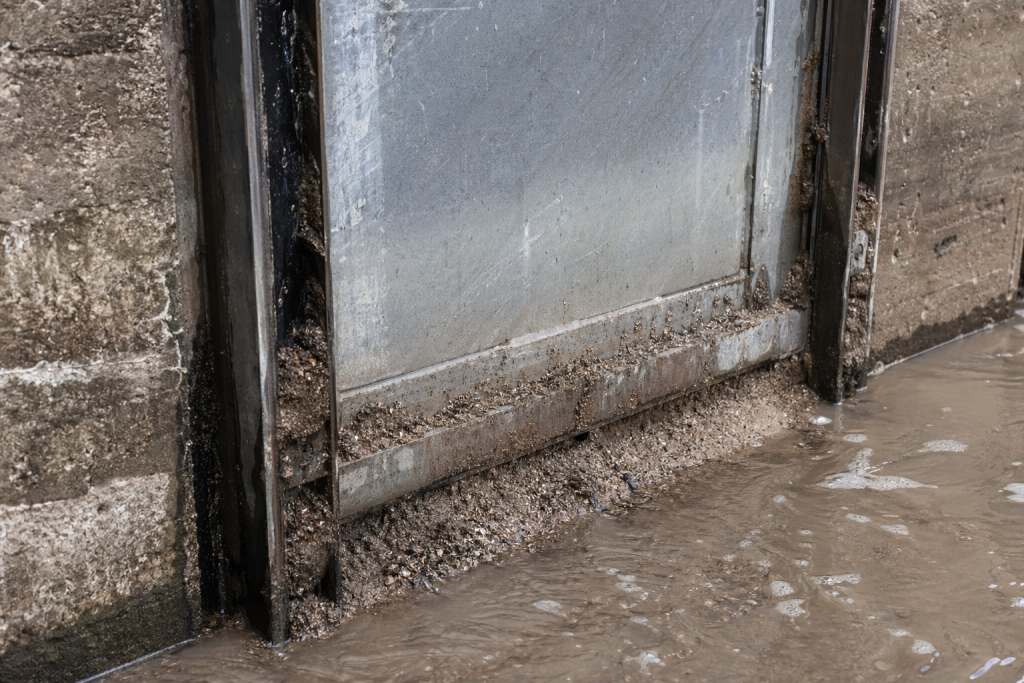
The operator blames the actuator because the heavy sluice gate suddenly needs more torque to move, or worse, never fully closes. But in many channels, the real problem starts lower down—where fine silt, trash, and abrasive fines accumulate. This pervasive issue of sediment jamming in sluice gates is not a beginner topic; it’s a painful operating reality in irrigation, stormwater, wastewater, and intake structures, compromising both reliability and sealing integrity.
This guide targets plant engineers and maintenance teams confronting unexpected sluice gate torque spikes et incomplete gate closure due to debris. We’ll explore why accumulated sediment drastically changes operating torque, why blaming the actuator is often the wrong first diagnosis, and the critical role of flush-bottom design, guide clearance, and invert design. Learn the importance of material and coating choices for abrasive service and when a full sluice gate retrofit is superior to constant maintenance cycles.
Quick Answer: Sediment jamming in sluice gates occurs when fine silt, grit, and debris accumulate around the gate leaf and guides, increasing friction and changing load paths. This requires significantly higher operating torque, causing torque spikes and often leading to incomplete gate closure due to debris.
1. Why Sediment Changes Operating Torque
The operational torque of a sluice gate is calculated based on hydrostatic forces, friction from seals, and friction within the guides. However, when sediment and debris enter the equation, these factors can increase exponentially, leading to sluice gate operating torque increase.
The Mechanics of Sediment Friction
- Increased Friction Load: Fine silt, sand, and grit become trapped between the sliding surfaces of the gate leaf and its guides, turning smooth movement into a grinding action. This dramatically increases the coefficient of friction and requires greater force to move the gate, resulting in sluice gate high torque operation.
- Debris Fouling: Larger debris like rags, plastics, or vegetation can wedge themselves around the perimeter of the gate leaf or in the guides, physically obstructing movement and causing localized binding.
- Sediment Accumulation on Bottom: If the invert (channel bottom) is not clean or flat, accumulated sediment prevents the gate from fully closing, leading to incomplete gate closure due to debris and potential leakage (sluice gate leakage causes).
- Hydraulic Loading Changes: Accumulation of sediment can alter the hydraulic profile, potentially increasing the differential pressure the gate must operate against, further adding to the required torque.
2. Why “The Actuator is Too Small” is Often the Wrong First Diagnosis
When a gate struggles to operate, the immediate reaction is often to blame an undersized actuator or motor. However, for sluice gate jammed by sediment scenarios, this is frequently a misdiagnosis that overlooks the fundamental problem.
The Actuator Sizing Margin Trap
Actuators are typically specified with a safety margin to handle calculated operating loads, plus some contingency for minor fouling. However, sluice gate torque spikes caused by severe sediment accumulation can easily exceed even generously sized actuators. The actuator might be perfectly capable of handling its design load; the problem is that the *actual* load has far surpassed the design operating conditions due to external factors.
Upgrading to a larger actuator can sometimes mask the underlying issue, leading to:
- Higher initial capital cost.
- Increased power consumption.
- Accelerated wear on mechanical components, as a larger actuator can generate forces that damage the gate itself or its frame.
- Failure to address the source of sluice gate debris incomplete closure, meaning problems persist.
3. Debris Path, Guide Clearance, and Invert Design
Efficace sluice gate debris handling starts with smart design that minimizes accumulation and facilitates self-cleaning.
Critical Design Elements for Sediment Resistance
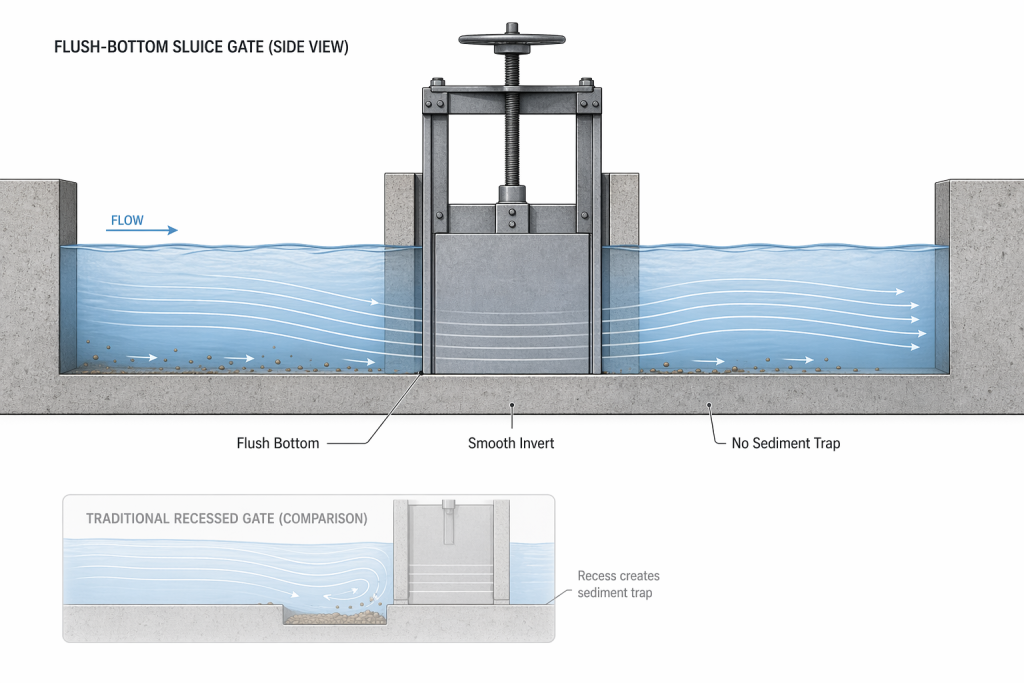
- Flush-Bottom Design: A gate with a flush-bottom sluice gate design seats directly onto a smooth, flush invert, eliminating recesses where silt can accumulate and prevent full closure. This is paramount for preventing sluice gate silt buildup maintenance.
- Optimized Guide Clearance: Guides must be tight enough to prevent excessive vibration but wide enough to allow some passage of fine particulates without binding the gate. Too tight, and even fine silt becomes abrasive.
- Invert Profile: A smooth, flat, self-scouring invert helps prevent sediment from settling directly beneath the gate. Inclined or v-shaped inverts can sometimes assist, directing debris away from the sealing surface.
- U-Frame Gates: For channels with extremely high debris loads, a U-frame gate (which extends below the bottom of the channel and lifts sediment clear) can be considered, though it adds significant civil work.
4. Manual vs. Electric/Hydraulic Operation Under Dirty Service
The choice of operating mechanism significantly impacts performance and maintenance requirements in dirty service conditions.
Operating Under Abrasive Conditions
| Operation Type | Pros for Dirty Service | Cons for Dirty Service |
|---|---|---|
| Manual (Handwheel) | Operator can “feel” obstructions, apply intermittent force | Fatigue, slow, limited force, risk of injury if jammed severely |
| Electric (Motorized) | Consistent, high torque, quick operation | Can damage gate/actuator if obstruction not detected; prone to stalling |
| Hydraulic/Pneumatic | High force, good speed, can handle binding better than electric (with pressure relief) | Higher complexity, need for HPU/compressor, greater maintenance |
For automated systems, proper actuator sizing margin and torque limiting switches are crucial. Torque sensors can provide feedback to detect sluice gate operating torque increase early, preventing damage.
5. When Retrofit is Better Than Repeated Maintenance
If your sluice gate silt buildup maintenance is becoming a weekly or monthly headache, the long-term cost-benefit analysis often tilts towards a permanent solution: a gate designed for abrasive conditions.
Material and Coating Choices for Abrasive Service
- Stainless Steel (304/316): Offers good corrosion resistance and is ideal for many water applications where abrasion is moderate.
- Ultra-High Molecular Weight Polyethylene (UHMWPE) on Guides: Low-friction, highly abrasion-resistant lining for guides reduces friction even with grit present.
- Hard Coatings: For severe abrasive service, specialized hard-facing or ceramic coatings on sealing surfaces and guides can dramatically extend life.
- Rubber Seals: While vulnerable to cutting, certain robust rubber compounds can withstand abrasive action better than rigid plastics.
If repeated maintenance (e.g., clearing debris, replacing seals) costs more than a new, appropriately designed gate over 3-5 years, then a sluice gate replacement existing embedment solution or a full custom sluice gate retrofit becomes the more economical choice.

FAQ on Sluice Gate Sediment Jamming
Can an actuator be damaged by sediment jamming?
Yes, absolutely. If a motorized actuator repeatedly encounters excessive torque from jamming, it can cause motor burnout, gearbox failure, or damage to the stem and stem nut, leading to costly repairs or replacement.
What is a “flush-bottom” sluice gate?
A flush-bottom sluice gate is designed so that its bottom seal seats directly onto a clean, flat channel invert. This design eliminates recesses or ledges where sediment can accumulate and interfere with full closure, significantly reducing jamming and leakage caused by silt.
How often should sluice gates in dirty service be inspected?
Inspection frequency depends on the severity of the dirty service. In channels with consistent silt or debris, gates might require daily or weekly visual checks for accumulation, and more thorough inspections (including operating torque trending) monthly or quarterly, versus annual for clean service.
Conclusion: Engineering Resilience Against Nature’s Grit
The silent enemy of water control systems, sediment jamming in sluice gates, is a complex challenge that demands intelligent design and material selection, not just brute force. By recognizing that sluice gate torque spikes et incomplete gate closure due to debris are symptoms of fundamental design interactions with environmental factors, engineers can proactively implement lasting solutions.
At BCST Valve, we specialize in manufacturing robust sluice gates purpose-built for abrasive, debris-laden environments. Our expertise in flush-bottom sluice gate design, optimized guide clearances, and wear-resistant materials ensures your gates operate reliably, minimizing sluice gate silt buildup maintenance and maximizing operational uptime in even the dirtiest applications.
Need a Gate Design Better Suited for Silt, Trash, or Abrasive Service?
Share your channel conditions and operating frequency with our experts for a customized, sediment-resistant solution.


 English
 Arabic
 Russian
 French
 Spanish