
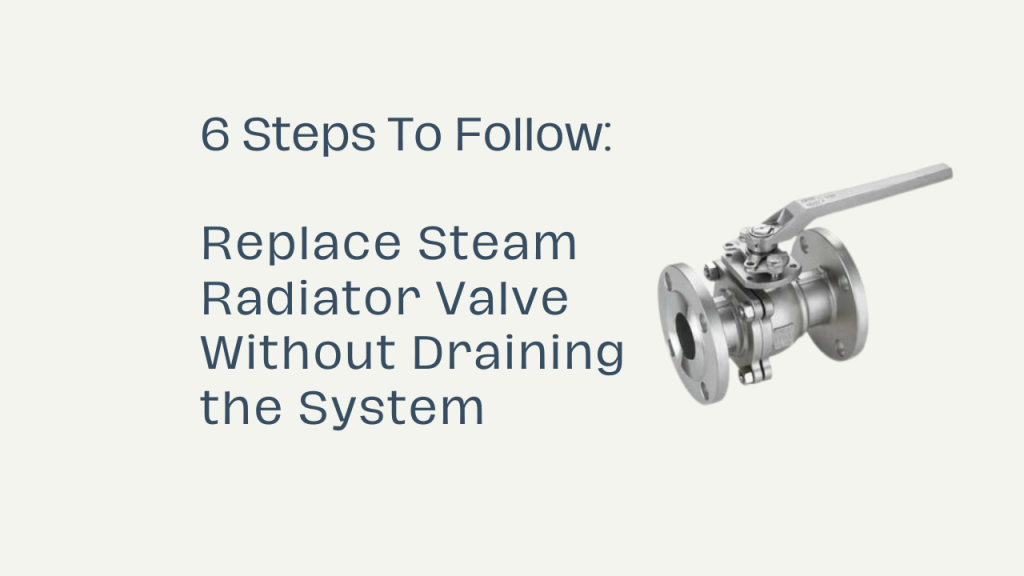
Replacing a steam radiator valve can be achieved without draining the whole system and is an effective way to maintain the proper functioning of your home heating system. While some homeowners take it for granted that a complete draining of the system is a must for replacing a valve, you could save quite a bit of time with the correct tools and techniques and avoid this lengthy procedure. This guide will help you to replace a steam radiator valve without the inconvenience of draining the entire system. This method will allow you to save time and effort and restore your radiator’s utmost performance at the same time.

Why Is It Necessary To Replace Steam Radiator Valve Matters
One of the most important roles that these steam radiator valves play is the optimization of the heat distribution in your home. These valves, with time, may fail because they wear out and deteriorate. As a consequence, you can experience inconsistent, inadequate, or nonexistent heat, or the radiator might cease functioning altogether. The radiator may not be able to heat up when a valve is no longer entirely functional, which can lower the effectiveness of the entire system.
Faulty valves can result in:
Inefficient Heating
Rooms may not heat properly if the steam flow is poorly regulated.
Increased Energy Bills
Leaky valves waste steam, leading to higher heating costs.
Risk of Damage
Water or steam that leaks from a problematic valve can be a source of damage to your flooring or nearby objects.
System Imbalance
In a multi-radiator setup, one valve can miss a signal and disrupt the balance, causing an uneven heat distribution across the house.
Since these problems exist, it is of importance to know the way of replacing the radiator valve without draining the system. It is an essential skill not only for minor fixes but also for the system’s proper functioning and energy saving.
Replace Steam Radiator Valve – Essential Tools and Materials
The apprehension of the right tools is crucial before you throw yourself into replacing a radiator valve. These are a few things that must be kept in mind to ensure that everything is ready:
· Adjustable wrench
· Pipe wrench (for stubborn valves)
· Teflon tape (for sealing threads)
· Replacement steam radiator valve (make sure it’s the correct size and type for your radiator)
· Towels or rags (to catch any potential leaks)
· Heat-resistant gloves (optional but recommended)
If you manage to carry out the process with these tools, you will not encounter any problems, and it will be quick and easy.
Step-by-Step Guide: How to Replace Steam Radiator Valve Without Draining the System
1. Turn Off the Steam System
Your priority is safety, so ensure the steam system is off when you are working on any radiator. This will prevent the steam from escaping and also make sure that the system is not pressurized during the replacement process. You should also allow the radiator to cool down completely to avoid burns from hot surfaces or steam.
2. Loosen the Old Valve
Carefully unscrew the old valve from the radiator with the help of your wrench. In case you have been using the radiator for a long period of time, the valve may be tight to fix and needs a little bit more effort. In such situations, a pipe wrench can be used to have some extra leverage to get the valve out and not spoil the radiator.
While unscrewing, you should be ready to get a little bit of water or steam if the radiator has been working recently. To catch any leaks and keeping the area clean and safe, it helps to have a pile of rags set nearby.

3. Remove the Old Valve
If the old valve is unscrewed, fully unscrew it &pull it off the radiator. Inspect the threads on the radiator for rust or dirt. Cleaning the threads provides the fitting for the new valve to be more smooth and the risk of leak is minimized by doing that.
4. Prepare the New Valve
Prior to the installation of the new valve, make certain the threads on the radiator are wound with Teflon tape. This is an essential step for the creation of a watertight seal and it is also important for the prevention of water leakage once the machine is running again. Make sure to circulate the tape tightly around the threads, so the tape can join to them effectively, but don’t go beyond the necessary layering which can be a trouble spot.
5. Install the New Valve
Next, thread the valve into the radiator by hand. Ensuring that it is aligned properly with the threads. Once the valve has been hand-tightened, securely hold it in place with an adjustable wrench. It is important to avoid over tightening, as this could harm the threads on the radiator or the valve.
6. Check for Leaks and Test the System
After the valve has been changed, go ahead and turn on your steam system. Let the radiator heat up and take a good look at the new valve, and see if any leaks are present. In the event of no steam or water leaking, you have had a successful replacement. In the event of minor leaks, you may need to tighten the valve slightly more or reapply Teflon tape.
Why Avoid Draining the System?
The top benefit of learning how to get the radiator valve replaced without turning the system off is that of time saving. To remove a steam system, it can take several hours on account of the size and complexity of the system. After you have already drained the system, airlocks might appear when you refill it, which is what causes those that cannot be controlled or those that need to be corrected afterwards.
If you don’t want to drain the whole system, you will:
· Save Wall Clock Time:
The operation results in less time spent so you will be able to regain the lost functionality as soon as possible.
· Minimize system interruptions
: By keeping the system clean of air, the system’s successful operation is maintained.
· Lower probability of failure
: It is demanding to drain and subsequently refill radiators, mainly where not only one at a time but several radiators are concerned.
When to Call a Professional for Valve Replacement
In many scenarios, homeowners can very well install steam radiator valve
themselves but there are some conditions when it is essential calling a professional. For instance, if the valve is so rusted that it cannot be moved or is jammed, you should leave it to a professional so that there is no damage caused to the radiator. And again, if the boiler is really hard to work with, or in the case where there are too many leaks, you should call the repair-your-home person to check on the job and fix it.
Final Thoughts: Maintain Efficiency Without Draining the System
Mastering the skill of valve replacement without draining the system by the steam radiator is a plus for a homeowner.
This not only means that you complete the process faster but it also means that the heating system works efficiently and without breaks. Doing the steps explained in this manual and using the proper devices, you will be capable of replacing worn-out valves quickly and safely, resulting in a warm and cozy home.


 English
 Arabic
 Russian
 French
 Spanish