
The Y-Strainer Handbook: A Complete Guide to Selection, Sizing, and Maintenance
Your foundational resource for protecting critical equipment and optimizing fluid system performance.
Often underestimated yet critically important, the Y-strainer plays a vital role in safeguarding expensive pumps, valves, and instrumentation from damage caused by debris in pipelines. From power generation to water treatment, and chemical processing to HVAC systems, these simple-yet-effective mechanical filters prevent operational disruptions and costly downtime. For both junior engineers navigating system design and experienced maintenance technicians troubleshooting flow issues, a thorough understanding of Y-strainers is indispensable.
For Whom This Guide Is: This comprehensive handbook is designed for junior engineers, maintenance technicians, procurement specialists, and engineering students who need a solid grasp of Y-strainer anatomy, functionality, selection criteria, sizing considerations, and best practices for installation and maintenance. BCST Valve has decades of experience manufacturing reliable straining solutions for virtually any application.
This guide from BCST Valve will serve as your definitive, one-stop resource. We’ll cover everything from the basic anatomy and why it works, through complex material and screen selection, to critical sizing and proper maintenance procedures. Equip yourself with the knowledge to ensure your fluid systems run cleanly and efficiently.
What is a Y-Strainer and Why is it Essential?
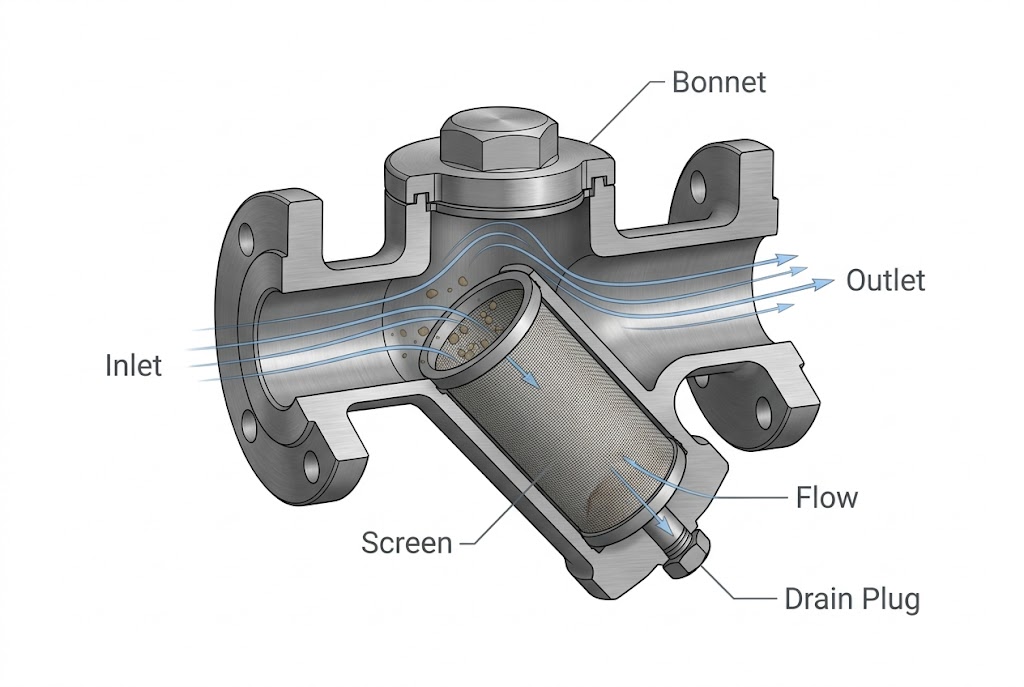
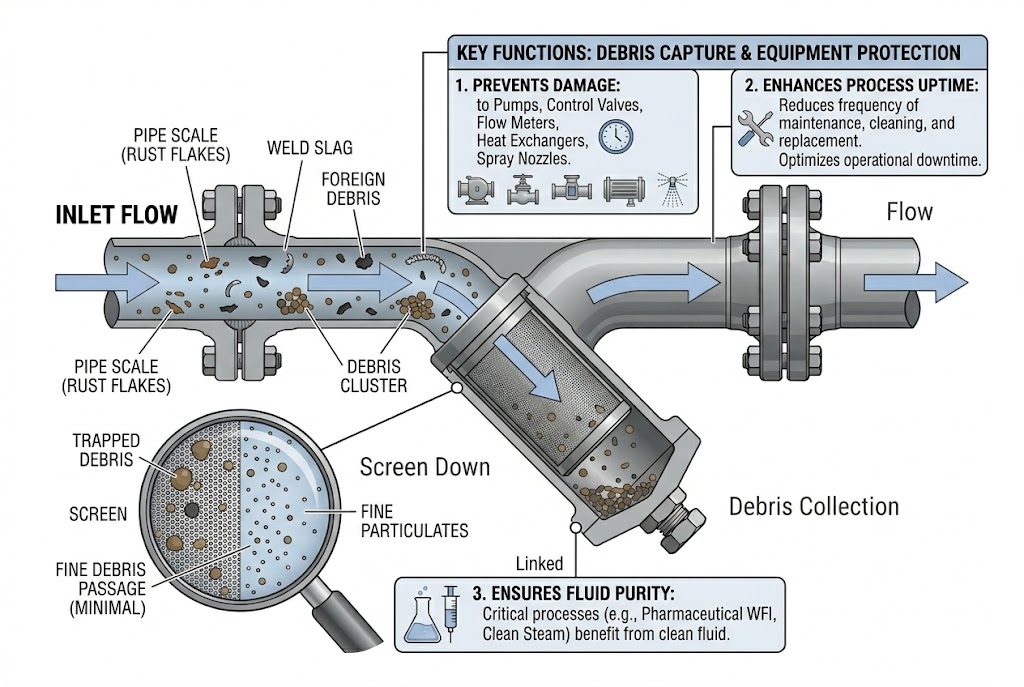
A Y-strainer is a mechanical device designed to remove unwanted solid particles from liquid, gas, or steam lines by means of a perforated or wire mesh straining element. It’s named for its “Y” shape, which allows the straining element (screen) to be positioned at an angle to the main flow, enabling it to collect debris without significantly impeding the flow path.
Key Functions:
- Protection de l'équipement : Prevents damage to pumps, control valves, flow meters, heat exchangers, and spray nozzles from pipe scale, rust, weld slag, or other foreign debris.
- Process Uptime: Reduces the frequency of maintenance, cleaning, and replacement of downstream equipment, thereby optimizing operational uptime.
- Fluid Purity: Ensures the cleanliness of the fluid or gas for critical processes, such as injectable water in pharmaceutical production or clean steam for sterilization.
Anatomy of a Y-Strainer: Components and Materials
Understanding the internal structure is crucial for proper selection and maintenance.
Key Components:
- Le corps : The main housing, typically constructed from cast iron, ductile iron, carbon steel, stainless steel, or bronze.
- Straining Element (Screen): The heart of the strainer, usually made of stainless steel (304 or 316), brass, or Monel. It can be perforated metal (for larger particles) or wire mesh (for finer particles).
- Screen Cover/Cap: Provides access to the screen for cleaning or replacement. Can be bolted, flanged, or threaded.
- Blow-off (Drain) Port: Located at the bottom of the screen cover/cap, allowing for debris to be flushed out without removing the screen (common for highly contaminated lines).
- Gasket/Seal: Ensures a tight seal between the body and the screen cover.
Material Selection Considerations:
The choice of body and screen material is dictated by the operating pressure, temperature, and chemical compatibility with the process fluid.
| Matériau | Applications typiques | Key Characteristics |
|---|---|---|
| Fonte | Water, oil, non-aggressive fluids (low pressure/temp) | Economical, good for non-critical services |
| Ductile Iron | Similar to CI, but higher pressure/temperature limits | More robust than CI, better impact resistance |
| Acier au carbone | High-pressure water, oil, gas, steam | Good for higher pressures and temperatures |
| Stainless Steel (304/316) | Corrosive fluids, food/pharma, high-temp steam | Excellent corrosion resistance, sanitary applications. Standard materials fail under extreme conditions. For high-temperature applications, you must consider specialized designs for Superheated Steam & Thermal Cycling. |
| Bronze/Brass | Water, non-corrosive fluids (smaller sizes) | Good for general utility, residential |
Screen Types & Mesh Sizes:
The choice of screen determines the particle size that will be retained. Mesh size is typically specified in terms of holes per linear inch or equivalent micron rating.
- Perforated Screens: Use round holes punched into a metal sheet. Available in larger opening sizes (e.g., 1/32″ to 1/2″). Durable, less prone to clogging with larger debris. Used for coarse straining.
- Wire Mesh Screens: Woven wire provides much finer filtration, often specified in mesh numbers (e.g., 20 mesh = 840 microns, 100 mesh = 149 microns). Used for fine straining and protecting sensitive equipment.
- Lined Screens: Perforated screens often lined with a finer wire mesh to combine strength with fine filtration.
Basic Sizing Rules for Y-Strainers
Proper sizing is critical to avoid excessive pressure drop and frequent cleaning. The goal is to select a strainer that is large enough to handle the maximum expected flow with an acceptable pressure drop, while effectively capturing particulate matter.
General Guidelines:
- Line Size Matching: As a starting point, the Y-strainer is often sized to match the pipeline diameter. However, for fluids with high viscosity, high debris load, or where low pressure drop is paramount, upsizing (selecting a strainer one or two sizes larger than the pipe) is recommended.
- Acceptable Pressure Drop:
- Clean Fluids: Typically 2-5 psi (0.14-0.34 bar) across a clean strainer.
- Contaminated Fluids: Maximum allowable pressure drop (which dictates cleaning frequency) should be specified, often 10-15 psi (0.69-1.03 bar).
- Cv Value (Flow Coefficient): Use the manufacturer’s Cv data for the chosen screen size to calculate pressure drop at your specific flow rate. While these are good starting points, a truly optimized system requires a more rigorous approach. For a deep dive, see our guide on The Science of Sizing Y-Strainers for Max Uptime.
Installation Best Practices: Horizontal vs. Vertical
The orientation of a Y-strainer directly impacts its effectiveness and ease of maintenance.
Horizontal Applications:
- Preferred Orientation: The strainer leg (where the screen is housed) should always point downwards. This provides a natural pocket for debris collection, preventing it from being swept back into the main flow.
- Benefits: Maximizes debris collection, prevents clogging of the main flow path, easier cleaning via blow-off.
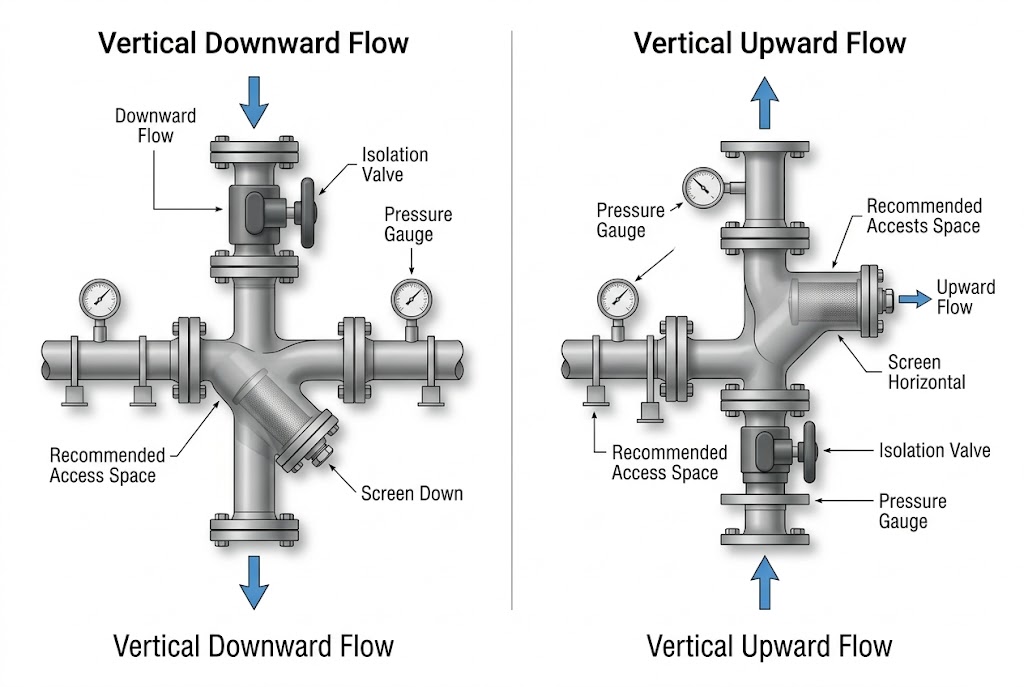
Vertical Applications:
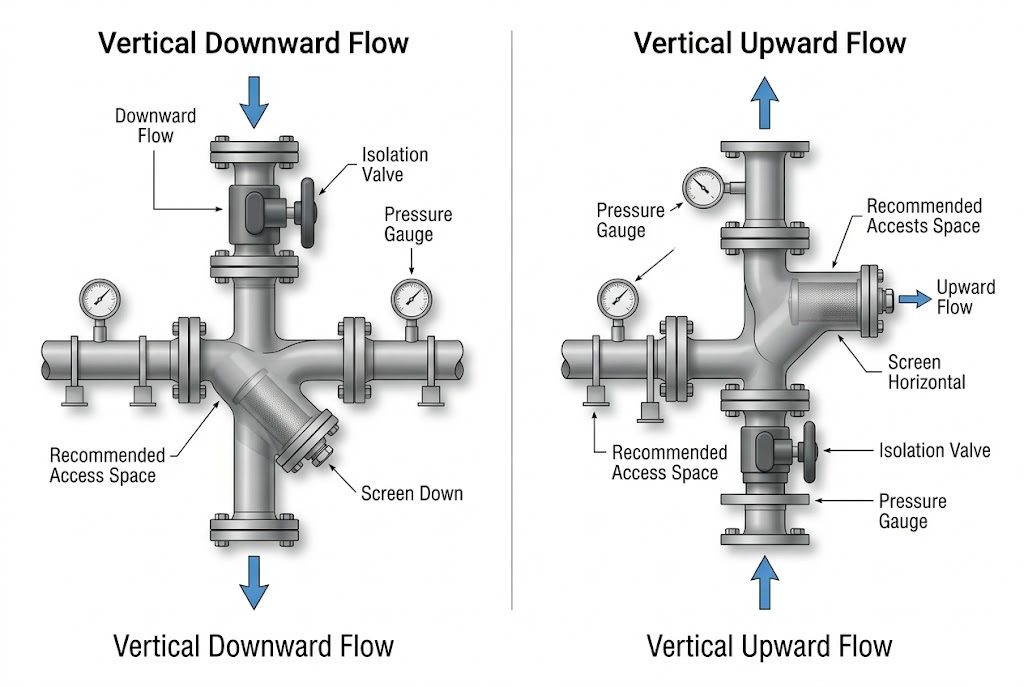
- Downward Flow: The strainer leg should point downwards, similar to horizontal, for optimal debris collection.
- Upward Flow: In vertical lines with upward flow, the strainer leg should be installed so that it is oriented horizontally. This prevents debris from falling back onto the screen when the flow stops, which could increase pressure drop on restart. However, for maximum dirt holding capacity, downward is still generally preferred if possible.
General Installation Tips:
- Accessibilité : Ensure sufficient clear space around the strainer cap for easy screen removal and cleaning.
- Vannes d'isolement : Install isolation valves upstream and downstream to allow the strainer to be serviced without system shutdown.
- Pressure Gauges: Install pressure gauges before and after the strainer to monitor pressure drop and indicate when cleaning is required.
Maintenance & Troubleshooting for Optimal Performance
Regular maintenance is key to the effectiveness and longevity of a Y-strainer.
Routine Maintenance Checks:
- Monitor Pressure Drop: The most crucial indicator. Increased pressure drop signals a clogged screen.
- Scheduled Cleaning: Establish a cleaning schedule based on process conditions and monitored pressure drop.
- Blow-off (if equipped): Utilize the blow-off valve to periodically flush collected debris without stopping the main flow, extending intervals between full cleanings.
- Inspect Screen: When cleaning, inspect the screen for damage (tears, holes). A damaged screen compromises filtration.
- Gasket/Seal Integrity: Replace gaskets if they show signs of wear, cracking, or leakage during reassembly.
Conclusion: Your First Line of Defense for Fluid Quality
The Y-strainer, though simple in concept, is an indispensable component in countless industrial and commercial fluid handling systems. Its proper selection, sizing, installation, and diligent maintenance are not merely best practices; they are critical safeguards against equipment failure, process interruptions, and ultimately, significant financial losses. By understanding the fundamentals outlined in this handbook, you can ensure the longevity and efficiency of your valuable downstream equipment.
At BCST Valve, we are committed to providing not just high-quality Y-strainers and other flow control solutions, but also the expert knowledge and support necessary for their optimal application. Trust our experience to help you protect your investments and maintain seamless operations.
Need expert advice on your Y-strainer application?


 English
 Arabic
 Russian
 French
 Spanish