
The integration of PLC-controlled valves has become a critical part of efficient process management. By automating valve operations, businesses can improve accuracy, reduce labor costs, and enhance overall system reliability. Here are 8 key benefits of integrating PLCs (Programmable Logic Controllers) with industrial valve systems.
Introduction to PLC-Controlled Industrial Valves

Programmable Logic Controllers (PLCs) are essential in modern industrial automation, controlling complex machinery and systems. The integration of PLC valve control systems has transformed the way industries handle valve operations. This transformation includes flow regulation and ensuring safety.
Understanding Programmable Logic Controllers (PLCs)
What are PLCs?
A PLC is a specialized computer that manages and controls industrial equipment. It processes inputs from sensors, executes programmed instructions, and controls outputs, like opening or closing valves. These Vannes commandées par PLC ensure precise, real-time management of flow systems.
How PLCs Work in Industrial Automation
In automation, PLCs serve as the decision-making hub. They receive data from sensors, analyze it, and control the output (valves). In a PLC valve control example, a PLC can regulate the flow in pipelines based on pressure levels. This ensures optimal operation without the need for manual intervention.
8 Key Benefits of PLC-Integrated Valve Systems
1. Improved Efficiency and Accuracy
One of the most significant benefits of Vannes commandées par PLC is the boost in accuracy and efficiency. PLCs use real-time data to adjust valves, ensuring they operate at optimal points. This minimizes errors, enhances precision, and ensures consistent production quality.
2. Automation and Reduced Labor Costs
Automation reduces the need for manual intervention, cutting labor costs. PLC valve control automates valve operations. It adjusts flows and regulates pressures.
This leads to fewer human errors. They lower labor requirements. They decrease the need for labor.
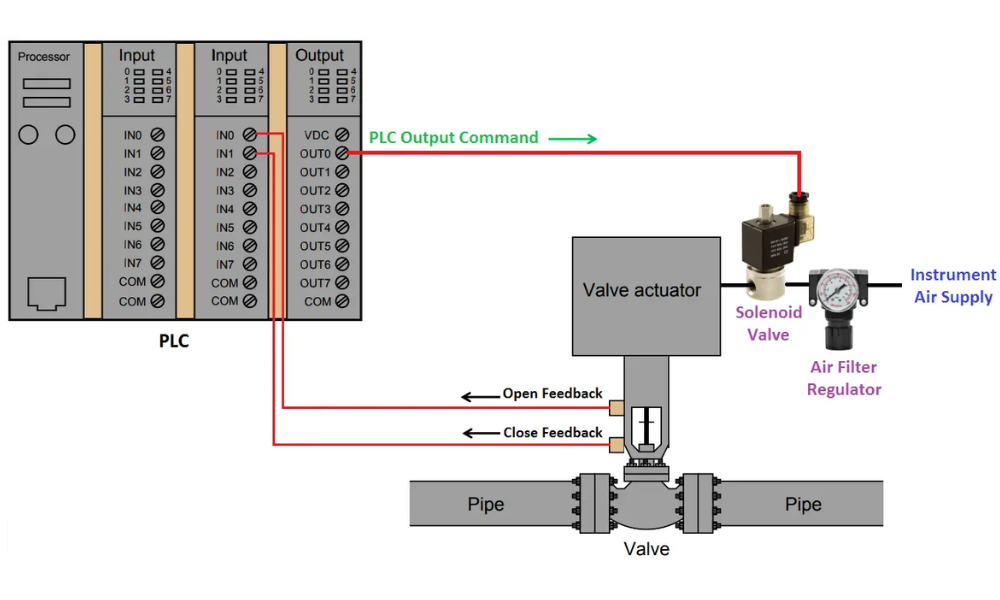
For instance, a PLC-controlled solenoid valve automates fluid control. It eliminates the need for constant monitoring.
3. Real-Time Monitoring and Remote Control
PLC valve systems allow for real-time monitoring and remote operation. Operators can track valve performance from a central location and make adjustments instantly. This feature significantly reduces downtime and ensures quicker responses to any system malfunctions.
4. Enhanced Safety and Reliability
In industries dealing with hazardous materials, safety is paramount. Vannes commandées par PLC add layers of security by automating emergency shut-off procedures. Should the system detect dangerous conditions, PLCs automatically close valves to prevent accidents, ensuring both safety and system reliability.
5. Greater Flexibility and Customization
PLCs provide flexibility for controlling different valve types, such as PLC pneumatic valve control ou PLC-controlled solenoid valves. By programming custom logic, businesses can modify valve operations for specific industrial processes, making changes in production without requiring new hardware.
6. Reduced Downtime and Maintenance
PLC valve control enables systems to monitor valve conditions constantly. This leads to predictive maintenance, with valves serviced before failure. By preventing breakdowns, businesses reduce downtime and maintain steady production levels.
7. Energy Efficiency
Efficient Vannes commandées par PLC can lead to energy savings. By optimizing the timing of valve opening and closing, PLCs reduce energy wastage. They also optimize resource use by adjusting the extent of valve opening and closing. This contributes to a more energy-efficient operation.
8. Integration with Other Systems
PLCs can easily integrate with other control systems, such as SCADA or ERP platforms, for centralized control. This enables smooth coordination between valve operations and other industrial processes, which improves total productivity.
Types of Industrial Valves Controlled by PLCs
Industrial valves play a vital role in controlling the flow of liquids and gases in manufacturing and processing environments. PLCs make the operation of these valves more efficient and reliable.
Électrovannes
PLC-controlled solenoid valves are commonly used in industries requiring precise control over fluid flow. These valves open and close quickly when controlled by a PLC. They offer an excellent solution for applications that require fast response times.
Such applications include chemical and water treatment plants. Control solenoid valves using PLC ensures a smooth, automated operation without manual input.
Vannes papillon
Butterfly valves are widely used to control fluid flow, especially in large-diameter pipes. Integrating PLC valve control allows for the automation of these valves to regulate flow based on sensor inputs. This helps maintain constant pressure and flow rate in critical processes.
Vannes à bille
Ball valves are ideal for applications that require a tight shutoff. When paired with PLC valve systems, these valves can open. This is especially beneficial in oil, gas, and water applications where leak prevention is critical.
Portail et Globe terrestre Vannes
Gate and globe valves are primarily used for regulating fluid flow in pipelines. PLC-controlled valve systems monitor the conditions of the valves. They ensure that the valves open or close based on system demand. This improves productivity even further.
Best Practices for Implementing PLC-Controlled Valves
To fully benefit from the integration of Vannes commandées par PLC, companies need to follow best practices during implementation.
Proper Valve Sizing and Selection
Choosing the right valve type and size is crucial for optimal performance. Ensure that the PLC valve is appropriate for your system’s pressure, temperature, and flow needs.
Regular Maintenance and System Checks
Even the most advanced PLC valve control systems require regular maintenance to function properly. Ensure that your team conducts system checks frequently, replacing any worn-out parts to avoid system failures.
Unlocking the Full Potential of Your Industrial Valve Systems
Integrating PLCs with industrial valve systems offers several benefits. These include: Improved efficiency and accuracy Enhanced safety Reduced labor costs. As industries continue to embrace automation, Vannes commandées par PLC will remain integral to optimizing production and ensuring reliable system performance.


 English
 Arabic
 Russian
 French
 Spanish