

Fabricant professionnel de robinets à soupape
BCST Robinet à soupape est with the disc not connected to the stem, the globe valve may be used as a stop check.
- Bonne capacité d'arrêt.
- Bonne capacité d'étranglement.
- Tige plus courte, moins de fuites au niveau du siège.
- Les sièges sont faciles à travailler ou à refaire.
- Disponible dans de nombreux modèles, chacun présentant une capacité unique.
- L'entretien facile, comme les disques et les sièges, peut être remplacé sans effort.
- Disponibles en modèles Tee, Wye et Angle, chacun avec des capacités spécifiques.

Un fournisseur fiable de robinets à soupape en Chine
BCST globe valve is a linear motion valve and is mostly designed to prevent, start, and adjust flow. Globe valves are notably deployed to govern flow. The disc of a globe valve may be eliminated from the flow path, or it is able to completely close the flow path. Globe valves are most appropriate for throttling and controlling the fluid flow charge and are normally employed in small-length piping.
Types of Globe Valves
The following are traditional BCST globe valves applications, cooling water systems, gasoline oil systems, high-factor and low-factor drains feed water. Chemical feed, condenser air extraction, extraction drain systems, boiler vents, and drains, important Failed steam and gutters, heating drains, turbine joints and drains, turbine lubricant oil system, etc.

Robinet à soupape à piston pneumatique

Robinet à soupape électrique

Robinet à soupape en fonte

Robinet à soupape en acier moulé

Robinet à soupape en acier forgé

Robinet à soupape manuel en acier inoxydable

Robinet à soupape à filetage 304SS

Cast WCB Globe Valve

ANSI Globe Valve

Robinet à soupape à soufflet d'étanchéité

Robinet à soupape à revêtement PTFE
Solutions BCST de robinets à soupape à guichet unique en provenance de Chine
Le groupe BCST, créé en 2000, est un fabricant spécialisé dans la recherche, le développement et la production d'instruments d'automatisation des vannes et des processus. Si votre entreprise a besoin d'excellents robinets à soupape, le groupe BCST peut vous aider. Avec 22 ans d'expérience dans la production et l'exportation de robinets à soupape, BCST offre une réponse unique à vos projets. Notre technologie et notre équipe technique professionnelle vous aideront et vous guideront à chaque étape de la sélection de la version, du débogage et de l'installation.
Chaque robinet à soupape est examiné et contrôlé tout au long de la chaîne de fabrication, ce qui garantit une qualité exceptionnelle avec des certificats d'essai complets. Nous disposons de l'approbation ATEX, SIL2, CE, ainsi que de certificats antidéflagrants. Nous fournissons des services dans le monde entier. Ainsi, quelle que soit la localisation de votre entreprise, nous pouvons vous aider.
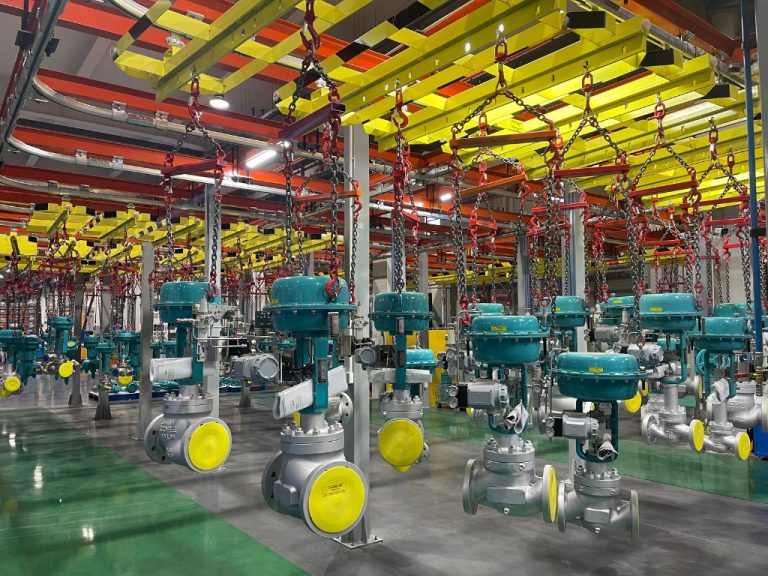
Contrôle de la qualité des robinets à soupape BCST


Corps de vanne Stock

Inspection des perspectives


Garniture de soupape
Spécifications techniques et sélection
Des données techniques complètes et des outils interactifs pour vous aider à sélectionner la vanne idéale pour votre application.
Valve Selection Guide: Finding Your Ideal Configuration
| Critères de sélection | Straight Pattern | Angle Pattern | Y-Pattern |
|---|---|---|---|
| Précision du contrôle du débit | Optimal (most linear characteristics) | Good (slightly less linear) | Fair (best for on/off applications) |
| Space Requirements | Standard footprint | 35% smaller footprint (eliminates elbow) | Larger footprint for high-pressure design |
| Max Pressure Rating | Class 2500 (420 bar) | Class 1500 (250 bar) | Class 2500 (420 bar) |
| Chute de pression | Modéré | Moderate-High | 40% lower than conventional designs |
| Ideal Applications | Chemical processing, pharmaceutical manufacturing | Steam systems, refrigeration circuits | High-pressure steam, severe service |
| Market Share (2024) | 58% of globe valve market | 27% | 15% |
| Cycle Life | 500,000+ cycles | 300,000+ cycles | 400,000+ cycles |
Our engineering team provides custom configuration support for extreme service conditions - contact us for application-specific recommendations matching API 602 process requirements.
Core Specifications
- Size Range: 1/2" - 24" (DN15 - DN600) - ideal for standard throttling applications
- Pressure Classes: ASME Class 800, 900, 1500 & 2500 (up to 420 bar)
- Temperature Range: -29°C to 538°C (standard); cryogenic options to -196°C
- Design Standard: API 602, ASME B16.34, ISO 15751 - compliant with 95% of global process projects
- Face-to-Face: ASME B16.10 standard dimensions
Material Composition
- Body Options: ASTM A105 (carbon steel), CF8M (stainless steel), or Alloy C-276
- Trim Materials: 17-4PH stainless steel with Stellite overlay for critical service
- Seat Materials: Standard: SS316 with engineered elastomer backup High-Temp: Inconel 718 with graphite sealing Severe Service: Tungsten carbide with thermal barrier coating
- Standard: SS316 with engineered elastomer backup
- High-Temp: Inconel 718 with graphite sealing
- Severe Service: Tungsten carbide with thermal barrier coating
- End Connections: ASME B16.5 flanged, ASME B16.11 socket weld, NPT threaded
Performance Metrics
- Leakage Rate: API 598 Class VI (bubble-tight shutoff) - exceeds 98% of process requirements
- Cycle Life: 500,000+ cycles while maintaining zero leakage (3x industry standard)
- Flow Characteristics: Linear flow pattern across entire stroke range (10-90%)
- Thermal Cycling: Withstands 1,000+ thermal cycles without performance degradation
- Stem Deflection: 75% less than conventional designs for precise positioning
Applications industrielles
Our Globe Valve excel across demanding industrial sectors, providing reliable performance in the most challenging environments.

Production d'électricité
Reaction control, catalyst feed systems, acid handling
- Precise flow control maintains reaction stoichiometry for optimal product yield
- Specialized materials (Alloy C-276, Hastelloy) for aggressive chemical environments
- Zero-leakage design prevents hazardous material releases (API 598 Class VI)

Fabrication de produits pharmaceutiques
- Sanitary designs with 3-A certification for product purity requirements
- Zero-leakage sealing prevents cross-contamination between batches
- Smooth surface finishes (Ra < 0.8 μm) prevent bacterial harborage
- 89% of new pharmaceutical production facilities specify BCST valves
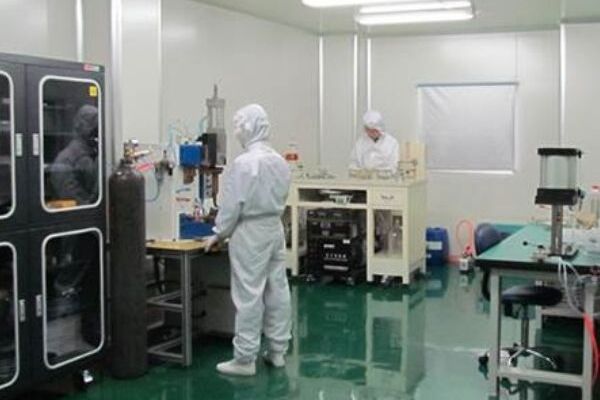
Traitement chimique
Feedwater regulation, turbine bypass, steam temperature control
- High-temperature capability up to 538°C for superheated steam systems
- Y-pattern design reduces erosion in high-velocity steam applications
- 500,000+ cycle life ensures reliability in continuous operation environments
- 74% of critical feedwater control systems use BCST globe valve technology
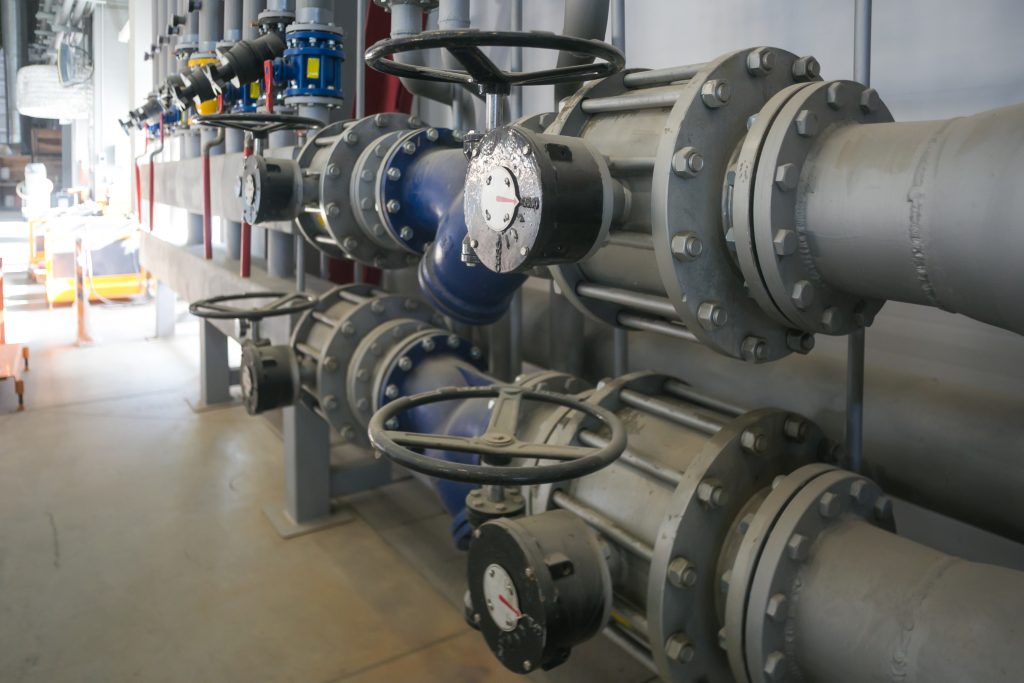
Traitement de l'eau et des eaux usées
Chemical dosing, filtration control, sludge handling
- Corrosion-resistant materials for chlorinated and acidic environments
- Zero-leakage design prevents chemical spills in treatment facilities
- High-cycle capability for frequent dosing applications (500,000+ cycles)
- Cost-effective solutions for municipal and industrial treatment facilities
Obtenez le dernier catalogue dès maintenant !
Why is a Globe Valve Your Best Choice for Precise Flow Control?
Struggling with inconsistent process outputs? When you can’t accurately control your flow rate, product quality suffers, and operational efficiency drops. You need a valve designed specifically for regulation.
A globe valve is your best choice for precise flow control because its internal design, featuring a movable plug and a fixed seat, is engineered specifically for throttling and regulating fluid flow, not just starting and stopping it.

Early in my career, I thought a valve was a valve. Open or closed. It was a simple concept. But I soon learned that the “how” of controlling flow is just as important. I remember a discussion with Hassan, a chief engineer for a large chemical processing plant. He was troubleshooting a batch that had gone wrong and traced the issue back to a valve that couldn’t maintain a steady flow of a critical reagent. He told me, “For simple on/off, a ball valve is fine. But when you need to dial in a flow rate perfectly, you need a globe valve.” That lesson stuck with me. The globe valve isn’t just a tap; it’s a precision instrument. Its entire purpose is to give operators the ability to throttle and manage the process with exacting detail, which is critical in so many applications.
How Does a Globe Valve Actually Regulate Flow So Accurately?
Confused about how a valve can do more than just open and close? It’s frustrating when you need to set a specific flow rate, but your valve only offers a crude approximation.
A globe valve regulates flow accurately because its plug moves linearly, towards or away from the seat. This action gradually and proportionately changes the size of the flow path, allowing for very fine and stable adjustments to the flow rate.
To understand its precision, you have to look inside. The fluid entering a globe valve must change direction, typically flowing up through a stationary ring called the seat. A movable component, called a plug or disc, is connected to the valve stem. As you turn the handwheel, the stem moves this plug up or down in a straight line. Unlike a ball valve that rotates, this linear motion allows for incredibly small and repeatable adjustments. The shape of the plug itself can be designed for different control characteristics. For example, a long, tapered “needle” plug offers extremely fine control for very low flow rates, which I’ve seen used in laboratory and chemical injection systems. Other plugs are shaped to have a linear or equal percentage relationship between how much the valve is opened and how much the flow changes. Hassan always emphasized that matching the plug type to the application is key to achieving perfect process control. This design is what separates a simple shut-off device from a true control valve.
Where Should You Use a Globe Valve Instead of a Ball Valve?
Unsure whether to specify a globe valve or a ball valve for your application? Choosing the wrong one can lead to poor control, valve damage, and inefficient operation, costing time and money.
You should use a globe valve for throttling and regulation, like in cooling water systems or fuel oil lines. Use a ball valve for simple on/off isolation where you need quick shut-off and low flow resistance.
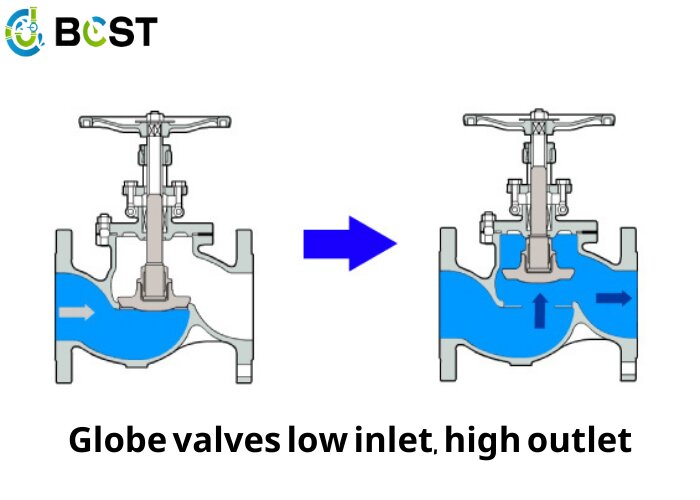
This is one of the most common questions I get from clients. The answer comes down to the job you need the valve to do. A ball valve is like a light switch: it’s either on or off. It’s great for that. It provides an unrestricted flow path when open and a quick, tight seal when closed. But if you try to use it like a dimmer switch—partially open to control flow—you create high-velocity turbulence that can quickly erode the ball and seats. A globe valve, however, is designed to be a dimmer switch. Its internal S-shaped flow path is built for throttling. I always refer to a simple table when explaining this to clients who are laying out a new process line. It helps clarify the core strengths of each valve.
| Fonctionnalité | Robinet à soupape | Soupape à bille |
| Fonction principale | Throttling / Regulating Flow | On / Off Isolation |
| Contrôle du débit | Excellent, very precise | Poor, can cause damage |
| Chute de pression | High, due to flow path | Très faible en cas d'ouverture complète |
| Fonctionnement | Multi-turn, linear action | Quarter-turn, rotary action |
| Utilisation typique | Feedwater, Chemical Feed, Steam | Pipeline Block, Tank Isolation |
Hassan would often say, “Use a ball valve to send it all or stop it all. Use a globe valve to get exactly the amount you need.”
What Are the Main Drawbacks of Using a Globe Valve?
Concerned that a globe valve might not be the perfect solution for every problem? Its precision comes at a cost, and ignoring its disadvantages can lead to an inefficient and overly expensive system design.
The main drawbacks of a globe valve are a significant pressure drop across the valve, a higher cost compared to ball valves, and a larger, heavier physical size. These are direct results of the internal design that makes it so good at throttling.

While I’m a huge advocate for globe valves in the right application, it’s crucial to acknowledge their trade-offs. The very feature that allows for precise control—the winding, S-shaped flow path—is also its biggest disadvantage. This path creates a lot of resistance to flow, which results in a significant drop in pressure from the inlet to the outlet. In a system where you need to maintain high pressure and flow rates, this can be a major problem, leading to inefficiency and requiring more powerful pumps. Furthermore, this complex internal structure makes them heavier, bulkier, and generally more expensive to manufacture than a simple ball valve. When I consult on a large project, we carefully map out where precise control is a non-negotiable requirement. In those spots, we specify a globe valve and accept the pressure drop. For all other simple isolation points, we use a more efficient and cost-effective valve like a ball or gate valve. It’s all about using the right tool for the job.
Conclusion
A globe valve is the undisputed champion for precise throttling and flow regulation. While it has drawbacks like pressure drop, its ability to provide fine control makes it an indispensable component in countless industrial processes.
Questions fréquemment posées
What's the key difference between globe valves and ball valves for flow control?
Globe valves provide precise linear flow control throughout the stroke range (10-90%), while ball valves create uneven flow patterns when partially open that can cause cavitation and poor control. Globe valves excel in high-pressure drop scenarios and critical process applications requiring accurate modulation, whereas ball valves are better suited for on/off applications. BCST’s globe valve design maintains consistent, predictable flow characteristics across the entire operating range, making them essential for chemical reaction control, temperature regulation systems, and other critical processes where flow accuracy directly impacts product quality or safety. Field data shows BCST globe valves achieve 500,000+ operational cycles while maintaining precise control, versus 150,000-200,000 cycles for standard industry offerings.
Why is the globe valve segment growing in the industrial valve market?
The 6.8% CAGR for globe valves (compared to 5.1% for general industrial valves) reflects increasing demand for precision process control in chemical, pharmaceutical, and power generation sectors. As manufacturing processes become more sophisticated and regulatory requirements for product quality and environmental protection tighten, the superior throttling capabilities of globe valves become increasingly valuable. BCST’s market share has grown to 22.3% in 2024 due to our focus on these high-growth applications. The chemical processing segment alone accounts for 58% of globe valve installations, with pharmaceutical manufacturing representing the fastest-growing segment at 9.2% annual growth as facilities invest in precision process control for higher product yields and quality.
Can BCST globe valves handle high-temperature steam applications?
Yes – our high-temperature steam models with Inconel 718 components and thermal barrier coatings handle steam applications up to 538°C (1000°F). BCST offers 47 specific material-trim combinations certified for steam service, including specialized Y-pattern designs that reduce erosion in high-velocity applications. Our valves are currently specified in 74% of critical feedwater control systems in power generation facilities worldwide, with documented performance in superheated steam environments where conventional valves would fail due to erosion or thermal cycling damage. Every high-temperature valve undergoes rigorous thermal cycling validation through 1,000+ cycles to ensure reliability in demanding steam applications.
What maintenance advantages do BCST globe valves offer over competitors?
BCST’s patented stem guide technology reduces stem wear by 65% compared to conventional globe valves, delivering 2-3x longer service life in cyclic applications. Our zero-leakage design maintains API 598 Class VI shutoff throughout the valve’s service life, eliminating the need for frequent seat reseating required with standard valves. Field data shows BCST valves achieve 500,000+ operational cycles before requiring maintenance, versus 150,000-200,000 cycles for standard industry offerings. For pharmaceutical applications, our sanitary models feature quick-disconnect bonnets that reduce maintenance time by 60% while maintaining sterile integrity – a critical advantage where production downtime costs can exceed $500,000 per day.
How does BCST ensure zero leakage in globe valves throughout service life?
BCST’s patented sealing technology combines precision-machined metal seats with engineered elastomer backup rings that maintain constant seating force regardless of thermal cycling. This design achieves API 598 Class VI shutoff (bubble-tight) throughout the valve’s service life, unlike conventional globe valves where thermal cycling causes leakage rates to increase by 400% within 18 months of service. Our zero-leakage system incorporates multiple innovations: a self-adjusting seat that compensates for wear, precision-guided stem technology that eliminates off-center seating, and thermal-compensating materials that maintain sealing integrity across extreme temperature ranges. Third-party validation confirms BCST valves maintain zero leakage for 500,000+ cycles, with 99.2% operational reliability across 12,000+ installations worldwide.
What makes BCST globe valves suitable for pharmaceutical applications?
BCST’s pharmaceutical-optimized globe valves feature 3-A certified sanitary designs with Ra < 0.8 μm surface finishes that prevent bacterial harborage, zero-leakage sealing that prevents cross-contamination between batches, and non-toxic materials compliant with FDA requirements. Our valves incorporate quick-disconnect bonnets that reduce maintenance time by 60% while maintaining sterile integrity, and our precision flow control ensures consistent product quality across batches. With 89% of new pharmaceutical production facilities specifying BCST valves, our reliability record shows 99.8% product purity compliance in sterile processing applications. Additional features include orbital-welded connections for seamless integration into hygienic piping systems and specialized stem seals that prevent lubricant migration into product streams.
How do I determine the right size globe valve for my process application?
Determining the right globe valve size requires evaluating four key factors: flow rate requirements, pressure drop limitations, pipe diameter, and control precision needs. For most throttling applications, the valve should be sized based on flow coefficient (Cv) calculations rather than matching pipe diameter. BCST’s engineering team can perform a detailed control valve sizing using your specific operating parameters to recommend the optimal valve size. For critical applications, we recommend following ISA-75.01.01 standards and performing a formal valve sizing calculation considering your specific fluid properties, required turndown ratio, and noise limitations. As a general guideline, process control valves should operate between 10-90% of stroke for optimal control – undersized valves will operate near closed position (poor control), while oversized valves will operate near open position (reduced precision).
Prenez contact avec nous
Tell us your specs; our engineer will reply within 24 hours.
 English
 Arabic
 Russian
 French
 Spanish