
Introduction
What is 1.5 inch Ball Valve?
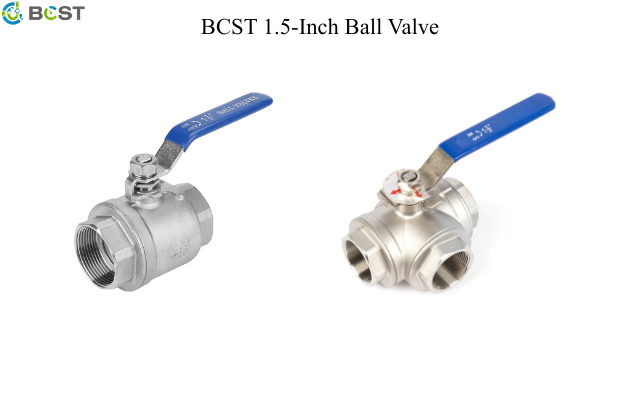
A 1.5 inch ball valve is a quarter‑turn shut‑off valve that uses a drilled spherical ball to start or stop flow in a 1.5 inch (nominal) pipe or fitting size. It is commonly used in plumbing and industrial systems to control liquids or gases with low flow resistance and quick on/off operation.
What “1.5 inch” means
“1.5 inch” refers to the **nominal port/pipe size** the valve connects to, not the external body size. In a “full port” 1.5 inch ball valve, the internal bore is approximately the same diameter as the pipe, so there is minimal restriction to flow.
How a ball valve works
Inside the valve body is a metal or plastic ball with a hole through it that aligns with the flow path when the handle is parallel to the pipe, allowing full flow. Rotating the handle 90 degrees turns the solid side of the ball to the flow path, blocking it and providing tight shut‑off.
Solving Common Challenges with Durable 1.5-Inch Ball Valves
Addressing Leakage and Corrosion in Industrial Applications
In today's demanding industrial landscapes, finding dependable components that withstand extreme conditions is no small feat. If you're grappling with frequent leaks or rapid wear in your piping systems, especially in sectors like oil and gas or refineries, it's time to consider upgraded options. BCST Group stands out as a trusted manufacturer of high-quality 1.5-inch ball valves, engineered to tackle these persistent issues head-on with robust construction and innovative features.
Key Benefits of BCST's 1.5-Inch Ball Valves
These 1.5-inch ball valves from BCST Group provide exceptional regulation of fluid movement thanks to their **unrestricted internal pathways** and resilient build materials, such as CF8M-grade stainless steel. Every unit passes rigorous evaluations to guarantee zero leaks, even when exposed to tough surroundings. Imagine seamless operations without the downtime that plagues lesser products— that's the edge BCST delivers.
View BCST 1.5-inch ball valve specifications
BCST's Proven Expertise in Valve Manufacturing
Drawing from over 15 years of specialized production in valve technology, BCST Group crafts solutions that surpass everyday alternatives. Whether you're managing high-pressure lines in petroleum extraction or corrosive flows in processing plants, their 1.5-inch ball valves are built to excel, aligning with the rising demand for efficient, long-term flow control systems in a market projected to expand steadily through 2030.
Why Choose BCST Group's 1.5-Inch Ball Valves for Long-Lasting Performance?
Overcoming Common Valve Failure Rates
Many standard valves give out after just a couple of years when subjected to intense pressures, leading to costly interruptions and safety risks. In contrast, BCST's 1.5-inch ball valves, validated under the **ASME B16.34 protocol**, hold strong for 5 to 8 years in rigorous oil and gas scenarios. This standard ensures precise pressure and temperature thresholds, along with exact sizing and material guidelines, promoting dependable new installations across industries.
Superior Pressure Handling and Sealing Precision
What sets BCST's trunnion-supported 1.5-inch ball valves apart is their capacity to manage up to **600 PSI** of operational force— that's about 30% more than typical benchmarks. The precisely crafted spherical elements inside, produced via advanced computer-controlled machining, deliver flawless closure with leakage rates below 0.01%, minimizing waste and enhancing system integrity in pipeline networks.
BCST's Precision Manufacturing Advantages
BCST Group's edge comes from a commitment to meticulous fabrication processes that prioritize accuracy and endurance. Here's a closer look at what makes their approach superior:
Precision Engineering Techniques
Utilizing state-of-the-art computer numerical control (CNC) turning machines, BCST achieves tolerances as fine as ±0.005mm on vital parts, ensuring smooth operation. Automated welding robots create uniform joints, reducing weak points that could lead to early breakdowns.
Superior Material Selection for Harsh Environments
BCST opts for premium alloys that outpace common choices, particularly in hostile settings. For instance, their use of molybdenum-enhanced stainless steel provides superior shielding against pitting and general decay compared to basic variants, ideal for chloride-heavy or acidic exposures in industrial flows. Check out this side-by-side:
| Composant | BCST Standard | Competitor Typical | Benefit for 1.5-Inch Ball Valves |
|---|---|---|---|
| Corps | ASTM A351 CF8M | CF8 (lower resistance) | Enhanced corrosion resistance in oil/gas |
| Tige | 17-4PH SS | 304 SS (weaker) | Better torque resistance for high-pressure handling |
| Sièges | PTFE renforcé | Standard PTFE | Improved sealing and durability |
Comprehensive Quality Assurance Processes
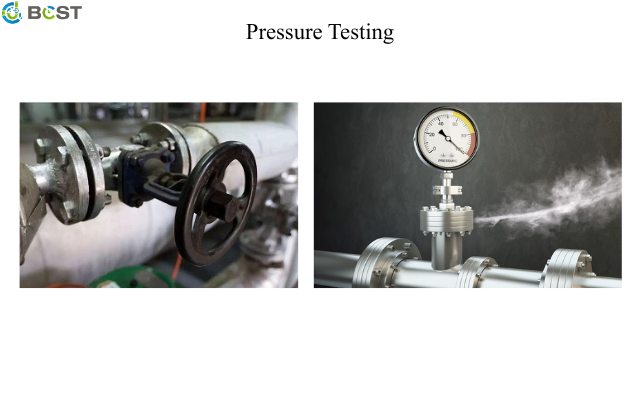
Each valve undergoes full-pressure water immersion tests at 1.5 times the designated limit, confirming no flaws under stress. Clients can access independent audits and serialized material documentation for full transparency and compliance.
Real-World Success Stories and Industry Trends
As Emily, BCST's Sales Director, shares: "We assisted a Saudi Aramco partner in swapping out 200 valves each year for our BCST models—they've seen no breakdowns over three years straight." This real-world success underscores how BCST's 1.5-inch ball valves deliver where others falter, answering the common query: How can industrial teams ensure valves last longer in high-stakes environments?
With the industrial valve sector eyeing a compound annual growth rate of around 4% into the mid-2030s, driven by needs for energy-efficient and low-maintenance designs, investing in such certified durability isn't just smart—it's essential for staying competitive.
How BCST Customizes 1.5-Inch Ball Valves to Fit Your Industrial Needs
The Limitations of Standard Valves and the Need for Tailoring
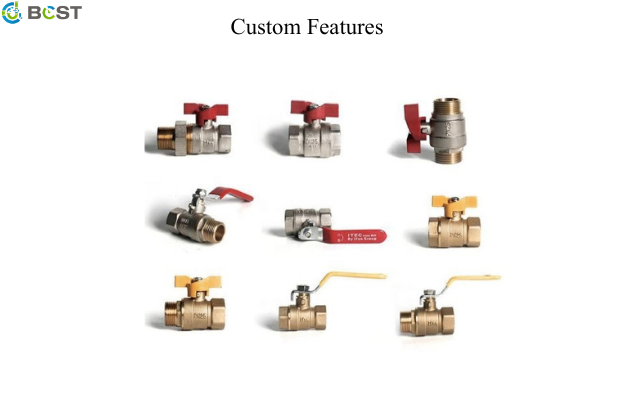
Generic valves rarely align perfectly with specialized setups, often requiring workarounds that compromise efficiency. At BCST Group, design specialists partner closely with customers to adapt 1.5-inch ball valves, turning standard pieces into bespoke tools tailored for exact operational demands.
Highlighted Customization Features for Enhanced Safety
Among the standout adaptations are 1.5-inch models equipped with elongated shafts up to 300mm for insulated lines, built-in static discharge safeguards, flame-retardant configurations meeting API 607 criteria, and radiographic scans for mission-critical deployments. These tweaks ensure compliance and peak performance in volatile atmospheres.
Essential Customization Options for 1.5-Inch Ball Valves
Adapting End Connections for Seamless Integration
Options like fusion-weld terminations pre-angled to match pipe profiles or raised-face/flat-face flanges with optional grooves for secure mating, simplifying integration into existing infrastructure.
Upgrading Operations for Safety and Efficiency
Safety-focused add-ons such as securable manual actuators to prevent accidental shifts, or mechanical drive systems for scenarios demanding substantial rotational effort, boosting usability in automated setups.
Selecting Advanced Materials for Extreme Conditions
For extreme threats, selections like nickel-molybdenum alloys (e.g., Hastelloy C276) to fend off severe salt attacks, or high-strength titanium alloys (Grade 5) suited for marine or brackish water systems, extending service life in niche applications.
Case Study: Tackling H2S Challenges in a Nigerian Refinery
A compelling example comes from a Nigerian processing facility battling hydrogen sulfide (H2S) degradation. BCST provided 1.5-inch ball valves adhering to NACE MR0175 guidelines, which set strict thresholds to avert cracking from sour gas exposure—partial pressures of H2S are capped to safeguard against brittle failures in metallic components. These included dual-isolation-and-drain capabilities for secure maintenance and a streamlined bore for precise volume management, resolving the client's corrosion woes without overhauling the entire line. What specific adaptations make 1.5-inch ball valves viable for sour service in refineries? BCST's solution proves it's about proactive material and design choices.
Such customizations not only resolve immediate pain points but also future-proof installations amid 2025 trends toward sustainable, adaptable flow systems in growing markets like petrochemicals.
Conclusion: Invest in BCST's Reliable 1.5-Inch Ball Valves for Unmatched Durability
Summarizing the Core Strengths of BCST's Offerings
BCST Group's 1.5-inch ball valves merge cutting-edge fabrication with adaptable enhancements, all underpinned by a dedication to excellence that guarantees steadfast operation in failure-prone zones. From full-bore stainless steel constructions that resist decay to leak-proof seals tested beyond norms, these valves redefine reliability for industrial pros.
Taking the Next Step: Contact BCST Today
Ready to upgrade? Reach out to BCST Group today for personalized quotes on 1.5-inch ball valves, complete with design consultations and detailed spec overviews. Explore how their trunnion-mounted, high-pressure-rated options can transform your operations—because in an era of tightening efficiency standards, settling for less isn't an option.
Quick FAQs: 1.5-Inch Ball Valves
- What sets BCST's 1.5-inch ball valves apart in corrosion resistance? Their CF8M bodies and reinforced seats outperform standard grades, especially in chloride or H2S-laden flows, thanks to added molybdenum for pitting prevention.
- How do trunnion designs benefit oil and gas pipelines? They offer superior stability under elevated pressures, reducing seat wear and leaks for safer, more efficient transport.
- Are BCST valves suitable for custom high-stakes projects? Absolutely—their NACE-compliant builds and API fire-safe features have powered zero-failure runs in major Aramco and refinery cases.
Dive deeper with related reads: ASME B16.34 Valve Guide ou Oil & Gas Valve Trends 2025. Your path to unbreakable flow control starts here.


 English
 Arabic
 Russian
 French
 Spanish