
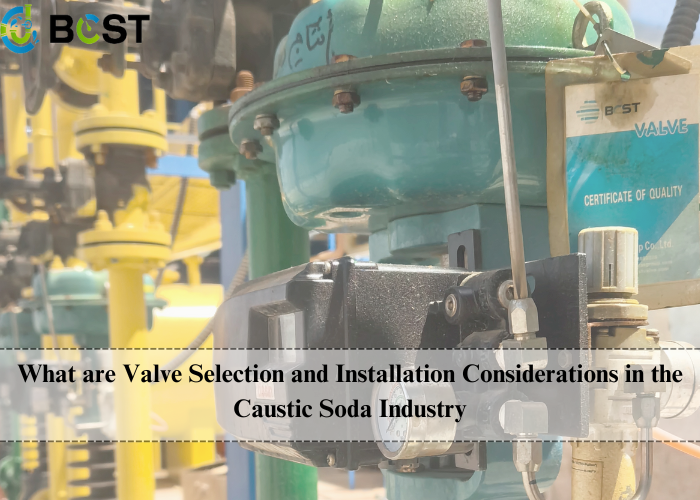
Caustic soda (sodium hydroxide) is one of the essential raw materials in the chemical industry, widely used in various fields such as textiles, metallurgy, and papermaking. Due to its strong corrosiveness and high alkalinity, there are stringent requirements for valve selection, usage, and installation in the production process. As an instrument engineer with years of field experience, I will share the key considerations for valve selection, usage, and installation in the caustic soda industry.
I. Valve Selection
1.Corrosion Resistance Requirements:
Caustic soda has a strong corrosive effect, especially at high temperatures and concentrations, leading to significant metal corrosion. Therefore, when selecting valve materials, it is essential to choose those with good corrosion resistance. Recommended materials include Hastelloy, titanium alloys, PTFE-lined valves, or other specially treated materials.
2.Sealing Material Selection:
Caustic soda has a strong corrosive effect on most common sealing materials (such as rubber and plastic), making the choice of sealing material critical. Common sealing materials include PTFE(polytetrafluoroethylene), which has excellent chemical resistance and high-temperature stability, meeting the sealing requirements for caustic soda.
3.Valve Type Selection:
Based on different operating conditions in the caustic soda process, it is crucial to select the appropriate valve type. Common valve options include:
3.1 Vannes à bille: Simple structure and good sealing performance, suitable for quick opening and closing and low differential pressure situations.
3.2 Vannes papillon: Suitable for opening and closing and flow control in large diameter pipelines, particularly effective in low and medium-pressure applications.
3.3 Diaphragm Valves: The diaphragm is completely isolated from the medium, making it suitable for highly corrosive media like caustic soda and providing excellent anti-corrosion performance.
3.4 Vannes à guillotine: Suitable for full open or close applications, with high corrosion resistance when selecting lined or specially alloyed gate valves.

4.Pressure and Temperature Requirements:
The production of caustic soda involves a wide range of operational temperatures and pressures; therefore, valves must possess appropriate pressure and high-temperature resistance. For high-temperature and high-pressure conditions, special alloys or high-temperature lining materials should be used to ensure stable valve operation under extreme conditions.
II. Valve Usage Considerations
1. Regular Inspection and Maintenance:
Over time, valves can be affected by caustic soda corrosion and mechanical wear. Regular inspection of the valve body and sealing components is necessary. If corrosion, leakage, or sealing failures are found, timely replacement or repair is required.
2. Preventing Buildup:
During the transport of caustic soda, valves may accumulate deposits, especially in high-concentration applications. To prevent buildup from affecting the opening and closing performance of the valve, regular internal cleaning is necessary to ensure smooth operation.
3. Avoid Rapid Opening and Closing Operations:
The high corrosiveness and flow characteristics of caustic soda dictate that valve operations, especially for ball and butterfly valves, should avoid rapid actions. Rapid opening and closing can exacerbate the erosive corrosion of the valve by the medium, shortening its service life.
4. Pay Attention to Fluid Direction:
Some valves have specific fluid direction requirements, such as check valves and certain types of control valves. Installation and operation must strictly adhere to the valve flow direction markings; otherwise, normal operation may be affected.
III. Valve Installation Considerations
1. Pre-Installation Inspection:
Before installation, carefully inspect the valve’s appearance and internal condition to ensure there is no damage from transportation or seal component damage. Additionally, confirm that the valve’s model, specifications, and materials meet process requirements.
2. Installation Position and Direction:
Special attention must be paid to the installation direction of the valve. For directional valves (like check valves), they must be installed according to the fluid flow direction to avoid operational failures caused by reverse installation. Furthermore, the installation position should facilitate future maintenance and inspection.
3. Avoiding Installation Stress:
The connection between the valve and the pipeline must ensure good sealing to prevent deformation or leakage caused by installation stress. During installation, flexible joints should be used to avoid stress concentration from strong connections.
4. Ensure a Clean Installation Environment:
The corrosiveness of caustic soda necessitates that the installation environment remains clean to prevent foreign materials from entering the valve body, affecting its sealing and normal operation.
IV. Conclusion
In the caustic soda industry, proper valve selection and correct installation and usage are key to ensuring safe and efficient production. Choosing suitable materials and types, emphasizing daily maintenance and regular inspections, and strictly following installation procedures will help extend the valve’s service life, reduce production downtime, and enhance production efficiency.
By leveraging modern design tools and technical expertise, such as the valve solutions offered by BCST, companies in the caustic soda industry can achieve safe and efficient production operations even under harsh conditions.


 English
 Arabic
 Russian
 French
 Spanish