
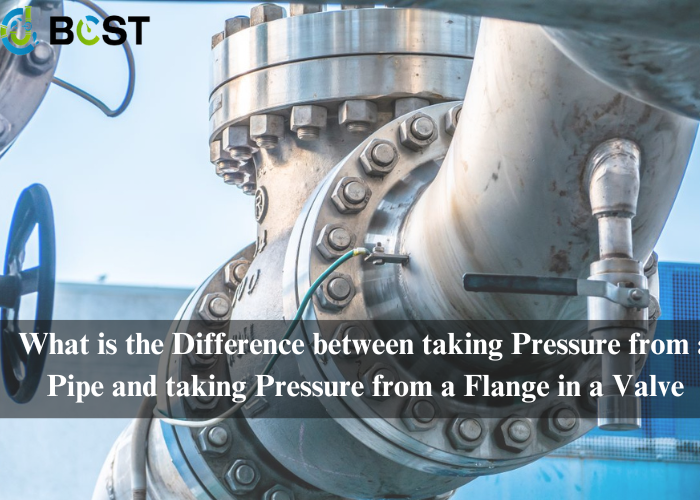
In the field of soupape manufacturing and application, pipeline pressure and flange pressure as two common pressure measurement methods, each has its own unique advantages and scope of application. As a professional soupape manufacturer, we are aware of the differences and importance of these two pressure methods in engineering design, manufacturing and actual operation. This article will be from the definition, principle, application scenarios, performance characteristics and selection recommendations, etc., to elaborate on the difference between pipeline pressure and flange pressure.
I. Definition and principle
Pipeline Pressurization
Pipeline pressure, as the name suggests, refers to the direct pressure measurement in the pipeline body. This kind of pressure extraction is usually realized by installing pressure sensors or pressure gauges on the pipeline, and the sensors or gauges are directly connected to the pipeline, by feeling the fluid pressure inside the pipeline and converting it into a measurable signal. The advantage of pipeline pressure extraction is that it is direct and accurate, and can reflect the real pressure condition of the fluid in the pipeline in real time.
Flange Pressure Extraction
Flange pressure taking is the way to realize pressure measurement through the flange connection. Flange as an important form of pipeline connection, through the bolt will be two flange surface closely connected together, so as to realize the connection and sealing of the pipeline. In flange pressure extraction, usually in the flange connection will be set up to take the pressure hole or take the pressure port, through the connection of pressure sensors or pressure gauges to measure the pressure difference between the two sides of the flange or the absolute pressure in the pipeline. The advantage of flange pressure taking is its flexibility and easy maintenance, especially suitable for occasions requiring frequent disassembly and maintenance.
Ⅱ. The Application Scene
Application Scenarios of Pipeline Pressure Taking
High-pressure pipeline system: In high-pressure pipeline system, due to the high pressure, the pressure sensor installed directly on the pipeline can ensure the accuracy and reliability of the measurement. Pipeline pressure can reflect the high-pressure condition in the pipeline in real time, which provides an important guarantee for the safe operation of the system.
- Precision measurement occasions:for occasions requiring high-precision pressure measurement, such as laboratory research, precision instrument manufacturing and other fields, pipeline pressure can provide more accurate pressure data to meet the needs of scientific research and production.
- Space-constrained environments: In some space-constrained piping systems, such as small equipment, compact devices, etc., installing pressure sensors directly on the pipeline can save space and avoid the use of additional connectors and pipelines.
Application Scenarios of Flange Pressure Taking
- Large piping systems: In large piping systems, flange connection is a common connection. Through flange pressure pickup, it is convenient to set pressure pickup points at different locations of piping system to realize multi-point monitoring and remote control.
- Easy maintenance environment: In some piping systems that require frequent disassembly and maintenance, such as process piping in chemical and petroleum industries, flange pressure-taking can reduce maintenance workload and improve maintenance efficiency. When the sensor needs to be replaced or other maintenance work, only the flange connection can be disassembled, without disassembling the whole pipeline system.
- Special working conditions: In some special working conditions, such as high temperature, high pressure, corrosive media and other environments, flange taking pressure can ensure the safety and reliability of the measurement system by choosing the appropriate flange material and seals. At the same time, flange pressure taking can also be combined with other measuring components (such as thermometers, flow meters, etc.) to realize multi-parameter measurement and monitoring.
Ⅲ. Performance Characteristics
- Performance characteristics of pipeline pressure taking
- Directness:Pipeline pressure taking directly measures the fluid pressure inside the pipeline without transmitting the pressure signal through other connectors or pipelines, so the measurement results are more direct and accurate.
- Real-time: Because the sensor is directly installed on the pipeline, the pipeline pressure taking can reflect the pressure change of the fluid in the pipeline in real time, which provides a strong support for the real-time control and adjustment of the system.
- High Accuracy:In precision measurement occasions, pipeline pressure taking can provide high-precision pressure data to meet the high standard requirements of scientific research and production.
- Performance characteristics of flange pressure taking
- Flexibility:flange pressure taking realizes pressure measurement through flange connectors, which has greater flexibility. According to the actual need to choose the appropriate flange specifications and materials and sensor models for the combination and matching.
- Facilité d'entretien : The flange connection is easy to remove and install, making flange pickup pressure more convenient in terms of maintenance. When it is necessary to replace the sensor or carry out other maintenance work, it can be completed with simple operation.
- Adaptability: flange pick-up pressure can adapt to the needs of a variety of working conditions and environmental conditions. By choosing suitable flange materials and seals and taking corresponding protective measures (such as anti-corrosion, high temperature resistance, etc.), the safety and reliability of the measurement system can be ensured.
Ⅳ. Selection recommendations
When choosing pipe pressure or flange pressure, it is necessary to make comprehensive consideration based on specific application scenarios, measurement requirements and economic costs. The following are some selection suggestions:
- l Selection according to the requirements of measurement accuracy:for occasions requiring high-precision measurement (such as laboratory research, precision instrument manufacturing, etc.), it is recommended to use pipeline pressure extraction to ensure the accuracy of the measurement results. For general industrial applications (e.g. chemical, petroleum and other industries), you can choose the appropriate flange pressure-taking method according to the actual needs.
- l Choose according to the characteristics of pipeline system: in large pipeline system, due to the complexity of pipeline connection and space constraints, it is recommended to use flange pressure extraction method in order to facilitate multi-point monitoring and remote control.


 English
 Arabic
 Russian
 French
 Spanish