
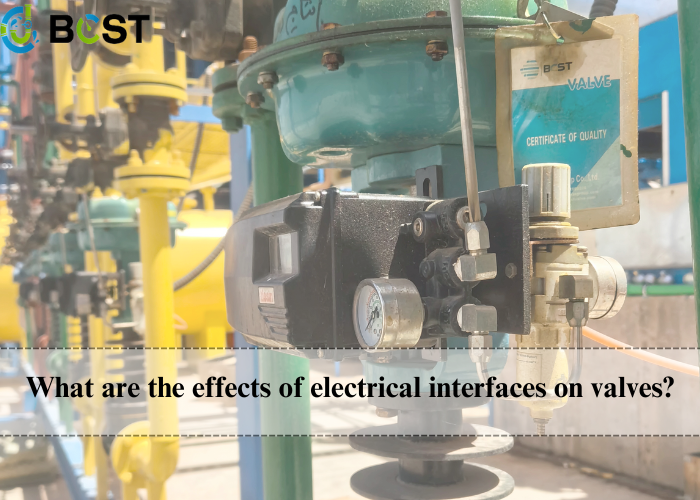
The electrical interface is an integral part of the valve control system. Its design, selection and installation have a significant impact on the performance, reliability and operating efficiency of the valve.In modern industrial automation, electrical interfaces connect valves to control systems, transmitting signals, executing commands, and providing feedback on status. This article will analyze in detail the impact of electrical interfaces on valves and their key role.
1. Definition and classification of electrical interfaces
        1.1 Definition
    The electrical interface is a connection device that realizes the transmission of electrical signals between the valve and the external electrical system (such as PLC, DCS or sensor). It includes both the physical connection part and the communication protocol part.
        1.2 Classification
    Signal interface: such as analog (4-20mA) and digital (switch) interface.
Communication interface: such as HART, RS485, Modbus, Ethernet interface, etc.
Power interface: an interface that provides power to an electric or solenoid valve, such as an AC/DC power interface.
Protective interface: such as explosion-proof junction box, shielded connector, etc., used for safety protection in special environments.
2. The influence of electrical interface on valve performance
        2.1 Accuracy
    The electrical interface is responsible for accurately transmitting the control system signal to the valve actuator. The quality of the interface directly affects the accuracy of signal transmission.For example, in an analog signal interface, if the current signal (such as 4-20mA) is disturbed during long-distance transmission, it will cause inaccurate valve opening.
For digital interfaces, such as the HART protocol interface, signal stability can improve control accuracy and make the valve movement more precise.
2.2 Response Speed
A high-quality electrical interface can reduce signal transmission delays, thereby increasing the valve's response speed to control commands. If the interface is poorly designed or the signal transmission speed is slow, it may cause valve action delays and affect the efficiency of the production process.Anti-interference ability
Strong electromagnetic interference often exists in industrial environments. If the shielding performance of the electrical interface is poor, the valve may be interfered with and malfunction.
For the communication interface, the use of shielded cables and anti-interference design can significantly improve the stability of signal transmission and ensure the reliability of valve operation.
3.The influence of electrical interface on valve reliability
        3.1 Environmental adaptability
    Valves often work in high temperature, high humidity, corrosive or explosive environments. The material and protection level of the interface will directly affect the reliability of the valve. For example, in a corrosive environment, it is necessary to select an electrical interface made of corrosion-resistant materials, such as stainless steel or nickel-plated copper alloy connectors. In a high humidity environment, an interface with a protection level of IP67 or higher should be selected to avoid short circuits caused by water vapor intrusion.
        3.2 Mechanical strength
    The connection strength of the electrical interface affects the stability of the valve in a vibrating or high-pressure environment. If the interface loosens or breaks during vibration, the valve will not operate normally.
Using anti-loosening devices or high-quality connectors can extend the service life of the interface and reduce maintenance frequency.
3.3 Temperature adaptability
    When the valve is operated in high or low temperature conditions, the electrical interface needs to have good temperature adaptability. For example, ordinary plastic interfaces may soften in high temperature environments, affecting the sealing and connection strength.
        4. The influence of electrical interface on valve safety
        4.1 Explosion protection
    In hazardous environments such as petrochemicals, the electrical interface of the valve needs to meet explosion-proof requirements. For example, a flameproof junction box can prevent sparks or high-temperature gas from leaking out, avoiding the risk of explosion. Intrinsically safe interfaces reduce electrical energy to ensure that even a short circuit will not cause an accident.
        4.2 Overload and short circuit protection
    Whether the interface design has overload or short-circuit protection will affect the safety of valve operation. For example, an interface with a fuse or overload protection circuit can cut off the current under abnormal conditions to prevent equipment damage. Without protection measures, electrical overload may burn out the valve actuator or cause equipment shutdown.
        4.3 Grounding and shielding design
    Improper grounding design of electrical interfaces may cause electrical failures or electric shock risks. Reasonable shielding and grounding design can reduce electromagnetic interference and improve system safety. In high-voltage environments, good grounding design can also prevent lightning strikes or high-voltage currents from impacting equipment.
        5. The impact of electrical interfaces on valve installation and maintenance
        5.1 Installation convenience
    The quick-plug interface is more convenient during installation and reduces the possibility of wiring errors. The layout of the interface should be reasonable to avoid inconvenience caused by small space.
5.2 Maintenance Cost
Interfaces with excessive contact resistance will increase current loss and may require frequent maintenance or replacement during long-term use. Using durable industrial-grade interfaces can significantly reduce maintenance costs and improve system operation stability.
5.3 Remote diagnostic capabilities
    Modern electrical interfaces (such as Ethernet interfaces) support remote monitoring and fault diagnosis, which can detect abnormalities in valve operation in a timely manner and reduce maintenance frequency. Combined with intelligent interface modules, automatic alarms and maintenance suggestions can also be realized to improve operating efficiency.
        6. How to optimize the impact of electrical interfaces on valves
        6.1 Select the appropriate interface type
    Select the appropriate electrical interface type according to the use environment and control requirements. For example, the 4-20mA interface is suitable for long-distance transmission, the Modbus interface is suitable for multi-device communication, and the Ethernet interface is suitable for high-speed communication and remote control.
        6.2 Improving the protection performance of interfacesHere
    In corrosive or high humidity environments, interfaces with high protection levels should be selected and sealing measures should be taken. In flammable and explosive situations, interfaces that meet explosion-proof requirements should be used.
        6.3 Optimizing signal transmission design
    Use shielded cables and anti-interference design to reduce the impact of external noise on the signal. For long-distance communication, add a repeater or signal amplifier to ensure signal stability.
        6.4 Regular inspection and maintenance
    Check the connection of the interface regularly, remove oxides or dust, and ensure good contact. Test the electrical performance of the interface, such as contact resistance and signal integrity, to detect potential problems in time.
        7. Summarize
    The electrical interface plays a bridging role in the valve system, and its design and selection directly affect the performance, reliability and safety of the valve. By selecting high-quality interface components, reasonably optimizing the signal transmission design, and performing regular maintenance, the operating efficiency and service life of the valve system can be significantly improved.In the future, with the development of intelligent technology, electrical interfaces will more widely support remote monitoring and automated operations, providing more efficient and reliable solutions for valve control.


 English
 Arabic
 Russian
 French
 Spanish