
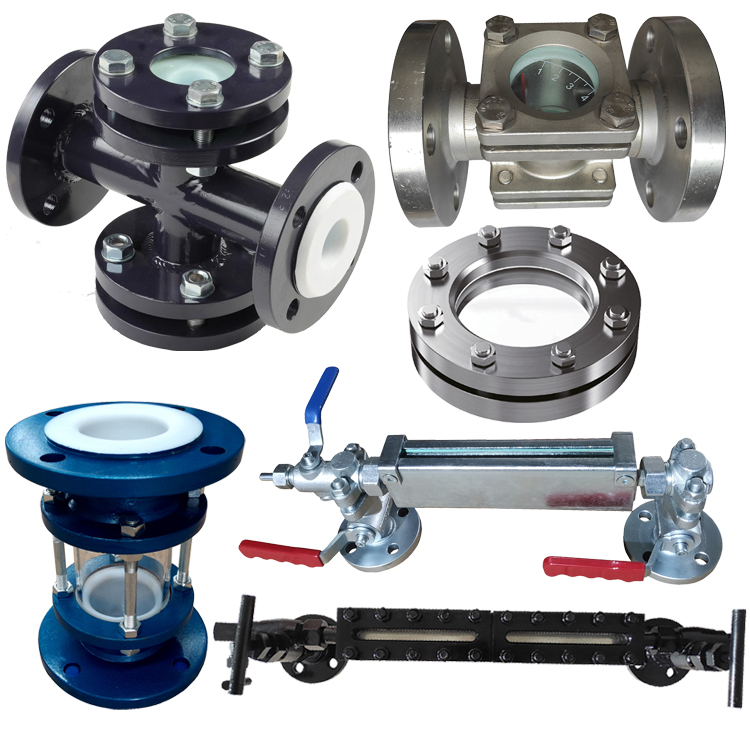
Même si voyantes are inherently resistant to corrosion, they can still begin to erode under certain circumstances, particularly if the wrong material is specified for the application. As a result, corroding sight glasses become increasingly vulnerable to failure, which can be sudden, catastrophic, and damaging. In addition, it can harm your system, put workers at risk, and cause unplanned downtime. To help prevent a costly disaster, it’s essential to comprehend the risks of sight glass corrosion and failure and take the necessary steps to prepare for them.
A voyant, also called a sight window or port is an essential tool for observing a closed system’s interior. Properly installed and spaced to your unique application, sight glass can be incredibly resistant to extreme temperatures, pressure fluctuations, and even corrosion. However, certain conditions can put sight glasses at an even greater risk for decay and damage. These include:
- Exposition à des produits chimiques agressifs.
- Contact avec de l'eau surchauffée.
- Nettoyage inadéquat ou abrasif.
- Contact permanent avec des milieux de traitement grossiers.
- Montée/descente rapide des températures.
- Surpression.
Aside from these hazards, your sight glass is at even greater risk of failure or corrosion if it is not correctly installed, handled correctly during operation, or designed for the wrong application. Glass that has been removed from service must never be reused, so using an old sight glass for a new operation can also cause issues. Even if an old sight glass had seen little use, the stresses and strains of the installation process could cause tiny, microscopic flaws in the material. While these invisible cracks won’t be seen with a visual inspection, they can significantly weaken the structural integrity of the glass, leaving it susceptible to breakage. Always inspect any sight glass for signs of wear before installation to minimize the chance of damage.
Le cercle vicieux de la corrosion et de la casse des vitres peut être difficile à briser. La corrosion affaiblit le verre, le rendant plus vulnérable aux fractures et aux ruptures, tandis qu'une fissure peut affaiblir considérablement le verre, le laissant ouvert à une corrosion et à un affaiblissement plus importants. Ce cycle peut être difficile à briser, mais un entretien et des réparations appropriés peuvent contribuer à l'empêcher de se produire.
The consequences of a failed sight glass can be catastrophic. When glass cracks at five miles per second, thick chunks and glass shards are ejected faster than the fastest fighter jets. This can easily damage your system, exposing it to the surrounding environment and rendering it inoperable. In addition, any product or materials inside your equipment can be ruined. Don’t let a failed sight glass lead to disaster – take the necessary steps to ensure your equipment and materials are safe.
Comment éviter la corrosion et la défaillance de l'acier ? Verre de viséees
La sélection, l'installation et l'entretien corrects d'un voyant sont essentiels pour protéger votre système d'une défaillance potentielle. Le choix du bon voyant pour votre système est la première étape pour assurer votre sécurité. L'installation correcte du voyant et son entretien par des inspections régulières sont également primordiaux pour éviter les pannes dangereuses du voyant.
When selecting the correct type of glass for your project, soda lime glass is often the first choice. However, it has its limitations regarding temperature and pressure tolerance – tempered soda lime should not be used in applications above 300°F. Therefore, for applications requiring higher temperature and pressure specifications, it is choosing a different type of glass.
Grâce à ses caractéristiques chimiques et mécaniques uniques, le verre borosilicaté est le choix par excellence pour les traitements chimiques, biotechnologiques et pharmaceutiques. Avec des températures pouvant atteindre 572 °F, une résistance à la corrosion à large spectre, une faible dilatation thermique et une excellente transparence et visibilité, le verre borosilicaté est le choix idéal pour toutes les applications. Qu'il s'agisse de mélanger, de mesurer, de stocker ou de transporter des produits chimiques, le verre borosilicaté est idéal pour des performances maximales.
Pour les applications dépassant les 572°F, les ingénieurs des procédés s'appuient sur les matériaux à base de quartz et de saphir pour leur résistance supérieure à la température et leur durabilité. En outre, ces matériaux offrent des performances fiables à des températures extrêmes, ce qui les rend idéaux pour les processus industriels nécessitant une résistance à la chaleur.
Soda lime glass’s chemical degradation or corrosion occurs much more rapidly in slightly acidic (pH 6) and alkaline (pH 10) conditions. As a result, soda lime glass is 10 times more vulnerable to degradation than borosilicate glass—so taking the proper precautions to protect it from these environmental conditions is essential.
For more information on the physical properties of borosilicate glass, see to ASTM E438 “Standard Specification for Glasses used in Laboratory Apparatus” and DIN 7079. The former provides information about the glass’s optical, thermal, electrical, and mechanical properties, while the latter outlines whether the glass can withstand high temperatures, high pressure, and corrosive chemicals.
Outre son impressionnante durabilité thermique et chimique, le verre borosilicaté est également réputé pour sa remarquable résistance mécanique. Avec une résistance à la compression pouvant atteindre 200 000 livres par pouce carré et une résistance à la traction plus de 10 fois supérieure à celle de l'acier, le verre borosilicaté est l'un des matériaux verriers les plus résistants.
Le choix du verre précontraint mécaniquement, qui se développe rapidement, peut vous aider à éviter les problèmes courants associés aux fenêtres standard. Avec le verre précontraint, vous pouvez éviter les problèmes courants tels que la casse, la déformation et la formation de buée qui se produisent souvent avec les fenêtres standard, ce qui vous donne une plus grande tranquillité d'esprit et une meilleure visibilité. En outre, le verre précontraint mécaniquement offre un niveau de sécurité plus élevé.
A mechanically pre-stressed sight glass consists of a stainless-steel ring that applies a uniform, radial compression to a disc of borosilicate glass. This unique design ensures greater strength and durability, allowing the sight glass to withstand more complex impacts and greater stress forces than other sight glasses. The radial compression also prevents tensile stress from affecting the glass so you can rely on its performance during challenging conditions. Invest in this high-quality sight glass, and you’ll have a dependable, long-lasting solution.
Once you’ve selected the optimal design for your operation, double-check that the glass is thick enough to handle the pressure of your application. Failure to do so can result in glass breakage, risking your process. To avoid this, it’s essential to ensure the glass can handle the maximum internal pressure it will be subjected to.
When considering a sight glass window, the metal ring’s corrosion must be considered. Therefore, system designers typically specify the type of stainless steel required to handle harsh caustic or acidic process mediums. In some cases, the sight glass can be mounted so that the metal ring is not directly exposed to the process fluid – meaning that lower-cost steel may be used.
Proper training is required for anyone who works with or near a sight glass, regardless of the task or the environment. Even the slightest bump from a tool or scratch from a gloved hand can weaken the glass, so it’s essential to ensure that all personnel is adequately trained in best practices. Furthermore, harsh cleaning agents can cause premature corrosion, making it even more important to ensure anyone who is working on or near the sight glass is aware of the potential hazards. With the proper training, you can ensure that your sight glass system runs safely and effectively.
It’s incredibly simple to install, and the less contact you have with your sight glass, the better it will perform. In addition, regular cleaning and maintenance can help keep your sight glass functioning optimally and ensure years of reliable service.


 English
 Arabic
 Russian
 French
 Spanish