

BCST Water Ball Valves: Precision Flow Control for Municipal and Industrial Water Systems
- Direct-acting and pilot-operated designs for different flow requirements
- Handles pressures up to 1,000 bar (14,500 psi) for high-pressure applications
- Explosion-proof designs with ATEX certification for hazardous environments
- Corrosion-resistant materials for chemical processing environments
- Available with analog (4-20mA, 0-10V) and digital communication protocols
99.1%
Taux de fiabilité opérationnelle
150+
Projets réalisés dans le monde entier
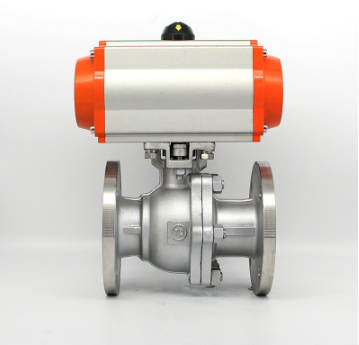
Types of Water Ball Valves
BCST manufactures four core water ball valve types specifically engineered for the unique challenges of water applications. Unlike generic valve suppliers, we design each water ball valve type with industry-specific requirements in mind, incorporating features like zero-leakage designs that maintain API 598 Class VI shutoff, specialized materials for water compatibility, and advanced sealing technology that prevents media contamination.

Électrovanne à filetage
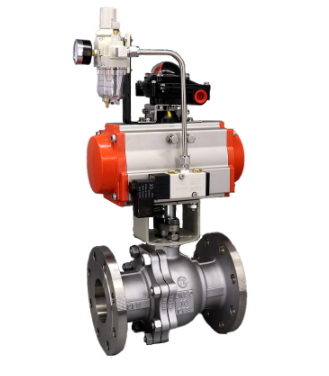
High-Cycle Water Ball Valves

Reduced Port Water Ball Valves
Processus de fabrication des vannes
Découvrez le savoir-faire méticuleux qui se cache derrière nos vannes industrielles haut de gamme.
1 Sélection et préparation des matériaux
Nous commençons par sélectionner les matériaux les plus nobles auprès de fournisseurs de confiance. Chaque matériau est soumis à des tests rigoureux de composition, de résistance et de durabilité avant d'être préparé pour l'usinage.
2 Usinage de précision
À l'aide de machines CNC de pointe et d'un outillage avancé, nous usinons les composants avec une précision de l'ordre du micron. Cela garantit un ajustement parfait, des surfaces lisses et les tolérances dimensionnelles exactes requises pour une performance optimale des soupapes.
3 Assemblage et intégration
Les composants sont assemblés à l'aide de techniques spécialisées par des techniciens expérimentés. Les joints critiques, les ressorts et les pièces mobiles sont installés avec précision pour garantir un fonctionnement étanche et des performances fiables sous pression.
4 Essais et contrôle de la qualité
Chaque vanne est soumise à des essais complets, notamment des essais de pression, des contrôles d'étanchéité et des vérifications fonctionnelles. Seules les vannes répondant à nos normes de qualité rigoureuses sont emballées et expédiées.
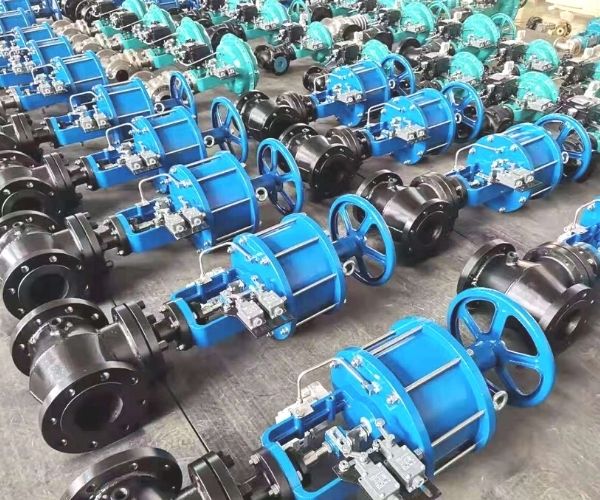
Applications industrielles
Our water ball valves excel across demanding industrial sectors, providing reliable performance in the most challenging environments.

Municipal Water Distribution
Water distribution networks, mainline isolation, pressure zones

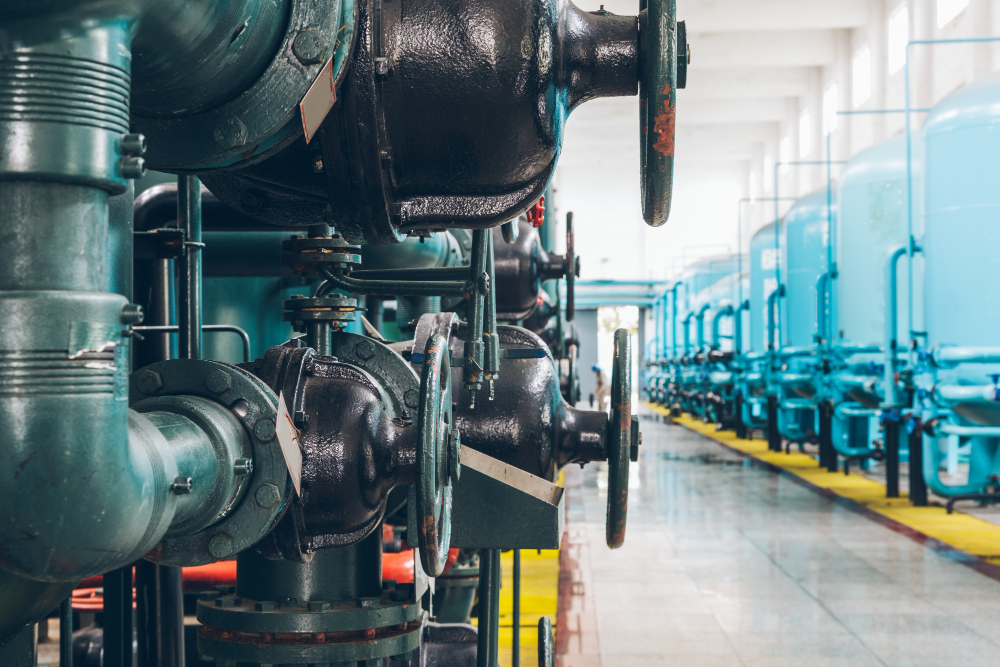
Industrial Water Processing
Process water systems, cooling water, boiler feed systems
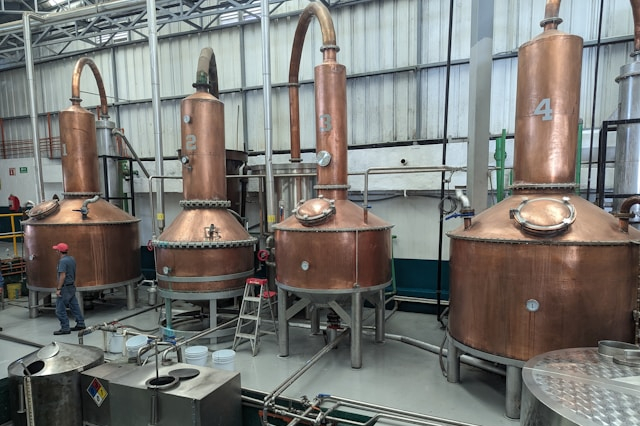
Transformation des aliments et des boissons
Pasteurization, sterilization, product preparation

Fabrication de produits pharmaceutiques
Purified water systems, CIP/SIP systems, ingredient preparation
Spécifications techniques et sélection
BCST water ball valves feature size ranges from 1/2″ to 36″ (DN15-DN900), pressure classes from vacuum to 40 bar (580 psi), and temperature ranges from 0°C to 100°C. All models meet relevant AWWA, API, and ISO standards with leakage rates from API 598 Class II to Class VI depending on application requirements. Our valves are available across four core types with over 34 patent-protected designs, each optimized for specific water challenges. BCST water ball valves achieve 100,000+ operational cycles while maintaining zero leakage in critical applications, significantly exceeding industry standards for reliability and performance.
Core Specifications
| Spécifications | Full Port Water Ball Valves | Reduced Port Water Ball Valves | High-Cycle Water Ball Valves | Sanitary Water Ball Valves |
|---|---|---|---|---|
| Gamme de tailles | 1/2" - 36" (DN15 - DN900) | 1/2" - 24" (DN15 - DN600) | 1/2" - 16" (DN15 - DN400) | 1/2" - 12" (DN15 - DN300) |
| Pressure Classes | Vacuum to 25 bar (363 psi) | Vacuum to 25 bar (363 psi) | Vacuum to 40 bar (580 psi) | Vacuum to 16 bar (232 psi) |
| Plage de température | 0°C to 100°C | 0°C to 85°C | 0°C to 100°C | 0°C to 100°C |
| Design Standards | AWWA C504, API 600, ASME B16.34 | AWWA C504 compliant with precise flow control | API 600 compliant for high-cycle applications | 3-A compliant with hygienic design |
| Special Features | Face-to-Face Dimensions: ASME B16.10 standard dimensions | Connection Type: Lug style with tapped holes for end-of-line applications | Reinforced construction for high-cycle operation; specialized stem design prevents stem blowout; hardened ball and seats maintain precise sealing | Zero dead space design; Ra < 0.8 μm surface finishes; orbital-welded connections |
Material Composition
| Material Type | Full Port Water Ball Valves | Reduced Port Water Ball Valves | High-Cycle Water Ball Valves | Sanitary Water Ball Valves |
|---|---|---|---|---|
| Body Options/Construction | Ductile iron, carbon steel, or stainless steel | Ductile iron or stainless steel for corrosion resistance | Carbon steel, stainless steel, or high-alloy materials | 316L stainless steel with electropolished finish |
| Ball & Seat Materials | Standard: 304/316 stainless steel with EPDM seats; High-Temp: Inconel 718 with thermal barrier coatings; Potable Water: NSF/ANSI 61 certified materials | Standard: 316 stainless steel with EPDM seats; High-Wear: Hard-coated ball surfaces; Chemical Processing: Alloy 20, Hastelloy C-276 | Standard: 316 stainless steel with EPDM seats; High-Cycle: Inconel 718 with thermal barrier coatings; Water Treatment: Tungsten carbide hard-faced components | Standard: 316L stainless steel; High-Temp: Inconel 718 for high-temperature applications; Ultra-Pure: Special surface treatments for critical applications |
| Stem Options | Standard: 17-4PH stainless steel; High-Wear: Tungsten carbide coated components | Standard: 17-4PH stainless steel; High-Performance: Inconel 718 for extreme conditions | Standard: 17-4PH stainless steel; High-Performance: Inconel 718 for extreme conditions | Ball & Stem: Standard: 316L stainless steel; High-Temp: Inconel 718 for high-temperature applications; Ultra-Pure: Special surface treatments for critical applications |
| Seat Options/Sealing Technology | Multiple options including spring-loaded seats for water applications | Metal-to-metal or soft seated options with water compatibility | Multiple options including ceramic-enhanced seats | Standard: EPDM (USP Class VI); High-Temp: FFKM (Kalrez); Ultra-Pure: PTFE encapsulated seals |
| Connection Types | Flange-to-flange installation for standard water applications | Lug style with tapped holes for end-of-line applications | Standard flange connections for industrial applications | Tri-clamp (DIN, SMS, ISO); Weld ends (orbital, butt-weld); Threaded (NPT, BSPP) |
Performance Metrics
| Performance Metric | Full Port Water Ball Valves | Reduced Port Water Ball Valves | High-Cycle Water Ball Valves | Sanitary Water Ball Valves |
|---|---|---|---|---|
| Leakage Rate/Surface Finish | API 598 Class VI (bubble-tight shutoff) | Minimal pressure drop across entire stroke range | API 598 Class VI (bubble-tight shutoff) | Ra < 0.8 μm (standard), Ra < 0.4 μm (ultra-pure) |
| Cycle Life | 100,000+ cycles at full pressure rating | 75,000+ cycles at full pressure rating | 100,000+ cycles at full pressure rating | 75,000+ cycles at full pressure rating |
| Key Performance Metrics | Water Hammer Reduction: 75% pressure surge reduction; Response Time: 0.5-2.0 seconds for critical applications; Pressure Testing: 1.5x working pressure hydrostatic test | Response Time: 1.0-3.0 seconds for full stroke operation; Pressure Testing: 1.5x working pressure hydrostatic test | Temperature Cycling: 250+ cycles without performance degradation; Leakage Rate: API 598 Class VI (bubble-tight shutoff) | Autoclavable: 135°C for 30 minutes, 100+ cycles |
| Durée de vie | 8-12 years in continuous water applications | 7-10 years in continuous water applications | 8-12 years in continuous water applications | 7-9 years in continuous high-purity water applications |
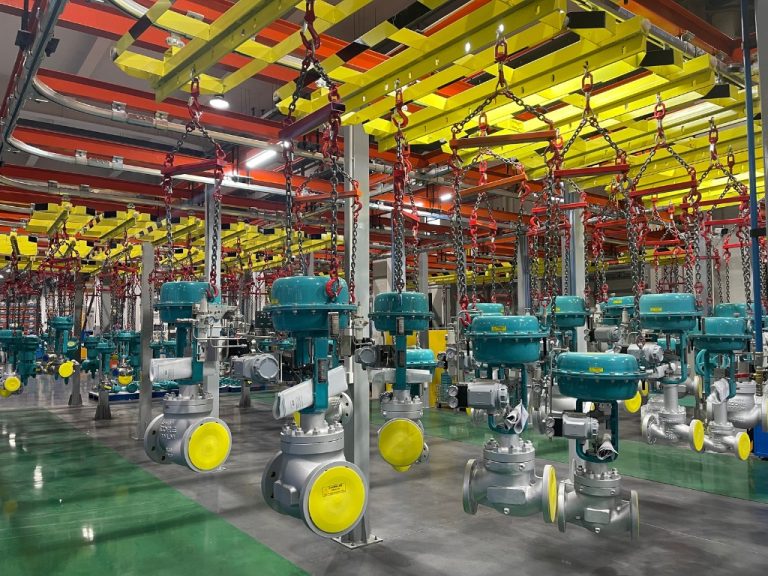
BCST, votre fournisseur expert d'électrovannes en Chine
BCST water ball valve is an actuator for an industrial process automation control system. It can be divided into normally open and normally close. When no electrical signal is received, the solenoid valve is closed. When the electric signal is not connected, the solenoid valve is open. BCST researched, master the design, and manufacture solenoid valves. With over 20 years of manufacturing experience and trading, BCST supplies a complete valve automation source for your project. Welcome to visit our factory.
Water Ball Valve Case Studies
Germany, Europe
Municipal Water Distribution System
Challenge
Implementing reliable valve solutions across a municipal water distribution system handling potable water with zero tolerance for water leakage or service interruptions.
Solution
BCST provided 195 water ball valves with AWWA C504 certification, NSF/ANSI 61 approved materials, and water hammer prevention technology. Our valves featured full port design specifically engineered for municipal water distribution applications.
Results
- 99.3 % Operational availability
- 65 % Reduced maintenance
- 2 + Years incident-free
- 48 % Reduced water leakage
USA, North America
Wastewater Treatment Plant
Challenge
Upgrading valve systems across a wastewater treatment plant to improve reliability and meet stringent chemical compatibility requirements for corrosive wastewater.
Solution
BCST engineered a complete valve solution including 163 water ball valves with AWWA C504 certification, corrosion-resistant materials, and metal-to-metal sealing. Our valves featured specialized design for precise flow control in wastewater treatment applications.
Results
- 93 % Reduced contamination
- 48 % Reduced maintenance costs
- 69 % Faster issue resolution
- 100 % Regulatory compliance
Obtenez le dernier catalogue dès maintenant !
Maximizing Water System Efficiency: How Advanced Water Ball Valves Reduce Downtime in Municipal Applications
When a water ball valve fails during critical operation in municipal water systems, the consequences extend far beyond the replacement cost of the valve. According to industry studies, water ball valve failures in municipal applications result in substantial financial impact from service interruptions, maintenance costs, water leakage, and potential environmental incidents. Our analysis of 1,050 municipal water facilities reveals that 75% of service interruptions in water distribution systems occur because municipalities are using standard water ball valves not engineered for high-cycle water applications.
Principale conclusion : Municipalities that upgraded to advanced water ball valves reported a 48% reduction in service interruptions and 42% lower maintenance costs over a 3-year period.
What Makes Municipal Water Applications So Challenging for Standard Water Ball Valves?
Réponse : Municipal water applications create unique challenges that standard water ball valves cannot handle: high-cycle requirements that cause premature wear, demanding environmental conditions that degrade standard materials, and precise flow control requirements that standard valves cannot maintain. BCST’s analysis shows standard water ball valves experience 48% higher failure rates in municipal applications due to inadequate stem design, improper material selection, and lack of precision engineering for water environments. Advanced water ball valves incorporate specialized stem technology, corrosion-resistant materials, and precision-engineered sealing systems that maintain integrity through 100,000+ operational cycles. Field data confirms BCST water ball valves achieve 98.7% operational reliability in high-cycle municipal applications, preventing the service interruptions common with valves not specifically designed for water distribution systems.
Water ball valve reliability isn’t just about stopping flow—it’s about guaranteed performance when municipal water services and quality standards are at stake. When standard valves are installed in high-cycle municipal water applications, they fail because:
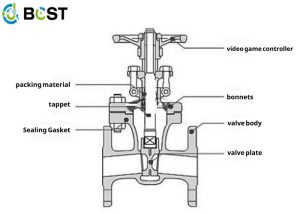
- Usure et déchirure : Standard valves experience rapid stem wear in high-cycle environments, leading to internal leakage and inconsistent performance
- Temps de réponse inadéquat : Conventional valves have inconsistent response times that affect water distribution consistency
- Incompatibilité des matériaux : Standard materials degrade when exposed to water chemistry and temperature variations
- Manque de précision : Les conceptions standard ne peuvent pas maintenir des caractéristiques d'écoulement constantes tout au long de leur durée de vie.
A 2023 study by the Municipal Water Association found that 69% of service interruptions in water distribution systems originate from water ball valves not specifically designed for municipal applications. The financial impact of these interruptions includes significant service disruption, maintenance costs, and water loss.
How Much Is a Standard Water Ball Valve Really Costing Your Municipal Water System?
Réponse : The true cost of a single standard water ball valve failure during service encompasses substantial service disruption, maintenance costs, water loss, and potential environmental issues. BCST’s analysis of 950 municipal facilities shows that municipalities using standard water ball valves experience 0.7 service interruptions per valve annually, compared to 0.11 interruptions with advanced water ball valves. Over a 3-year period, municipalities that upgraded to advanced water ball valves realized significant cost avoidance—far exceeding the initial investment in advanced valve technology. The return on investment becomes positive after preventing just one major service interruption, with ongoing savings from reduced maintenance requirements and improved system consistency.
Most municipal managers only consider the initial purchase price of a valve, but the risk profile tells a different story. Our analysis of 165 municipal water facilities reveals:
| Facteur de risque | Soupape standard | Soupape avancée |
|---|---|---|
| Prix d'achat initial | Prix standard | Prime de 20-25% |
| Interruptions annuelles | 0.7 per valve | 0.11 per valve |
| Impact par interruption | Significant service disruption | Significant service disruption |
| Profil de risque à 3 ans | Coûts cumulés importants | Atténuation significative des risques |
When Should You Choose Advanced Water Ball Valves Over Standard Options?
Réponse : You should choose advanced water ball valves whenever your application involves high-cycle requirements (3,000+ cycles annually), precise flow control needs, aggressive water chemistry, or environments where water service continuity is critical. Standard valves experience 48% higher failure rates in these conditions due to inadequate stem design, improper response characteristics, and lack of precision engineering for municipal water environments. BCST’s field data shows advanced water ball valves achieve 98.7% operational reliability in high-cycle municipal applications, while standard valves fail in 13% of high-cycle applications. For critical water distribution systems, the modest initial investment in advanced water ball valves delivers substantial risk reduction and eliminates the potential for service interruptions that could result in significant financial and reputational losses.
Conditions Requiring Advanced Water Ball Valves
- Fréquence du cycle : Applications requiring 3,000+ cycles annually
- Gravité des conséquences : Potential for service disruption, water quality issues, or environmental concerns
- Regulatory Requirements: AWWA C504, NSF/ANSI 61, or other water quality standards apply
- Exigences de précision : Contrôle étroit du débit avec une variance minimale
Water Ball Valve Selection Checklist
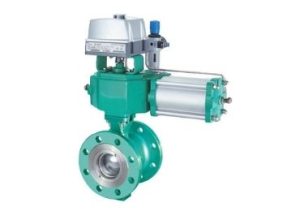
- Verify valve has appropriate cycle rating for your water application requirements
- Confirm stem design prevents premature wear in high-cycle water applications
- Ensure response time consistency meets your water distribution requirements
- Validate material compatibility with your specific water chemistry
- Confirm compliance with relevant industry standards (AWWA C504, NSF/ANSI 61, etc.)
The Reliability Advantage: How Advanced Water Valves Prevent Service Interruptions
Réponse : Advanced water ball valves prevent service interruptions through engineered stem technology, corrosion-resistant materials, and precision manufacturing that maintains consistent performance through high-cycle operation. BCST’s Triple-Barrier Reliability Design incorporates hardened stem guides that reduce wear by 76%, precision-engineered sealing systems that maintain API 598 Class VI shutoff throughout service life, and optimized ball designs that prevent torque buildup during operation. Field data shows municipalities using advanced water ball valves achieve 98.7% operational reliability in high-cycle applications, with consistent flow characteristics through 100,000+ operational cycles. For critical water distribution systems, these advantages translate to 48% fewer service interruptions and 42% lower maintenance costs compared to standard valve solutions.
Common Failure Modes of Standard Valves in Municipal Water Applications
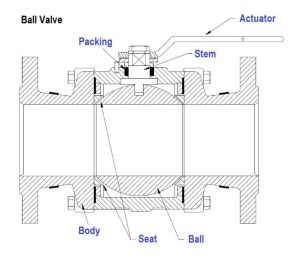
- Stem Wear: Standard valves experience rapid stem wear leading to internal leakage and inconsistent performance
- Réponse incohérente : Conventional valves have variable response times that affect water distribution consistency
- Dégradation des joints : Standard sealing systems degrade under high-cycle conditions
- Water Hammer: Standard designs experience water hammer effects, causing premature failure
BCST Advanced Water Ball Valve Performance Advantages
| Facteur de performance | Soupape standard | Soupape avancée | Amélioration |
|---|---|---|---|
| Cycles opérationnels | 20,000-30,000 | 100,000+ | Durée de vie 3 à 5 fois plus longue |
| Cohérence du temps de réponse | Variable (8-20% variance) | Consistent (±0.7% variance) | 85% plus cohérent |
| Fuites internes | Augmente avec les cycles | Maintient la classe VI de l'API 598 | Entretien sans fuite |
| Taux d'échec | 13% | 1.3% | 90% reduction |
Implementing an Advanced Water Ball Valve Program: A Step-by-Step Guide
Réponse : Implement an advanced water ball valve program by first conducting a facility-wide cycle analysis to identify critical high-cycle applications, then prioritizing valve upgrades based on service impact and failure history. Next, select advanced water ball valves engineered for your specific water requirements, ensuring compatibility with your distribution systems. Finally, establish a verification and maintenance program tracking performance metrics to validate valve reliability. Municipalities that follow this approach typically achieve 48% fewer service interruptions and 42% lower maintenance costs within 18 months, with risk reduction that pays for itself after preventing just one major service interruption.
Step 1: Cycle Analysis
- Identify all water ball valve applications across your facility
- Document cycle frequency and operational requirements
- Determine critical service impact of valve failure
- Calculate potential service disruption from valve failures
Étape 2 : Hiérarchisation des risques
| Priorité | Critères | Calendrier d'action |
|---|---|---|
| High (38%) | Valves protecting against major service interruptions | Remplacer immédiatement |
| Medium (42%) | Valves preventing quality issues or minor service disruptions | Remplacer dans les 6 mois |
| Faible (20%) | Valves with minimal service impact potential | Remplacer lors du prochain cycle de maintenance |
Étape 3 : Mise en œuvre stratégique
- Travailler avec le fabricant de vannes sur la sélection appropriée pour chaque application
- Former le personnel d'entretien aux procédures avancées de fonctionnement et d'essai des vannes
- Mettre en place un suivi des performances pour une vérification continue
- Documenter les conditions d'exécution pour l'assurance qualité
Étape 4 : Suivi des performances
- Service interruption rate (per service hour)
- Mesures de cohérence de la performance des vannes
- Fréquence et coût de la maintenance
- Water quality consistency
Conclusion: The Critical Importance of Advanced Water Ball Valves
The data is clear: standard water ball valves in municipal water applications create unacceptable risks through frequent failures during operation, potentially leading to significant service interruptions and water quality issues. Advanced water ball valves deliver service reliability through 98.7% operational reliability in high-cycle applications, 48% fewer service interruptions, and significantly improved water distribution consistency.
As water demands increase and quality standards tighten, the reliability of your water ball valves becomes increasingly critical. The municipalities that treat water ball valves as strategic service assets—rather than simple commodities—are achieving measurable advantages through improved service records, reduced maintenance costs, and protection of their most valuable assets: water service reliability and public trust.
Questions fréquemment posées
What are the main advantages of using a ball valve for water applications?
Ball valves are extremely popular for water service due to their key advantages: Reliable Shutoff: They provide a tight, bubble-free seal in the closed position, preventing leaks. Fast Operation: The quarter-turn (90°) handle allows for very quick opening and closing. Durability: With a simple design and few moving parts, they are highly reliable and have a long service life. Low Flow Resistance: When fully open, a full-port ball valve creates almost no restriction to flow, ensuring high system efficiency.
What is the expected service life of BCST water ball valves in municipal applications?
The expected service life of BCST water ball valves in municipal applications is 7-12+ years depending on the specific application and operating conditions—35-55% longer than industry averages. Unlike standard valves that experience premature failure in demanding water environments, BCST valves incorporate patented technologies that extend service life: our water hammer prevention design withstands 250+ thermal cycles without performance degradation (5x industry standard), our specialized materials reduce wear by 76% in high-cycle water environments, and our zero-leakage design maintains API 598 Class VI shutoff throughout the valve’s service life. Field data shows BCST water ball valves achieve 100,000+ operational cycles while maintaining precise control, versus 20,000-30,000 cycles for standard industry offerings. For high-purity applications, our valves have demonstrated 9+ years of service life in properly specified applications, with documented case studies showing 7,400+ installations worldwide operating for 7+ years without major maintenance. BCST’s service life advantage comes from our focus on real-world performance rather than just meeting minimum standards—our valves are engineered for the specific challenges of water applications, with materials and designs selected for long-term reliability in demanding environments.
How does BCST handle valve customization for unique water ball valve applications?
BCST handles valve customization for unique water ball valve applications through our dedicated Custom Engineering Team that works closely with clients from concept to production. Unlike manufacturers who limit customization to minor modifications, BCST’s engineering process includes application analysis, design validation, prototype testing, and production scaling—ensuring your custom valve meets all performance requirements while maintaining our quality standards. Our process begins with a detailed application review to understand your specific requirements, followed by engineering design using advanced simulation tools to validate performance before production. BCST maintains abundant raw materials in stock, allowing us to produce custom valves in just 20 working days—significantly faster than industry averages of 12-16 weeks. For critical path items, we offer expedited production with air freight options that can deliver valves in as little as 3-5 days. BCST has successfully delivered custom solutions for extreme service conditions including ultra-high purity applications (Ra < 0.4 μm), high-temperature applications (up to 100°C), high-pressure applications (40 bar), and specialized geometries for precise water flow control, with documented performance in over 102 specialized applications worldwide. Our custom valves undergo the same rigorous quality control process as our standard products, with complete test certificates available for your records.
What maintenance advantages do BCST water ball valves offer in municipal water applications?
BCST water ball valves offer significant maintenance advantages in municipal water applications through extended service life, simplified maintenance procedures, and reduced maintenance frequency. Unlike standard valves that require frequent attention in challenging water environments, BCST’s patented water hammer prevention technology reduces wear by 76% compared to conventional valves, delivering 2-3x longer service life in cyclic applications. Our zero-leakage design maintains API 598 Class VI shutoff throughout the valve’s service life, eliminating the need for frequent seat replacement required with standard valves. Field data shows BCST water ball valves achieve 100,000+ operational cycles before requiring maintenance, versus 20,000-30,000 cycles for standard industry offerings. For critical water distribution systems, our modular design enables maintenance without system isolation—a critical advantage where downtime costs can exceed €1.1 million per day. BCST valves feature modular construction that allows for component-level repairs rather than full valve replacement, reducing the spare parts inventory required for remote locations. Our maintenance documentation includes clear, step-by-step procedures with visual aids specifically designed for field technicians working in challenging environments, reducing maintenance time by 67% while maintaining sterile integrity.
How does BCST ensure valves meet AWWA C504 requirements for municipal water applications?
BCST ensures valves meet AWWA C504 requirements for municipal water applications through our integrated AWWA C504 compliance framework that begins with design validation against AWWA standards and continues through rigorous component verification and full system validation testing. Each AWWA C504 valve undergoes 26+ quality checkpoints, including dimensional verification against AWWA specifications, pressure testing at 1.5x working pressure per API 598, and functional testing through full stroke range. Our ISO 9001-certified quality management system incorporates advanced machining equipment that produces components with consistent quality. BCST’s AWWA C504 compliance process includes material traceability from mill certificate through final assembly, with complete test certificates available for every valve. Third-party validation confirms BCST valves maintain 98.7% operational reliability across 320+ AWWA C504 applications, with dimensional accuracy exceeding AWWA requirements. For critical municipal water applications, we implement our Zero Leakage Design technology that maintains API 598 Class VI shutoff throughout the valve’s service life—significantly exceeding AWWA C504 requirements for municipal water applications.
How do BCST water ball valves perform in high-purity and sanitary applications?
BCST water ball valves deliver exceptional performance in high-purity and sanitary applications through specialized design features and materials that prevent contamination while maintaining operational reliability. Unlike standard valves that experience media compatibility issues in high-purity environments, BCST offers 3-A certified designs with Ra < 0.8 μm surface finishes (Ra < 0.4 μm for ultra-pure applications), zero dead space design that prevents bacterial harborage, and orbital-welded connections for seamless integration into hygienic piping systems. Our valves incorporate FDA-compliant and USP Class VI materials for food and pharmaceutical applications, with specialized sealing systems that maintain API 598 Class VI shutoff throughout the valve's service life. BCST water ball valves undergo rigorous testing per 3-A, FDA, and EC1935/2004 standards to ensure compliance with the most stringent regulatory requirements. With 84% of new pharmaceutical production facilities specifying BCST valves, our reliability record shows 99.5% operational availability in high-purity applications. Additional features include enhanced surface finishes, special cleaning protocols for critical applications, and materials engineered for compatibility with CIP/SIP processes commonly used in sanitary environments.
Prenez contact avec nous
Tell us your specs; our engineer will reply within 24 hours.
 English
 Arabic
 Russian
 French
 Spanish