
High-Performance Pneumatic Valves
Harness the power of compressed air to control actuators, cylinders, and industrial processes with unmatched speed, reliability, and precision.
- Iso 9001 certified
- Fast Global Delivery
Find the Right Pneumatic Valve for Your Function
Pneumatic valves are categorized by their function. Choose the category that matches your application’s needs.
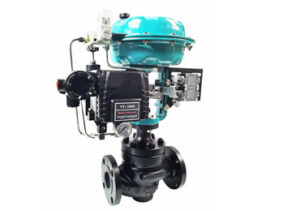
Valve de contrôle pneumatique
Air-Actuated Modulating Flow Regulation
Pneumatic control valves utilize compressed air signals (typically 3-15 psi or 0.2-1.0 bar) to position valve stems continuously throughout their stroke range, providing precise modulating control in automated process systems. These air-operated control valves convert pneumatic pressure signals into proportional valve positioning through spring-opposed diaphragm or piston actuators, enabling accurate flow regulation without requiring electrical power at the valve location. Pneumatic control valves offer inherent fail-safe capabilities through spring-return mechanisms, maintain operation during power outages, and provide intrinsically safe solutions in hazardous areas where electrical equipment poses explosion risks.
Key Features
- Continuous modulating control
- Air signal actuation (3-15 psi)
- Spring-return fail-safe modes
- Intrinsically safe operation
- No electrical power required
Applications typiques
- Chemical process control
- Oil and gas refineries
- Fabrication de produits pharmaceutiques
- Hazardous area installations
- Temperature and pressure loops
Vanne pneumatique
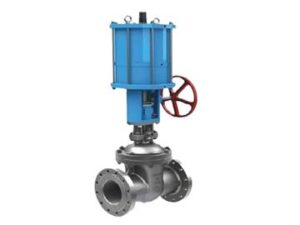
Air-Actuated Wedge Isolation Technology
Pneumatic gate valves combine pneumatic actuators with rising stem or non-rising stem gate valve bodies, providing automated full-bore isolation with minimal pressure drop in pipeline systems requiring remote or automated control. These air-operated valves utilize pneumatic cylinders, scotch-yoke actuators, or rack-and-pinion mechanisms that drive wedge or parallel gate elements perpendicular to flow direction, delivering bi-directional sealing and visual position indication. Pneumatic gate valves excel in main line isolation, emergency shutdown applications, and hazardous area service where fail-safe positioning and explosion-proof operation are mandatory safety requirements.
Key Features
- Full-bore flow passage
- Pneumatic actuator options
- Bi-directional sealing
- Positionnement à sécurité intégrée
- Hazardous area rated
Applications typiques
- Pipeline isolation systems
- Emergency shutdown valves
- Refinery block valves
- Stations d'épuration des eaux
- Main distribution lines
Pneumatic Globe Valve
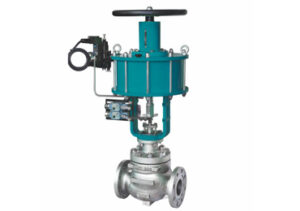
Air-Driven Linear Throttling Control
Pneumatic globe valves integrate pneumatic diaphragm or piston actuators with linear motion globe valve bodies, delivering precise throttling control and bubble-tight shutoff in process applications requiring modulating or on-off service. These air-actuated valves utilize compressed air pressure to drive valve plugs linearly against seats, providing superior rangeability (50:1 or greater), accurate flow characterization, and reliable shutoff through multiple trim configurations. Pneumatic globe valves offer fail-safe spring-return operation, high-pressure capability, and proven performance in temperature control, pressure regulation, and critical process parameter management.
Key Features
- Linear throttling control
- High rangeability (50:1+)
- Bubble-tight shutoff
- Multiple trim options
- Spring-return fail-safe
Applications typiques
- Process temperature control
- Pressure regulation loops
- Flow rate modulation
- Boiler feedwater systems
- Critical process control
Vanne papillon pneumatique
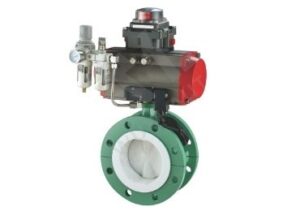
Rotary Disc Air-Actuated Control
Pneumatic butterfly valves combine rack-and-pinion or scotch-yoke pneumatic actuators with quarter-turn butterfly valve bodies, providing economical automated flow control in large-diameter applications with minimal installation space and weight requirements. These air-operated valves utilize compressed air to rotate resilient-seated or metal-seated discs 90 degrees, achieving rapid shutoff with low operating torque and reduced air consumption compared to linear actuated alternatives. Pneumatic butterfly valves deliver cost-effective automation, fast response times, and fail-safe positioning capability in HVAC systems, water distribution networks, and industrial applications requiring large flow capacity with space constraints.
Key Features
- Quarter-turn pneumatic operation
- Space-saving compact design
- Low air consumption
- Fast-acting response
- Large-diameter capability
Applications typiques
- HVAC isolation and control
- Water distribution systems
- Fire protection networks
- Cooling water circuits
- Industrial ventilation
Pneumatic Shutdown Valve
Emergency Isolation Safety Technology
Pneumatic shutdown valves are specifically engineered for safety instrumented systems (SIS), providing rapid fail-safe closure during emergency conditions to protect personnel, equipment, and environmental integrity in critical process facilities. These safety-critical valves utilize fast-acting spring-return pneumatic actuators with redundant air supply systems, partial stroke testing capability, and SIL-rated (Safety Integrity Level) certification for compliance with IEC 61508 and IEC 61511 functional safety standards. Pneumatic shutdown valves deliver millisecond closure times, proven reliability under extreme conditions, and integration with emergency shutdown systems in refineries, chemical plants, and offshore production platforms.
Key Features
- Fast-acting emergency closure
- SIL-rated safety certification
- Spring-return fail-safe design
- Partial stroke testing
- Redundant air supply capability
Applications typiques
- Emergency shutdown systems (ESD)
- Safety instrumented systems (SIS)
- Refinery safety protection
- Offshore platform isolation
- Chemical plant emergency valves
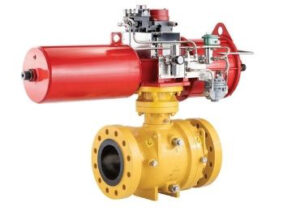
Robinet à boisseau sphérique pneumatique
Quarter-Turn Air-Actuated Isolation
Pneumatic ball valves integrate spring-return or double-acting pneumatic actuators with full-port or reduced-port ball valve bodies, providing automated bubble-tight isolation with minimal pressure drop and bidirectional sealing in process and utility applications. These air-operated valves utilize rack-and-pinion or scotch-yoke pneumatic mechanisms that rapidly rotate spherical closure elements 90 degrees, achieving ANSI Class VI shutoff with fail-safe positioning during air supply failure. Pneumatic ball valves offer superior sealing performance, low maintenance requirements, and intrinsically safe operation in explosive atmospheres where reliable automated isolation is essential for process safety and operational efficiency.
Key Features
- Bubble-tight shutoff (Class VI)
- Quarter-turn fast actuation
- Full-bore flow capacity
- Bidirectional sealing
- Fail-safe spring return
Applications typiques
- Process isolation valves
- On-off flow control
- Safety shutdown systems
- Chemical handling systems
- Oil and gas production
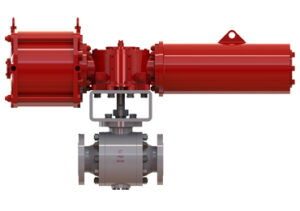
Pneumatic Rotary Valve
Air-Actuated Multi-Port Switching
Pneumatic rotary valves utilize pneumatic rack-and-pinion or vane actuators to rotate multi-port plugs or spheres that direct flow between multiple inlet and outlet connections, providing automated flow diversion and stream switching in process applications. These air-operated valves feature precision-machined rotary elements with multiple flow passages that align with body ports through pneumatic positioning, enabling rapid switching between process streams, bypass operations, or multi-way flow distribution. Pneumatic rotary valves deliver reliable multi-port control, reduced piping complexity, and fail-safe positioning in applications requiring automated flow path selection without multiple individual isolation valves.
Key Features
- Multi-port flow switching
- Pneumatic rotary actuation
- Rapid stream diversion
- Reduced piping complexity
- Fail-safe positioning options
Applications typiques
- Process stream switching
- Bypass operations
- Multi-way flow distribution
- Sampling system control
- Automated diversion valves
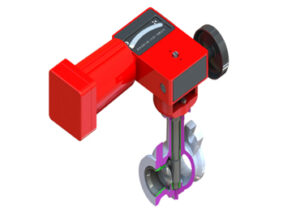
Vanne papillon à commande pneumatique
Modulating Air-Actuated Disc Regulation
Pneumatic control butterfly valves combine precision positioner-equipped pneumatic actuators with characterized disc profiles, providing accurate modulating flow control with superior rangeability in throttling applications requiring large flow capacity. These sophisticated air-operated valves utilize spring-opposed pneumatic actuators with digital positioners that convert 4-20mA control signals into precise disc positioning, enabling linear or equal percentage flow characteristics through specialized disc geometries. Pneumatic control butterfly valves deliver economical throttling control, reduced installation costs compared to globe valves, and proven reliability in HVAC temperature control, process cooling systems, and applications requiring variable flow regulation in large-diameter services.
Key Features
- Modulating flow control
- Digital positioner integration
- Characterized disc profiles
- Superior rangeability
- Cost-effective throttling
Applications typiques
- HVAC temperature modulation
- Process cooling control
- Variable flow systems
- Large-diameter throttling
- Energy management systems

Vanne papillon pneumatique à joint métallique
High-Temperature Air-Actuated Technology
Pneumatic metal seal butterfly valves feature air-operated actuators coupled with metal-seated butterfly bodies utilizing triple-offset geometry to achieve bubble-tight shutoff in extreme temperature and pressure applications where elastomeric seals would fail. These high-performance valves employ pneumatic rack-and-pinion or scotch-yoke actuators that rotate metal-seated discs with cam action, eliminating disc-to-seat friction during operation while delivering zero-leakage performance (API 598) at temperatures exceeding 1000°F. Pneumatic metal seal butterfly valves provide fire-safe certification, cryogenic service capability, and extended service life in demanding applications requiring automated isolation without compromising shutoff integrity under severe operating conditions.
Key Features
- Metal-to-metal sealing
- High-temperature capability (1000°F+)
- Fire-safe certified design
- Cryogenic service compatibility
- Zero elastomeric components
Applications typiques
- High-temperature steam service
- Thermal oil systems
- Power plant applications
- Cryogenic process control
- Fire-safe isolation requirements

Powering Automation Across Every Industry
Our Pneumatic valves are trusted across diverse industries for their reliability, precision and durability
Manufacturing & Assembly
Powering robotic end-of-arm tooling (grippers, clamps), pneumatic presses, and automated assembly fixtures with speed and precision
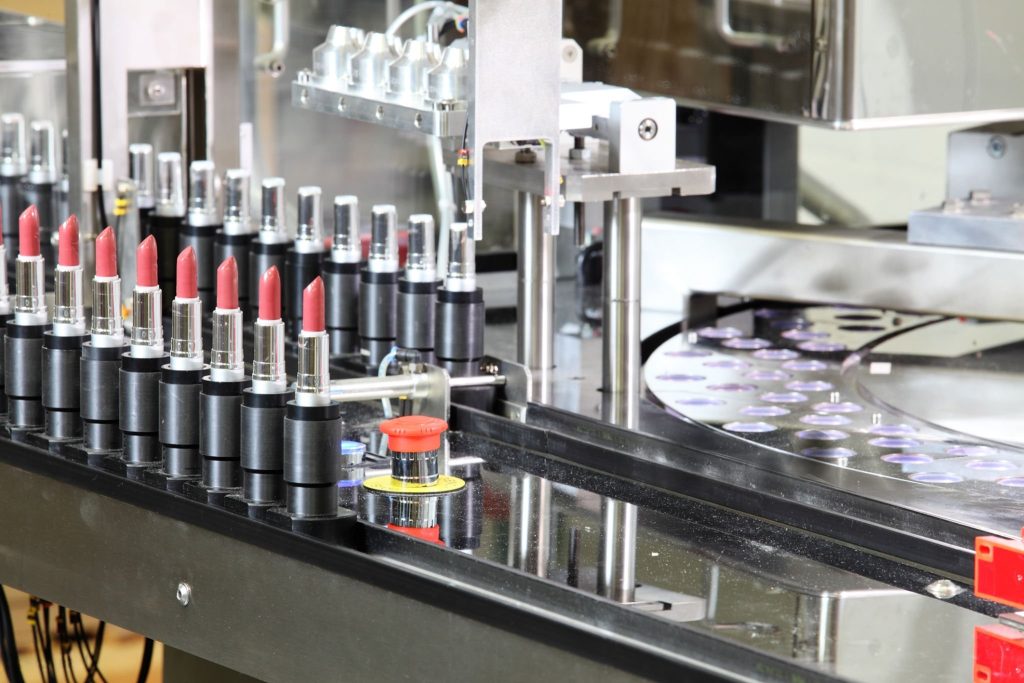
Emballage
Actuating diverter gates, case packers, carton erectors, and labeling machines with high cycle rates and proven reliability.
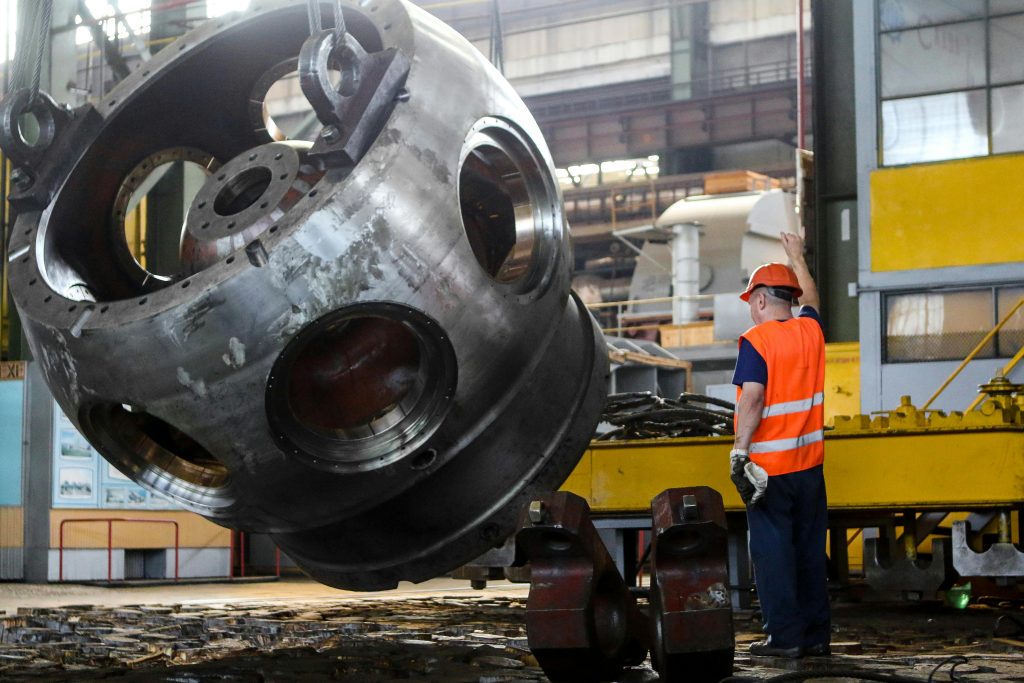
Material Handling
Controlling sorting gates on conveyors, operating pneumatic lifts, and managing product stops in automated warehousing systems
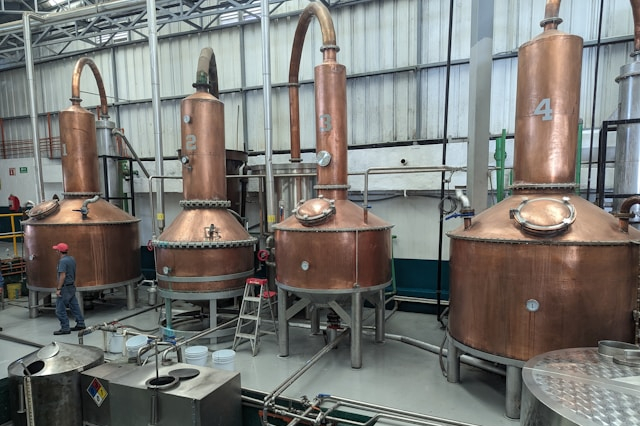
Alimentation et boissons
Using washdown-safe, hygienically designed valves for direct control in processing, filling, and packaging lines

Automobile
Driving welding robots, assembly line tools, clamping fixtures, and part testing equipment in rugged environments.
Certified Performance: Industrial Pneumatic Valves You Can Trust
In critical applications across oil and gas, chemical, and power generation, an industrial pneumatic valve must meet stringent safety and quality standards. As your trusted manufacturer, BCST holds key international certifications, including ISO 9001, CE, and SIL (Safety Integrity Level), to ensure our products meet global requirements for hazardous and demanding environments. This commitment to certified quality, direct from our factory, provides the assurance you need for safe and compliant operations..

Conception
- Calcul du logiciel technique
- Réunion de l'équipe technique
- Confirmation du dessin CAO

Inspection des matières premières
- Analyse chimique
- Propriété mécanique
- dimension Contrôles
- Contrôles visuels
- Examen de non-destruction

Usinage
- Usinage CNC
- Contrôles visuels
- Contrôles dimensionnels
- Test de pénétration des liquides

Test de la partie spartiate
- Contrôles visuels
- Pénétration des liquides
- Test
- Essai de dureté
- Rodage
- Contrôles dimensionnels

Assemblée
- Installation
- Calibrage

Test hydrostatique
- Essai de carapace
- Test d'étanchéité
- Essai d'étanchéité
- Test à l'air
- Test de fonctionnement

Traitement des perspectives
- Polissage de surface
- Peinture
- Inspection visuelle
- Contrôles d'épaisseur

Emballage
- Marquage
- Boîte en bois exportée
Have a Pneumatic Challenge? We Have the Solution.
From selecting a single valve to designing a complete pneumatic circuit, our technical experts are ready to help you optimize your system for performance and efficiency.
What is a Pneumatic Valve?
A pneumatic valve, also known as an air valve or directional control valve, acts as a switch to control the flow of compressed air or gas in a system. By directing, stopping, or regulating this airflow, it manages the action of pneumatic components like cylinders, actuators, and grippers. They are the fundamental building blocks of any automated pneumatic system.
How Does a Pneumatic Valve Work?
At its core, a pneumatic valve uses a signal, typically an electric current to a solenoid or a pneumatic pilot pressure—to shift an internal mechanism (like a spool or poppet). This movement opens and closes different internal pathways, directing compressed air from an inlet port to one or more outlet ports, while venting air from other ports to the exhaust.
Understanding Key Specifications
Navigating datasheets can be complex. Here are the most critical terms to know when selecting your valve.
Port & Position (e.g., 5/2): “Ports” are the number of connection points for air. “Positions” are the number of distinct states the valve has. A “5/2” valve has 5 ports (1 inlet, 2 outlets, 2 exhausts) and 2 positions, making it ideal for controlling a double-acting cylinder.
Actuation Method: How the valve is shifted. Common methods include Single Solenoid (an electrical signal shifts the valve, and an internal spring returns it when the signal is off) and Double Solenoid (one signal shifts it one way, a second signal shifts it back; it stays in its last position if power is lost). Other methods include Air Pilot et Manual Lever/Button.
Flow Rate (Cv): This value measures the valve’s capacity to flow air. A higher Cv value means a larger volume of air can pass through, enabling faster actuator speeds for a given pressure. It is a critical factor in sizing a valve correctly.
Port Size: The physical thread size for connecting air lines and fittings (e.g., 1/4″, 1/2″ NPT or G thread). This must match the tubing and components used in your circuit.
What is a Pneumatic System?
A pneumatic system is a system that uses compressed air to power mechanical devices. It is a reliable and efficient way to create motion and force in industrial automation. A complete pneumatic system has four essential parts: a compressor, a reservoir, a pneumatic cylinder (actuator), and pneumatic valves to control the flow.
Pneumatic systems work by compressing air, storing it under pressure in a reservoir, and then releasing it through a network of valves and tubes to power devices. The controlled release of this compressed air is what generates mechanical work.
 Figure 1: Basic construction of a pneumatic system.
What is a Pneumatic Valve?
A vanne pneumatique is a device that directs or controls the flow of compressed air (or another gas) within a pneumatic system. These valves are critical for controlling the volume, pressure, and direction of air moving into and out of actuators like cylinders and motors. They are the “brains” of the system, telling the compressed air where to go and when.
 Figure 2: A pneumatic actuated control valve.
How Does a Pneumatic Valve Work?
A pneumatic valve works by using a pilot signal (which can be a small amount of compressed air or an electrical signal) to shift an internal component like a spool or poppet. This movement opens or closes internal pathways, redirecting the main flow of compressed air. This allows a small, low-energy signal to control a much larger, high-pressure flow of air to do work.
Why use pneumatic valves? BCST Pneumatic valves are widely used for their reliability and ease of control. Because they use air pressure to open and close, they are ideal for systems that require rapid actuation, such as in automated assembly lines or safety systems.
Understanding Pneumatic Solenoid Valves
What is a Pneumatic Solenoid Valve?
A pneumatic solenoid valve is a type of valve that uses an electronically energized solenoid to act as the pilot. The solenoid is an electromechanical device that converts electrical energy into mechanical energy. When electricity is applied to the solenoid coil, it creates a magnetic field that moves a plunger. This plunger’s movement then actuates the main valve, controlling the air flow.
When the solenoid is energized, the plunger is pulled into the solenoid, opening the valve. When de-energized, a spring typically returns the plunger, closing the valve.
 Figure 3: Pneumatic Solenoid Valve.
Where are Pneumatic Solenoid Valves Used?
BCST pneumatic solenoid valves are widely used across industries to control fluid flow. Common applications include:
- Oil Refineries & Chemical Plants
- Water Treatment Facilities
- Sugar & Textile Mills
- Power Generation Plants
Parts of a Pneumatic Solenoid Valve
 Figure 4: Key components of a solenoid valve.
- Coil: Generates a magnetic field when current is applied.
- Core/Plunger: The movable part that is attracted by the magnetic field to open or close the valve.
- Core Spring: Returns the core to its initial position when the coil is de-energized.
- Le corps : Holds all internal components and contains the valve ports.
- Diaphragm/Disc: The seal that stops fluid flow when the valve is closed.
- Siège : The orifice that the disc seals against.
Types and Classifications of Pneumatic Valves
Pneumatic valves can be categorized in several ways, including by their function, construction, and number of ports/positions.
Pneumatic Valve Types by Construction
BCST manufactures a wide variety of pneumatic valves, each designed for specific applications:
- Pneumatic Three-Way Control Valve: Suitable for a medium with a solid body, such as slurry.
- Pneumatic Piston Control Valve: Regulates flow by linear movement with a spherical body shape.
- Pneumatic PTFE Control Valve: Offers high-accuracy flow control and a simple design.
- Pneumatic Butterfly Control Valve: An economical selection with lower accuracy than other types.
- Pneumatic Two-Way Control Valve: Suitable for erosive or viscous fluid.
- Pneumatic Liner Control Valve: Has three pipelines to mix or diverge the fluid service.
 Vanne papillon pneumatique
 Robinet à boisseau sphérique pneumatique
Classifications by Ports and Positions
A common way to classify directional control valves is by the number of ports (flow paths) and positions (states) they have.
- 2-way, 2-position: A simple on/off valve with two ports. Allows air to flow in one direction.
- 3-way, 2-position: Has three ports. Can pressurize one port and exhaust another, commonly used for single-acting cylinders.
- 4-way, 2-position: Has four ports and helps to easily reverse the motion of a motor or double-acting cylinder.
- 5/2-way (5-port, 2-position): A five-port, two-position valve used for double-acting cylinders where precise flow control is needed.
 A 3-Way Pneumatic Valve.
Key Comparisons and Considerations
Solenoid vs. Air Actuation
The choice between direct air actuation (air pilot) and solenoid actuation depends on the application’s needs for safety, complexity, and environment.
| Fonctionnalité | Air Actuator (Air Pilot) | Solenoid Actuator |
|---|---|---|
| Actuation Method | A 3-way air pilot valve and pipework | Wires and electrical AC/DC switches |
| Explosion Risk | Inherently safe; no risk of sparks, fire, or explosion. | Potential risk of sparks; may require special shielding. |
| Fiabilité | Simpler, may be less reliable in complex systems. | Generally more reliable for precise, automated control. |
Why use a 5/2 valve instead of a 4/2 valve?
While both can control a double-acting cylinder, the key difference is in the exhaust ports. A 5/2-way valve has two independent exhaust ports, allowing for individual speed control of the cylinder’s extend and retract strokes using flow controllers. A 4/2-way valve has only one common exhaust port, limiting this capability.
How do I read a pneumatic valve schematic?
Pneumatic schematics use standard symbols to show the number of ports, positions, flow paths, and actuation methods. Understanding these symbols is key to interpreting the valve’s function in a circuit.

What is a pneumatic valve positioner?
A pneumatic valve positioner is a device that ensures a control valve stem reaches the precise position dictated by a control signal. It uses feedback from the stem’s actual position to adjust the air pressure to the actuator, overcoming factors like friction or pressure variations to improve process accuracy.

What are the disadvantages of pneumatic valves?
- They require a constant, clean, and dry air supply to function properly.
- The initial investment for a full system (compressor, dryer, etc.) can be high.
- Air is compressible, which can make precise, slow-speed control more challenging than with hydraulics or electric motors.
Questions fréquemment posées
What is the difference between a 3/2, 5/2, and 5/3 valve?
This is the most common question and it’s all about ports and positions.
- 3/2 Valve: Has 3 ports and 2 positions. It’s used to control single-acting cylinders (which use a spring to return) or to act as a simple on/off switch for airflow.
- 5/2 Valve: Has 5 ports and 2 positions. It’s the standard for controlling double-acting cylinders, allowing you to power both the extension and retraction strokes.
- 5/3 Valve: Has 5 ports and 3 positions. The third, center position offers a special function when the solenoids aren’t active, such as “all ports blocked” (stopping a cylinder mid-stroke) or “all ports open to exhaust” (allowing the cylinder to be moved freely by hand).
How do I control the speed of my pneumatic cylinder?
You control cylinder speed using a Vanne de régulation de débit. While a directional valve (like a 5/2) tells the cylinder when to move, a flow control valve determines how fast it moves by restricting the air exhausting from the cylinder. For precise control, use two flow control valves—one on each cylinder port—to regulate the speed of the extension and retraction strokes independently.
Should I choose a single solenoid or double solenoid valve?
It depends on your application’s safety and operational needs.
- Single Solenoid (Spring Return): When the solenoid is energized, the valve shifts. When power is cut, an internal spring automatically returns the valve to its “home” position. This is ideal for applications where you need a predictable, safe return state when power is lost (e.g., ensuring a clamp opens).
- Double Solenoid: One solenoid shifts the valve to the first position, and a second solenoid shifts it to the other. It stays in its last shifted position even if power is lost (it is “detented”). This is useful for applications where you want the valve’s state to be unaffected by a power interruption.
Why does the Flow Rate (Cv) of a valve matter so much?
Cv is a direct measure of the valve’s airflow capacity. A valve with a Cv that’s too low will “starve” your actuator of air, resulting in slow and sluggish performance, even if your air pressure is high. A valve with a significantly oversized Cv can work, but it’s often more expensive and physically larger than necessary. Matching the Cv to the cylinder size and desired speed is critical for an efficient and cost-effective pneumatic system.
Can I use a standard pneumatic valve for vacuum applications?
Sometimes, but it must be the right type. Many standard pneumatic valves require positive air pressure to help shift their internal spool. For vacuum applications, you should use a valve specifically rated for vacuum service or a direct-acting solenoid valve, which uses the solenoid’s power alone to shift the valve mechanism without relying on system pressure. Using the wrong valve can cause it to fail to shift or leak.
Prenez contact avec nous
Tell us your specs; our engineer will reply within 24 hours.
 English
 Arabic
 Russian
 French
 Spanish