
Pneumatic Ball Valve for Industrial Flow Isolation
Achieve fast, reliable on/off actuation, ensure tight shut-off with zero leakage, and automate your pipeline isolation with our range of high-performance pneumatic ball valves.
- Iso 9001 certified
- Fast Global Delivery
Our Core Products
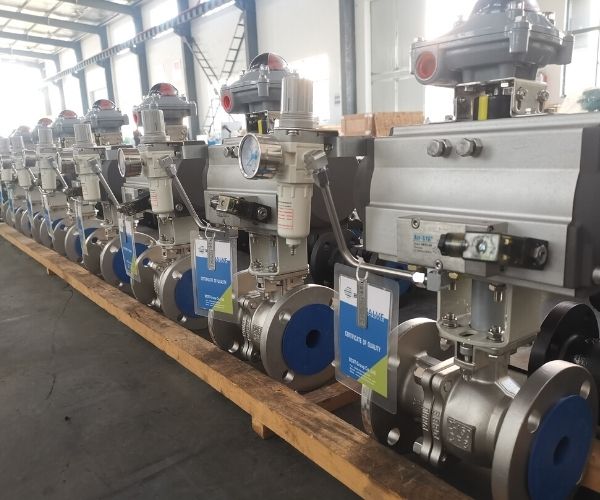
BCST pneumatic ball valves deliver fast, reliable quarter‑turn actuation with bubble‑tight shut‑off and long cycle life. Engineered for automated on/off isolation, emergency shutdown, and precise throttling (V‑port designs), they outperform standard manual ball valves in demanding industrial environments. Our range includes floating and trunnion designs, soft‑sealed and metal‑seated options, plus L‑port/T‑port three‑way configurations to meet your exact process requirements – from clean water and instrument air to high‑pressure gas, abrasive slurries, and high‑temperature steam.
Robinet à boisseau sphérique pneumatique à joint métallique
Metal-to-Metal Seating for High-Temperature & Abrasive Services
Pneumatic metal seal ball valves utilize a hardened metal seat and ball surface that mate directly without soft elastomers, providing exceptional durability in high-temperature, abrasive, or erosive media. Unlike soft-seated valves that degrade above 200°C, metal-sealed designs operate reliably up to 500°C or higher, with coating options like tungsten carbide, Stellite, or chromium carbide for extended wear life. These quarter-turn valves deliver tight shut-off (typically ANSI Class IV or V) even after thousands of cycles, making them ideal for steam, high-temperature thermal oil, catalyst slurries, and ash handling systems where soft seats would fail prematurely.
Key Features
- Hardened metal seat (Stellite, tungsten carbide, or chromium carbide)
- Operating temperature up to 500°C+
- Wear-resistant coating options
- ANSI Class IV or V shut-off capability
- Fire-safe design (API 607/ISO 10497)
Applications typiques
- High-temperature steam isolation (power plants)
- Catalyst and slurry handling (refineries, petrochemical)
- Thermal oil systems (chemical processing)
- Ash handling and fly ash injection
- High-cycle abrasive media (mining, cement)

Robinet à boisseau sphérique d'arrêt pneumatique
Bubble-Tight Isolation for Critical On/Off Service
Pneumatic shut off ball valves are purpose-built for fast, reliable, zero-leakage isolation in automated on/off applications. Featuring a floating ball design with PTFE or PEEK seats, these valves achieve bubble-tight shut-off (ANSI Class VI) at pressures up to 10,000 psi. The pneumatic rack-and-pinion or scotch-yoke actuator provides rapid 90-degree rotation, enabling emergency shutdown (ESD) response times under one second. Designed for high cycle life, these valves incorporate blowout-proof stems and anti-static devices, meeting stringent safety requirements for hazardous fluid isolation.
Key Features
- Bubble-tight shut-off (ANSI Class VI)
- Rapid quarter-turn actuation (<1 second)
- Blowout-proof stem design
- Anti-static grounding (API 607)
- High cycle life (up to 1M+ cycles)
Applications typiques
- Emergency shutdown (ESD) systems
- Fuel gas isolation in burner trains
- Pipeline block and bleed stations
- Toxic or flammable fluid isolation
- Tank farm isolation valves

Vanne à boisseau sphérique segmentée en V pneumatique
Precision Flow Control for Slurries & Fibrous Media
Pneumatic segmented V-port ball valves feature a V-notched ball segment that provides equal percentage flow characteristics, enabling accurate throttling control in applications where standard ball valves cannot modulate effectively. Unlike standard ball valves limited to on/off service, the V-port design creates a shearing action as the ball rotates, cutting through fibrous slurries, paper stock, or viscous liquids without clogging. The segmented ball reduces torque and weight while maintaining high rangability (turndown up to 300:1). These valves excel in pulp and paper, wastewater treatment, and chemical processes requiring both control and isolation in one unit.
Key Features
- V-notch ball for equal percentage flow characteristic
- Self-cleaning shearing action (cuts fibers and solids)
- High rangability (300:1 turndown)
- Reduced torque and weight vs. full ball
- Available with metal or soft seats
Applications typiques
- Pulp and paper stock control
- Wastewater sludge flow regulation
- Food processing (purees, batters, sauces)
- Viscous chemical metering
- Mining slurry throttling

Robinet à boisseau sphérique pneumatique à joint souple
Bubble-Tight, Low-Torque Isolation for Clean Media
Pneumatic soft seal ball valves employ elastomeric seats (PTFE, RTFE, PEEK, or Nylon) that conform tightly to the polished ball surface, delivering zero-leakage shut-off (ANSI Class VI) with minimal actuation torque. The resilient seat material absorbs dimensional variations and provides excellent sealing even at low differential pressures. These valves are ideal for clean fluids, gases, and low-temperature applications from -40°C to +200°C, depending on seat material. Soft seal designs are the most economical choice for high-cycle automated isolation in water, air, inert gases, and mild chemicals where temperature and abrasion are moderate.
Key Features
- Zero leakage (ANSI Class VI)
- Low operating torque (smaller actuator)
- Wide material options (PTFE, RTFE, PEEK, Nylon)
- Temperature range -40°C to +200°C
- Economical for high-cycle applications
Applications typiques
- Clean water and demineralized water systems
- Instrument air and plant compressed air
- Natural gas and LPG isolation (non-corrosive)
- HVAC chilled water and hot water
- Food-grade and sanitary lines

Robinet à boisseau sphérique pneumatique à trois voies
Diverter & Mixer for Multi-Path Flow Control
Pneumatic three way ball valves feature three ports (L-port or T-port configurations) that allow flow diversion, mixing, or direction changes in a single valve body, eliminating multiple two-way valves and complex piping. L-port valves divert flow between two outlet paths; T-port valves can mix two inlets or direct flow to both outlets simultaneously. Pneumatic actuation enables fast, automated switching between process lines, making them essential for filter changeover, tank filling/emptying, and heat exchanger bypass. Available in floating or trunnion designs, these valves simplify manifolds, reduce leak points, and save installation space.
Key Features
- L-port (diverting) or T-port (mixing) configurations
- Single valve replaces multiple components
- Reduced piping and leak points
- Fast automated switching (<1 second)
- Available with soft or metal seats
Applications typiques
- Filter and strainer changeover (duplex systems)
- Tank filling and emptying (alternating vessels)
- Heat exchanger bypass control
- Hydraulic circuit directional control
- Chemical batch mixing (T-port configuration)

Robinet à boisseau sphérique pneumatique monté sur tourillon
High-Pressure, Large-Bore Isolation for Demanding Services
Pneumatic trunnion-mounted ball valves feature a fixed ball supported by trunnion bearings, reducing operating torque and seat wear in high-pressure, large-diameter, or high-cycling applications. Unlike floating ball designs where the ball shifts against the downstream seat, trunnion valves mechanically fix the ball position, allowing the upstream seat to spring-load against the ball for consistent shut-off at pressures up to 2500 psi or higher. These valves excel in pipeline isolation, compressor stations, and high-pressure gas/liquid services where low torque and long service life are critical. Double block-and-bleed (DBB) capability is standard in trunnion designs.
Key Features
- Trunnion bearings reduce operating torque
- Suitable for pressures up to ANSI Class 2500
- Double block-and-bleed (DBB) capability
- Low seat wear (spring-loaded seats)
- Available in sizes up to 48 inches
Applications typiques
- Natural gas transmission pipelines
- High-pressure oil and gas wellhead isolation
- Compressor station suction/discharge isolation
- Refinery high-pressure hydroprocessing units
- Water transmission main isolation

What Is A Pneumatic Ball Valve?
A pneumatic ball valve is a quarter-turn rotary control valve designed for fast, reliable on/off isolation and flow control. Unlike a globe valve that modulates linearly, a ball valve uses a spherical disc with a cylindrical bore that rotates 90 degrees from fully open to fully closed. When the bore aligns with the pipeline, flow passes through with minimal pressure drop; when rotated perpendicular, the solid ball surface blocks flow completely, providing bubble-tight shut-off. Pneumatic actuators enable rapid remote automation, making ball valves ideal for pipeline isolation, emergency shutdown, and frequent cycling applications in oil, gas, water, and chemical processing.
Tight shut-off (zero leakage)
Fast quarter-turn actuation
Low torque, durable design
Fire-safe & blowout-proof stem options
Trusted Across All Industries
Our Pneumatic Ball Valve are trusted across diverse industries for their reliability, precision and durability

Traitement chimique
Demands corrosion-resistant materials and reliable on/off control for hazardous fluids.
View Solutions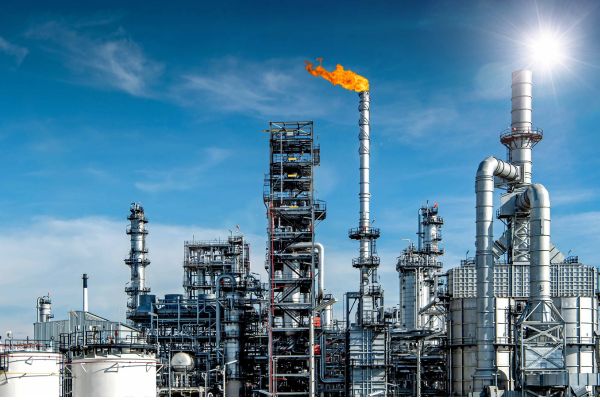
Pétrole et gaz
Requires fast, fail-safe shut-off for pipeline isolation and ESD systems – a core strength of pneumatic ball valves.
View Solutions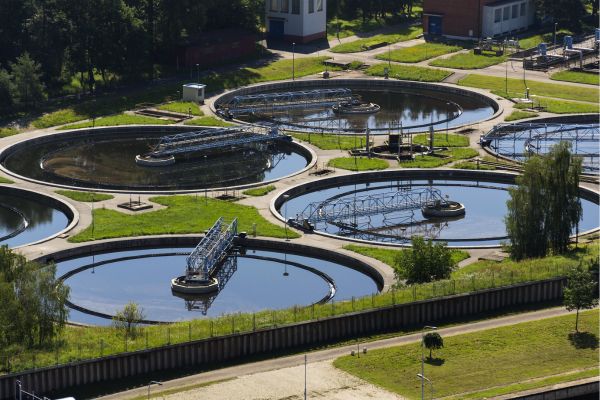
Traitement de l'eau
High cycle life, remote automation, and bubble-tight shut-off for treatment plant reliability.
View Solutions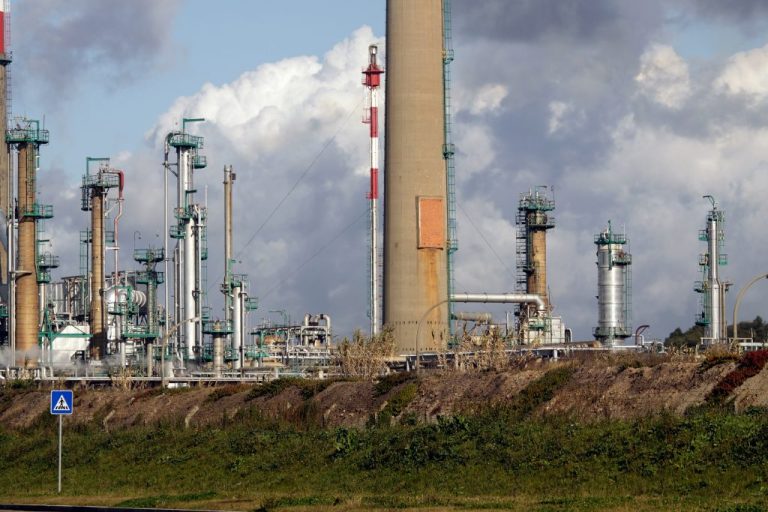
Production d'électricité
Handles high-temperature steam, cooling water, and fuel gas with rugged durability.
View Solutions
Alimentation et boissons
Requires sanitary designs, CIP compatibility, and corrosion-resistant materials (316 SS).
View Solutions
Pharmaceutique
Needs ultra-clean surfaces, validation-ready components, and sterile service capability.
View SolutionsVous êtes prêt à trouver la solution de robinetterie idéale pour votre projet ?
Contactez notre équipe d'experts dès aujourd'hui pour discuter des exigences de votre projet et découvrir comment BCST peut fournir des solutions fiables et efficaces adaptées à vos besoins.
Contacter nos experts Download Product CatalogueCertified Performance: BCST Pneumatic Ball Valve Quality Control
In critical applications across oil and gas, chemical, and power generation, an industrial on-off valve must meet stringent safety and quality standards. As your trusted manufacturer, BCST holds key international certifications, including ISO 9001, CE, and SIL (Safety Integrity Level), to ensure our products meet global requirements for hazardous and demanding environments. This commitment to certified quality, direct from our factory, provides the assurance you need for safe and compliant operations.

Conception
- Calcul du logiciel technique
- Réunion de l'équipe technique
- Confirmation du dessin CAO

Inspection des matières premières
- Analyse chimique
- Propriété mécanique
- dimension Contrôles
- Contrôles visuels
- Examen de non-destruction

Usinage
- Usinage CNC
- Contrôles visuels
- Contrôles dimensionnels
- Test de pénétration des liquides

Test de la partie spartiate
- Contrôles visuels
- Pénétration des liquides
- Test
- Essai de dureté
- Rodage
- Contrôles dimensionnels

Assemblée
- Installation
- Calibrage

Test hydrostatique
- Essai de carapace
- Test d'étanchéité
- Essai d'étanchéité
- Test à l'air
- Test de fonctionnement

Traitement des perspectives
- Polissage de surface
- Peinture
- Inspection visuelle
- Contrôles d'épaisseur

Emballage
- Marquage
- Boîte en bois exportée
Floating, Trunnion, V‑Port, or Three‑Way? How to Choose a Pneumatic Ball Valve
You need a reliable ball valve for automated on/off or throttling duty, but the options—metal‑seated, soft‑sealed, V‑port, three‑way, trunnion‑mounted—can be overwhelming. The wrong choice leads to seat wear, high torque, or failed shut‑off. Here’s exactly when to pick each type, backed by industry standards.
✅ For high‑temperature / abrasive media → Robinet à boisseau sphérique pneumatique à joint métallique (hardened seats, up to 500°C).
✅ For bubble‑tight emergency shut‑off → Robinet à boisseau sphérique d'arrêt pneumatique (ANSI Class VI, fast actuation).
✅ For slurry / fibrous media with control → Pneumatic Segmented V‑port Ball Valve (shearing action, 300:1 rangability).
✅ For clean fluids, low torque, zero leakage → Robinet à boisseau sphérique pneumatique à joint souple (PTFE/PEEK seats).
✅ For diverting or mixing flow paths → Robinet à boisseau sphérique pneumatique à trois voies (L‑port or T‑port).
✅ For high pressure, large bore, low torque → Pneumatic Trunnion‑mounted Ball Valve (trunnion bearings, DBB capability).
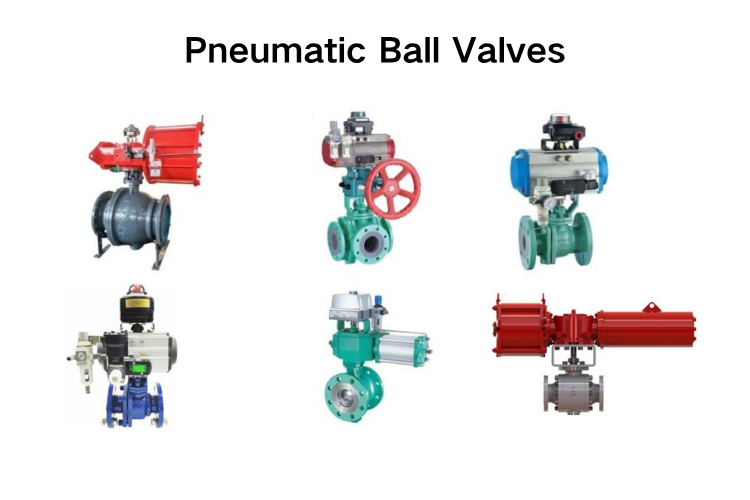
Figure 1: Six pneumatic ball valve configurations – each engineered for a specific operating window (API 6D, ISO 17292).
💡 Real‑world lesson: A chemical plant used standard soft‑sealed ball valves on a hot slurry line. Within three months, the PTFE seats extruded and the valves leaked. After switching to metal‑sealed valves with tungsten carbide coating, they achieved two years of trouble‑free operation. Match seat material and design to your real process temperature and abrasion.
What You Really Need to Know Before Choosing a Pneumatic Ball Valve
Ball valves are quarter‑turn devices, but not all are equal. Your four key decision factors: shut‑off leakage class (ANSI/FCI 70‑2), operating torque & actuator sizing, temperature & abrasion resistance (seat material), and flow control needs (on/off vs. throttling). Also consider pipeline size (trunnion for large diameters) and whether you need diverting/mixing. Below we break down six specialized types with technical depth from API 6D, ISO 17292, and industry best practices.
1. Pneumatic Metal Seal Ball Valve: For High Temperatures & Abrasive Media
Comment ça marche
A metal‑seated ball valve replaces soft elastomeric seats with hardened metal alloys (Stellite, tungsten carbide, chromium carbide). The ball and seat are lapped to achieve metal‑to‑metal shut‑off (typically ANSI Class IV or V). No elastomers means operation from cryogenic temperatures up to 500°C+ (or even 800°C with special materials). The design follows API 607 fire‑safe standards and is immune to extrusion, swelling, or thermal degradation.
When I Recommend It
- High‑temperature steam (>200°C) – power plants, steam distribution.
- Abrasive slurries – mining, mineral processing, catalyst lines.
- High‑cycle, high‑wear services – where soft seats would fail quickly.
- Thermal oil / heat transfer fluid systems – up to 400°C.
- Ash handling and fly ash injection in power plants.
Where It Falls Short
Higher torque than soft‑seated valves (requires larger actuator). Initial cost is higher due to hardfacing and precision lapping. Not bubble‑tight (Class VI) – typically Class IV or V leakage. For absolute zero leakage at low temperature, a soft seal is better.
2. Pneumatic Shut Off Ball Valve: Bubble‑Tight Emergency Isolation
Comment ça marche
A dedicated shut‑off ball valve features a floating ball with PTFE, PEEK, or Nylon seats that conform tightly to the ball surface, achieving ANSI Class VI “bubble‑tight” shut‑off. The pneumatic rack‑and‑pinion or scotch‑yoke actuator provides 90° rotation in under one second. Built‑in features include blowout‑proof stem, anti‑static grounding, and fire‑safe certification (API 607). These valves are designed for high cycle life (up to 1 million cycles) and fail‑safe options (spring‑return).
When You Want This One
- Emergency Shutdown (ESD) systems – oil & gas, chemical plants.
- Fuel gas isolation – burner trains, compressor stations.
- Toxic or flammable fluid isolation – where zero leakage is mandatory.
- Pipeline block and bleed stations (double block & bleed configuration).
- High‑cycle automated isolation – water treatment, chemical injection.
The Big Trade‑Off
Soft seats limit temperature to ~200°C (PTFE) or ~250°C (PEEK). Not suitable for abrasive media (seat erosion). For high temperature or abrasion, use metal‑sealed valves. Always verify fire‑safe certification if required by local code.
⚠️ Critical: For SIL‑rated ESD applications, ensure the actuator and solenoid valve meet the required safety integrity level (e.g., SIL 2/3). Also verify that the valve has a fire‑safe certificate per API 607 or ISO 10497 for hydrocarbon service.
3. Pneumatic Segmented V‑port Ball Valve: Throttling & Shearing Action
Comment ça marche
Instead of a full spherical ball, the V‑port valve uses a segmented ball with a V‑shaped notch. As the ball rotates, the notch progressively opens, providing an equal percentage flow characteristic – ideal for modulating control. The sharp edge of the V‑port shears through fibers, solids, or viscous materials, preventing clogging. Rangability up to 300:1 (much higher than standard globe valves). The segmented design also reduces weight and torque compared to a full ball.
When You Absolutely Need This Valve
- Pulp and paper stock control – thick fiber slurries.
- Wastewater sludge & biosolids – shears rags and debris.
- Viscous food products – purees, batters, sauces, chocolate.
- Mining slurries with coarse particles – prevents jamming.
- Chemical metering where both isolation and throttling are needed – replaces two valves.
One Limitation
The V‑port design may have higher pressure drop than a full bore ball valve when fully open. Not suitable for clean gas or low‑pressure drop applications where a standard ball valve is fine. Also, for very fine particles, the V‑port can still erode over time – specify hardened trim if needed.
4. Pneumatic Soft Seal Ball Valve: Zero Leakage, Low Torque for Clean Media
Comment ça marche
The workhorse of industrial automation: a floating ball pressed against a resilient seat (PTFE, RTFE, PEEK, or Nylon). The seat deforms elastically to create a perfect seal at low torque. These valves achieve ANSI Class VI (zero measurable leakage) and are the most economical for clean fluids. Temperature range from -40°C to +200°C (depending on seat material). Easy to automate with small, cost‑effective pneumatic actuators.
When You Grab This One
- Clean water, demineralized water, irrigation.
- Instrument air, plant compressed air systems.
- Natural gas, LPG (non‑corrosive, dry gas).
- HVAC chilled water and hot water (up to 120°C).
- Food‑grade and sanitary lines (316 SS, FDA‑approved seats).
Where It Falls Short
Soft seats are vulnerable to high temperature (>200°C), abrasive particles (erosion), and chemical attack (e.g., swelling in hydrocarbons with aromatics). For steam, hot oil, or slurry, upgrade to metal seats. Also, PTFE can cold‑flow under high pressure – use reinforced seats (RTFE) or PEEK for high‑pressure gas.
5. Pneumatic Three‑Way Ball Valve: Divert or Mix Without Extra Piping
Comment ça marche
A single valve body with three ports (L‑port or T‑port configuration). L‑port directs flow from one inlet to either of two outlets (diverting). T‑port can mix two inlets into one outlet or allow flow through all three ports simultaneously. Pneumatic actuation enables fast switching between process lines, eliminating multiple two‑way valves and reducing leak points. Available in floating or trunnion designs.
When You Grab This One
- Duplex filter / strainer changeover – alternate between two filter vessels.
- Tank filling and emptying – fill one tank while emptying another.
- Heat exchanger bypass control – divert flow around a failed exchanger.
- Chemical batch mixing (T‑port) – combine two components into one line.
- Hydraulic circuit directional control – extend/retract cylinders.
When to Walk Away
If you only need simple on/off isolation of a single line, a two‑way valve is cheaper and simpler. For mixing that requires precise proportional control, a three‑way globe valve with positioner is better. Also, three‑way valves have higher pressure drop than full‑bore two‑way valves.
6. Pneumatic Trunnion‑mounted Ball Valve: High Pressure, Large Bore, Low Torque
Comment ça marche
Unlike floating ball valves where the ball shifts against the downstream seat, a trunnion‑mounted ball is fixed in place by top and bottom trunnion bearings. The seats are spring‑loaded against the ball. This design dramatically reduces operating torque (up to 70% less) and allows the valve to handle extremely high pressures (ANSI Class 600 to 2500) and large diameters (up to 48 inches). Trunnion valves inherently provide double block‑and‑bleed (DBB) capability, making them the standard for pipeline isolation.
When You Absolutely Need This Valve
- Natural gas transmission pipelines (high pressure, large bore).
- High‑pressure oil & gas wellhead isolation (up to 15,000 psi).
- Compressor station suction/discharge isolation.
- Refinery high‑pressure hydroprocessing units.
- Water transmission mains (large diameter, high flow).
One Limitation
Higher initial cost than floating ball valves. Not necessary for small diameters (≤DN50) or low pressure. Also, trunnion valves require more maintenance due to bearings and spring‑loaded seats. For dirty services, ensure the cavity is self‑relieving or has a cavity filler to prevent pressure build‑up.
Quick Comparison Table: Pneumatic Ball Valve Types
| Fonctionnalité | Metal Seal | Shut‑Off (Soft) | V‑port | Soft Seal (General) | Three‑Way | Tourillon |
|---|---|---|---|---|---|---|
| Fonction principale | High‑temp / abrasive | Bubble‑tight isolation | Throttling + shearing | Clean fluids, low cost | Divert / mix | High pressure, large bore |
| Leakage Class | Class IV‑V | Class VI (zero) | Class IV‑VI (option) | Class VI | Class IV‑VI | Class V‑VI (double seal) |
| Plage de température | -40°C to 500°C+ | -40°C to 200°C | -40°C to 350°C (metal) | -40°C to 200°C | -40°C to 200°C | -46°C to 300°C |
| Max Pressure (ANSI) | Class 600‑1500 | Class 150‑600 | Class 150‑600 | Class 150‑600 | Class 150‑300 | Class 600‑2500 |
| Actuator Torque | Haut | Medium | Medium | Low | Medium | Low (trunnion bearings) |
| Best Industries | Power, mining, steel | Oil & gas, chemical, ESD | Pulp & paper, wastewater, food | Water, air, HVAC, food | Filters, tanks, blending | Pipeline, wellhead, high‑pressure |
Making the Right Choice – A Practical Decision Framework
✅ Need bubble‑tight shut‑off for clean media at moderate temperature? → Soft Seal Ball Valve (lowest cost).
✅ Need emergency shutdown with zero leakage and fast actuation? → Robinet à boisseau sphérique d'arrêt pneumatique (Class VI, fire‑safe).
✅ Handling high temperature steam, thermal oil, or abrasive slurries? → Robinet à bille à joint métallique (hardened seats).
✅ Need throttling control with shearing action for fibrous or viscous fluids? → Segmented V‑port Ball Valve.
✅ Want to divert or mix flows without complex piping? → Three‑Way Ball Valve (L‑port or T‑port).
✅ Working with high pressure (>ANSI 600) or large pipe sizes (>DN150)? → Trunnion‑mounted Ball Valve (low torque, DBB).
Match the valve construction to your real process conditions – temperature, pressure, media cleanliness, and cycle frequency. I’ve seen plants save 30% on actuator costs by switching to trunnion valves, and others avoid catastrophic leaks by choosing fire‑safe soft seats. Do not guess; refer to API 6D, ISO 17292, and your valve supplier’s technical data.
Pro tip: Always verify the seat material compatibility with your fluid (use chemical resistance guides). For high cycle life (>100,000 cycles), specify reinforced seats (PEEK or RTFE) and ensure the actuator has sufficient safety factor. When in doubt, request a valve sizing and selection report from an application engineer – it saves months of unplanned downtime.
Questions fréquemment posées
What are the key differences between pneumatic and electric actuators for ball valves?
Pneumatic actuators are the “speed king” of industrial automation, typically completing a full stroke in 1-2 seconds and offering a 100% duty cycle for continuous operation. They are inherently safe for explosive environments and require no electrical power at the valve, only compressed air. Electric actuators, by comparison, are slower (10-60 seconds per cycle), have limited duty cycles (25-50%), and require complex battery backups for fail-safe operation. However, they are easier to install in remote locations without compressed air infrastructure and offer precise positioning control for modulating duties. For hydrocarbon and hazardous area services, pneumatic actuation is the standard choice.
How do I select the right soft seat material for my ball valve application?
The seat material determines your valve’s temperature limit, chemical resistance, and leakage class:
- PTFE: General-purpose, -40°C to 200°C, excellent chemical resistance, moderate wear resistance. Ideal for clean media and low-cycle applications.
- RPTFE (Reinforced PTFE): -40°C to 260°C, improved wear resistance over PTFE. Suitable for saturated steam and moderate abrasion.
- PEEK: -40°C to 250°C, high mechanical strength, excellent wear and chemical resistance. Preferred for high-pressure (up to 6000 psi) and demanding services.
- Nylon: -40°C to 80°C, good for dry gas and low temperature, economical.
- Metal Seats (Stellite, Tungsten Carbide): -196°C to 500°C+, required for high-temperature steam, abrasive slurries, or when soft seats would degrade.
Soft seat valves achieve ANSI Class VI bubble-tight shut-off (zero leakage), while metal seat valves achieve Class IV or V (minor measurable leakage). For cryogenic service (-196°C), PCTFE or specially formulated PEEK seats are required.
What is fire-safe certification (API 607) and when is it required?
Fire-safe certification (API 607, 7th Edition) ensures that a soft-seated ball valve maintains basic sealing integrity after being exposed to a 30-minute fire at 760°C-1000°C. The soft seat may burn away, but a secondary metal backup seal engages to prevent catastrophic leakage. This certification is mandatory for valves in hydrocarbon process piping, refineries, petrochemical plants, offshore platforms, pipeline emergency shutdown (ESD) systems, and any service where a fire could compromise valve integrity. Always verify that the fire-safe certification is from a recognized third party and that the specific valve size and pressure class are included in the certification scope.
Single-acting vs. double-acting pneumatic actuator – what's the difference?
Double-acting actuators use compressed air to both open and close the valve. They are simpler, smaller, and offer faster cycling speeds, but without air supply, they stay in their last position – no fail-safe.
Single-acting (spring-return) actuators use air pressure to move the valve in one direction and a mechanical spring to return it when air is lost. This provides a fail-safe position (normally closed or normally open), making them essential for emergency shutdown (ESD) systems, burner fuel gas isolation, and any critical service where loss of air must not compromise safety. Single-acting actuators are larger, more expensive, and slightly slower than double-acting types. The rule: use double-acting for non-critical, high-cycle applications where compressed air is reliable; use single-acting for any safety-critical or unmanned installation.
How should I size my pneumatic actuator to prevent valve failure?
Actuator sizing is the most common cause of field failures. A ball valve’s torque requirement is not constant – breakaway torque (the force required to start moving the ball) is significantly higher than running torque. Always apply a safety factor:
- For clean media and soft-seated valves: add 25-30% to the published breakaway torque.
- For metal-seated valves, viscous fluids (oil, syrup), or slurry service: add 50% safety factor.
- For high-cycle applications (>100,000 cycles per year): consult the manufacturer for specific recommendations.
An undersized actuator will eventually stall, leaving the valve partially open and causing seat erosion, process contamination, or safety hazards. Always ensure your actuator supplier has the valve’s exact torque data at your specific differential pressure, and request a written sizing report for critical services.
Prenez contact avec nous
Tell us your specs; our engineer will reply within 24 hours.
 English
 Arabic
 Russian
 French
 Spanish