
The Ultimate Guide to Slide Gate Valves for Dry Bulk Handling
In the vast world of industrial processes, handling dry bulk materials like powders, pellets, and granules presents unique challenges. Controlling their flow, preventing spillage, and ensuring safety requires specialized equipment. Among the most crucial components in this domain is the slide gate valve. Often overlooked, these robust devices are the unsung heroes of efficient material handling, providing precise shut-off and controlled discharge from silos, hoppers, and conveyors.
At BCST Valve, with over two decades of expertise, we’ve seen firsthand how the right slide gate valve can transform operational efficiency and safety. This ultimate guide will demystify these essential valves, exploring their function, types, core mechanics, and where they excel in the demanding environment of dry bulk processing.
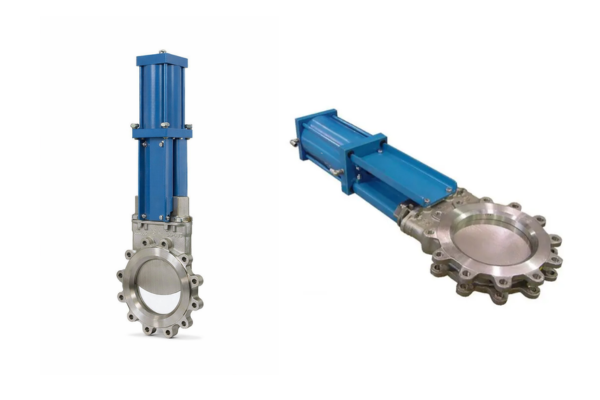
What Exactly is a Slide Gate Valve?
أ slide gate valve (or simply a slide gate) is a type of industrial valve specifically engineered to control the flow of dry bulk solid materials. Unlike conventional valves designed for liquids or gases, the primary function of a slide gate is to either completely shut off, permit, or regulate the gravity flow of powders, granules, pellets, and other bulk solids from hoppers, bins, silos, or conveyors.
Its core mechanism involves a flat blade or “gate” that slides horizontally across the opening between two flanges. When the gate is closed, it forms a tight seal, preventing material flow. When opened, it retracts, allowing material to pass through. This straightforward yet highly effective design ensures minimal material degradation and prevents leakage or contamination.
Important Distinction: It is crucial not to confuse a slide gate valve with a knife gate valve. While they share a similar sliding mechanism, they are engineered for entirely different applications. Knife gate valves are typically used for slurries or abrasive materials, whereas slide gates are optimized for dry bulk solids. We detail the critical differences in our guide: Slide Gate Valve vs. Knife Gate Valve: Which One Do You Actually Need?
Understanding the Core Mechanics: How a Slide Gate Valve Works
The fundamental principle behind a slide gate valve is simple: a plate slides in and out of a housing to open or close an aperture. However, the reliability and efficiency of this operation depend on several key interconnected components:
- جسم الصمام: The structural housing that contains all internal components and connects to the material handling system. Typically constructed from robust materials like carbon steel or stainless steel, depending on the application.
- Slide Gate (Blade): The flat, movable plate that opens and closes the flow path. It’s often made from abrasion-resistant material.
- Sealing System: Crucial for preventing material leakage when the valve is closed and minimizing dust emission when in operation. This can include flexible seals, internal deflectors, or specialized packing.
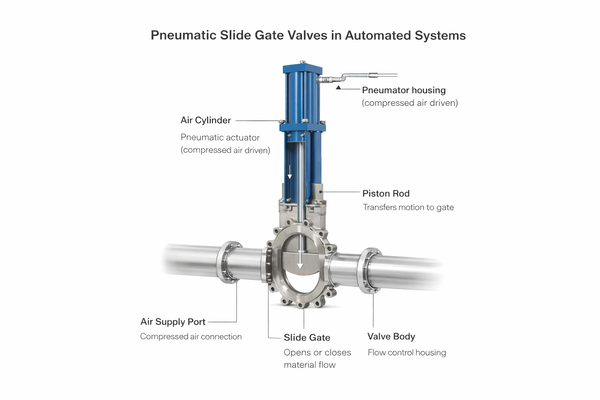
- المشغّل: The mechanism that moves the slide gate. This can range from a simple handle to pneumatic cylinders or electric motors.
The precision and durability of these components are paramount for consistent performance, especially under continuous operation.
For a deep dive into the engineering specifics, including detailed diagrams and explanations of how the different parts work in unison, refer to our dedicated guide: How a Slide Gate Valve Works: An Engineer’s Guide to Actuators & Sealing Systems.
Types of Slide Gate Valves for Varied Needs
While the basic function remains consistent, slide gate valves come in various configurations to meet diverse operational demands in dry bulk handling:
- Manual Slide Gate Valve: Operated by hand using a lever, handwheel, or chain. These are cost-effective and suitable for applications where infrequent operation is acceptable or when power sources are unavailable.
- Pneumatic Single Piston Slide Gate Valves: Utilize compressed air to actuate the gate. They offer rapid, remote-controlled operation and are common in automated systems where frequent cycling is required.
- Electric Slide Gate Valves: Driven by electric motors, offering precise control and integration into complex control systems. Ideal for larger forces or where compressed air isn’t available.
- Parallel Slide Gate Valve: Features a design where the gate slides between two parallel surfaces, often used for critical shut-off or in applications requiring exceptionally tight sealing against fine powders.
- Gravity Feed Slide Gate Valves: Designed specifically to handle free-flowing bulk solids under gravity, often featuring open frames and robust construction.
- Pressure or Hopper Slide Gate Valves: Built for applications where the material might be under slight pressure or for specialized use at the bottom of pressurized hoppers.
Industrial Applications for Slide Gate Valves
The versatility and reliability of slide gate valves make them indispensable across numerous industries that handle dry bulk solids. Their precise control is critical for maintaining product quality, preventing waste, and ensuring worker safety.
- المأكولات والمشروبات: Controlling grains, sugar, flour, coffee beans, and other food ingredients from storage bins to processing lines.
- Pharmaceuticals: Handling delicate powders for medication production, requiring strict cleanliness and precise batching.
- المعالجة الكيميائية: Managing various chemical powders and granules, often requiring valves made from corrosion-resistant materials.
- Mining & Minerals: Robust valves are used for aggregates, ores, and other heavy, abrasive materials.
- Plastics: Controlling plastic pellets and resins in manufacturing and molding processes.
- Agriculture: Regulating the flow of feed, seeds, and fertilizers.
These valves are essential components at the discharge of silos, hoppers, and conveyors, facilitating everything from simple material transfer to complex batching operations. Explore their most effective placements and industry-specific considerations in our guide to the Top 5 Industrial Applications for Slide Gate Valves.
Conclusion: The Key to Controlled Dry Bulk Handling
ال slide gate valve stands as a foundational piece of equipment for any operation involved in dry bulk material handling. Its ability to provide reliable shut-off, controlled flow, and robust performance in demanding environments makes it indispensable for process engineers, plant managers, and MRO professionals.
By understanding the various types—from the simple manual slide gate valve to advanced pneumatic single piston slide gate valves and specialized parallel slide gate valves—you can make informed decisions that optimize your processes. While these valves are built for durability, knowing how to address potential issues is also vital. Learn how to identify and solve them in our Field Guide to Troubleshooting Common Slide Gate Valve Problems.
At BCST Valve, we are committed to providing superior quality slide gate valves tailored to the unique demands of your dry bulk applications, ensuring safety, efficiency, and longevity in your operations.
Optimizing your dry bulk handling system?


 English
 Arabic
 Russian
 French
 Spanish