
Industrial Valve Solutions
Jacketed Valve Manufacturer
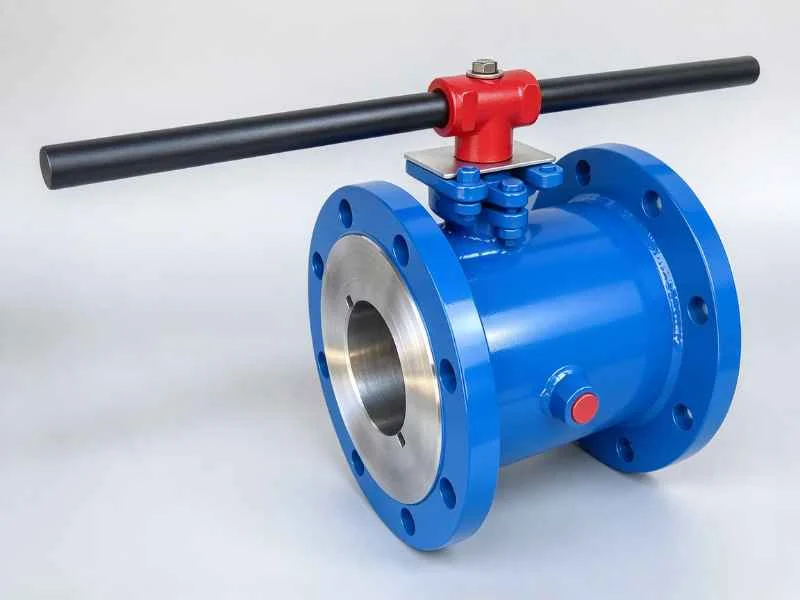
BCST manufactures jacketed valves for processes where the media must remain within a controlled temperature range during transfer, isolation or regulation. The heating or cooling jacket surrounds critical valve areas to help prevent solidification, crystallization, excessive viscosity and process interruption.
- Full-jacket and partial-jacket configurations
- Ball, gate, globe, plug and check valve options
- Steam, hot oil or thermal-fluid jacket service
- Custom body, trim, seat and jacket materials
- Flanged, welded and project-specific connections
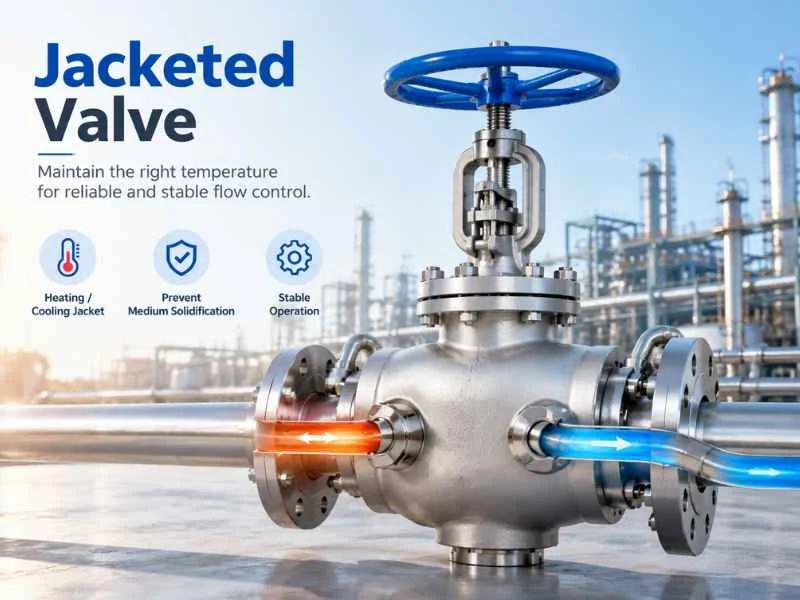
Stable Temperature
Helps maintain process media at the required flowing temperature.
Reduced Blockage
Limits solidification, crystallization and high-viscosity buildup.
Engineered Materials
Body, trim, sealing and jacket materials selected for the medium.
Project Support
Application review, drawing confirmation and documented inspection.
Product Range
Jacketed Valve Types
Select the valve design according to shutoff duty, control requirements, media behavior and cleaning needs.
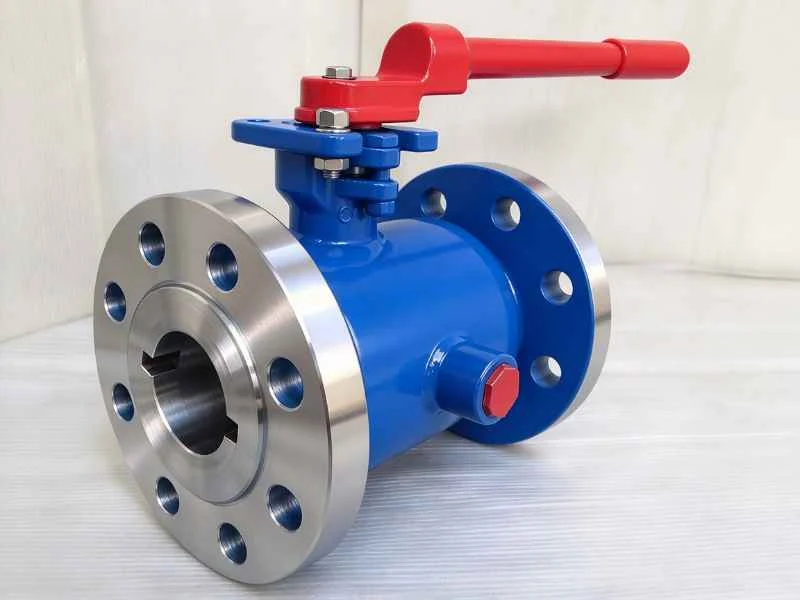
Jacketed Ball Valve
Quarter-turn isolation with a streamlined flow path for viscous, crystallizing or temperature-sensitive media.
- Full-port and reduced-port designs
- Two-piece or three-piece construction
- Manual or automated operation
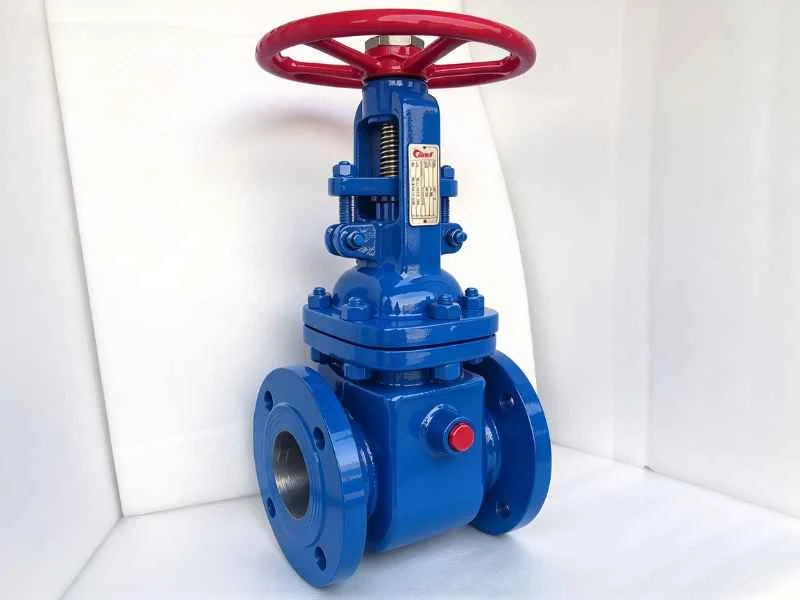
Jacketed Gate Valve
Suitable for full-flow isolation where low pressure loss and continuous body heating are important.
- Rising-stem configurations
- Full or partial jacket options
- Project-specific end connections
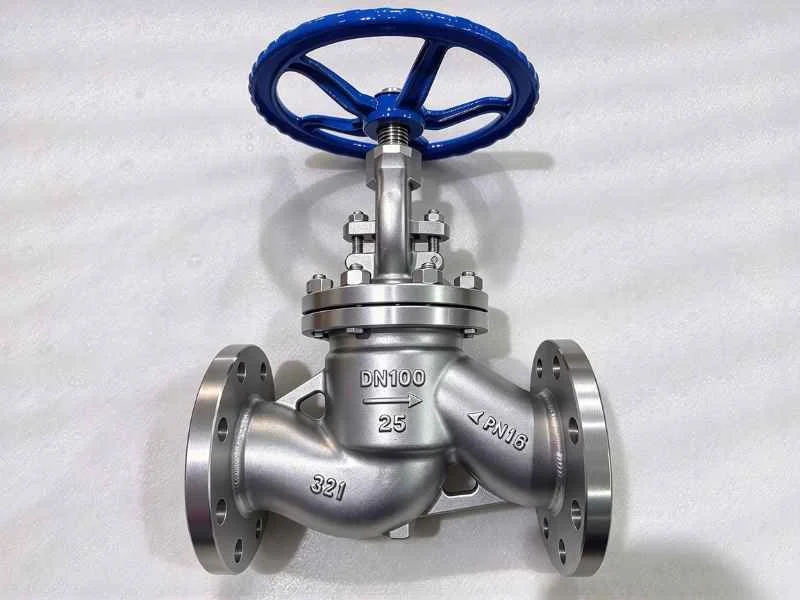
Jacketed Globe Valve
Provides isolation or controlled throttling for heated process lines requiring stable flow adjustment.
- Guided plug configurations
- Metal or soft seating options
- Pneumatic actuator compatibility
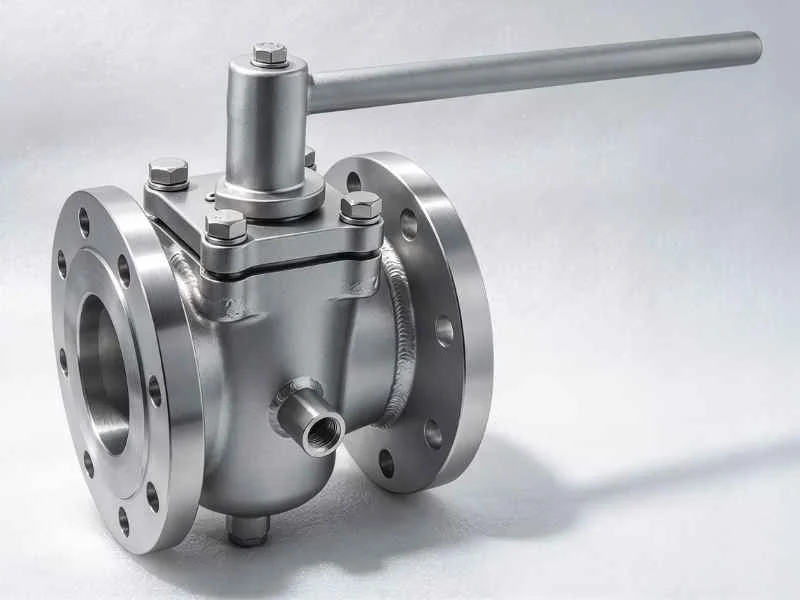
Jacketed Plug Valve
A robust quarter-turn option for viscous media and applications requiring a simple internal flow path.
- Lubricated or sleeved designs
- Broad material availability
- Manual, pneumatic or electric operation
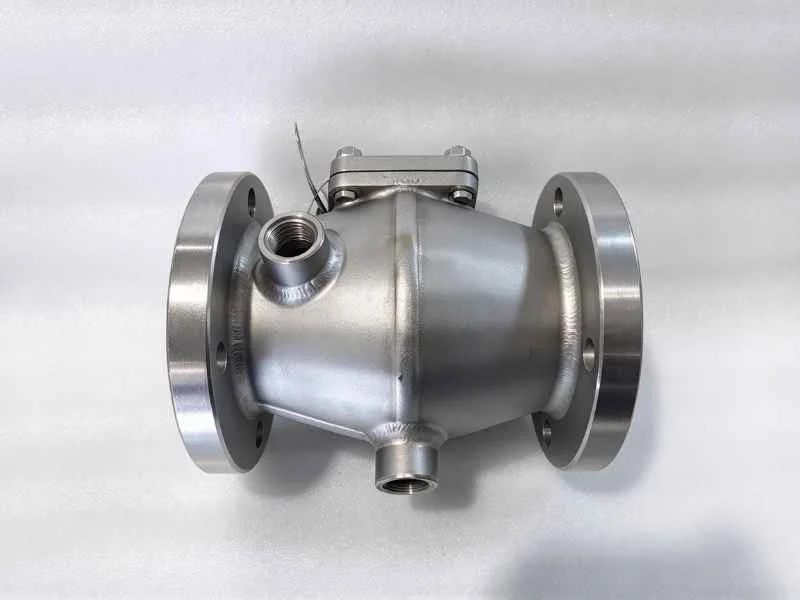
Jacketed Check Valve
Protects heated process lines against reverse flow while reducing cold spots around the valve body.
- Swing, lift or piston patterns
- Horizontal or vertical installation options
- Low-temperature-loss construction
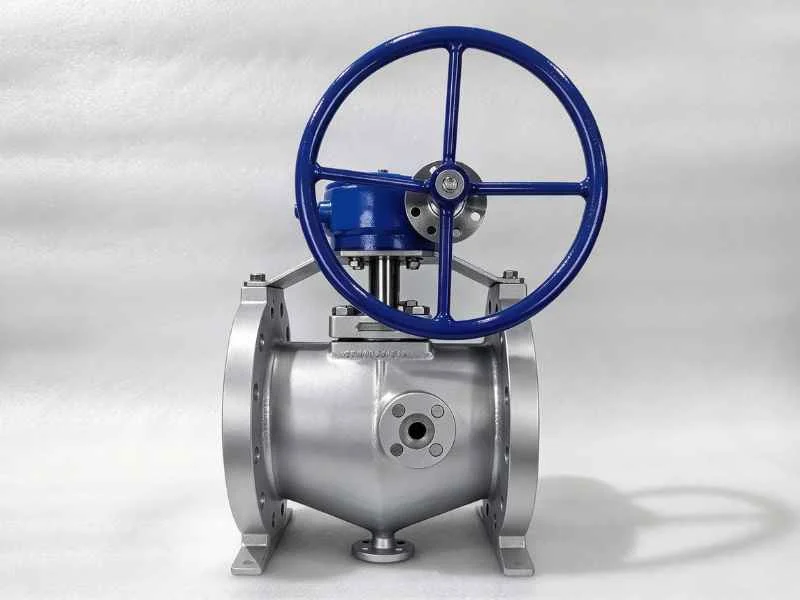
Custom Jacketed Valve
Engineered configurations for unusual media, restricted installation space or project-specific operating conditions.
- Custom jacket coverage
- Special alloys and linings
- Drain, vent and instrumentation ports
Product Comparison
Choose the Right Jacketed Valve
| نوع الصمام | Primary Duty | خاصية التدفق | Typical Media | Key Selection Point |
|---|---|---|---|---|
| Jacketed Ball Valve | On-off isolation | Low flow resistance | Resins, polymers, oils and viscous liquids | Seat compatibility and cavity management |
| Jacketed Gate Valve | Full-bore isolation | Straight-through flow | Bitumen, sulfur and heavy process fluids | Body heating coverage and stem sealing |
| Jacketed Globe Valve | Isolation or throttling | Controlled pressure drop | Heat-transfer fluids and chemical media | Flow direction, trim and actuator sizing |
| Jacketed Plug Valve | Frequent isolation | Direct flow path | Viscous, sticky or crystallizing media | Plug design, sleeve and operating torque |
| Jacketed Check Valve | Reverse-flow prevention | Automatic non-return | Heated transfer lines | Cracking pressure and installation orientation |
مبدأ العمل
How a Jacketed Valve Maintains Process Temperature
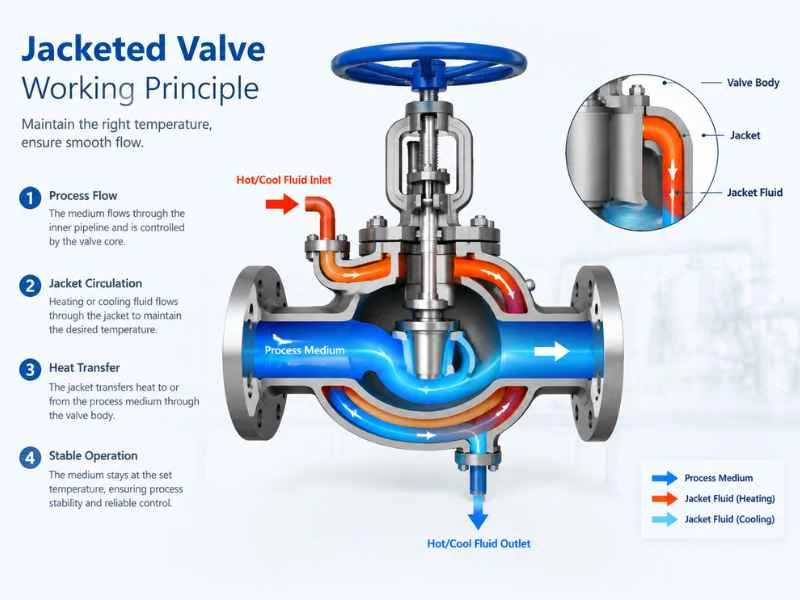
A jacketed valve incorporates an external chamber around selected pressure-containing areas. Steam, hot oil, thermal fluid or another heat-transfer medium circulates through this chamber to reduce heat loss from the process fluid.
- The heating medium enters the jacket through a dedicated connection.
- Heat transfers through the valve body wall to the process medium.
- Continuous circulation reduces cold areas around the closure element.
- The heating medium exits through the outlet or condensate connection.
- The process fluid remains easier to move, isolate or regulate.
Jacket temperature, pressure and medium must be reviewed separately from the main process conditions.
Define the Process Medium
Provide composition, viscosity, solids content and solidification temperature.
Confirm Both Pressure Systems
Specify process pressure and jacket pressure independently.
Control Heat Distribution
Select jacket coverage and connections to minimize cold spots.
Engineering Data
Typical Technical Configuration
Available specifications depend on valve type, size, pressure class, materials and project requirements.
| المعلمة | Typical Options | Engineering Consideration |
|---|---|---|
| Valve pattern | Ball, gate, globe, plug or check | Selected according to isolation, regulation and flow requirements |
| Jacket construction | Full jacket or partial jacket | Coverage depends on required heat distribution and flange arrangement |
| Process connection | Flanged, butt-weld, socket-weld or threaded | Must match piping specification and maintenance strategy |
| Jacket connection | Flanged, socket-weld or threaded ports | Positioned for supply, return, drainage and venting |
| Body materials | Carbon steel, stainless steel or special alloy | Selected for corrosion, temperature and mechanical strength |
| Seat and sealing | Metal seat, PTFE family or engineered sealing system | Compatibility must be checked against temperature and media |
| العملية | Manual, pneumatic, electric or hydraulic | Actuator sizing considers pressure differential and operating torque |
| الفحص | Visual, dimensional, pressure and functional checks | Testing scope is confirmed against the purchase specification |
اختيار المواد
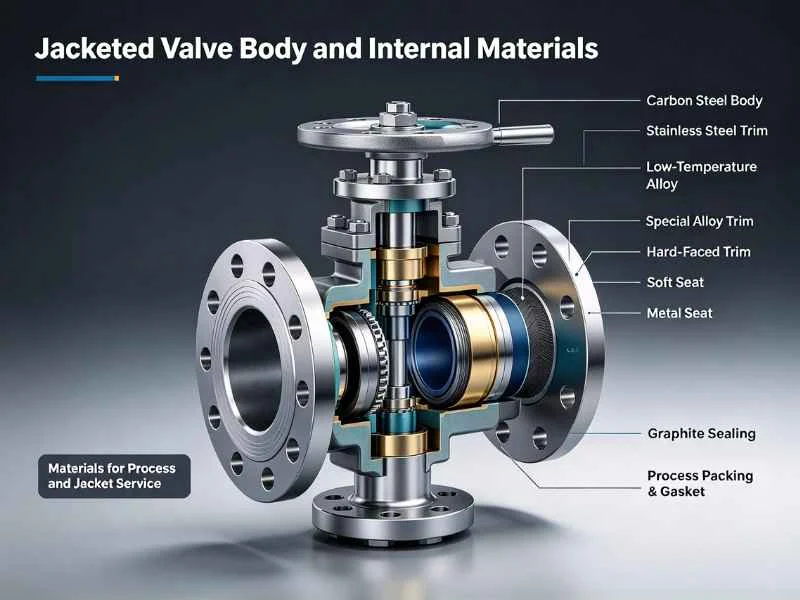
Materials for Process and Jacket Service
Valve Body and Trim
- Carbon steel: general heated hydrocarbon and utility services
- الفولاذ المقاوم للصدأ: corrosive chemicals, food processes and cleaner service
- Low-temperature materials: selected when the surrounding process requires suitable impact performance
- Special alloys: considered for aggressive acids, chlorides and high-corrosion duties
- Hard-faced trim: available where erosion, wear or frequent cycling is expected
Seats, Packing and Gaskets
- Soft seats for reliable shutoff within their rated temperature range
- Metal seats for elevated temperature or abrasive service
- Graphite-based sealing for suitable high-temperature applications
- Process-compatible packing and gasket materials
Application Industries
Where Jacketed Valves Are Used
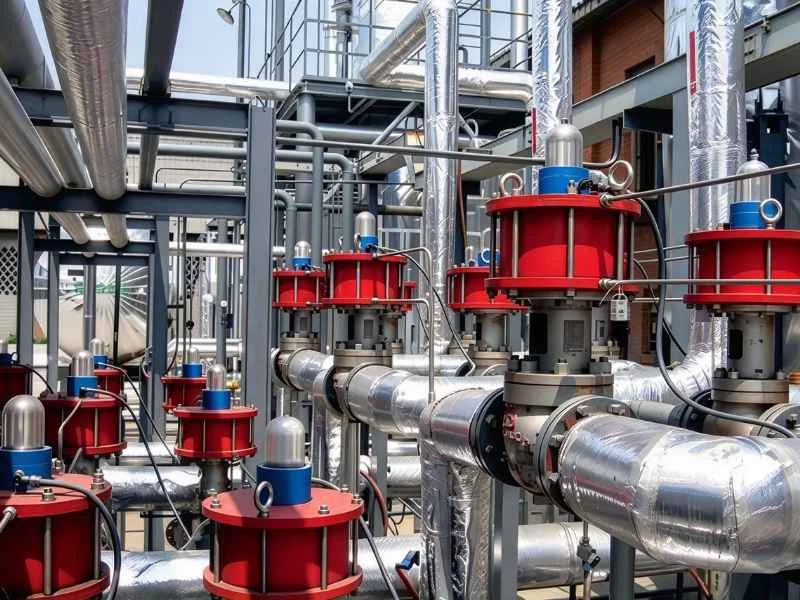
Petrochemical Processing
For resins, polymers, heavy hydrocarbons and process streams that become difficult to handle as temperature falls.
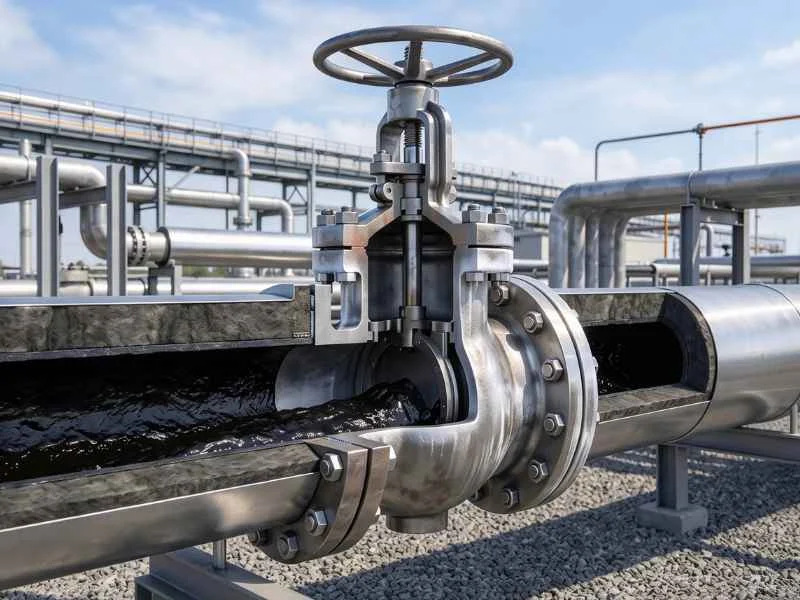
Bitumen and Asphalt
Helps maintain fluidity through transfer, loading and storage-system isolation points.
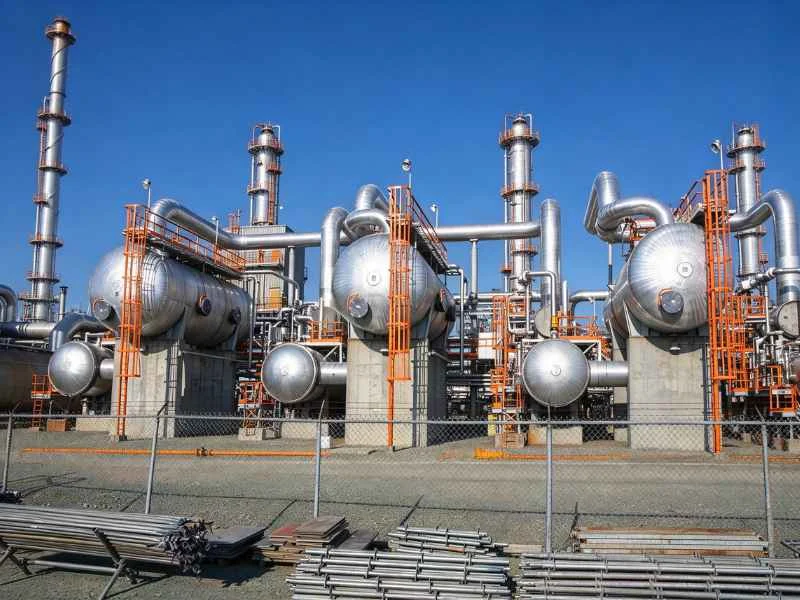
Molten Sulfur
Reduces the risk of solidification around the valve body, seating area and adjacent piping.
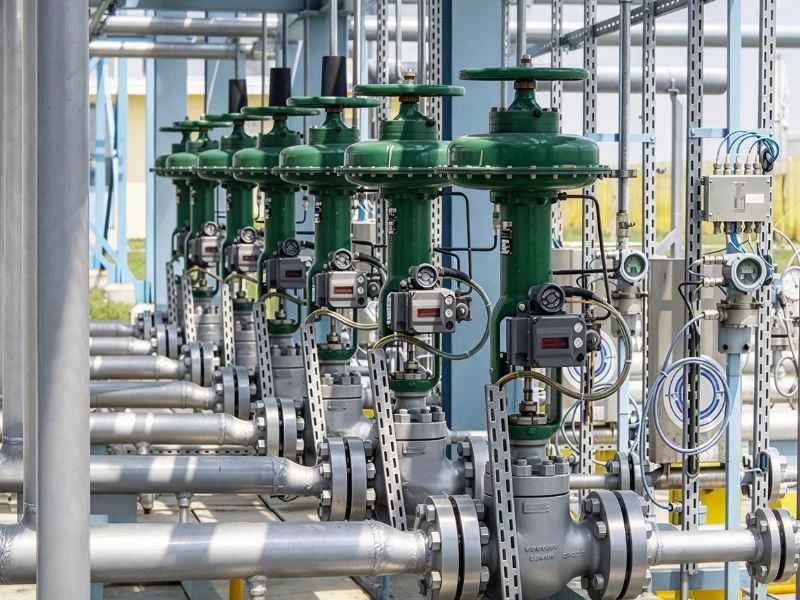
المعالجة الكيميائية
Supports crystallizing chemicals, waxes, additives and temperature-sensitive process media.
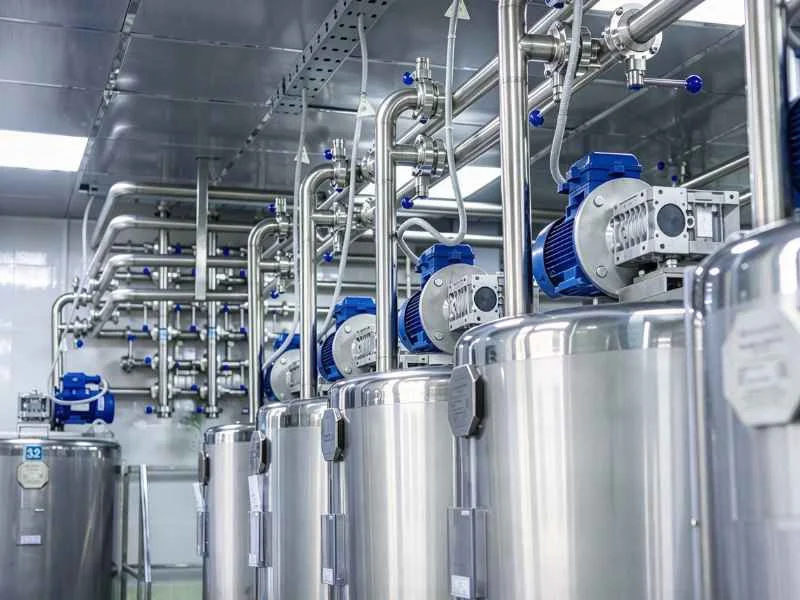
Food and Pharmaceutical
Used for chocolate, syrup, fats, oils and other products requiring controlled process temperature.
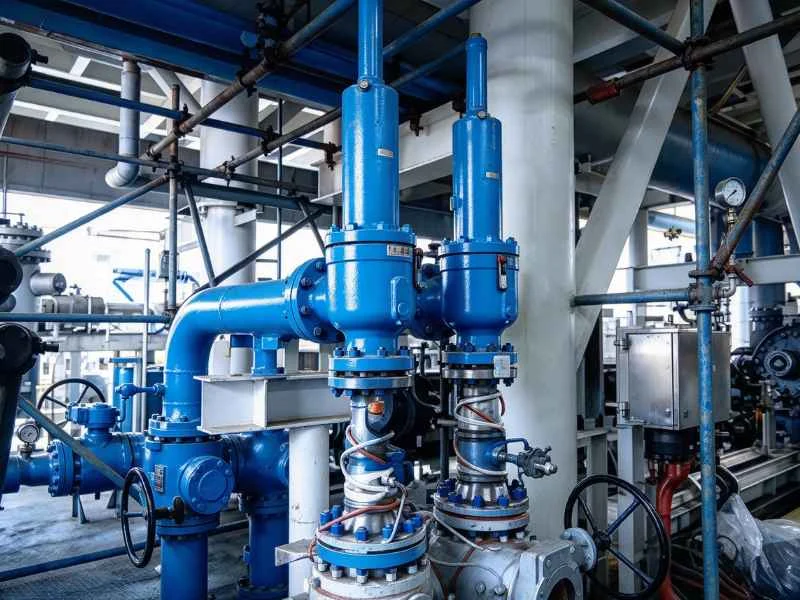
Polymer and Resin Plants
Maintains flow through isolation and transfer points handling sticky or high-viscosity media.
Application Matrix
Process Challenges and Valve Solutions
| Process Concern | Recommended Feature | Customer Benefit |
|---|---|---|
| Media solidifies during shutdown | Full body jacket with suitable heating connections | Faster restart and reduced manual cleaning |
| Viscosity increases as temperature drops | Continuous jacket circulation around the flow path | More stable flow and lower operating torque |
| Crystals form near the seat | Jacket coverage around the closure area | Improved seating reliability and fewer blockages |
| Product contamination is unacceptable | Compatible body, trim and sealing materials | Better product integrity and service life |
| Maintenance access is limited | Serviceable valve construction and accessible jacket ports | Simplified inspection and planned maintenance |
| Remote operation is required | Pneumatic or electric actuator with accessories | Integration with plant automation and interlocks |
Selection Guide
Information Required for Valve Sizing
Complete operating data allows the jacketed valve manufacturer to evaluate the valve and heating system as two connected but independently rated pressure systems.
- Process medium and chemical composition
- Normal, minimum and maximum operating temperature
- Solidification, crystallization or pour-point temperature
- Viscosity at operating and shutdown conditions
- Process pressure and design pressure
- Required flow rate or line size
- Heating medium, supply temperature and pressure
- Valve type, connection and pressure class
- Shutoff requirement and operating frequency
- Preferred body, trim, seat and packing materials
- Manual or automated operation
- Applicable project standards and inspection requirements
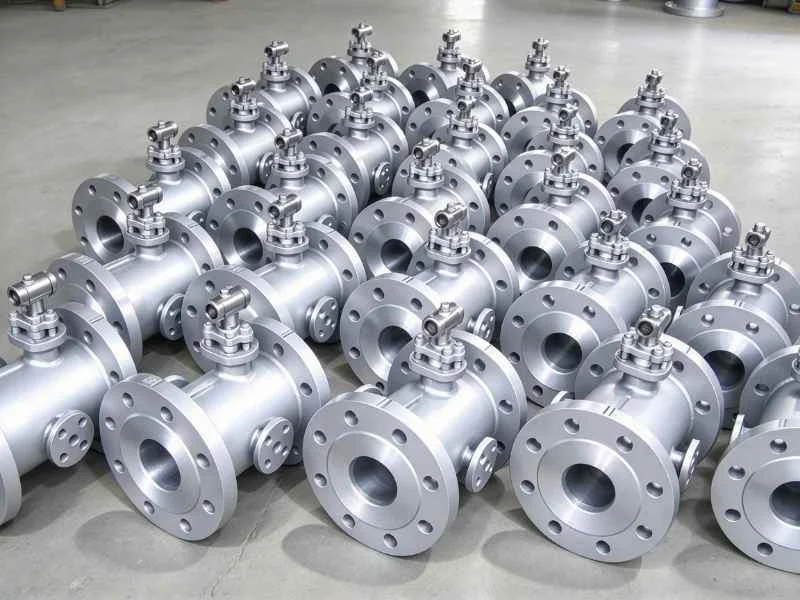
Send Us Your Jacketed Valve Data
Share the process medium, temperature range, valve size, pressure class and heating-medium conditions. Our engineering team will review the application and recommend a suitable configuration.
Manufacturing Support
From Application Review to Delivery
1. Process Review
We review media behavior, operating temperature, pressure, flow and shutdown conditions.
2. Design Confirmation
Valve pattern, materials, jacket coverage, connections and operation method are confirmed.
3. Inspection and Testing
Required dimensional, pressure and functional checks are completed under the agreed inspection plan.
4. Documentation and Delivery
Approved drawings, applicable records and shipment documentation are prepared for the order.
Quality Control
Inspection Focus for Jacketed Valves
- Material identification and document review
- Dimensional and connection inspection
- Valve shell and seat testing where applicable
- Separate jacket pressure and leakage testing
- Operational and actuator function checks
- Coating, marking and packing inspection
- Additional examination according to the agreed project specification
Testing methods, acceptance criteria and documentation are confirmed before production when project-specific requirements apply.
التركيب والصيانة
Protect Valve Performance in Service
Before Installation
- Verify valve tag, materials and flow direction
- Flush debris from the process line
- Confirm jacket-medium pressure and temperature limits
- Check connection alignment and installation clearance
During Commissioning
- Introduce the heating medium gradually
- Vent trapped air and drain condensate correctly
- Check process and jacket connections for leakage
- Cycle the valve and verify actuator response
Routine Maintenance
- Inspect packing, gaskets and external connections
- Keep jacket passages and condensate paths clear
- Monitor operating torque and closure performance
- Replace sealing components with compatible materials
الأسئلة المتداولة
Jacketed Valve FAQ
What is a jacketed valve?
A jacketed valve has an external chamber through which a heating or cooling medium circulates. This helps control the temperature of process media passing through the valve.
When should a jacketed valve be used?
It is commonly selected when the media may solidify, crystallize, become highly viscous or lose process stability as its temperature changes.
What is the difference between a full jacket and a partial jacket?
A full jacket provides broader heating coverage around the valve body. A partial jacket heats selected areas and may be preferred where flange dimensions, installation space or process conditions limit full coverage.
Which heating media can be used?
Steam, hot water, hot oil and other thermal fluids may be used when compatible with the jacket design, connection arrangement, pressure rating and temperature limits.
Are the valve body and jacket rated separately?
Yes. Process-side and jacket-side design conditions must be specified independently. Their pressure, temperature, materials and testing requirements may differ.
Can a jacketed valve be automated?
Yes. Pneumatic, electric or hydraulic actuation can be supplied depending on valve type, operating torque, control philosophy and site utilities.
How are jacket connection positions selected?
Port locations are arranged to support circulation, air removal and condensate drainage while remaining accessible within the available piping layout.
What information does the manufacturer need for a quotation?
Provide the medium, viscosity, solidification temperature, process and jacket conditions, valve size, pressure class, connections, materials and actuator requirements.
 English
 Arabic
 Russian
 French
 Spanish