
Corrosive Media Flow Control
Lined Valve Manufacturer
BCST manufactures lined valves for isolating and controlling corrosive, high-purity and contamination-sensitive process media. A selected lining separates the process fluid from the pressure-containing body, allowing the mechanical structure and wetted materials to be optimized independently.
- Lined butterfly, ball, plug, diaphragm and control valves
- Fluoropolymer, elastomer and engineered lining options
- Manual, pneumatic and electric operation
- Flanged, wafer and project-specific connections
- Material selection based on chemistry and temperature
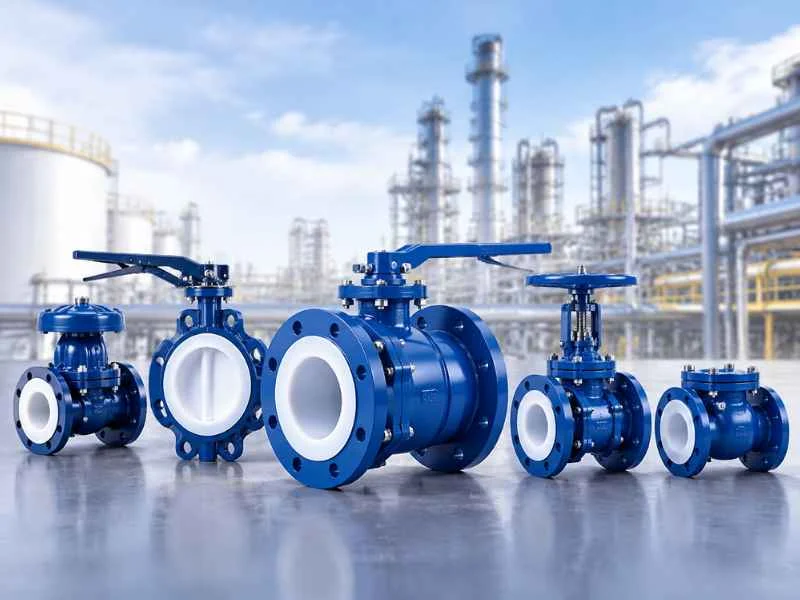
Corrosion Protection
Separate aggressive process media from the structural valve body.
Multiple Valve Designs
Select a flow path for isolation, throttling, cleanliness or solids handling.
Engineered Lining
Match the lining to chemistry, concentration, temperature and operating duty.
Automation Options
Integrate actuators, switches, solenoids and positioners with plant controls.
Product Collection
Lined Valve Configurations
Select the valve design according to the required shutoff, control performance, solids content and maintenance strategy.
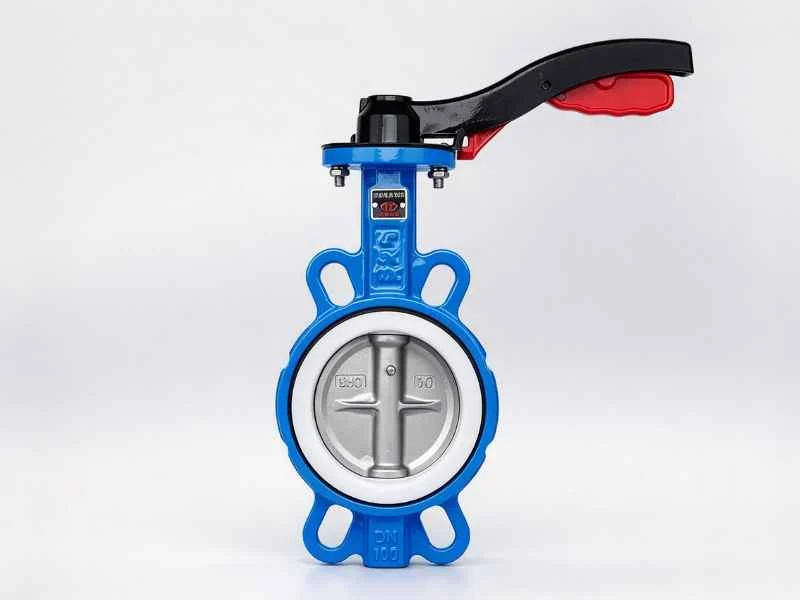
Lined Butterfly Valve
A lined body and compatible disc provide compact quarter-turn isolation or application-dependent regulation.
- Compact and lightweight design
- Suitable for larger pipe sizes
- Manual or automated operation
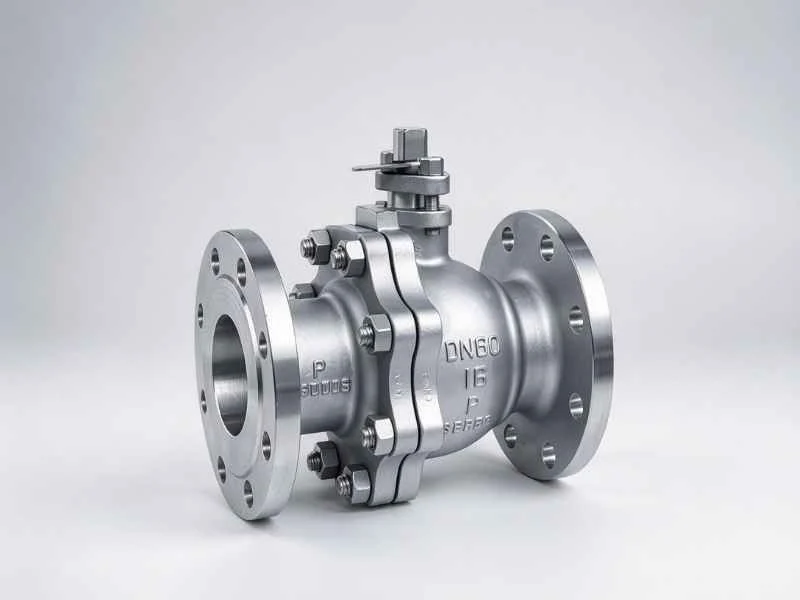
Lined Ball Valve
A lined full-port or reduced-port flow path provides quarter-turn isolation for compatible corrosive media.
- Low-obstruction open passage
- Fast quarter-turn operation
- Remote automation options
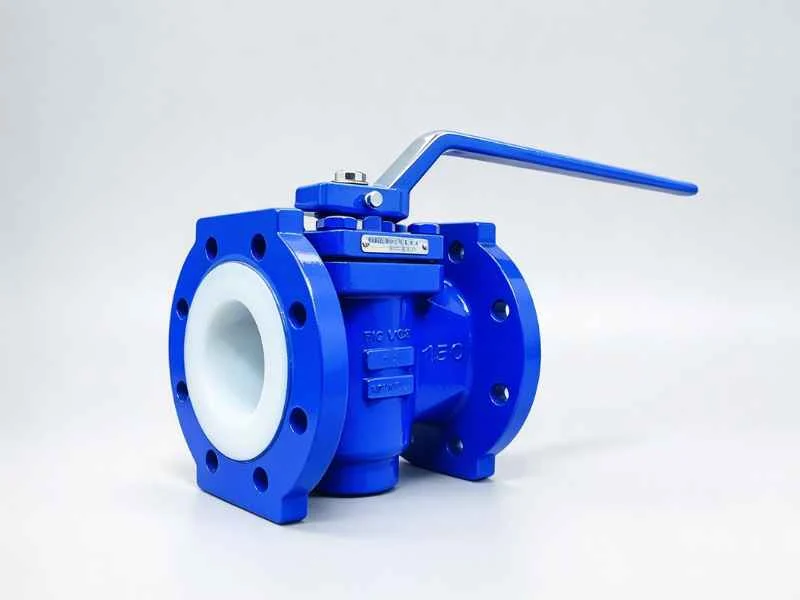
Lined Plug Valve
A rotating lined plug provides compact shutoff and a process-isolated body construction.
- Quarter-turn isolation
- Compact flow-control element
- Multiple operating options
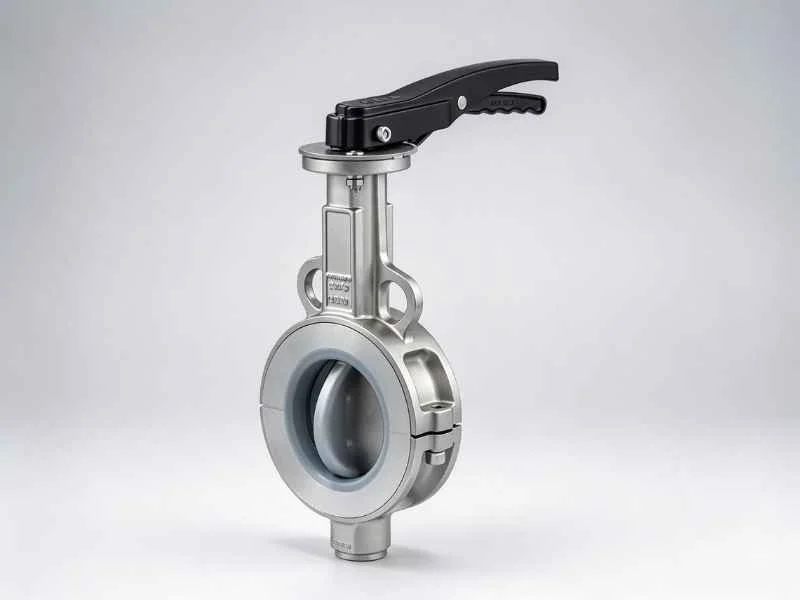
Lined Diaphragm Valve
A flexible diaphragm separates the process medium from the stem and operating components.
- Isolated operating mechanism
- Suitable for corrosive fluids
- Application-dependent throttling capability
Product Comparison
Choose the Appropriate Lined Valve
| نوع الصمام | الوظيفة الأساسية | Main Advantage | Important Consideration | Typical Duty |
|---|---|---|---|---|
| Lined butterfly valve | Isolation or application-dependent regulation | Compact design for larger sizes | Disc exposure and liner compression | Corrosive liquid and gas service |
| Lined ball valve | Quarter-turn isolation | Low-obstruction flow path | Seat, cavity and pressure-temperature limits | Clean and compatible process media |
| Lined plug valve | Quarter-turn isolation | Compact closure element | Operating torque and lining integrity | Corrosive process isolation |
| Lined diaphragm valve | Isolation or throttling | Stem separated from process medium | Diaphragm compatibility and cycle life | Corrosive and contamination-sensitive media |
| Lined control valve | Continuous flow regulation | Engineered control performance | Velocity, cavitation and lining erosion | Corrosive process control |
Operating Principle
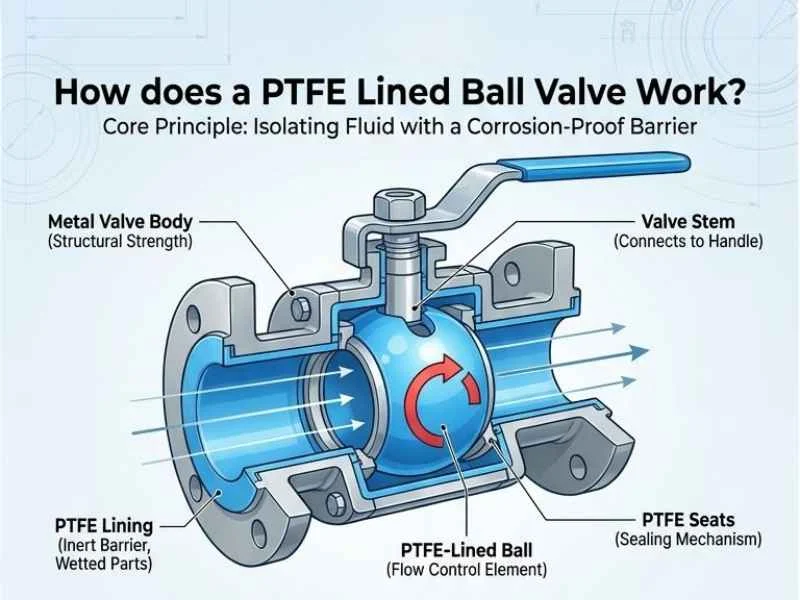
How a Lined Valve Protects the Body
- Process containment: The compatible lining forms the principal wetted barrier inside the valve.
- Structural support: The external body contains line pressure and supports the internal components.
- Valve operation: The disc, ball, plug or diaphragm moves to open, regulate or stop flow.
- Seat engagement: Compatible sealing surfaces provide the required shutoff performance.
- External isolation: Shaft, stem and body-sealing arrangements help limit process leakage.
- Corrosion protection: Correctly selected wetted materials reduce contact between aggressive media and structural metal.
Provide Full Chemistry
State every process component, concentration, impurity and cleaning chemical.
Confirm Temperature
Include normal, maximum, minimum, cleaning and upset temperatures.
Define the Valve Duty
Distinguish between isolation, frequent cycling and continuous throttling.
Technical Configuration
Configurable Lined Valve Specifications
Available specifications depend on the valve design, lining material and approved operating conditions.
| المعلمة | Available Engineering Options | Selection Basis |
|---|---|---|
| Nominal size | Model-dependent size range | Pipeline size, flow rate and velocity |
| Pressure class | Selected according to valve and lining construction | Operating, design and differential pressure |
| درجة حرارة التشغيل | Lining- and seal-dependent range | Normal, maximum, minimum and cleaning temperature |
| Lining material | Fluoropolymer, elastomer or engineered option | Chemistry, temperature, permeation and abrasion |
| Body material | Cast iron, ductile iron, carbon steel or stainless steel | Pressure, mechanical strength and environment |
| Wetted trim | Lined, coated or compatible alloy construction | Fluid contact, wear and sealing requirements |
| اتصال | Flanged, wafer, lug or project-specific connection | Piping standard and installation layout |
| العملية | Manual, pneumatic or electric | Size, torque, cycle frequency and automation |
| Control accessories | Solenoid, regulator, switches and positioner | Plant control philosophy |
| Inspection requirements | Visual, dimensional, pressure and application-specific checks | Approved specification and purchase order |
Lining Selection
The Lining Must Match the Complete Process
Material compatibility cannot be determined from the main chemical name alone. Concentration, impurities, pressure, temperature and operating cycles may change lining performance.
- List all process chemicals and concentrations
- Identify trace contaminants and cleaning agents
- Provide moisture and gas-phase composition
- State normal, maximum and upset temperatures
- Identify vacuum or pressure-cycling conditions
- Describe suspended solids and abrasive particles
- Confirm static charge or contamination concerns
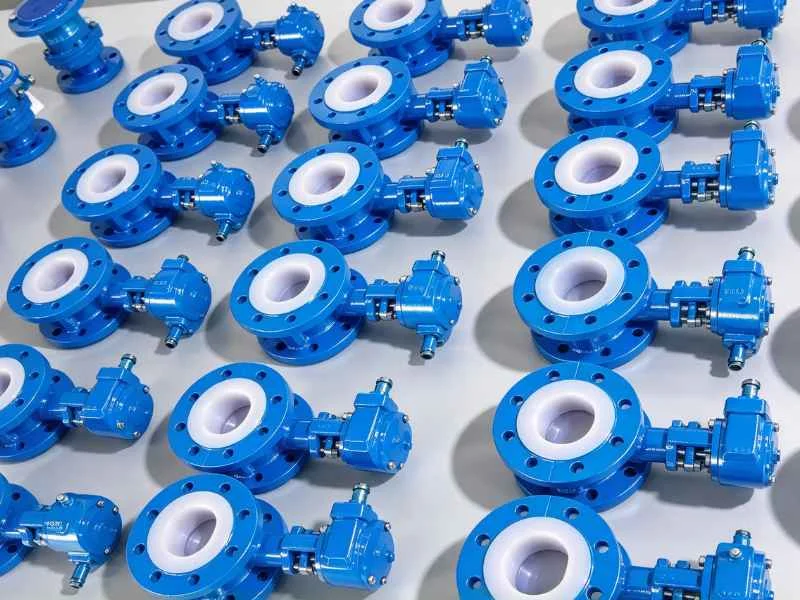
Lining Material Guide
Lining Options for Different Media
Final compatibility and operating limits must be verified using complete process data and the selected valve construction.
| Lining Option | Typical Strength | Engineering Consideration |
|---|---|---|
| مادة البولي تترافلوروإيثيلين | Broad chemical resistance and low friction | Review pressure, temperature, permeation and cold flow |
| PFA | Chemical resistance with melt-processable construction | Confirm temperature, permeation and valve design limits |
| FEP | Chemical resistance for selected applications | Verify temperature and mechanical requirements |
| PVDF | Mechanical strength and resistance to selected chemicals | Check compatibility with the exact medium and temperature |
| Rubber lining | Abrasion resistance and compatibility with selected fluids | Verify elastomer type, chemistry and temperature |
| Engineered lining | Application-specific corrosion or wear performance | Requires detailed project review and confirmation |
Isolation vs. Control
Match the Valve to the Operating Duty
Isolation Duty
The valve operates primarily between fully open and fully closed positions.
- Pipeline shutdown
- Equipment isolation
- Process-line switching
- Reduced exposure to throttling wear
Frequent-Cycle Duty
The valve repeatedly opens and closes during batching, filling or transfer operations.
- Cycle-life evaluation
- Actuator torque review
- Position feedback
- Preventive inspection planning
Modulating Duty
The valve operates at intermediate positions to regulate flow or pressure.
- Velocity and pressure-drop analysis
- Cavitation and flashing review
- Lining erosion evaluation
- Positioner and feedback options
Handling & Installation
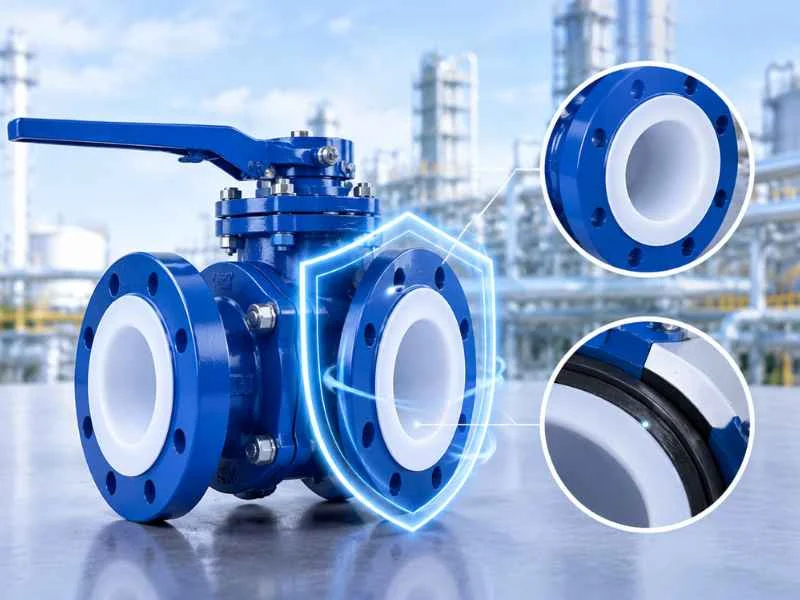
Protect the Lining Before Startup
Lined sealing faces and internal surfaces can be damaged by impact, sharp tools, debris, misaligned piping or unsuitable gaskets.
- Keep protective covers installed until assembly
- Inspect exposed lining before installation
- Prevent tools from contacting lined surfaces
- Align piping without forcing the valve body
- Use the specified gasket and flange arrangement
- Tighten fasteners using the approved sequence
- Remove welding debris before valve installation
Application Matrix
Typical Lined Valve Applications
| Industry or System | Typical Medium | Valve Function | Key Selection Concern |
|---|---|---|---|
| المعالجة الكيميائية | Acids, alkalis and aggressive chemicals | Isolation and process control | Chemistry, concentration and temperature |
| معالجة المياه | Treatment chemicals and corrosive solutions | Dosing and pipeline isolation | Chemical compatibility and cycle frequency |
| Mining and minerals | Corrosive slurry and leaching solutions | Isolation and transfer control | Combined abrasion and corrosion |
| Steel and metallurgy | Pickling and surface-treatment chemicals | Process isolation | Acid concentration and temperature |
| توليد الطاقة | Water-treatment and emission-control chemicals | Isolation and dosing control | Compatibility and operating reliability |
| Pulp and paper | Bleaching and process chemicals | Isolation and flow control | Chemistry, solids and cleaning method |
| General manufacturing | Corrosive cleaning and process fluids | Transfer and equipment isolation | Contamination and maintenance access |
Selection Checklist
Information Required for Lined Valve Selection
Process Data
- Complete chemical composition and concentration
- Normal, minimum and maximum flow rate
- Operating and design pressure
- Operating, cleaning and upset temperature
- Solids concentration and particle characteristics
- Vacuum, permeation or contamination concerns
Mechanical & Control Data
- Pipeline size and connection standard
- Isolation, cycling or modulating duty
- Required shutoff performance
- Expected operating frequency
- Available pneumatic or electric utility
- Fail position, feedback and control requirements
Manufacturer Support
From Chemical Data to Final Valve Configuration
1. Process Review
We review the complete chemistry, pressure, temperature, solids and operating duty.
2. Material Selection
The lining, wetted trim, seats, seals and body construction are evaluated together.
3. Actuator Selection
Required torque, speed, fail position and control accessories are configured.
4. Documentation
Approved drawings, technical data and inspection documents are prepared for the order scope.
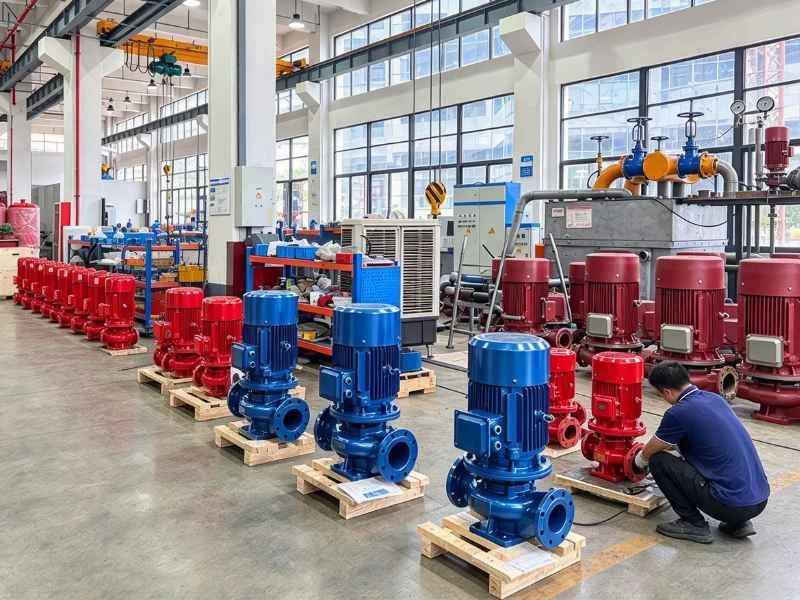
Quality Control
Inspection Before Shipment
Inspection and testing are completed according to the selected model, approved specification and purchase-order requirements.
- Material and component verification
- Dimensional and visual inspection
- Lining surface and continuity inspection
- Valve opening and closing checks
- Pressure and leakage testing where specified
- Actuator and accessory function checks
- Position-feedback verification where required
- Protection, marking and packing inspection
Installation & Maintenance
Maintain Lining Integrity Throughout Service
تثبيت
- Inspect lining and flange faces
- Align piping without external stress
- Use approved gaskets where required
- Follow the specified bolt-tightening sequence
- Keep sharp tools away from lined surfaces
Commissioning
- Remove debris from the pipeline
- Confirm complete opening and closing
- Verify actuator direction and feedback
- Introduce process conditions gradually
- Inspect flange areas for leakage
الصيانة
- Inspect exposed lining at planned intervals
- Monitor leakage and operating torque
- Avoid incompatible cleaning chemicals
- Replace damaged seats or seals promptly
- Keep recommended service parts available
Send Us Your Lined Valve Data
Provide the complete chemical composition, concentration, flow rate, pressure, temperature, solids conditions, pipeline connection, operating duty and actuator preference. Our engineers will help configure a suitable lined valve.
الأسئلة المتداولة
Lined Valve FAQ
What is a lined valve?
It is a valve with a corrosion-resistant or application-specific lining that separates the process medium from the structural valve body.
Which lined valve type should I select?
Butterfly valves suit compact larger-size service, ball and plug valves provide quarter-turn isolation, diaphragm valves isolate the stem, and control valves regulate flow.
How should the lining material be selected?
Selection must consider every chemical component, concentration, temperature, pressure, impurities, solids, cleaning agents and operating cycles.
Can lined valves be used under vacuum?
Vacuum suitability depends on the lining material, valve construction, temperature and operating conditions. Vacuum service must be stated during selection.
Can a lined valve handle abrasive slurry?
Some configurations can handle solids-bearing media, but combined abrasion and corrosion require evaluation of the lining, particle characteristics and velocity.
Can lined valves be used for throttling?
Only suitable designs should be used for throttling. Velocity, pressure drop, cavitation, flashing and potential lining erosion must be evaluated.
Can BCST provide automated lined valves?
Yes. Pneumatic and electric actuation can be evaluated with solenoids, switches, positioners and feedback accessories.
What information is required for quotation?
Provide complete process chemistry, concentration, flow, pressure, temperature, solids data, pipeline connection, operating duty, cycle frequency and actuator preference.
 English
 Arabic
 Russian
 French
 Spanish