
Pipeline Filtration Solutions
T-Type Strainer Manufacturer
BCST Valve manufactures T-type strainers for removing solid particles from liquid, gas and steam pipelines. The straight-through flow path and removable screen support high flow capacity, convenient maintenance and reliable protection of downstream equipment.
Our T-type strainer range includes cast, fabricated, temporary, high-pressure, quick-opening and jacketed configurations for process pipelines and industrial utility systems.
- Horizontal and vertical installation options
- Cast and fabricated body construction
- Flanged, butt-welded and project-specific connections
- Perforated, mesh-lined and wedge-wire screens
- Drain, vent and differential-pressure connections
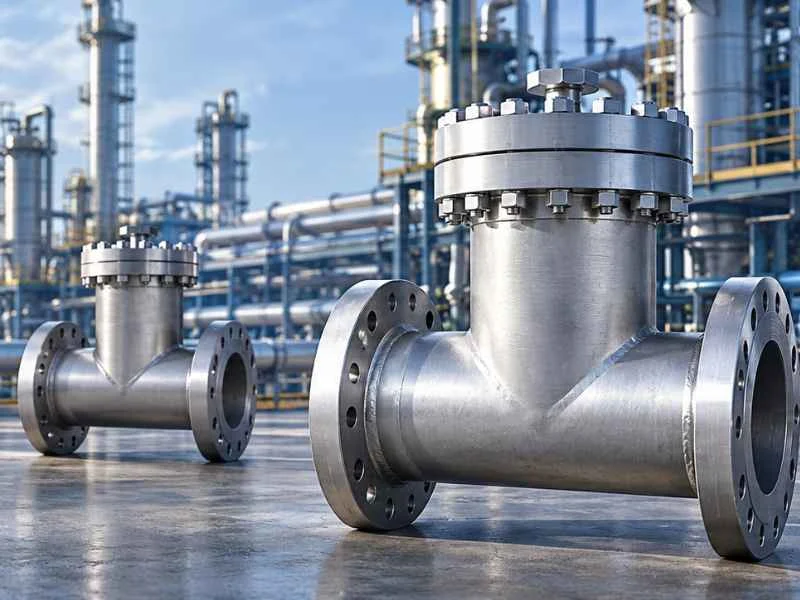
Straight Flow Path
Supports efficient pipeline flow through the main body.
Large Screen Area
Provides useful dirt-holding capacity for industrial service.
Accessible Screen
The removable element supports inspection, cleaning and replacement.
Custom Configuration
Body, connection and screen options can match project requirements.
Product Collection
T-Type Strainer Types
Select the body construction, screen orientation and maintenance arrangement according to the pipeline conditions.
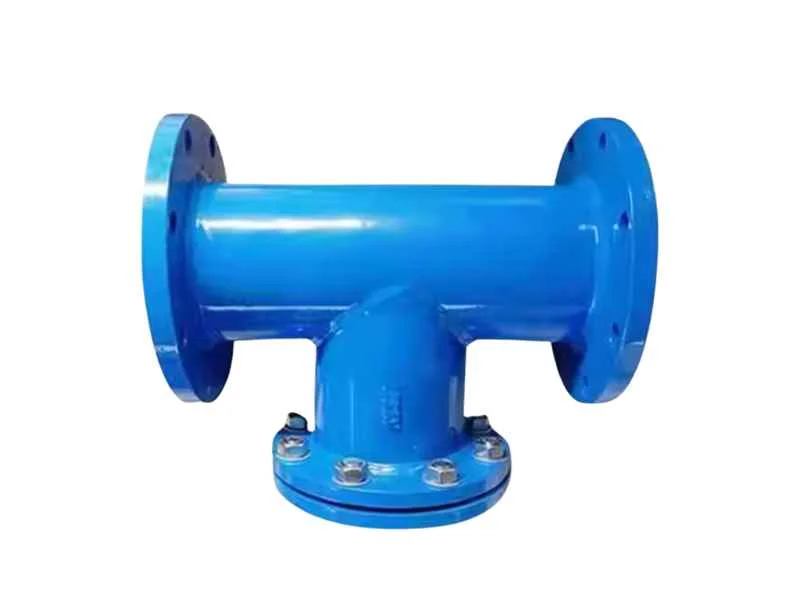
Cast T-Type Strainer
A compact cast-body configuration for general industrial liquid, gas and steam pipelines.
- Flanged connections
- Removable filter element
- Multiple body materials
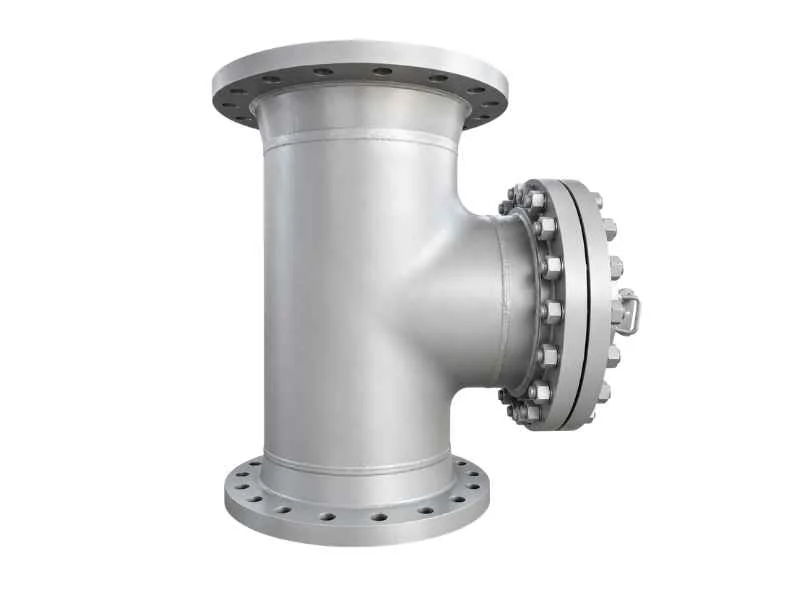
Fabricated T-Type Strainer
A welded configuration for larger sizes, higher flow rates and project-specific pipeline layouts.
- Large-size capability
- Custom body dimensions
- Flexible nozzle arrangement
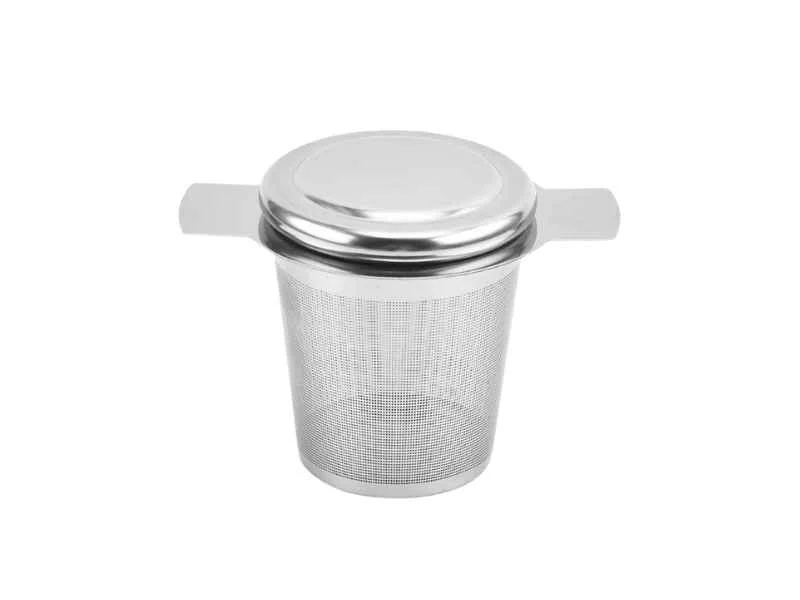
Temporary T-Type Strainer
A removable startup screen used to capture construction debris during flushing and commissioning.
- Temporary startup filtration
- Compact removable element
- Coarse debris protection
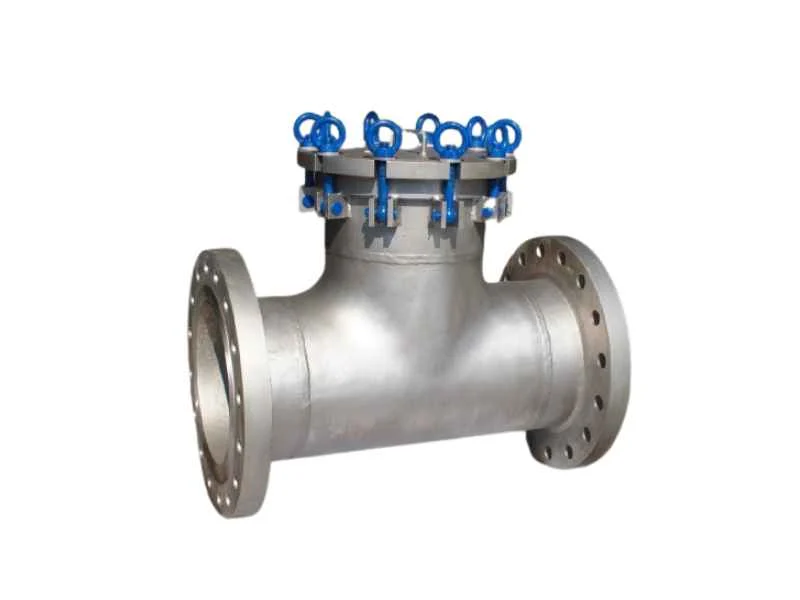
High-Pressure T-Type Strainer
A reinforced configuration for demanding process pipelines and higher design pressures.
- Heavy-duty body construction
- Engineered cover and bolting
- Pressure-class connection options
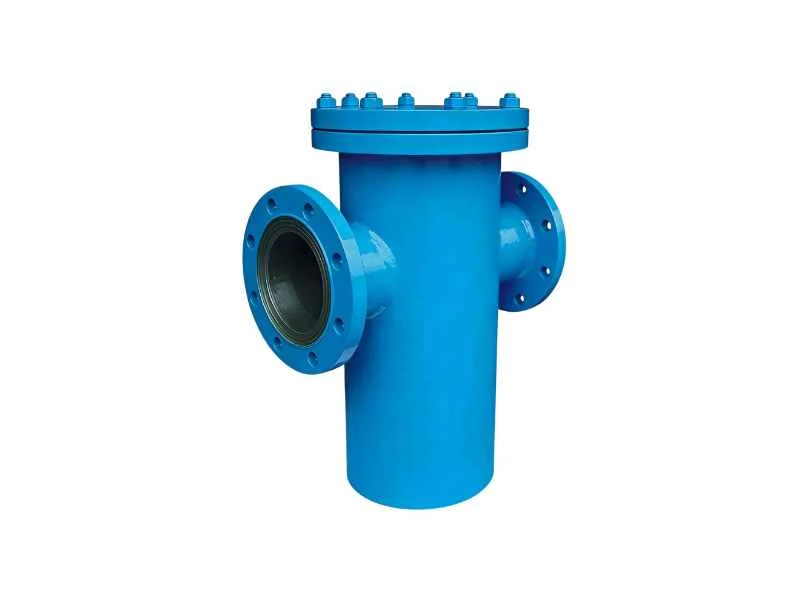
Quick-Opening T-Type Strainer
A maintenance-focused design for applications requiring frequent access to the filter element.
- Faster screen access
- Reduced maintenance time
- Safety interlock options
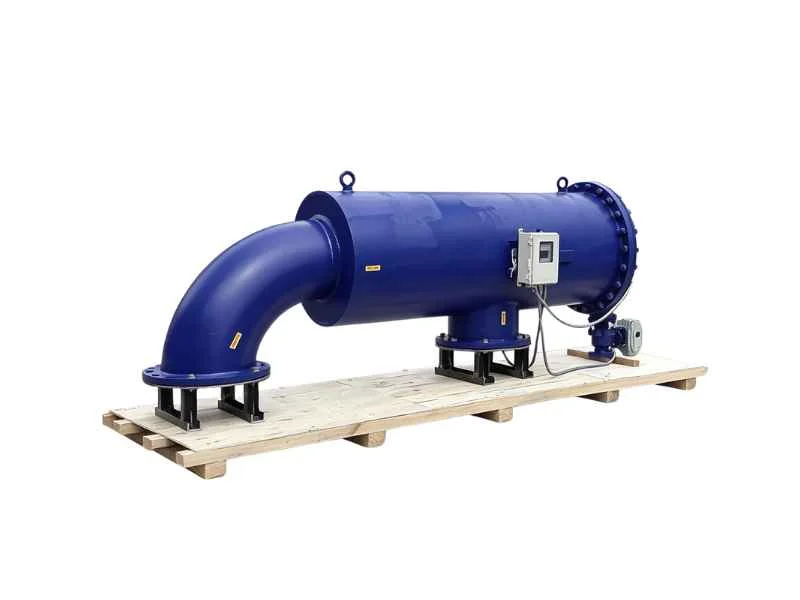
Jacketed T-Type Strainer
A heated configuration for media that can become viscous, crystallize or solidify as temperature falls.
- Full or partial jacket options
- Steam or heat-transfer medium
- Temperature-sensitive process service
Product Comparison
Choose the Appropriate T-Type Strainer
The correct configuration depends on size, pressure, operating duration, screen access and filtration duty.
| Strainer Type | Body Construction | Filtration Duty | Maintenance Access | Typical Application |
|---|---|---|---|---|
| Cast T-Type Strainer | Cast body | Permanent | Bolted or removable cover | خطوط الأنابيب الصناعية العامة |
| Fabricated T-Type Strainer | Welded body | Permanent | Project-specific cover | Large-size and high-flow systems |
| Temporary T-Type Strainer | Removable element | Startup or commissioning | Pipeline disassembly required | Construction debris removal |
| High-Pressure T-Type Strainer | هيكل متين | Permanent | Engineered cover | Higher-pressure process service |
| Quick-Opening T-Type Strainer | Cast or fabricated | Permanent | Quick-opening closure | Frequent screen cleaning |
| Jacketed T-Type Strainer | Cast or fabricated with jacket | Permanent | Model dependent | Viscous or temperature-sensitive media |
Operating Principle
How a T-Type Strainer Works
Process fluid enters the straight-through body and passes across the installed filter element. Particles larger than the selected opening are retained while filtered fluid continues downstream.
- Unfiltered process fluid enters the strainer inlet.
- Flow is directed through the perforated or mesh-lined screen.
- Solid particles collect on the dirty side of the screen.
- Filtered fluid exits through the main pipeline connection.
- Differential pressure increases as debris accumulates.
- The element is isolated, removed and cleaned when required.
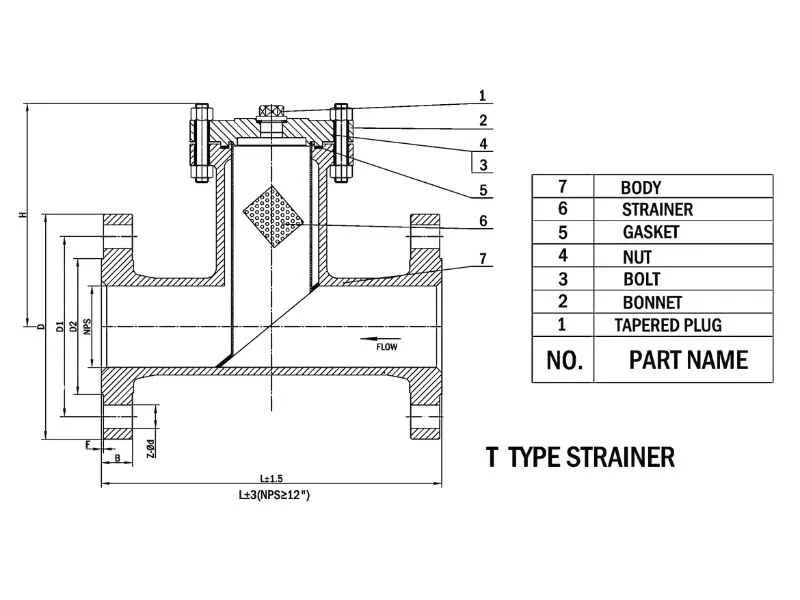
Required Flow
Determines connection size, body size and required filtration area.
Screen Opening
Must protect downstream equipment without excessive restriction.
Allowable Pressure Drop
Must be checked for clean and contaminated screen conditions.
Maintenance Space
Sufficient clearance is required to remove the screen safely.
Technical Options
T-Type Strainer Configuration Guide
Available options depend on the selected construction and project conditions. Confirm the complete specification before ordering.
| المعلمة | Typical Options | Information Required |
|---|---|---|
| Body Construction | Cast or fabricated | Pipe size, pressure and project specification |
| تثبيت | Horizontal or vertical | Flow direction and available space |
| اتصال | Flanged, butt-welded or project specified | Piping standard and pressure class |
| Cover | Bolted, hinged or quick opening | Pressure and maintenance frequency |
| Screen Construction | Perforated, mesh lined or wedge wire | Particle size and mechanical strength |
| Drain and Vent | Plugged, flanged or valve connections | Cleaning and maintenance procedure |
| Monitoring | Pressure-gauge or differential-pressure connections | Maintenance and control requirements |
| مُكَمِّلات | Support legs, lifting devices or heating jacket | Installation and process requirements |
Screen Selection
Filtration Opening and Screen Construction
Screen design should balance particle retention, filtration area, mechanical strength and allowable pressure drop.
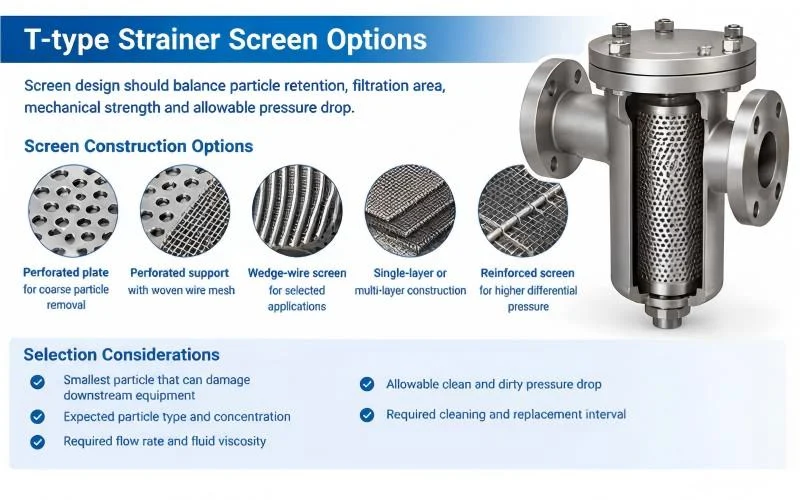
Screen Construction Options
- Perforated plate for coarse particle removal
- Perforated support with woven wire mesh
- Wedge-wire screen for selected applications
- Single-layer or multi-layer construction
- Reinforced screen for higher differential pressure
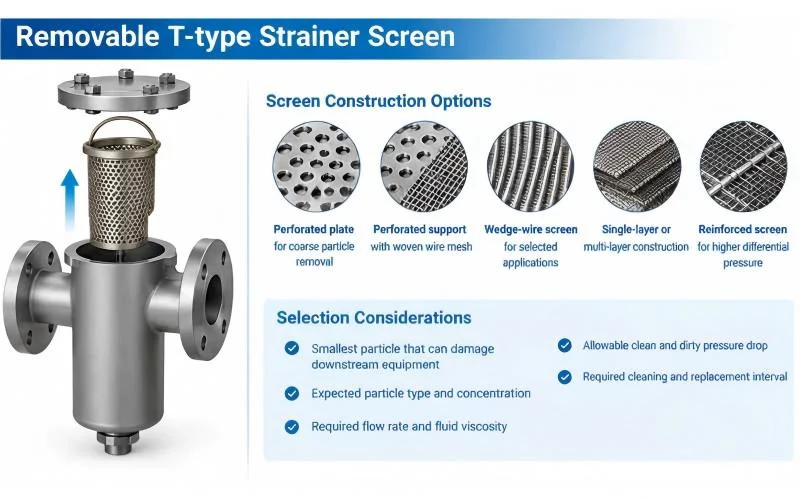
Selection Considerations
- Smallest particle that can damage downstream equipment
- Expected particle type and concentration
- Required flow rate and fluid viscosity
- Allowable clean and dirty pressure drop
- Required cleaning and replacement interval
| Screen Type | Filtration Characteristic | Relative Strength | Typical Use |
|---|---|---|---|
| Perforated Plate | Coarse filtration | عالية | Large debris and startup protection |
| Mesh-Lined Screen | Medium or fine filtration | Supported | Pumps, valves and meters |
| Wedge-Wire Screen | Uniform slot opening | عالية | Water and selected process systems |
| Reinforced Screen | Application-specific filtration | Very high | Higher differential-pressure conditions |
T-Type or Y-Type
Compare Pipeline Strainer Configurations
Both products remove pipeline debris, but installation space, screen area and maintenance access can favor one configuration.
| Selection Factor | T-Type Strainer | مصفاة Y |
|---|---|---|
| مسار التدفق | Straight-through body | Y-shaped screen pocket |
| Screen Orientation | Perpendicular or project configured | Angled to the main pipeline |
| Filtration Area | Suitable for larger screen designs | Compact screen area |
| Maintenance Access | Top or side access, design dependent | Angled cover access |
| Large Pipeline Use | Common fabricated option | Model dependent |
| Typical Selection Reason | High flow or layout preference | Compact and economical filtration |
المواد
Material Options for Different Media
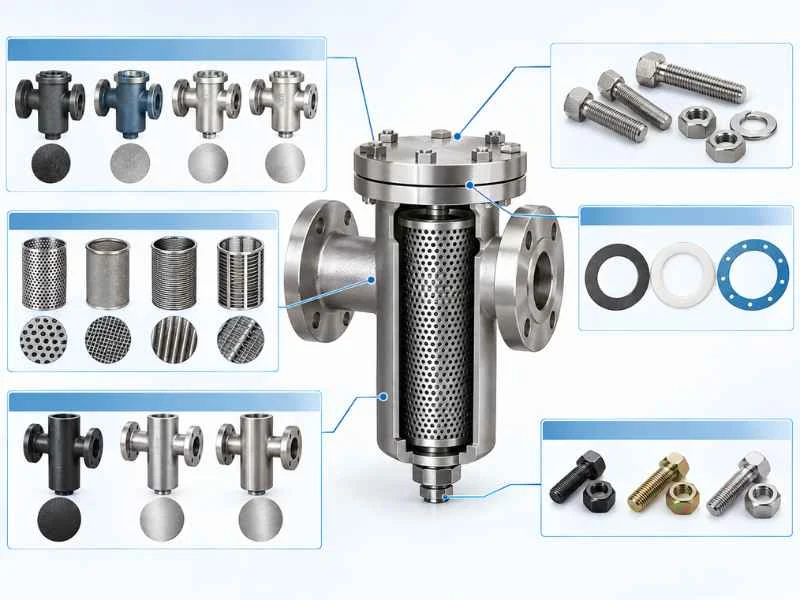
Body, screen, gasket and bolting materials should be selected together according to the medium, temperature, pressure and corrosion conditions.
| المكوّن | Typical Material Options |
|---|---|
| Cast Body | Carbon steel, low-temperature steel, SS304 or SS316 |
| Fabricated Body | Carbon steel, SS304, SS304L, SS316 or SS316L |
| Filter Screen | SS304, SS304L, SS316 or SS316L |
| Cover Gasket | Graphite, PTFE or application-specific material |
| Bolting | Selected according to pressure, temperature and body material |
Selection Checklist
Information Required for T-Type Strainer Selection
Complete operating data allows the manufacturer to review body size, screen area, opening size and pressure-drop requirements.
Process Data
- Fluid name and composition
- Design pressure and temperature
- Operating pressure and temperature
- Normal and maximum flow rates
- Fluid density and viscosity
Filtration Data
- Required screen opening
- Particle type and concentration
- انخفاض الضغط المسموح به
- Required filtration area
- Screen material and construction
Piping Requirements
- Nominal pipe size
- Connection standard and pressure class
- Horizontal or vertical installation
- Available screen-removal clearance
- Drain, vent and monitoring requirements
التطبيقات
T-Type Strainer Applications
T-type strainers protect critical equipment across process, energy and industrial utility systems.
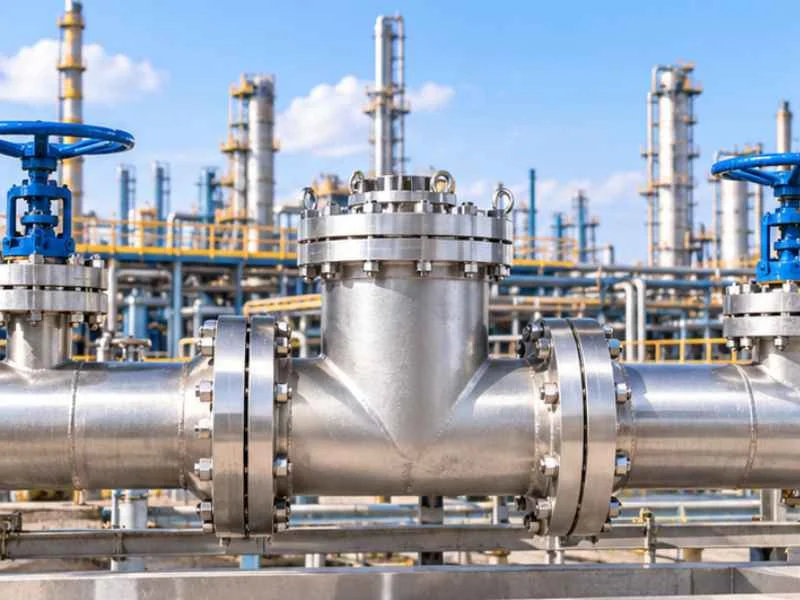
النفط والغاز
Pipeline protection for pumps, meters, valves and transfer equipment.
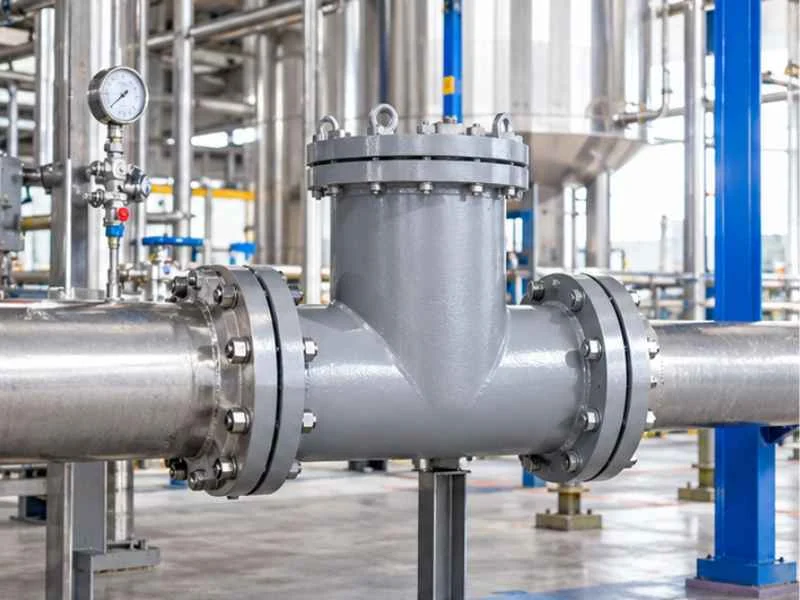
المعالجة الكيميائية
Material-compatible filtration for chemicals, solvents and process liquids.
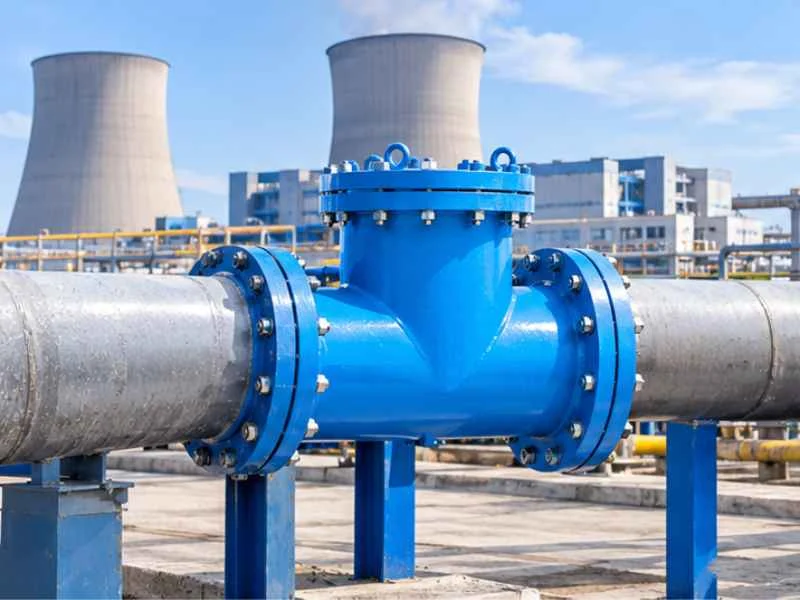
توليد الطاقة
Filtration for cooling water, steam, condensate and auxiliary systems.
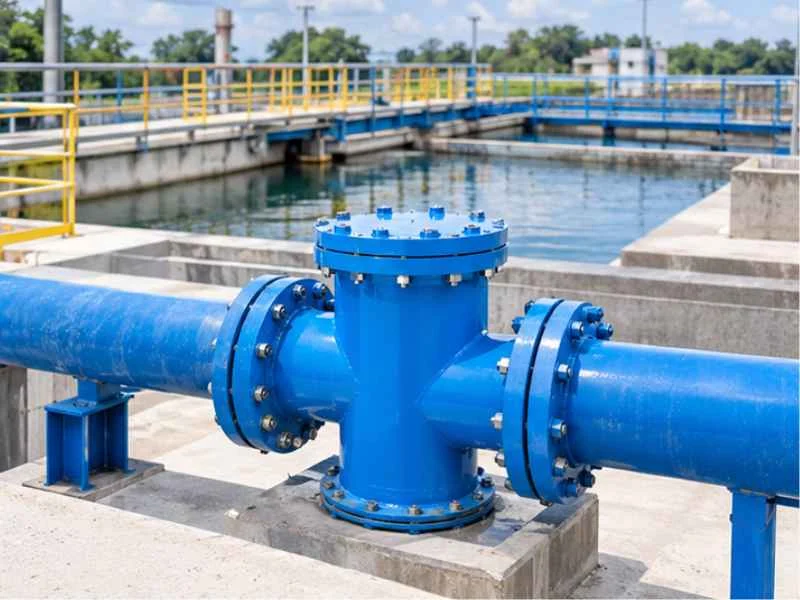
Water & Mining
Debris removal from process water, raw water and utility pipelines.
Manufacturer Quality Control
Inspection Before Delivery
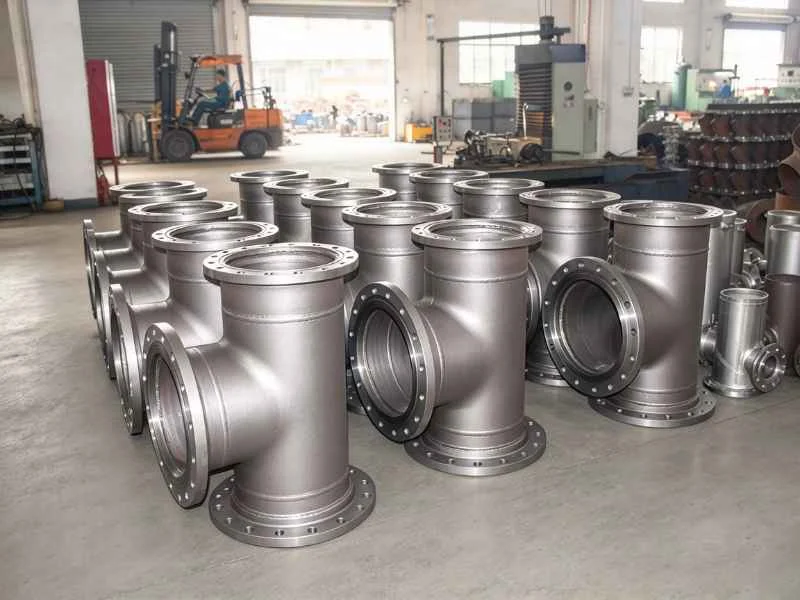
The inspection scope depends on the selected T-type strainer construction and agreed project requirements.
- Review the approved datasheet and product drawing.
- Verify body, screen, gasket and bolting materials.
- Inspect dimensions, nozzle orientation and connections.
- Check screen opening, construction and fit.
- Perform pressure and leakage testing where applicable.
- Review cleanliness, documentation and protective packing.
Installation & Maintenance
Maintain Reliable Filtration Performance
Correct orientation, adequate screen-removal clearance and regular cleaning help control pressure drop and protect downstream equipment.
Installation Guidelines
- Match the body arrow to the pipeline flow direction.
- Follow the approved screen orientation.
- Provide sufficient clearance for element removal.
- Support the strainer body and connected piping.
- Install pressure connections where monitoring is required.
- Flush the pipeline before commissioning.
Maintenance Guidelines
- Monitor differential pressure across the strainer.
- Isolate and depressurize the line before opening.
- Remove and clean the screen at suitable intervals.
- Inspect the element for deformation or damage.
- Replace damaged cover gaskets before reassembly.
- Verify sealing after returning the strainer to service.
Send Us Your T-Type Strainer Data
Provide the pipe size, flow rate, pressure, temperature, medium, screen opening and connection standard. BCST Valve will review the information and recommend a suitable T-type strainer.
الأسئلة المتداولة
T-Type Strainer FAQ
Answers to common questions from engineers, operators and procurement teams.
What is a T-type strainer?
A T-type strainer is a pipeline filter with a straight-through body and a removable screen positioned through a perpendicular branch.
What is the difference between a T-type and Y strainer?
A T-type strainer uses a straight-through body with perpendicular screen access. A Y strainer uses an angled screen pocket and is often more compact.
Can a T-type strainer be used permanently?
Yes. Permanent models include a serviceable body, removable screen, cover, drain and optional pressure-monitoring connections.
When should a temporary T strainer be used?
A temporary strainer is generally used during pipeline flushing, startup and commissioning to capture construction debris before it reaches equipment.
How is the screen opening selected?
Select an opening small enough to protect downstream equipment but large enough to maintain acceptable pressure drop and cleaning intervals.
How is T-type strainer size determined?
Selection considers pipe size, flow rate, fluid properties, screen opening, filtration area and allowable clean and dirty pressure drop.
Can the strainer be installed vertically?
Selected models can be installed vertically when the flow direction, screen orientation and debris collection arrangement are suitable.
How often should the screen be cleaned?
The interval depends on particle concentration and allowable pressure drop. Differential-pressure monitoring provides a practical indication of blockage.
Can BCST Valve manufacture a custom T-type strainer?
Project-specific dimensions, materials, screen openings, nozzle orientations and accessories can be reviewed against the operating conditions.
What information is required for a quotation?
Provide the pipe size, flow rate, pressure, temperature, medium, screen opening, body material, connection standard and installation orientation.
Need Help Selecting a T-Type Strainer?
Send your pipeline and filtration data to BCST Valve for technical selection and quotation support.
 English
 Arabic
 Russian
 French
 Spanish