
Pipeline Filtration Solutions
Y Strainer Manufacturer
BCST Valve manufactures Y strainers for removing solid particles from liquid, gas and steam pipelines. The compact Y-shaped body contains a removable screen that protects pumps, valves, meters, regulators and other downstream equipment.
Our Y strainer range includes cast, forged, welded, threaded, socket-welded, telescopic and jacketed configurations for general industrial and demanding process applications.
- Flanged, threaded, socket-welded and butt-welded connections
- Carbon steel, low-temperature steel and stainless steel bodies
- SS304, SS316 and special filter-element options
- Standard and project-specific screen openings
- Drain, blowdown and differential-pressure options
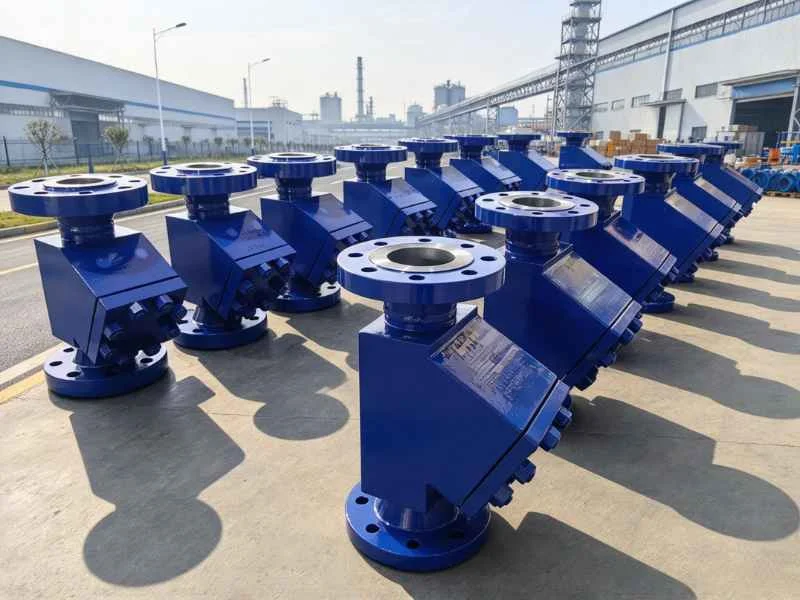
Equipment Protection
Captures debris before it reaches sensitive downstream equipment.
Compact Installation
Provides pipeline filtration in a compact Y-shaped body.
Removable Screen
Allows inspection, cleaning and replacement during maintenance.
Application-Matched
Body, screen and connection options for different services.
Product Collection
Y Strainer Types
Select the body construction, connection and screen design that match the pipeline conditions.
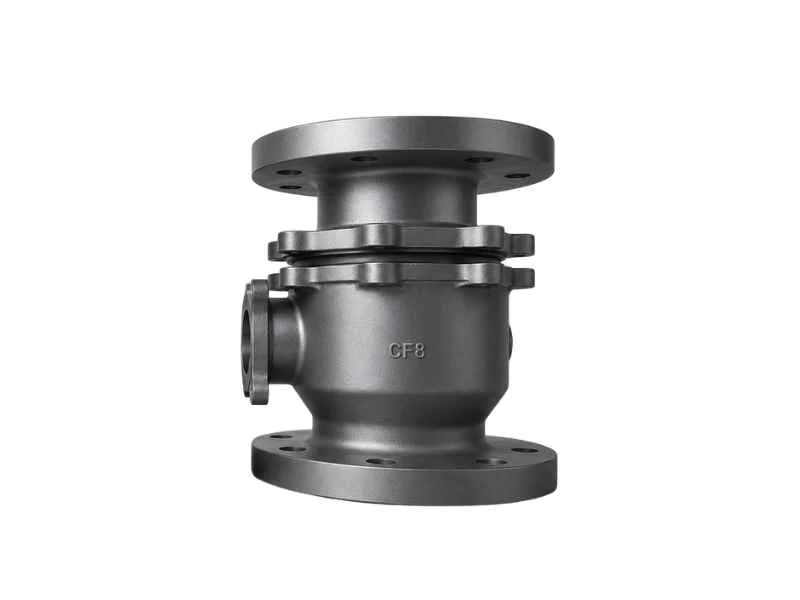
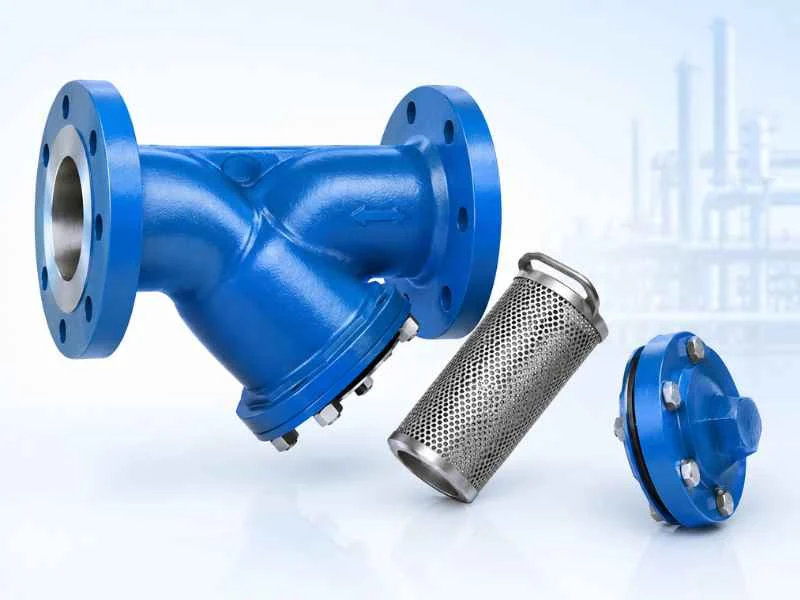
Cast Y Strainer
A general-purpose flanged Y strainer for liquid, gas and steam pipelines.
- JCSY14 catalog series
- Broad nominal-size range
- Multiple body materials
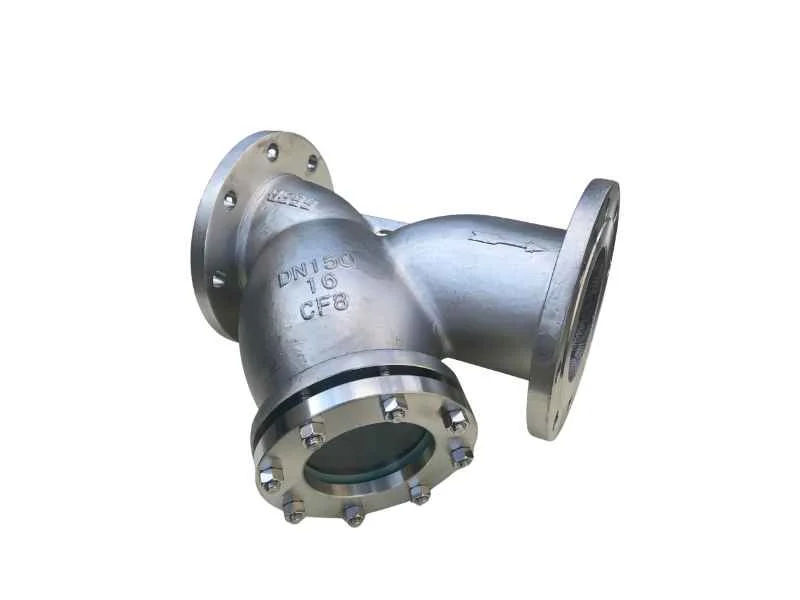
Forged Y Strainer
A compact strainer for smaller pipelines and higher-pressure process applications.
- Reduced-bore and full-bore options
- Bolted or welded bonnet
- Selected classes up to Class 2500
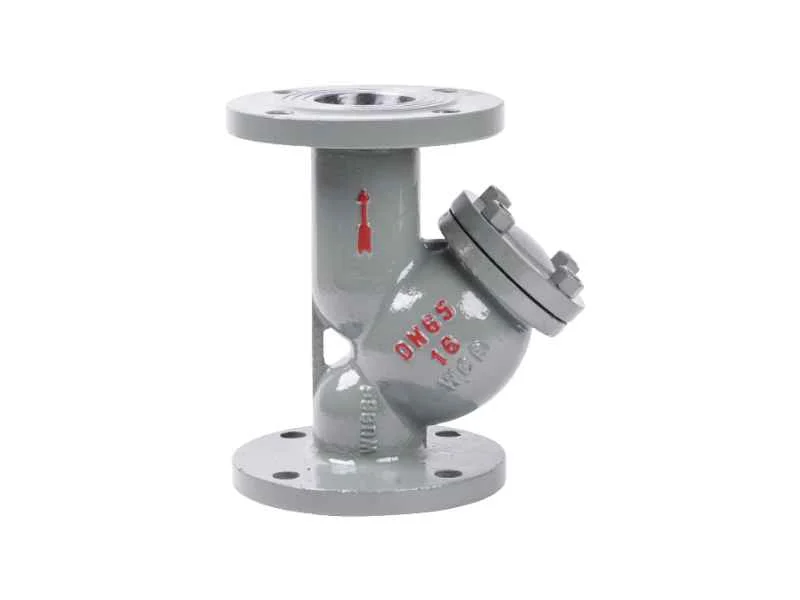
Welded Y Strainer
A fabricated Y strainer suitable for larger sizes and project-specific pipeline requirements.
- JCSY34 catalog series
- Selected sizes from DN15 to DN400
- Drain connection options
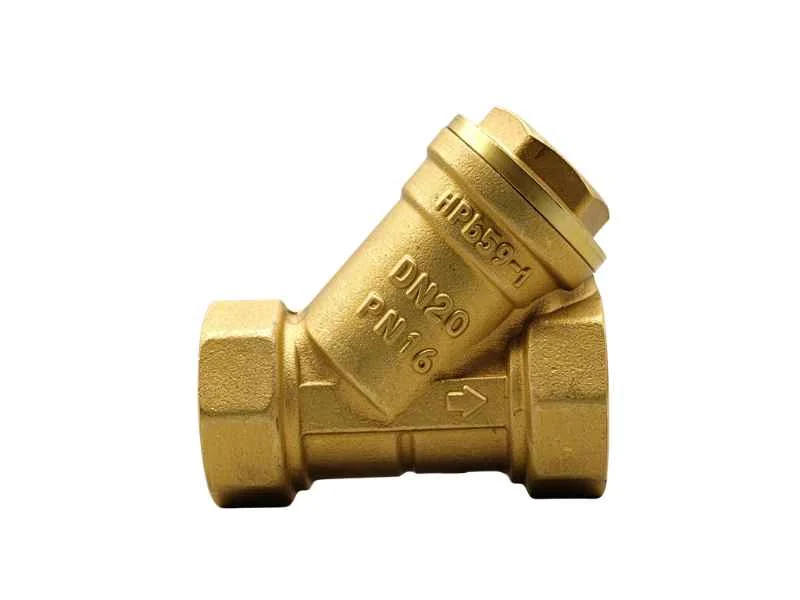
Threaded Y Strainer
A space-saving configuration for smaller process and utility pipelines.
- NPT and tapered-thread options
- Compact body design
- Replaceable filter screen
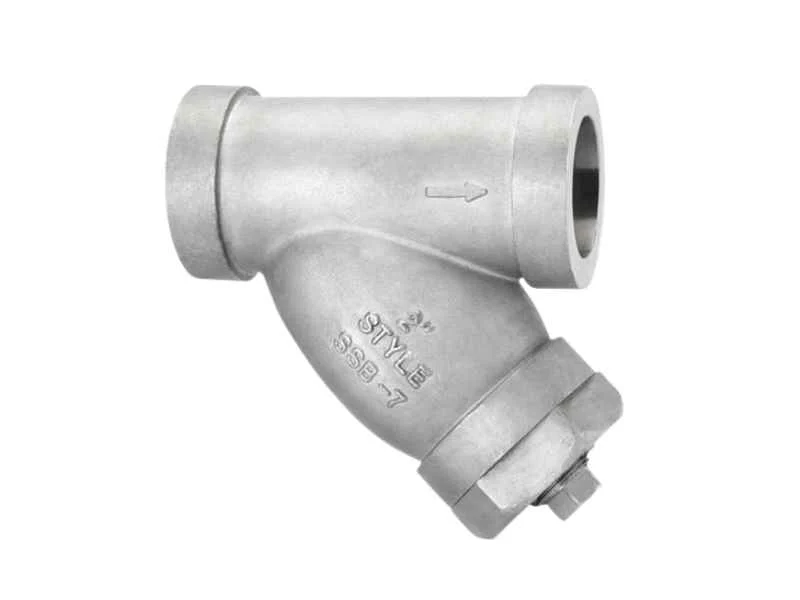
Socket-Weld Y Strainer
A welded-end configuration for compact, higher-pressure piping systems.
- Socket-weld connection
- Forged or fabricated construction
- High-pressure service options
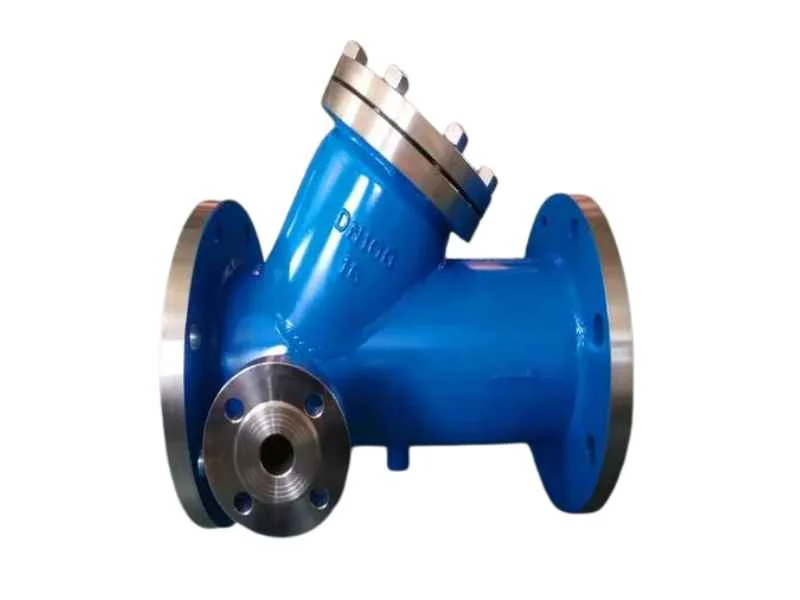
Jacketed Y Strainer
A heated configuration for media that can cool, crystallize, solidify or lose flowability.
- Full or partial jacket options
- Steam or heat-transfer medium
- Process-specific jacket connections
Product Comparison
Choose the Appropriate Y Strainer
The correct configuration depends on pipe size, pressure, temperature, medium and maintenance requirements.
| Y Strainer Type | Typical Connection | نطاق الحجم | Pressure Capability | Typical Use |
|---|---|---|---|---|
| Cast Y Strainer | ذو حواف | DN15 to DN500 | Model dependent | خطوط الأنابيب الصناعية العامة |
| Forged Y Strainer | Threaded, socket-welded or butt-welded | Small-bore sizes | High-pressure options | Process, steam and hydrocarbon service |
| Welded Y Strainer | Flanged or welded | DN15 to DN400 | Project dependent | Large or customized pipeline systems |
| Threaded Y Strainer | NPT or tapered thread | Small-bore sizes | Model dependent | Utility and compact installations |
| Telescopic Y Strainer | ذو حواف | DN50 to DN300 | Model dependent | Installations requiring length adjustment |
| Jacketed Y Strainer | ذو حواف | DN20 to DN200 | Model dependent | Viscous or temperature-sensitive media |
Operating Principle
How a Y Strainer Works
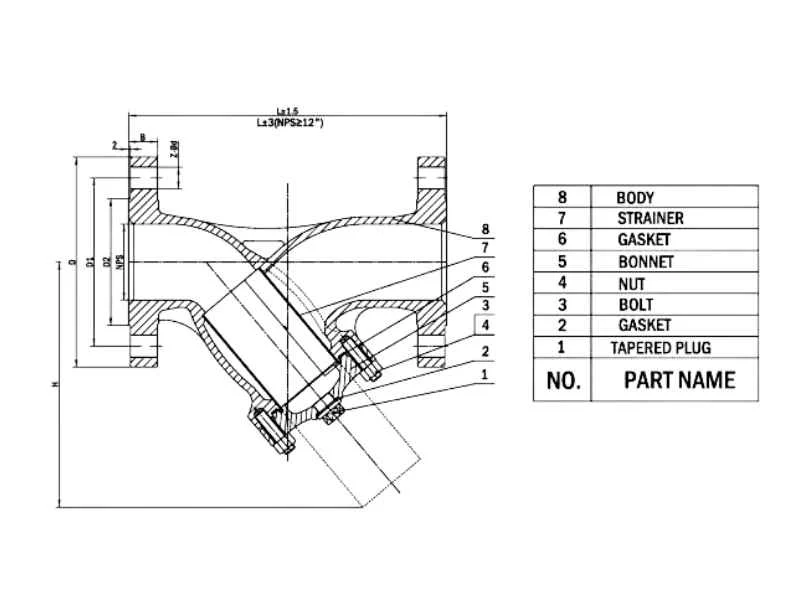
Process fluid enters the strainer body and passes through the perforated or woven screen. Particles larger than the selected opening are retained inside the screen while filtered fluid continues downstream.
- Unfiltered process fluid enters the Y strainer inlet.
- The fluid passes from the screen exterior to its clean side.
- Solid particles collect inside the screen pocket.
- Pressure differential increases as debris accumulates.
- The screen is isolated, removed and cleaned when required.
- A drain or blowdown connection may remove loose debris.
Particle Size
Determines the required mesh or perforation opening.
Allowable Pressure Drop
Guides screen area, opening size and cleaning frequency.
Process Conditions
Pressure and temperature determine suitable construction.
توافق المواد
Body, screen and seals must suit the process medium.
Technical Range
Y Strainer Technical Options
The available range depends on the selected construction and material. Confirm all operating conditions before ordering.
| المعلمة | Catalog Options | Selection Requirement |
|---|---|---|
| Nominal Size | DN15 to DN500 for selected cast models | Pipeline size and required flow |
| نطاق الضغط | PN0.6 to PN25.0 MPa; selected ANSI classes | Design pressure and temperature |
| نطاق درجة الحرارة | -40°C to 650°C for selected constructions | Body, gasket and screen limits |
| Body Material | WCB, LCB, A105, CF8, CF8M, CF3 or CF3M | Fluid compatibility and corrosion allowance |
| Screen Material | SS304, SS316, sintered mesh or sintered fiber felt | Particle size and process medium |
| اتصال | Flanged, threaded, socket-welded or butt-welded | Piping standard and pressure class |
| Drain Connection | Plug, valve or blowdown connection | Cleaning and maintenance method |
Filter Screen Selection
Mesh and Opening Reference
Select a screen that protects downstream equipment without creating excessive clean or dirty pressure drop.
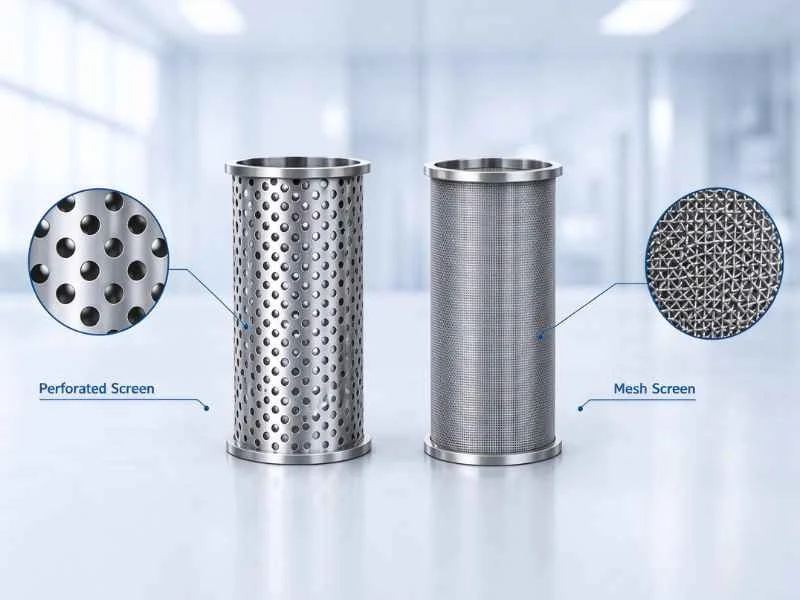
Screen Construction
- Perforated plate for coarse particle removal
- Woven wire mesh for finer filtration
- Perforated support with an internal mesh layer
- Sintered metal mesh for selected applications
- Sintered fiber felt where specified
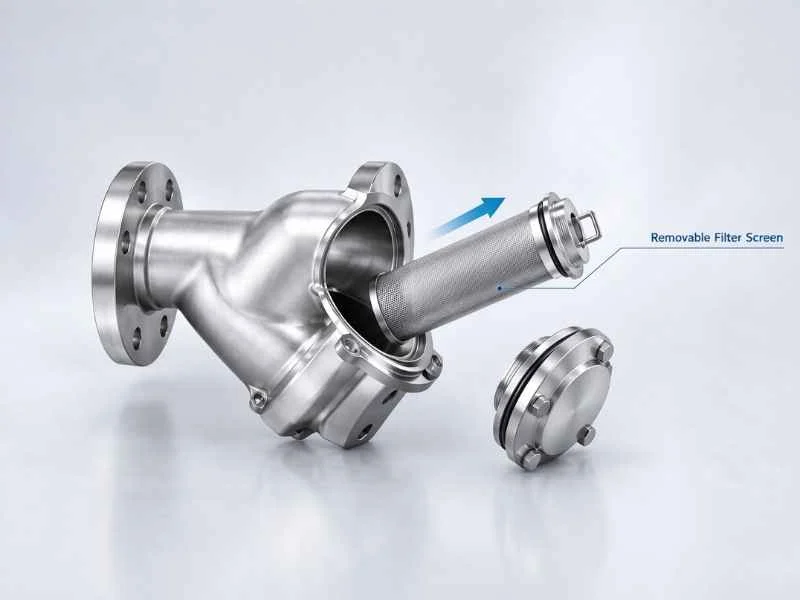
Selection Considerations
- Smallest damaging particle size
- Expected particle concentration
- Required flow rate and fluid viscosity
- Allowable clean and dirty pressure drop
- Screen strength under differential pressure
| Service | Catalog Mesh Reference | Typical Selection Objective |
|---|---|---|
| Coarse Solids | 1 to 20 mesh | Remove larger debris from the pipeline |
| Liquid Service | 30 to 80 mesh | Protect pumps, valves and meters |
| Gas Service | 100 to 400 mesh | Capture smaller particles where pressure drop permits |
| Special Process Service | Project specified | Balance filtration accuracy, strength and pressure drop |
Mesh ranges are general catalog references. The purchaser should specify the required screen opening when ordering.
أبعاد
Cast Flanged Y Strainer Size Reference
Selected JCSY14 catalog dimensions are provided for preliminary layout. Confirm the approved drawing before designing connected piping.
| Nominal Size | Face-to-Face Length | Overall Height | اتصال |
|---|---|---|---|
| DN25 | 160 mm | 80 mm | ذو حواف |
| DN50 | 220 mm | 130 mm | ذو حواف |
| DN80 | 280 mm | 195 mm | ذو حواف |
| DN100 | 320 mm | 230 mm | ذو حواف |
| DN150 | 430 mm | 335 mm | ذو حواف |
| DN200 | 485 mm | 420 mm | ذو حواف |
| DN250 | 550 mm | 512 mm | ذو حواف |
| DN300 | 680 mm | 580 mm | ذو حواف |
| DN400 | 785 mm | 700 mm | ذو حواف |
| DN500 | 900 mm | 875 mm | ذو حواف |
المواد
Material Options for Process Conditions
Body, screen, gasket and bolting materials should be selected together according to the fluid, temperature, pressure and corrosion conditions.
| المكوّن | Typical Material Options |
|---|---|
| Cast Body | WCB, LCB, CF8, CF8M, CF3 or CF3M |
| Forged Body | A105, LF2, F11, F22, F304, F316 or F51 |
| Filter Screen | SS304, SS304L, SS316 or SS316L |
| Gasket | Graphite, PTFE or spiral-wound construction |
| Bolting | Selected according to body material and design conditions |
Selection Checklist
Information Required for Y Strainer Selection
Complete process and piping data allows the manufacturer to review the body, screen, connection and pressure-drop requirements.
Process Data
- Fluid name and composition
- Design pressure and temperature
- Operating pressure and temperature
- Required and maximum flow rates
- Fluid density and viscosity
Filtration Data
- Required mesh or opening size
- Particle type and concentration
- Smallest damaging particle size
- انخفاض الضغط المسموح به
- Required screen material
Piping Requirements
- Nominal pipe size
- Connection type and standard
- Pressure class and flange facing
- Installation orientation
- Drain or blowdown requirements
التطبيقات
Y Strainer Applications
Y strainers provide compact pipeline protection across process, energy and utility industries.
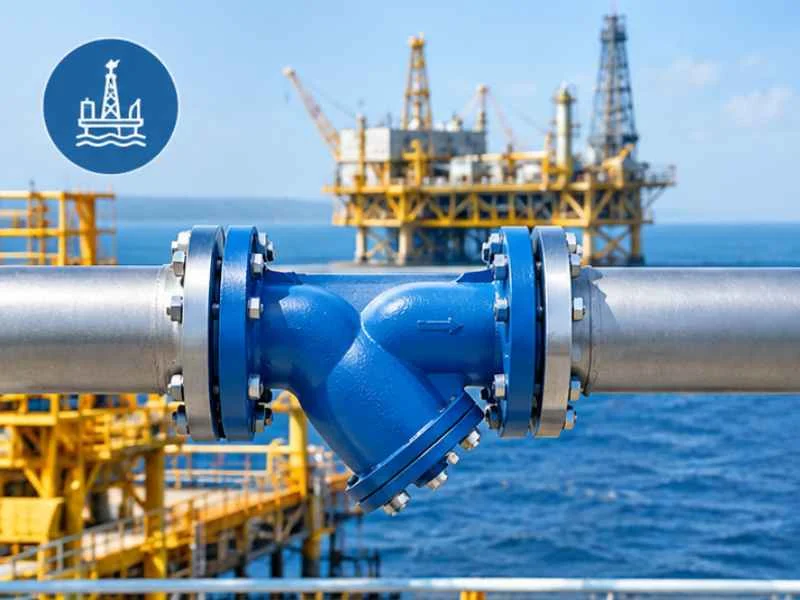
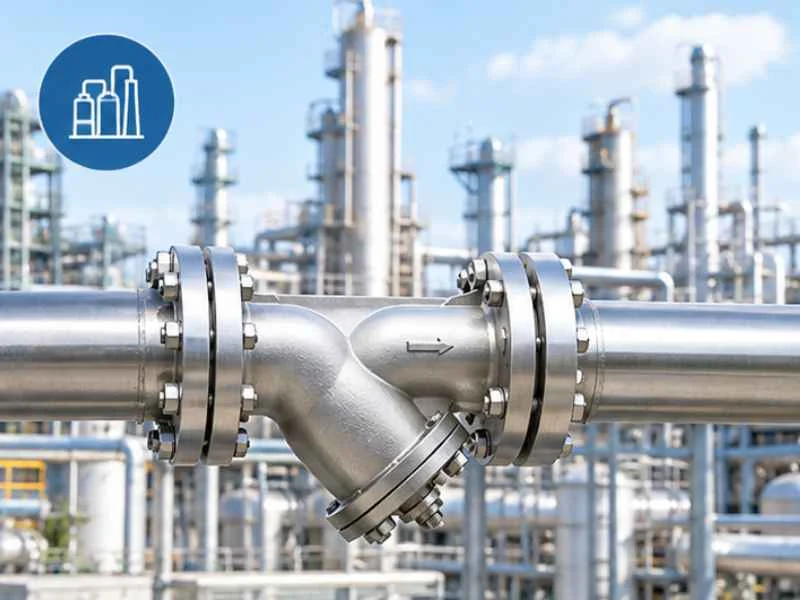
النفط والغاز
Protection for valves, pumps, regulators and metering equipment.
المعالجة الكيميائية
Material-compatible filtration for chemicals, solvents and process fluids.
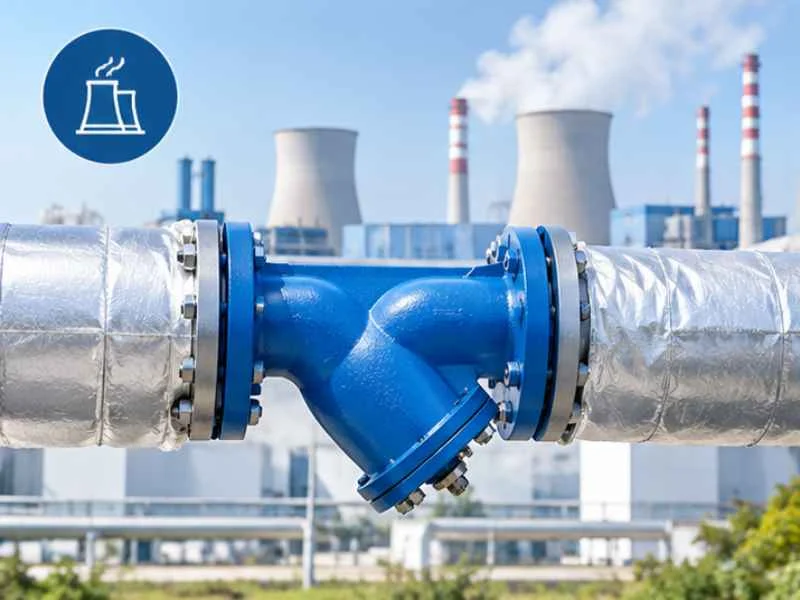
Power & Steam
Debris removal from steam, condensate and auxiliary piping systems.
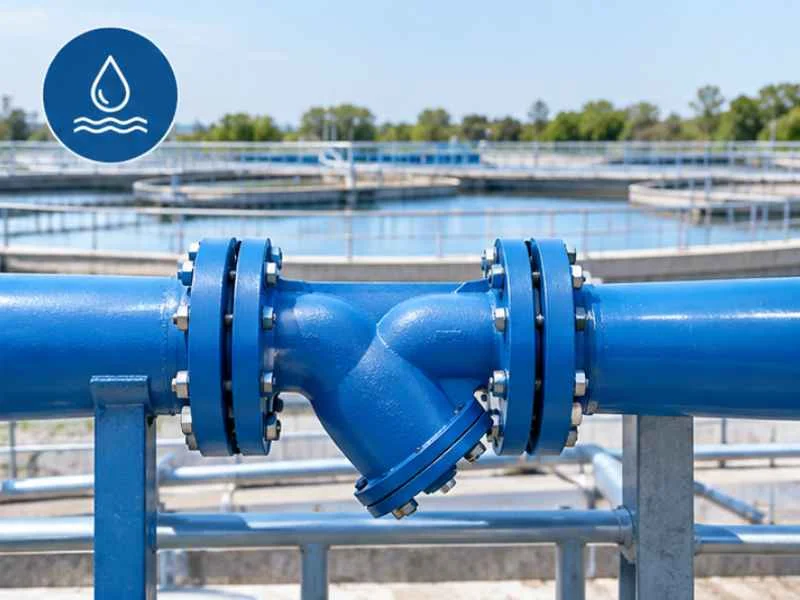
معالجة المياه
Protection for pumps, control valves and water distribution equipment.
Manufacturer Quality Control
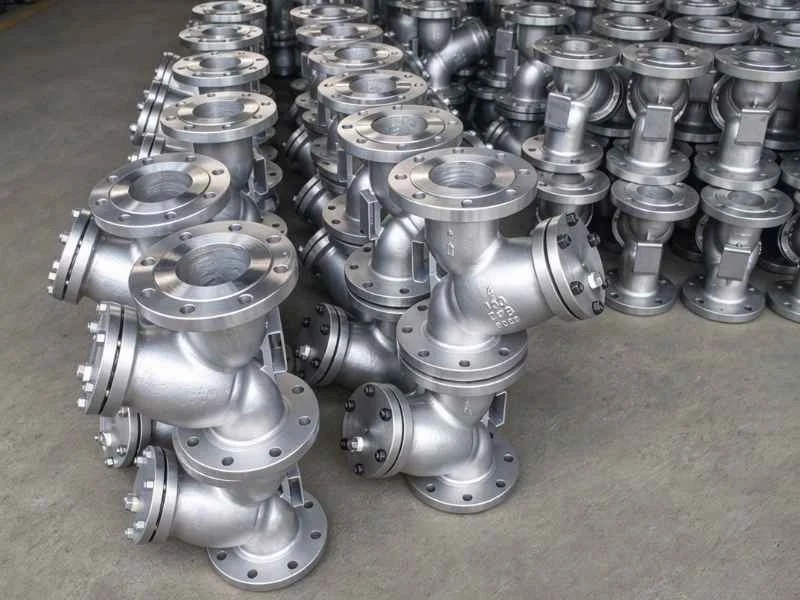
Inspection Before Delivery
The inspection scope depends on the selected Y strainer construction and agreed project requirements.
- Review the approved datasheet and product drawing.
- Verify body, screen, gasket and bolting materials.
- Inspect dimensions, connection details and markings.
- Check screen opening, construction and fit.
- Perform pressure and leakage testing where applicable.
- Review cleanliness, documentation and protective packing.
Installation & Maintenance
Maintain Reliable Filtration Performance
Correct orientation, sufficient maintenance space and regular screen cleaning help control pressure drop and protect downstream equipment.
Installation Guidelines
- Match the body arrow to the pipeline flow direction.
- Install the screen pocket in the approved orientation.
- Provide clearance for screen removal and cleaning.
- Support connected piping to avoid body stress.
- Install pressure gauges when differential monitoring is required.
- Flush the pipeline before commissioning.
Maintenance Guidelines
- Monitor differential pressure across the strainer.
- Isolate and depressurize the line before opening.
- Remove and clean the screen at suitable intervals.
- Inspect the screen for deformation or broken wires.
- Replace damaged gaskets before reassembly.
- Verify sealing after returning the strainer to service.
Send Us Your Y Strainer Data
Provide the pipe size, pressure, temperature, medium, flow rate, screen opening and connection standard. BCST Valve will review the information and recommend a suitable Y strainer.
الأسئلة المتداولة
Y Strainer FAQ
Answers to common questions from engineers, plant operators and procurement teams.
What is a Y strainer?
A Y strainer is a pipeline filter with a removable screen positioned in an angled body pocket. It captures solid particles before they reach downstream equipment.
Which media can a Y strainer handle?
Depending on its materials and screen design, a Y strainer can be used for water, oil, chemicals, gas, air, steam and other compatible process fluids.
How do I select the screen opening?
Select an opening small enough to protect downstream equipment but large enough to maintain acceptable pressure drop and cleaning intervals.
What is the difference between mesh and perforation?
Perforated plate is generally used for coarser and stronger filtration. Woven mesh provides smaller openings and is often supported by a perforated screen.
Can a Y strainer be installed vertically?
Some configurations can be installed vertically when flow direction and screen-pocket orientation permit debris collection and safe maintenance. Confirm the arrangement before installation.
How often should the screen be cleaned?
The interval depends on debris concentration and allowable pressure drop. Monitoring inlet and outlet pressure provides a practical indication of screen blockage.
Can the strainer include a blowdown valve?
Yes. Selected models can include a drain plug or blowdown connection. Blowdown removes loose debris but does not replace periodic screen inspection.
When is a jacketed Y strainer required?
A jacket may be appropriate when the process medium can become too viscous, crystallize or solidify as its temperature falls.
Can BCST Valve manufacture a custom screen?
Project-specific screen materials, openings and support constructions can be reviewed against the operating conditions and required mechanical strength.
What information is required for a quotation?
Provide the pipe size, pressure class, temperature, medium, flow rate, connection standard, required screen opening, body material and drain requirements.
Need Help Selecting a Y Strainer?
Send your pipeline and filtration data to BCST Valve for technical selection and quotation support.
 English
 Arabic
 Russian
 French
 Spanish