
Slurry & Abrasive Media Control
Pinch Valve Manufacturer
BCST manufactures industrial pinch valves for controlling abrasive slurry, powder, granules and solids-bearing fluids. Flow is regulated by compressing a flexible sleeve, allowing the process medium to contact the sleeve instead of the valve body and operating mechanism.
- Full-bore flow path when fully open
- Suitable for abrasive and solids-bearing media
- Replaceable sleeve in multiple elastomer options
- Pneumatic, manual and powered configurations
- Engineered connections and control accessories
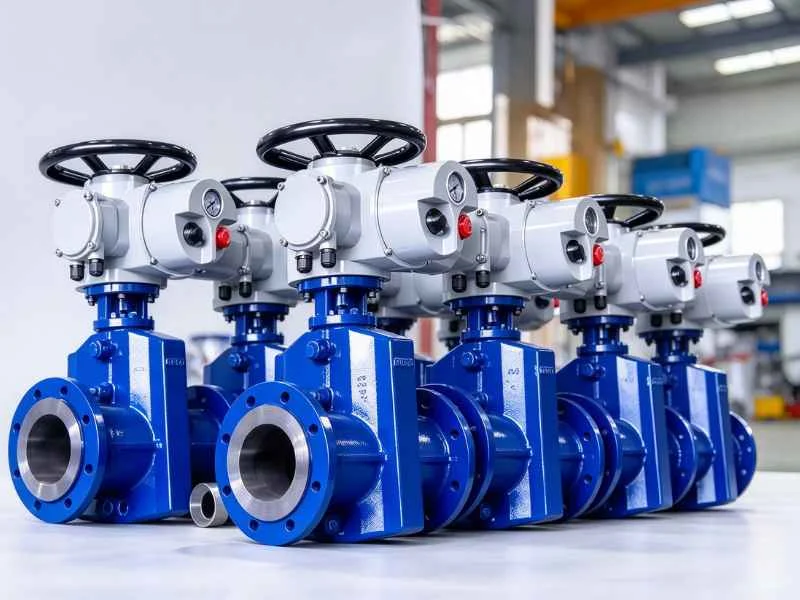
Full-Bore Flow
An open sleeve provides an unobstructed passage for solids-bearing media.
Media Isolation
The process medium is contained by the sleeve rather than the valve body.
Abrasive Service
Sleeve options are selected for slurry, powder and particulate applications.
Replaceable Sleeve
Restore the main sealing component without replacing the complete valve.
Product Collection
Pinch Valve Configurations
Select the operating design according to pressure, cycle frequency, control requirements and available plant utilities.
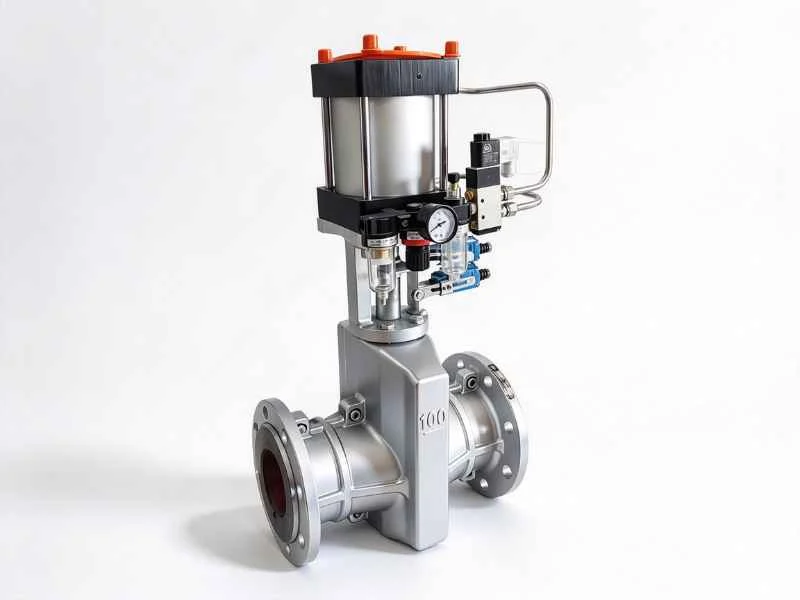
Pneumatic Pinch Valve
Compressed air acts on the sleeve or actuator mechanism to provide fast and repeatable open-close operation.
- Suitable for automated systems
- Fast operating cycles
- Solenoid and position feedback options
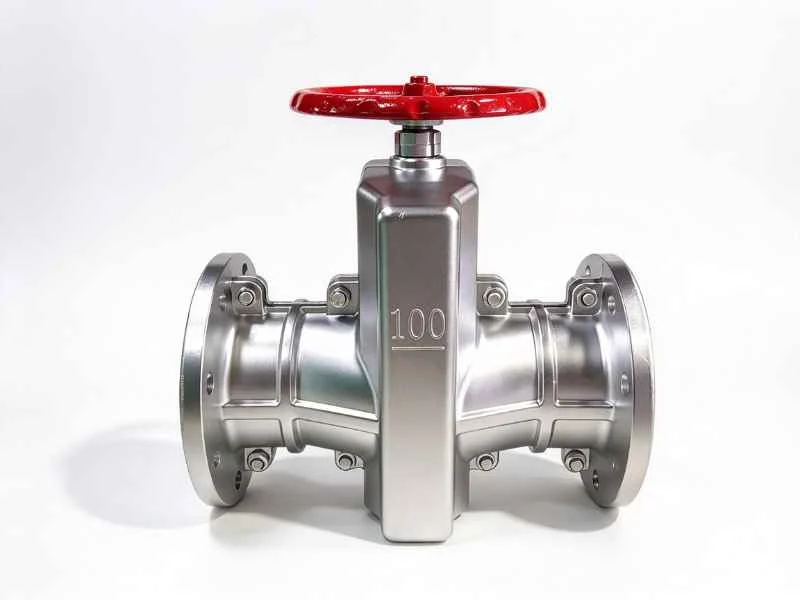
Manual Pinch Valve
A handwheel or mechanical operator compresses the sleeve for local isolation or adjustment.
- Simple local operation
- لا حاجة إلى طاقة خارجية
- Suitable for lower cycle frequency
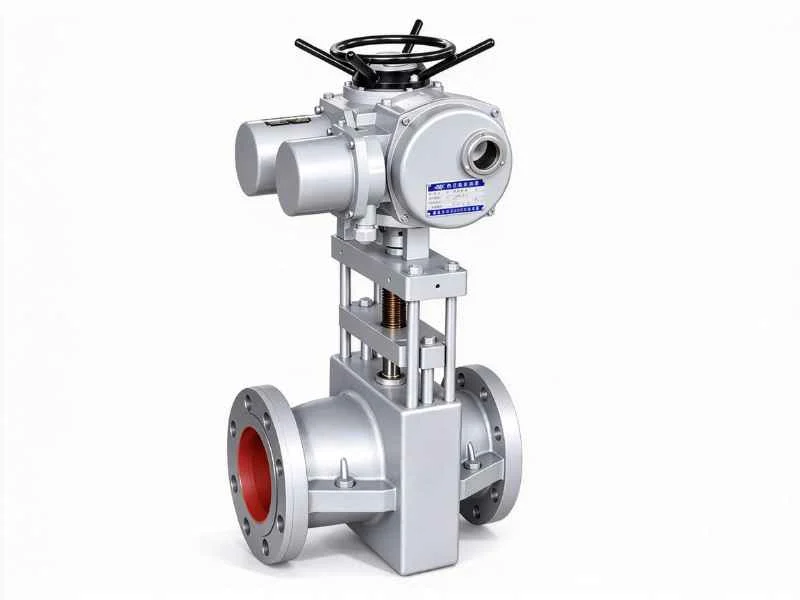
Electric Pinch Valve
An electric actuator drives the mechanical closing system for remote isolation or controlled positioning.
- التشغيل عن بُعد
- Open-close or positioning options
- Project-specific electrical configuration
Product Comparison
Choose the Appropriate Pinch Valve Type
| نوع الصمام | Operating Method | Typical Application | Main Advantage | Selection Priority |
|---|---|---|---|---|
| Air-operated pinch valve | Control air directly compresses the sleeve | Powder, granules and automated process lines | Simple and fast operation | Control pressure and sleeve differential pressure |
| Pneumatic mechanical pinch valve | Pneumatic actuator drives pinch bars | Slurry and frequent-cycle service | Controlled mechanical closure | Actuator force and cycle frequency |
| Manual pinch valve | Handwheel or gearbox | Local isolation and infrequent operation | No actuator utility required | Accessibility and operating effort |
| Electric pinch valve | Electric actuator drives closing mechanism | Remote isolation and controlled operation | Plant-control integration | Power supply and operating time |
| Hydraulic pinch valve | Hydraulic actuator drives pinch mechanism | Larger sizes and demanding duties | High available closing force | Hydraulic utility and safety requirements |
Operating Principle
How a Pinch Valve Works
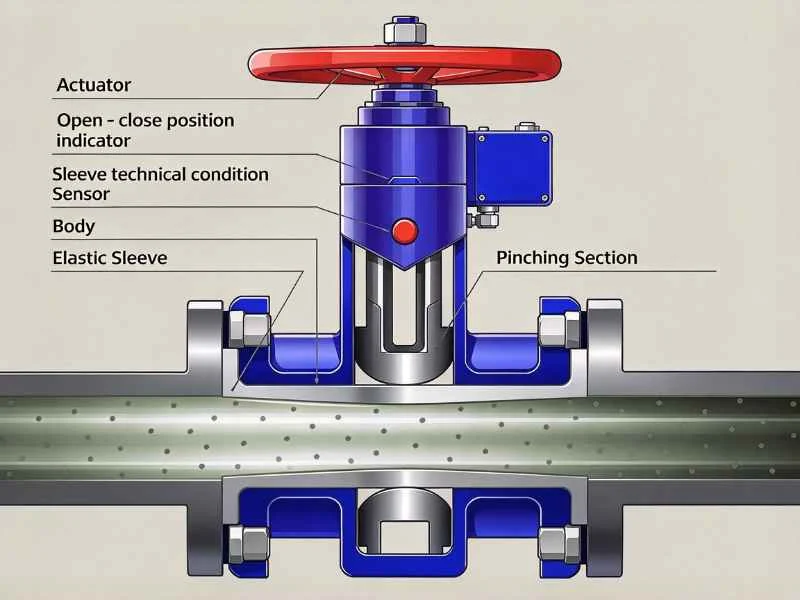
- Fully open: The resilient sleeve returns to its open shape and provides a full-bore flow passage.
- Closing command: Air pressure or a mechanical actuator applies force to the sleeve.
- Sleeve compression: The sleeve walls move together and progressively reduce the flow area.
- Closed position: The sleeve surfaces meet to isolate the process medium.
- Reopening: Closing force is released and sleeve elasticity restores the flow passage.
- Media containment: The sleeve remains the primary process-contact and sealing component.
Select the Sleeve First
Match sleeve material to abrasion, chemistry, temperature and expected flex cycles.
Confirm Pressure Conditions
Provide line pressure, differential pressure and available control pressure.
Describe the Solids
State particle size, concentration, hardness, shape and settling behavior.
Technical Configuration
Configurable Pinch Valve Specifications
Available specifications depend on the selected valve design, sleeve material and approved operating conditions.
| المعلمة | Available Engineering Options | Selection Basis |
|---|---|---|
| Nominal size | Model-dependent size range | Pipeline size, flow and solids passage |
| Design pressure | Selected according to valve construction | Maximum line and differential pressure |
| درجة حرارة التشغيل | Sleeve-dependent temperature range | Normal, minimum and maximum temperature |
| Sleeve material | Natural and synthetic elastomer options | Abrasion, chemistry, temperature and flexibility |
| Body construction | Open frame, enclosed body or air-operated housing | Environment, safety and maintenance requirements |
| Body material | Cast iron, carbon steel, stainless steel or engineered option | External environment and mechanical requirements |
| اتصال | Flanged, threaded or project-specific connection | Piping standard and installation layout |
| العملية | Manual, pneumatic, electric or hydraulic | Cycle frequency, utility and automation level |
| Control accessories | Solenoid, regulator, switches and position feedback | Plant control philosophy |
| Fail position | Application-dependent operating arrangement | Process safety assessment and actuator design |
Sleeve Selection
The Sleeve Is the Core Process Component
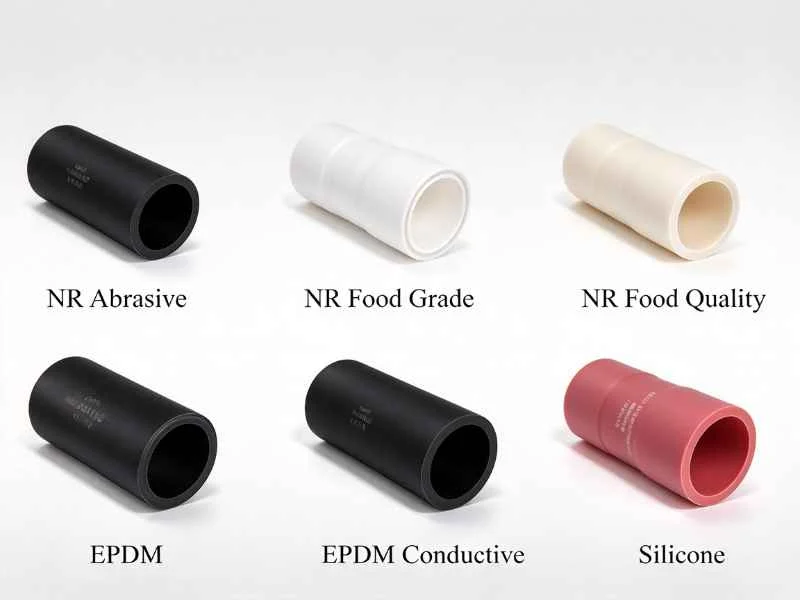
The sleeve controls media compatibility, abrasion resistance, closing performance and service life. It should be selected using complete process information rather than color or general material name alone.
- Chemical composition and concentration
- Particle size, shape and hardness
- Solids concentration and settling behavior
- Normal and maximum temperature
- Line pressure and pressure differential
- Operating frequency and expected cycle life
- Cleaning agents and sanitation procedures
Sleeve Material Guide
Sleeve Options for Different Media
Compatibility and operating limits must be verified for the actual fluid, concentration, temperature and duty cycle.
| Sleeve Material | Typical Strength | Common Consideration |
|---|---|---|
| Natural rubber | Strong abrasion resistance and flexibility | Verify chemical, oil and temperature compatibility |
| EPDM | Resistance to water and selected chemicals | Generally unsuitable for many petroleum-based fluids |
| إن بي آر | Resistance to oils and selected hydrocarbons | Confirm chemical concentration and temperature |
| Neoprene | Balanced weathering and industrial resistance | Verify compatibility with the specific process medium |
| Butyl rubber | Low gas permeability and selected chemical resistance | Evaluate abrasion and temperature requirements |
| Engineered elastomer | Application-specific chemical or thermal performance | Requires detailed compatibility review |
Why Pinch Technology?
Advantages for Difficult Media
Unobstructed Passage
The open sleeve provides a straight flow path without a stem, disc or seat projecting into the medium.
- Supports slurry passage
- Reduces internal trapping points
- Accommodates suspended particles
Sleeve-Based Isolation
Closing occurs through elastic sleeve deformation rather than contact between rigid metallic seats.
- Suitable for abrasive media
- Sleeve separates medium from body
- Replaceable sealing component
Reduced Internal Complexity
The process passage contains fewer rigid internal parts than many conventional valve designs.
- Simplified wetted flow path
- Lower risk of solid accumulation
- Accessible sleeve maintenance
Application Matrix
Typical Pinch Valve Applications
| Industry or System | Typical Medium | Valve Function | Key Selection Concern |
|---|---|---|---|
| Mining and minerals | Ore slurry, tailings and mineral suspension | Isolation and flow control | Abrasion, particle size and solids concentration |
| Cement production | Dry powder and abrasive material | Discharge and transfer isolation | Dust, cycle frequency and sleeve wear |
| معالجة المياه | Sludge, lime slurry and solids-bearing water | Isolation and dosing control | Chemical compatibility and settling solids |
| المعالجة الكيميائية | Corrosive slurry and process suspension | Process isolation | Sleeve chemistry and temperature |
| توليد الطاقة | Ash slurry and treatment chemicals | Isolation and discharge control | Abrasion and pressure differential |
| Pulp and paper | Pulp stock, fiber and coating slurry | Isolation and process control | Fiber accumulation and sleeve compatibility |
| Bulk-material handling | Powder, pellets and granules | Transfer-line isolation | Particle shape, dust and operating frequency |
Selection Checklist
Information Required for Pinch Valve Selection
Process Data
- Medium name and chemical composition
- Solids concentration by weight or volume
- Particle size, shape and hardness
- Normal, minimum and maximum flow rate
- Operating and design temperature
- Operating and maximum line pressure
Mechanical & Control Data
- Pipeline size and connection standard
- Required isolation or regulating duty
- Expected operating frequency
- Available pneumatic, electric or hydraulic utility
- Required operating time and fail position
- Position feedback and control-signal requirements
Manufacturer Support
From Process Data to Final Valve Configuration
1. Media Review
We review the fluid chemistry, solids, temperature, pressure and abrasion conditions.
2. Sleeve Selection
The sleeve material and construction are evaluated for compatibility and expected service duty.
3. Actuation Selection
Operating force, control pressure, cycle time and accessories are configured for the application.
4. Documentation
Approved drawings, technical data and inspection documents are prepared for the order scope.
Quality Control
Inspection Before Shipment
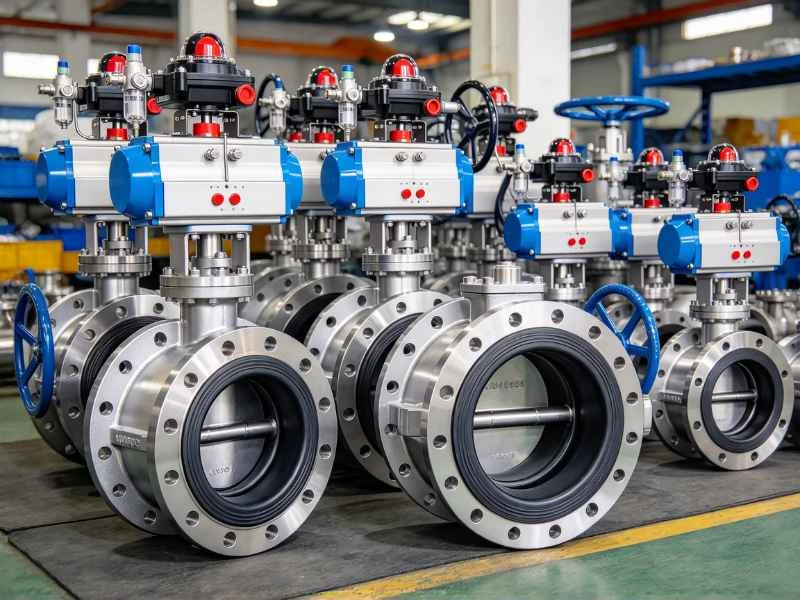
Inspection and testing are completed according to the selected model, approved specification and purchase-order requirements.
- Material and component verification
- Dimensional and visual inspection
- Sleeve material and surface inspection
- Valve opening and closing checks
- Pressure and leakage testing where specified
- Actuator and accessory function checks
- Position-feedback verification where required
- Marking, documentation and packing inspection
Installation & Maintenance
Protect the Sleeve and Extend Service Life
تثبيت
- Align connected piping without external stress
- Support the valve and adjacent pipeline
- Use compatible flange and gasket arrangements
- Provide actuator and sleeve service access
- Follow the approved installation orientation
Commissioning
- Remove sharp construction debris from the line
- Confirm the available control pressure
- Check complete opening and closing
- Verify actuator direction and feedback
- Observe operation under process conditions
الصيانة
- Inspect the sleeve at planned intervals
- Monitor changes in operating time or leakage
- Avoid prolonged unnecessary partial closure
- Check actuator and air-line condition
- Keep a compatible replacement sleeve available
Send Us Your Pinch Valve Data
Provide the medium, solids concentration, particle characteristics, flow rate, pressure, temperature, pipeline size, operating frequency and actuator preference. Our engineers will help configure a suitable pinch valve.
الأسئلة المتداولة
Pinch Valve FAQ
What is a pinch valve?
A pinch valve controls flow by compressing a flexible sleeve. The process medium flows through the sleeve rather than contacting the valve body and operating mechanism.
Why are pinch valves suitable for slurry?
The open sleeve provides an unobstructed passage without an internal disc or seat, helping solids-bearing media pass through the valve.
How should the sleeve material be selected?
Selection should consider chemical compatibility, abrasion, temperature, line pressure, particle characteristics and expected operating cycles.
Can a pinch valve regulate flow?
Some designs can be configured for positioning or throttling. Suitability depends on the application, sleeve design, control accuracy and expected wear.
Can the sleeve be replaced?
Yes. The sleeve is normally a replaceable process component. The correct replacement must match the valve model, material and operating conditions.
What control pressure does a pneumatic valve require?
The required pressure depends on the valve design, line pressure, sleeve construction and size. These values must be confirmed during selection.
Can BCST provide automated pinch valves?
Yes. Pneumatic, electric and hydraulic configurations can be evaluated with solenoids, switches, position feedback and other control accessories.
What information is required for quotation?
Provide the medium, chemical composition, solids concentration, particle size, pressure, temperature, pipeline size, connection, cycle frequency and actuator preference.
 English
 Arabic
 Russian
 French
 Spanish