Zero Leakage Shut-off
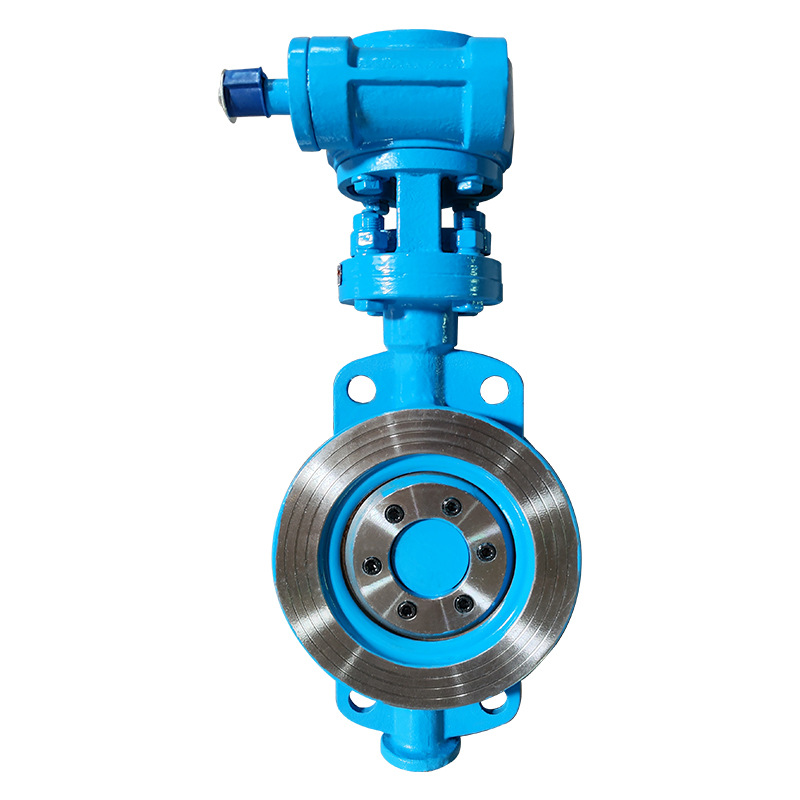
The metal-to-metal seating design, combined with the unique triple offset geometry, ensures a bidirectional, bubble-tight seal.

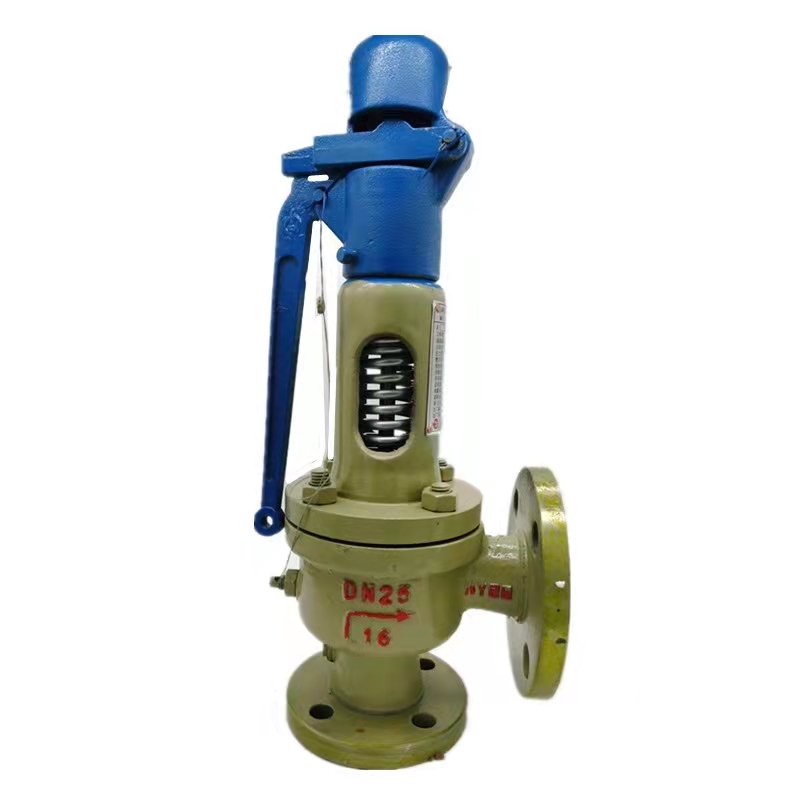
In critical systems, there is no room for error. A pressure safety valve is your final and most important safeguard. As a specialized manufacturer, BCST engineers and produces ASME-certified pressure safety valves in our state-of-the-art factory. We deliver the code-compliant, life-saving reliability your people, plant, and environment depend on.

A Pressure Safety Valve is not just a component; it’s a promise of safety. The BCST advantage lies in our meticulous manufacturing process. Within our factory, we precision-machine every critical component, from the nozzle to the spring, ensuring a rapid “pop” action at the exact set pressure. As a direct manufacturer, we control the entire lifecycle—material sourcing, assembly, and individual testing—to guarantee that each valve performs flawlessly when needed most.
The metal-to-metal seating design, combined with the unique triple offset geometry, ensures a bidirectional, bubble-tight seal.
Friction-free operation eliminates wear between disc and seat, dramatically extending valve lifespan.
Robust construction withstands extreme conditions up to 650°C and 25MPa pressure.
Non-rubbing design requires significantly lower torque, enabling smaller actuators.
Durable construction and minimal wear reduce maintenance frequency and costs.
Designed for bi-directional flow capability, offering greater system flexibility.
: When specifying a Triple Offset Butterfly Valve, trust is paramount. Every BCST valve is built to exceed industry standards in our ISO 9001 certified factory. We hold crucial certifications including API 609, API 607 Fire Safe, and CE, guaranteeing our products are suitable for the most demanding services in oil & gas, chemical processing, and power generation. This commitment to certified quality is a core advantage of partnering with BCST.




Pressure range, temperature, fluid type, and flow characteristics
Back pressure, leakage limits, response time, and capacity needs
Corrosion, erosion, toxicity, and material compatibility
ASME, API, PED, and industry-specific standards
Comprehensive technical data and interactive tools to help you select the perfect valve for your application.
Reliable spring-loaded design for standard applications where back pressure is minimal.
Advanced design that eliminates back pressure effects on set pressure.
Precision control with tight shut-off and accurate set pressure.
BCST valves are manufactured according to international and Chinese national standards.
Up to 1,500°F (816°C) for fired heaters and furnaces with Inconel materials.
Down to -320°F (-196°C) for LNG and liquid nitrogen applications.
3A, FDA, EHEDG compliant for food, beverage, and pharmaceutical applications.
ASME Section III, Class 1-3 with seismic qualification for nuclear plants.
Factory Testing
Certified
Years Experience
Comprehensive technical data and compliance standards for BCST pressure safety valves.
15 - 150 PSI
1 - 10 bar
150 - 750 PSI
10 - 52 bar
750 - 3,000 PSI
52 - 207 bar
3,000 - 6,000+ PSI
207 - 414+ bar
-320°F to -100°F
-196°C to -73°C
Materials: Stainless steel 316L, special alloys
-20°F to 450°F
-29°C to 232°C
Materials: Carbon steel, stainless steel
450°F to 1,500°F
232°C to 816°C
Materials: Inconel, Hastelloy, ceramic
±1% to ±3%
Depending on valve type
2% to 20%
Adjustable on most models
10% (fired) / 16% (unfired)
ASME code compliance
Bubble-tight to API 527
Zero leakage on pilot valves
تتفوق صمامات الفراشة الثلاثية اللامركزية التي نقدمها في القطاعات الصناعية المتطلبة، مما يوفر أداءً موثوقًا في أكثر البيئات صعوبة.

Essential for steam, condensate, and cooling water systems in thermal, nuclear, and combined cycle power plants.
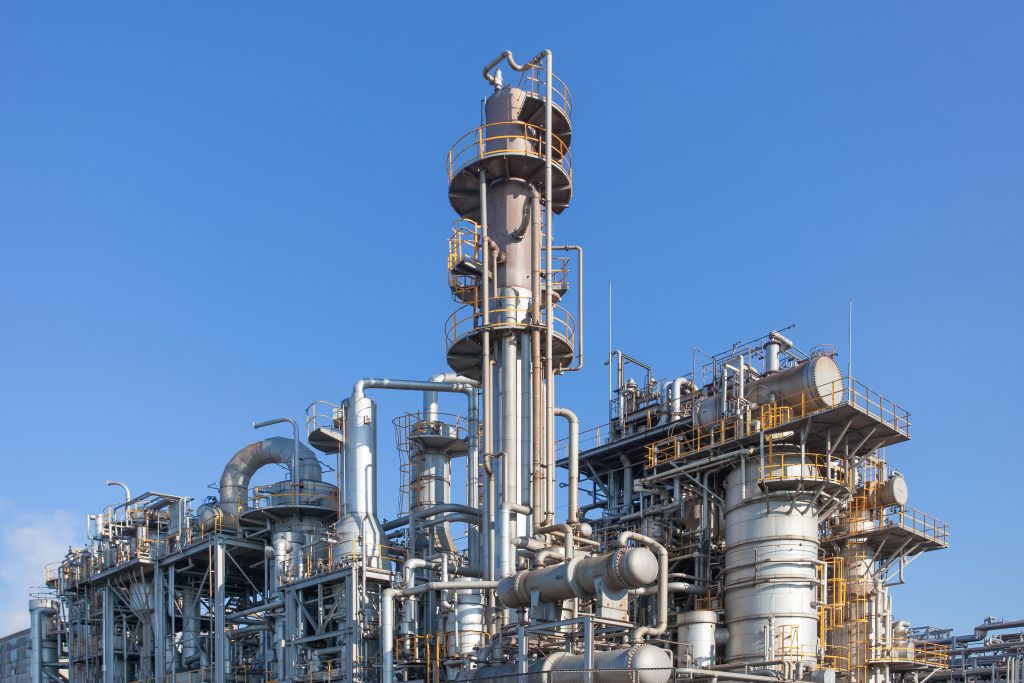
Essential for steam, condensate, and cooling water systems in thermal, nuclear, and combined cycle power plants.

Handling aggressive chemicals, high-purity fluids, and slurries with superior chemical resistance.
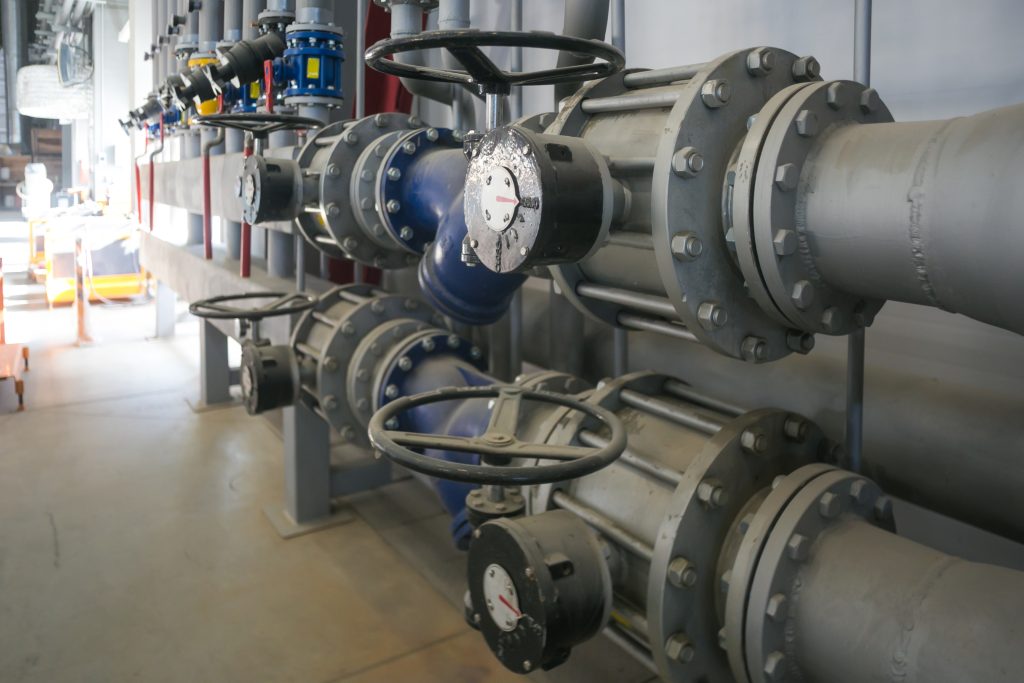
Large-diameter pipelines, pump stations, and treatment facilities requiring reliable isolation and flow control.
Large-scale heating, ventilation, and air conditioning systems providing efficient and precise control.

High-temperature, abrasive slurries, and corrosive media in blast furnaces and mineral processing.
As a direct manufacturer, BCST controls the entire production process, giving us significant advantages in quality, delivery time, and pricing. Our ISO 9001 certified factory ensures every valve meets the highest standards.

International Brands
Satisfied Customers
Quality Rate
Safety valves are designed for gas and vapor service with rapid opening (pop action) to quickly relieve overpressure. Relief valves are typically used for liquid service with proportional opening. Safety relief valves can handle both applications. Safety valves have a rapid “pop” opening when set pressure is reached, while relief valves open gradually and proportionally based on overpressure. The terminology varies by industry, but the key difference is the opening characteristics and intended service.
ASME and API codes typically require PSV inspection every 2-5 years depending on the service. Critical applications may require annual testing. Factors affecting frequency include process conditions, fluid type, operating history, and regulatory requirements. For ASME Section VIII (Pressure Vessels), general service requires inspection every 5 years maximum, while lethal service requires every 2-3 years. Online testing systems can extend intervals while maintaining safety assurance.
Accumulation is the pressure increase above the maximum allowable working pressure (MAWP) during a relief event, typically limited to 10% for fired vessels and 16% for unfired vessels. Blowdown is the difference between set pressure and reseat pressure, usually 2-20% of set pressure, ensuring the valve closes properly after relieving. Proper blowdown prevents chattering and ensures system stability, while accumulation limits protect equipment from overpressure damage.
PSVs can often be repaired by qualified service centers using OEM parts and procedures. Repairs must maintain the original design specifications and certifications. However, valves with damaged pressure-containing parts, corroded springs, or those that have experienced significant overpressure events may require replacement for safety assurance. Repairable components include seats, discs, springs, gaskets, and adjusting rings, but body cracks and severe corrosion typically require replacement.
The ASME UV stamp certifies that pressure safety valves meet ASME Boiler and Pressure Vessel Code requirements. It’s legally required for many applications and ensures the valve has been designed, manufactured, and tested according to rigorous safety standards. Only ASME-authorized manufacturers can apply the UV stamp. This certification is recognized worldwide and demonstrates compliance with design, material, manufacturing, and testing requirements for pressure safety valves.
PSV sizing requires careful analysis of relief scenarios, fluid properties, and system conditions. The process involves determining the required relief capacity, calculating the valve orifice area using API 520/521 methods, and selecting the appropriate valve size. Key steps include identifying relief scenarios (fire case, blocked outlet, thermal expansion), calculating required relief rates, and considering multiple simultaneous scenarios. Professional engineering consultation is recommended for critical applications to ensure proper sizing and safety.
Your entire system is under extreme stress, and the pressure is building to a breaking point. Your control systems have failed. What’s the final defense? Without a purely mechanical safeguard, the outcome could be a devastating explosion, risking lives and destroying assets.
A pressure safety valve (PSV) is a fail-safe device, your ultimate line of defense. It automatically opens to release excess pressure when a system goes over a preset limit. Unlike a control valve, it has one job: prevent a catastrophe by rapidly venting pressure.
You always call the pressure safety valve the “guardian angel” of the plant. As you’ve explained to me, a relief valve handles gradual pressure changes during normal operations, but a safety valve is for the emergency you hope never happens. Its action is sudden and powerful, what you call a “pop,” opening almost instantly to handle a rapid pressure surge from compressible fluids like steam or gas. This immediate, forceful action is what makes it your non-negotiable last resort for safety.
Have you ever wondered what makes a pressure safety valve open so dramatically and instantly? It’s not a slow, gradual opening. It’s a powerful, split-second reaction designed to stop a disaster in its tracks.
That rapid “pop” action comes from a specially designed disc and nozzle. In a standard spring-loaded PSV, a spring holds a disc tightly against the nozzle. When system pressure hits the setpoint, it starts lifting the disc. This initial lift exposes a larger part of the disc to the system’s pressure, which suddenly multiplies the opening force, making it instantly overcome the spring’s resistance and causing the valve to “pop” to its full-lift position for maximum discharge.
I’ll never forget you drawing this on a whiteboard for me. “Emily, a relief valve opens proportionally, a little at a time,” you sketched, drawing a gentle slope. “But a safety valve,” you drew a sharp, vertical line, “is built to go from zero to one hundred in a heartbeat. The pop action uses the system’s own energy to create a much bigger opening force than what was needed to just crack it open.” You explained this is critical for gases and steam that can expand explosively. It’s a purely mechanical, automatic fail-safe that works even if all power and controls go down.
| Terminology | الوصف | Why It’s Important |
|---|---|---|
| Set Pressure | The pressure at which the valve begins its “pop” action. | This is the critical threshold, usually set just above the normal operating pressure, that defines the start of the emergency release. |
| Overpressure | The pressure increase above the set pressure that’s needed to fully open the valve. | Per ASME code, a PSV must fully open within a specific overpressure limit (e.g., 3% or 10%) to achieve its rated discharge capacity. |
| Blowdown | The difference between the set pressure and the reseating pressure. | This ensures the valve closes firmly once pressure is safe, preventing “chattering” or “simmering” that can damage the valve seat. |
Do you think the same pressure safety valve can protect a steam boiler and a high-pressure gas storage tank? Of course not. The fluid type, pressure, temperature, and backpressure conditions demand different kinds of PSVs to guarantee reliable protection.
The most common is the conventional spring-loaded PSV, but there are also balanced bellows and pilot-operated designs. A balanced bellows PSV is built to cancel out the effects of backpressure in the outlet piping, making sure it opens at the set pressure no matter what. A pilot-operated PSV uses the system’s own pressure, controlled by a small pilot valve, to open the main valve. This allows for extremely precise opening and a bubble-tight seal very close to the setpoint.
You made this crystal clear during a design review for our new LNG facility. The general process lines used conventional PSVs. But for the main storage tanks, you insisted on pilot-operated valves. “With something this critical,” you argued, “we can’t afford any premature simmering or product loss. A pilot-operated valve stays bubble-tight up to 98% of its set pressure.” Then you pointed to a line that would have variable backpressure in its flare header. “Here, we need a balanced bellows. A conventional valve’s setpoint would be thrown off by that backpressure, making it useless. The bellows isolates the spring, so it always opens true.” You taught me that choosing the right PSV isn’t just about pressure; it’s about understanding the whole system’s dynamics.
What are the hidden threats that could take down your most critical safety device? A pressure safety valve failure is a silent danger, one that often only reveals itself when it’s already too late.
The most common reasons for failure are leakage, not opening at the set pressure, and chattering (rapid, vibrating opening and closing). Leakage is often caused by debris trapped between the valve’s sealing surfaces, or from corrosion and wear. A valve might fail to open if it was installed wrong, if internal parts have corroded and seized, or if the spring is weak or incorrectly adjusted. Chattering is a classic sign that the valve is oversized for the job or that there’s too much resistance in the outlet piping, which causes instability.
“Never underestimate the importance of keeping a PSV clean and testing it regularly,” you’ve told me more times than I can count. I remember you showing me a valve from a decommissioned unit that was completely frozen shut by corrosion and product buildup. “This valve was just a paperweight,” you said. “It would have never opened.” This is exactly why a strict maintenance and testing schedule, guided by standards like API RP 576, is non-negotiable in our facilities. The standard might recommend inspection intervals from 5 to 10 years depending on the service, but you always taught me that the valve’s history and operating conditions are the real guide. Regular inspection, testing, and proper installation are the only ways to ensure your ultimate fail-safe will actually work when you need it most.
The pressure safety valve is the final, non-negotiable fail-safe for any pressurized system. Its reliability depends on choosing the right valve for the job, installing it perfectly, and following a strict schedule of inspection and testing to prevent common failures.
Tell us your specs; our engineer will reply within 24 hours.
 English English
 Arabic
 Russian
 French
 Spanish