
If you are searching for a new صمام كروي for your pipeline system, you have likely encountered the terms “one-piece,” “two-piece,” and “three-piece.” While they may look similar at first glance, their internal structures and ideal uses are quite different. Choosing the wrong type can lead to installation headaches, higher maintenance costs, or even system failure.
In this guide, we will break down the structures, features, and common uses of these three types of ball valves. We use simple language to help you make the right choice for your project.
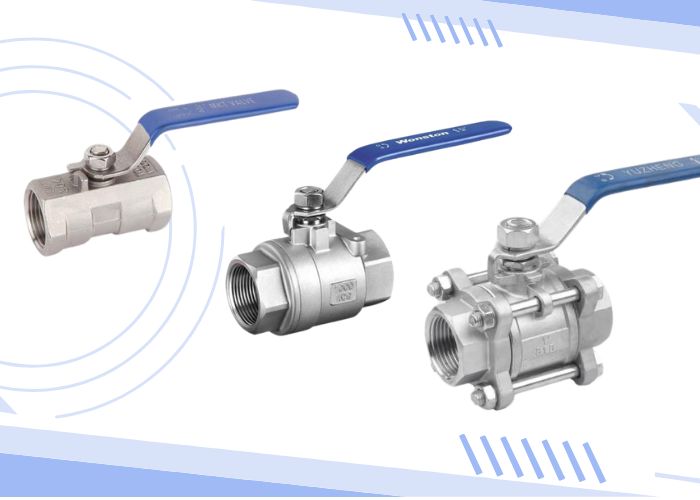
What is a One-Piece Ball Valve?
As the name suggests, a one-piece ball valve has a single, solid body. Because the valve body is in one piece, the internal parts (like the ball and seats) must be inserted through the end of the pipe connection.
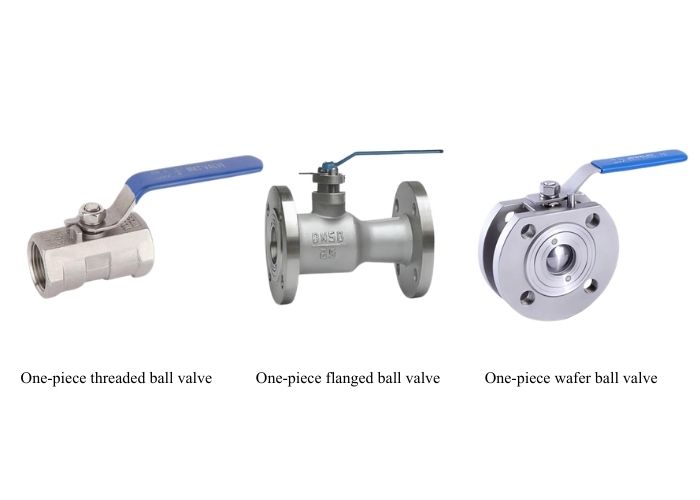
Key Features:
-
Reduced Bore: Due to the way it is assembled, the ball inside a one-piece valve usually has a smaller opening than the pipe itself. This is called a “reduced bore” or “reduced port.” This design restricts flow slightly.
-
Compact Size: These valves are small, lightweight, and save space.
-
Connection Types: They are commonly available with threaded connections (often 55° tapered threads for a good seal), flanged ends, or wafer types for tight spaces.
-
Material: Often made from WCB carbon steel, or stainless steel like CF8 and CF8M.
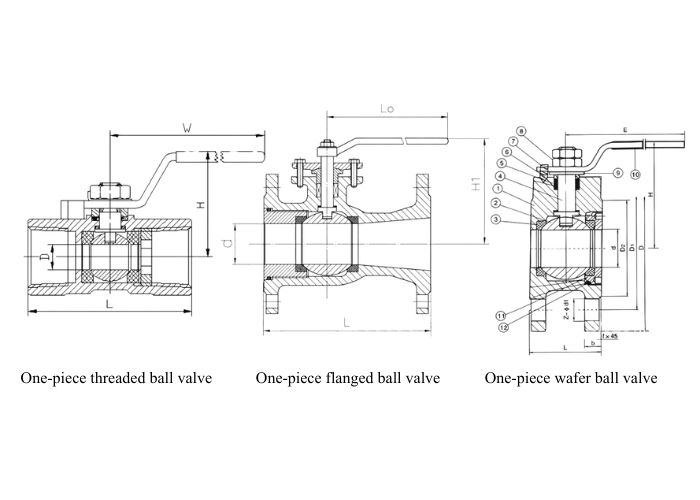
Common Uses:
Because the stem area has less space for packing material, one-piece ball valves are generally used for low-pressure applications. They are a budget-friendly option where high flow rates are not critical. A special type, the one-piece flanged valve, is often used as a high-temperature drain valve for steam or heat transfer oils because the one-piece body prevents leaks to the atmosphere.
What is a Two-Piece Ball Valve?
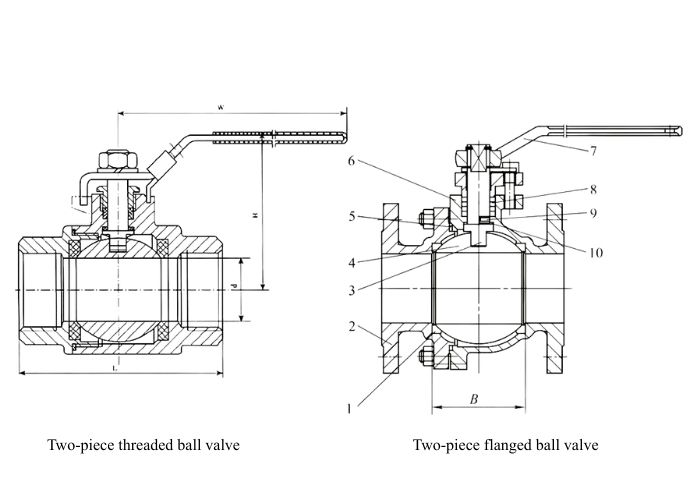
أ two-piece ball valve consists of a main body and a separate end cap. The ball and stem are placed into the main body, and then the end cap is screwed or bolted on to hold everything together.
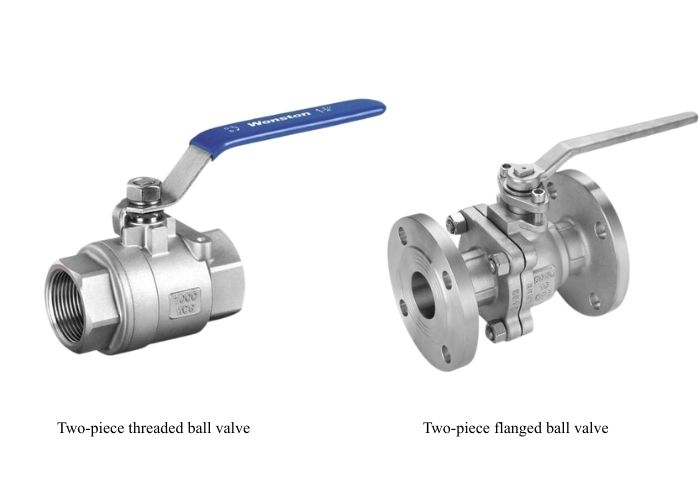
Key Features:
-
Full Bore (Full Port): Because the valve is assembled from two parts, manufacturers can fit a larger ball inside. This allows for a “full bore” design where the opening through the valve is the same size as the pipe, resulting in very low resistance to flow.
-
Strong and Reliable: This is the most common type of ball valve used in industrial settings.
-
Connection Types: Available in threaded (NPT/BSPT), flanged, and socket weld ends.
Common Uses:
Two-piece ball valves are incredibly versatile. They are used when you need maximum flow and can handle a wide range of pressures and temperatures. They are a standard choice for general isolation duties in many industries.
What is a Three-Piece Ball Valve?
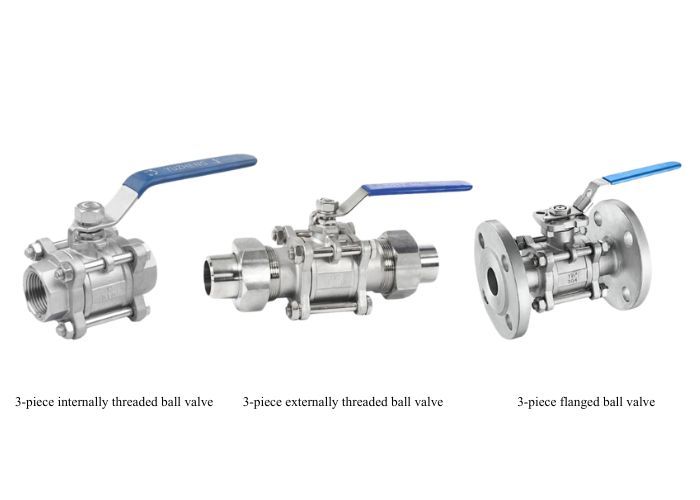
أ three-piece ball valve is made from three parts: a central body and two end caps. The ball and stem are housed in the middle section. The end caps, which hold the seats, are bolted onto the central body from both sides.
Key Features:
-
Easy Maintenance (Inline Repair): This is the biggest advantage. You can remove the center section of the valve (with the ball and stem) while the two end caps remain welded or threaded to the pipeline. This allows you to clean the valve, replace the seats, or replace the ball without removing the entire valve from the system.
-
Full Bore: Like two-piece valves, three-piece valves are typically full port, offering excellent flow capacity.
-
Versatile Connections: They come with threaded ends, but are very popular with weld ends (butt weld or socket weld). The extended weld ends protect internal seals from the heat of welding during installation.

Common Uses:
Three-piece valves are ideal for critical applications where downtime is expensive. They are perfect for processes that require frequent cleaning or where media might damage seats over time, as they can be repaired quickly and easily.
Key Differences: One-Piece vs Two-Piece vs Three-Piece
Still unsure which one to pick? Here are the four main differences to consider:
-
Body Structure:
-
One-Piece: A single, solid body.
-
Two-Piece: Two parts (main body + one end cap).
-
Three-Piece: Three parts (center body + two end caps).
-
-
Flow Path (Bore Size):
-
One-Piece: Usually reduced bore. This restricts flow.
-
Two-Piece & Three-Piece: Usually full bore. This allows maximum flow with minimal pressure drop. If flow rate is critical, choose a two or three-piece valve.
-
-
Installation and Maintenance:
-
One-Piece & Two-Piece: If the valve needs repair, the entire unit must usually be taken out of the pipeline.
-
Three-Piece: Can be repaired inline. Simply unbolt the center section to access internal parts while the pipe ends stay in place. This saves significant time and effort.
-
-
التكلفة:
-
One-Piece: Lowest cost. Best for simple, low-pressure jobs.
-
Two-Piece: Moderate cost. Best value for general-purpose use.
-
Three-Piece: Highest initial cost, but saves money on long-term maintenance and downtime.
-
Frequently Asked Questions (FAQ)
1. Which ball valve is best for water?
For general home or low-pressure water lines, a one-piece valve is usually sufficient and cost-effective. For main water lines or industrial applications where you need full flow, choose a two-piece full port valve.
2. Can I use a one-piece ball valve for high pressure?
It is not recommended. One-piece valves typically have a shallower packing area and are designed for low-pressure applications. For high-pressure systems, you should use a two-piece or three-piece valve designed for that pressure rating.
3. Why is a three-piece ball valve more expensive?
The higher cost is due to its complex design and the ability to maintain it without removing it from the pipeline. You are paying for reduced downtime and easier repairs, which saves money in the long run.
4. What does “full bore” or “full port” mean?
It means the hole through the ball is the same size as the inside diameter of the pipe. This allows fluid to pass through with very little friction or pressure loss. Two-piece and three-piece valves are usually full bore.
5. How do I maintain a three-piece ball valve?
First, ensure the line is depressurized. Then, remove the bolts holding the center body to the end caps. You can then swing or remove the center section to access the ball and seats for cleaning or replacement, all while the pipe ends stay in place.
6. Are these valves only for water?
No, they are used for a vast range of media including air, oils, gases, steam, and corrosive fluids, depending on the seat and body materials chosen.
7. What is the difference between reduced bore and full bore?
A reduced bore valve has a smaller internal opening than the pipe, which restricts flow and creates a pressure drop. A full bore valve has an opening equal to the pipe, allowing fluid to pass through freely without restriction.
8. Can I weld a threaded ball valve into place?
It is not recommended to weld a threaded valve. The heat can damage internal seals. If you need a welded connection, use a three-piece valve with weld ends, which are designed to protect the seats from heat during installation.
خاتمة
Still trying to decide? Choose a one-piece valve for tight budgets and simple low-pressure jobs. Pick a two-piece for reliable, full-flow performance in daily operations. Invest in a three-piece if you want to slash maintenance downtime.
Need expert advice? في اختبار BCST, we help you select the perfect valve for your specific application. From material selection to pressure ratings, our team ensures you get it right the first time.
اتصال us today for a quote or technical support—let’s solve your flow control challenges together!


 English
 Arabic
 Russian
 French
 Spanish