
Efficient Use of Ball Valve LOTO for Ensuring Absolute Safety During Maintenance
In any industrial setting, safety is paramount, especially when performing maintenance on machinery and pipelines. The accidental start-up of equipment or the unexpected release of stored energy can lead to severe injuries or fatalities. This is where Lockout/Tagout (LOTO) procedures become not just a guideline, but a life-saving mandate, particularly when dealing with fluid control devices like valves. Among these, the صمام كروي, known for its quick-acting, positive shut-off capabilities, presents its own unique considerations for effective LOTO.
This comprehensive guide will explore the essential aspects of ball valve LOTO, outlining its importance, detailing the step-by-step process, discussing specialized devices, and highlighting best practices to ensure absolute safety. At BCST Valve, we understand that robust valve integrity goes hand-in-hand with stringent safety protocols, making LOTO a cornerstone of reliable operation.
A thorough understanding of ball valve LOTO protocols is critical for maintenance personnel, safety officers, and facility managers alike to prevent accidents and ensure compliance with regulatory standards such as OSHA.
What is Lockout/Tagout (LOTO) and Why is it Critical?
Lockout/Tagout (LOTO) refers to specific safety procedures used to ensure that dangerous machines are properly shut off and unable to be started up again prior to the completion of maintenance or servicing work. It involves placing a lockout device and tag on an energy-isolating device (like a valve) to indicate that the equipment must not be operated until the lockout device is removed.
The criticality of LOTO stems from the potential for stored energy. This can be electrical, mechanical, hydraulic, pneumatic, chemical, thermal, or other energy sources that can inflict harm. Preventing unexpected energization or release of stored energy is the primary objective, safeguarding workers from crushing, cutting, burning, or other injuries.
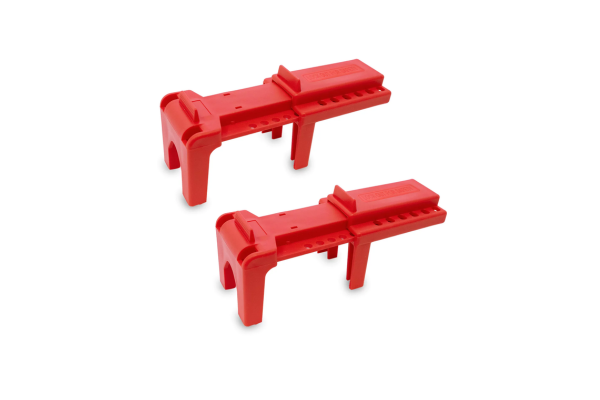
The Unique Importance of LOTO for Ball Valves
While all isolation points require LOTO, ball valves have characteristics that make specific LOTO considerations vital:
- Quarter-Turn Operation: Ball valves require only a 90-degree rotation to go from fully open to fully closed. This quick action can be a hazard if accidentally actuated.
- Positive Shut-off: A well-maintained ball valve provides an excellent, bubble-tight seal. However, assuming closure alone is enough without LOTO risks accidental opening, especially if the handle is left free.
- Visible Indicator: The position of a ball valve handle generally indicates whether it’s open or closed. However, reliance solely on visual cues, without a physical lockout, is a grave safety error.
The core issue is that an operational handle can be bumped, turned intentionally by an uninformed worker, or activated remotely (if automated), releasing hazardous fluid or pressure. Therefore, effective ball valve LOTO goes beyond mere closure; it ensures the valve stays closed and cannot be operated.
Ball Valve LOTO vs. Other Valve Types
Compared to other valve types:
- Gate Valves: Often require many turns to close, making accidental full opening less likely but also slower to isolate. LOTO is still crucial.
- Globe Valves: Designed for throttling, they also require multiple turns. Their internal design sometimes makes complete isolation for LOTO verification more complex.
- Butterfly Valves: Similar to ball valves in quarter-turn functionality, making LOTO equally critical, often using similar devices.
For ball valve LOTO, the focus is often on preventing the rotation of the handle and ensuring that line pressure in the isolated section is bled down and verified.
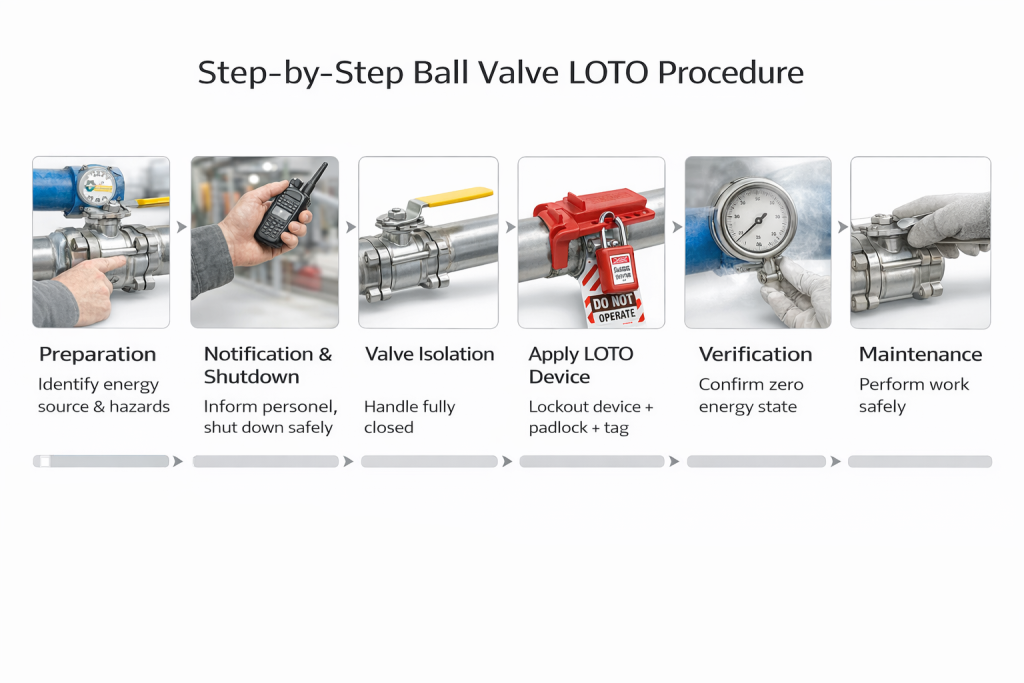
Step-by-Step Ball Valve LOTO Procedure
A comprehensive ball valve LOTO procedure follows the general OSHA guidelines, adapted for specific ball valve considerations. Always adhere to your facility’s specific written LOTO program:
- Preparation:
- Identify the energy source(s) and magnitude.
- Understand the system, potential hazards (e.g., fluid type, pressure, temperature), and the scope of work.
- Obtain necessary tools and ball valve LOTO devices.
- Notification: Inform all affected personnel of the impending shutdown and LOTO procedure.
- Equipment Shutdown: Safely shut down the equipment according to established procedures.
- Valve Isolation:
- Turn the ball valve handle to the fully closed position (perpendicular to the pipe).
- For critical isolation, consider a صمام كروي مزدوج الكتلة والنزف (DBB) setup, where two isolation valves and a bleed valve ensure a verifiable zero-energy state.
- Apply Lockout/Tagout Devices:
- Place an appropriate ball valve LOTO device over the valve handle, preventing its movement.
- Attach a personal padlock by each authorized employee performing the work.
- Affix a tagout device (tag) clearly stating “DO NOT OPERATE,” the reason for LOTO, date, and authorized person’s name.
- Release Stored Energy:
- Bleed or drain any residual fluid or built-up pressure from the isolated section.
- For ball valves, remember the internal body cavity can trap pressure even when the valve is closed. This must be bled or otherwise managed.
- Vent downstream lines, relieve spring tension, block moving parts, etc.
- التحقق: This is a crucial step.
- Attempt to operate the isolated ball valve handle (it should not move).
- Visually check pressure gauges to confirm zero pressure.
- Use appropriate testing equipment to verify the absence of hazardous energy.
- Confirm all downstream equipment is also de-energized.
- Perform Maintenance: Once verification is complete, the authorized employees can safely perform the required maintenance.
- Release LOTO:
- Ensure all tools are removed and components are reinstalled.
- Notify all affected personnel that LOTO devices will be removed.
- Remove lock(s) and tag(s) by the authorized personnel who applied them.
- Restore energy to the entire system safely.
Specialized LOTO Devices for Ball Valves
Effective ball valve LOTO relies on specialized devices designed for their unique geometry:
- Standard Ball Valve Lockouts: These typically consist of two halves that encapsulate the valve handle in the closed position, preventing it from being turned. They are designed to fit various handle sizes and body styles.
- Adjustable Ball Valve Lockouts: Offer greater versatility, allowing them to fit a wider range of valve sizes and configurations than fixed-size devices.
- Cable Lockouts: A flexible alternative, a cable lockout can be threaded through valve handles or other energy isolation points and then locked in place, suitable for awkwardly shaped valves or tight spaces.
- Multi-Lock Hasps: Allow multiple authorized employees to apply their individual padlocks to a single energy isolation device, ensuring all workers are safe before work begins.
Regulatory Compliance and Best Practices for Ball Valve LOTO
Compliance with LOTO procedures is not optional. In the United States, OSHA Standard 29 CFR 1910.147, “The Control of Hazardous Energy (Lockout/Tagout),” mandates these procedures. Similar regulations exist globally. To ensure effective ball valve LOTO and overall safety:
- Develop Written Procedures: Every energy source and piece of equipment requiring LOTO should have a specific, documented procedure.
- Train Employees: All authorized, affected, and other employees must receive comprehensive training on LOTO procedures, including the specific steps for ball valve LOTO.
- Regular Audits and Reviews: Periodically review and inspect LOTO procedures and their implementation to ensure effectiveness and compliance.
- Provide Proper Devices: Ensure an adequate supply of readily accessible, appropriate LOTO devices for all energy isolation points, including ball valves.
- Communication is Key: Maintain clear and constant communication among all personnel involved, especially during shift changes or multi-person LOTO.
Common Mistakes to Avoid with Ball Valve LOTO
Even with clear procedures, mistakes can happen. Be aware of these common pitfalls in ball valve LOTO:
- Inadequate Verification: Assuming a visually closed valve means zero energy without physically testing or checking gauges.
- Not Isolating All Energy Sources: Overlooking residual pressure in the valve cavity or downstream lines, or other energy types connected to the system.
- Using Unauthorized Devices: Using personal locks not designed for LOTO, or applying tags without corresponding locks.
- Bypassing Procedures: Taking shortcuts because a task “only takes a minute” or due to time pressure.
- Lack of Training/Understanding: Employees not fully understanding the LOTO procedure or the specific hazards associated with ball valve LOTO.
خاتمة
Ball valve LOTO is a fundamental and non-negotiable safety practice in industrial maintenance. Given the ball valve’s widespread use and quick-action design, understanding and meticulously applying LOTO procedures is vital to preventing accidents, protecting personnel, and maintaining operational integrity. It’s a testament to a facility’s commitment to safety, ensuring that every worker returns home safely at the end of their shift.
At BCST Valve, we not only deliver high-quality, reliable الصمامات الصناعية, including a comprehensive range of ball valves, but we also emphasize the importance of their safe operation and maintenance. Partner with us for expertly engineered valves and an unwavering commitment to industrial safety.
Need reliable ball valves or expert advice on isolation protocols?


 English
 Arabic
 Russian
 French
 Spanish