
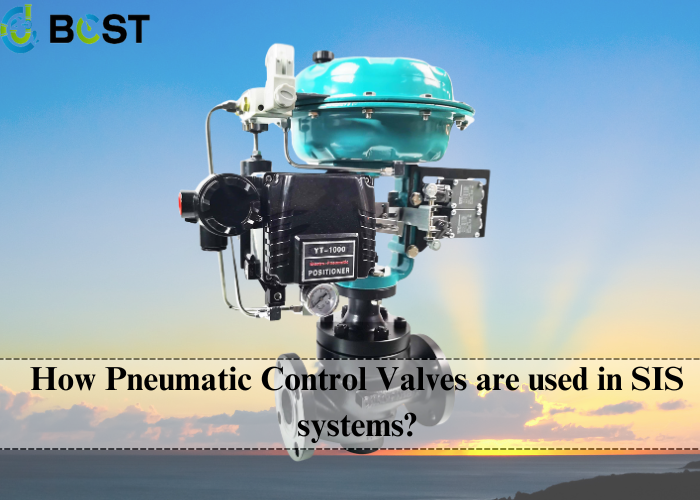
بصفتنا شركة تصنيع متخصصة، فإننا ندرك أهمية صمامات التحكم التي تعمل بالهواء المضغوط في أنظمة التحكم في الأتمتة الصناعية الحديثة، وخاصة في أنظمة أجهزة السلامة (SIS). في هذه المقالة، سوف نقدم بالتفصيل كيف يمكن دمج صمامات التحكم الهوائية مع أنظمة SIS لضمان سلامة وموثوقية عمليات الأتمتة الصناعية.
Ⅰ. المفهوم الأساسي لنظام SIS ووظيفته الأساسية
Safety Instrumented System (SIS) is a key component of modern industrial automation systems to ensure safety and reduce risk, especially in areas involving high-risk processes and environments, such as petrochemical, natural gas, nuclear power, etc. The main role of SIS is to prevent accidents from occurring by monitoring and controlling the hazardous parameters of the industrial process, and to take emergency protective measures when necessary.According to the International Electrotechnical Commission standards IEC 61511 and IEC 61508, an SIS is a safety protection system consisting of sensors, logic controllers, and actuators designed to perform one or more Safety Instrumented Functions (SIFs) to ensure that potential hazards in an industrial process can be effectively monitored and responded to in a timely manner.
SIS system generally consists of three core components:Sensors: Used for key parameters in industrial processes, such as temperature, pressure, liquid level, etc. When the monitored parameters exceed the set safety gateway, the sensor sends a signal to the logic control unit.Logic Control Unit (Logic Solver): Usually a PLC (Programmable Logic Controller) or a dedicated safety controller, used to analyze the data coming from the sensors and make judgments and processes according to the preset logic. If it is determined that a potential hazard exists, the Logic Control Unit will issue an execution order.Actuators (Actuators): Receive the command of the logic control unit and perform the corresponding action, such as closing the valve, start the emergency shutdown system, etc., in order to prevent accidents or mitigate their impact.The working principle of the SIS system can be summarized as “detection – decision – execution” of the closed-loop control process. Its core function is to provide real-time monitoring and rapid response to potential hazards in the system. When the system parameters are detected to deviate from the safe range, the SIS will immediately take pre-defined protective measures to prevent accidents from occurring or to keep the consequences within acceptable limits.
In order to ensure that the design, operation and maintenance of SIS systems comply with international safety standards, relevant organizations have developed a number of standards and specifications. The most representative standard is IEC 61508, the foundation standard for SIS design, which defines design, installation, operation and maintenance requirements throughout the safety lifecycle. Another important standard is IEC 61511, which focuses on the design of SIS systems for the process industry to ensure that they meet process safety requirements.SIS systems have a wide range of applications in a variety of high-risk industries, including oil and gas, chemical manufacturing, power and nuclear energy, food and pharmaceutical industries.
Ⅱ. الوظائف والخصائص الأساسية لصمامات التحكم الهوائية وخصائصها
Pneumatic control valves are widely used in automation control systems for regulating medium flow, pressure, temperature, liquid level and other process parameters. Pneumatic control valve has the following advantages and features:Accurate regulation: pneumatic control valve can accurately adjust the medium flow, pressure, temperature and liquid level and other parameters, to ensure the stability and reliability of industrial automation process.Fast response: pneumatic control valve driven by a gas source, has a fast response speed, can be realized in a short period of time parameter adjustment.Safe and reliable: Pneumatic control valve adopts pneumatic actuator, which has the advantages of simple structure, reliable operation and convenient maintenance. In addition, the pneumatic control valve can be equipped with various safety protection devices, such as limit switches, solenoid valves, etc., to further improve the safety of the system.Strong adaptability: pneumatic control valves are suitable for a variety of media and working conditions, such as high temperature, high pressure, corrosive media. By choosing the right material and design, it can meet the needs of different industrial processes.In special cases, if the adjustment valve needs to be installed horizontally in the vertical pipeline, the adjustment valve must also be supported (except for small diameter adjustment valves).Medium flow direction: pneumatic regulator valve installation must be installed according to the illustrated arrow indicated by the direction of medium flow.Maintenance: If the regulator uses graphite asbestos as packing, lubricant should be added to the packing approximately every three months to ensure that the regulator is flexible and easy to use. If the packing pressure cap is found to be low, the packing will need to be refilled. If the PTFE dry packing is found to be hardened, it should be replaced promptly.
Ⅲ. تطبيق صمام التحكم الهوائي في نظام SIS
    يلعب صمام التحكم الهوائي دورًا مهمًا في نظام SIS. وباعتباره أحد المشغِّلات، فإنه يتلقى الأوامر من نظام SIS لتنظيم المعلمات الخطرة للعملية الصناعية والتحكم فيها في الوقت الحقيقي، وذلك لضمان سلامة النظام وموثوقيته.
        1. المراقبة والإنذار
    In the SIS system, sensors are responsible for monitoring the critical parameters in the industrial process, such as temperature, pressure, liquid level, and so on. When these parameters exceed the set safety limits, the sensors transmit signals to the logic control unit. The logic control unit makes judgment and processing according to the preset logic, and if it determines that there is a potential danger, it will issue an execution command. Pneumatic control valve, as one of the actuators, can immediately adjust the flow rate, pressure and other parameters of the medium after receiving the command to prevent accidents.At the same time, the SIS system can also be equipped with an alarm device, which will send out an alarm signal in time to remind the operator to take emergency measures when abnormal parameters are monitored.
        2. الإغلاق والتفريغ في حالات الطوارئ
    In some cases, when the hazardous parameters in the industrial process exceed the set safety limits and cannot be controlled by regulation, the SIS system will issue an emergency shutdown command. After receiving the command, the pneumatic control valve can quickly close the relevant valves and cut off the flow of media to prevent further expansion of the accident.In addition, the SIS system can be equipped with an automatic discharge device, which automatically discharges the hazardous medium to a safe area when the hazardous parameters are monitored and exceeded, in order to minimize the harm to the environment and personnel.
        3. الحماية من التعشيق والعزل
    SIS systems are usually equipped with a variety of interlock protection functions to ensure the safety and reliability of industrial processes. Pneumatic control valves play an important role in interlock protection. For example, when the temperature of a key device exceeds the set value, the SIS system will trigger the interlock protection, the pneumatic control valve receives the command, you can close the valve related to the device, cut off the supply of media to prevent accidents caused by overheating of equipment.At the same time, the pneumatic control valve can also be used to isolate the fault area. When a fault occurs in a region of the industrial process, the SIS system can issue a command to close the relevant valves through the pneumatic control valve to isolate the faulty area from the normal area, in order to reduce the impact of the fault on the overall operation of the system.
        4. دراسة حالة إفرادية: تطبيق نظام SIS في إنتاج الميثانولإنتاج الميثانول
    Take methanol production as an example, the SIS system plays a crucial role in methanol production. There are many potential dangers in the methanol production process, such as high temperature, high pressure, flammable and explosive. In order to ensure the safety and reliability of the production process, a well-equipped SIS system is required.In a methanol production plant, the SIS system evaluates the safety of the production process in real time by monitoring key parameters (e.g., temperature, pressure, flow rate, etc.). When abnormal parameters are detected, the SIS system will immediately issue commands to regulate and control the production process through pneumatic control valves and other actuators.For example, in the methanol synthesis reactor, when the pressure in the reactor exceeds the set value, the SIS system will trigger the interlock protection to close the inlet and outlet valves of the reactor through the pneumatic regulating valves to cut off the flow of the medium, in order to prevent accidents caused by overpressure in the reactor. At the same time, the SIS system can also activate the emergency discharge device to discharge the high pressure gas in the reactor to the safe area.In addition, the SIS system can be equipped with a fire alarm and fire extinguishing device. When a fire is monitored, the SIS system will immediately send an alarm signal and activate the fire extinguishing device to extinguish the fire. At the same time, the relevant valves will be closed through the pneumatic control valve to cut off the supply of combustible medium to prevent the further spread of fire.
        5. اختيار صمام التحكم الهوائي وصيانته
    When selecting pneumatic control valves in the SIS system, the following factors need to be considered:- Medium characteristics: according to the nature of the medium (such as temperature, pressure, corrosivity, viscosity, etc.) to select the appropriate valve material and sealing form.- Flow characteristics: according to the process requirements to select the appropriate flow characteristics (such as equal percentage, linear, etc.) to ensure the accuracy and stability of the regulation.- Pressure level: according to the system's pressure level to select the appropriate valve pressure level to ensure that the valve's pressure-bearing capacity.- Control mode: select the appropriate control mode (such as gas open, gas close, etc.) according to the control requirements of the SIS system to ensure that the valve action is consistent with the instructions of the SIS system.In the maintenance process of the pneumatic adjustment valve, the following points need to be noted:- Regular inspection: Regularly inspect the pneumatic adjustment valve, including the sealing of the valve, the flexibility of the action, and whether the connectors are loose.- Cleaning and maintenance: Regularly clean the inside and outside of the pneumatic adjustment valve to keep it clean and dry. For parts that are easy to wear (such as seals, packing, etc.), they need to be replaced regularly.- Trouble shooting: When the pneumatic adjustment valve fails, it needs to be handled in time. First, analyze the failure phenomenon and the cause, and then take appropriate measures to repair or replace.
        Ⅳ. تكامل صمام التحكم الهوائي ونظام SIS وتحسينه
    من أجل تحقيق التكامل الفعال والتحسين الفعال لصمام التحكم الهوائي ونظام SIS، يجب مراعاة الجوانب التالية:
        1. نقل الإشارة والوصلة البينية النص هنا
    تأكد من دقة نقل الإشارة بين صمام التحكم الهوائي ونظام SIS. ويشمل ذلك اختيار نوع الإشارة المناسبة (على سبيل المثال، التناظرية والرقمية وغيرها) وطريقة الإرسال (على سبيل المثال، الإرسال السلكي والإرسال اللاسلكي وغيرها)، وكذلك ضمان توافق الواجهة وموثوقيتها.
        2. التحكم المنطقي وتحسين الخوارزمية
    في نظام SIS، تكون وحدة التحكم المنطقي مسؤولة عن تحليل البيانات من المستشعرات وإصدار الأحكام والمعالجة وفقًا للمنطق المحدد مسبقًا. من أجل ضمان دقة وتوقيت عمل صمام التحكم الهوائي، يجب تحسين وحدة التحكم المنطقي لتحسين سرعة الحوسبة والقدرة على إصدار الأحكام. وفي الوقت نفسه، يمكن أيضًا استخدام خوارزميات متقدمة (مثل التحكم التنبؤي والتحكم الضبابي وما إلى ذلك) لتحسين دقة التنظيم واستقرار صمام التحكم الهوائي.
        3. تصميم زائد عن الحاجة وآلية تحمل الأخطاء
    من أجل تحسين موثوقية وسلامة نظام SIS، هناك حاجة إلى تصميم التكرار وآلية تحمل الأعطال. على سبيل المثال، يمكن إعداد أجهزة استشعار متعددة لرصد نفس المعلمة في نفس الوقت لتحسين دقة البيانات وموثوقيتها؛ ويمكن إعداد قنوات زائدة عن الحاجة بين وحدات التحكم المنطقي والمشغلات لمنع حدوث نقطة فشل واحدة تؤدي إلى فشل النظام بأكمله؛ ويمكن استخدام خوارزميات وتقنيات تحمل الأخطاء لتقليل حساسية النظام لفشل واحد.
        4. رصد البيانات وتحليلها
    وباستخدام نظام SIS لمراقبة وتحليل بيانات تشغيل صمام التحكم الهوائي في الوقت الحقيقي، يمكن العثور على الأعطال والمشاكل المحتملة في الوقت المناسب ويمكن اتخاذ التدابير المناسبة للتعامل معها. على سبيل المثال، من خلال مراقبة عدد مرات التبديل ووقت العمل والتسرب وغيرها من معلمات صمام التحكم الهوائي، يمكن تقييم حالته التشغيلية وعمره التشغيلي؛ ومن خلال تحليل البيانات، يمكن التنبؤ باتجاه ونمط الأعطال، مما يوفر أساسًا للصيانة والاستبدال.
 English
 Arabic
 Russian
 French
 Spanish