
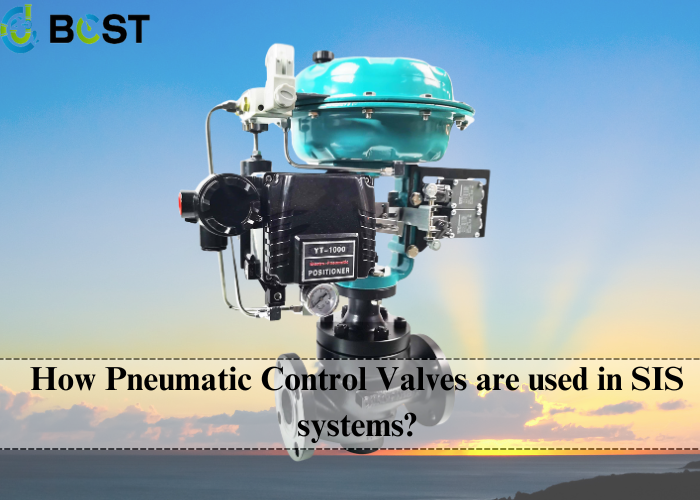
Как специализированный производитель, мы понимаем важность пневматических регулирующих клапанов в современных системах управления промышленной автоматикой, особенно в системах безопасности (Safety Instrumented Systems, SIS). В этой статье мы подробно расскажем о том, как пневматические регулирующие клапаны могут быть объединены с системами SIS для обеспечения безопасности и надежности процессов промышленной автоматизации.
Ⅰ. Основная концепция и функции системы SIS
Safety Instrumented System (SIS) is a key component of modern industrial automation systems to ensure safety and reduce risk, especially in areas involving high-risk processes and environments, such as petrochemical, natural gas, nuclear power, etc. The main role of SIS is to prevent accidents from occurring by monitoring and controlling the hazardous parameters of the industrial process, and to take emergency protective measures when necessary.According to the International Electrotechnical Commission standards IEC 61511 and IEC 61508, an SIS is a safety protection system consisting of sensors, logic controllers, and actuators designed to perform one or more Safety Instrumented Functions (SIFs) to ensure that potential hazards in an industrial process can be effectively monitored and responded to in a timely manner.
SIS system generally consists of three core components:Sensors: Used for key parameters in industrial processes, such as temperature, pressure, liquid level, etc. When the monitored parameters exceed the set safety gateway, the sensor sends a signal to the logic control unit.Logic Control Unit (Logic Solver): Usually a PLC (Programmable Logic Controller) or a dedicated safety controller, used to analyze the data coming from the sensors and make judgments and processes according to the preset logic. If it is determined that a potential hazard exists, the Logic Control Unit will issue an execution order.Actuators (Actuators): Receive the command of the logic control unit and perform the corresponding action, such as closing the valve, start the emergency shutdown system, etc., in order to prevent accidents or mitigate their impact.The working principle of the SIS system can be summarized as “detection – decision – execution” of the closed-loop control process. Its core function is to provide real-time monitoring and rapid response to potential hazards in the system. When the system parameters are detected to deviate from the safe range, the SIS will immediately take pre-defined protective measures to prevent accidents from occurring or to keep the consequences within acceptable limits.
In order to ensure that the design, operation and maintenance of SIS systems comply with international safety standards, relevant organizations have developed a number of standards and specifications. The most representative standard is IEC 61508, the foundation standard for SIS design, which defines design, installation, operation and maintenance requirements throughout the safety lifecycle. Another important standard is IEC 61511, which focuses on the design of SIS systems for the process industry to ensure that they meet process safety requirements.SIS systems have a wide range of applications in a variety of high-risk industries, including oil and gas, chemical manufacturing, power and nuclear energy, food and pharmaceutical industries.
Ⅱ. Основные функции и характеристики пневматических регулирующих клапанов
Pneumatic control valves are widely used in automation control systems for regulating medium flow, pressure, temperature, liquid level and other process parameters. Pneumatic control valve has the following advantages and features:Accurate regulation: pneumatic control valve can accurately adjust the medium flow, pressure, temperature and liquid level and other parameters, to ensure the stability and reliability of industrial automation process.Fast response: pneumatic control valve driven by a gas source, has a fast response speed, can be realized in a short period of time parameter adjustment.Safe and reliable: Pneumatic control valve adopts pneumatic actuator, which has the advantages of simple structure, reliable operation and convenient maintenance. In addition, the pneumatic control valve can be equipped with various safety protection devices, such as limit switches, solenoid valves, etc., to further improve the safety of the system.Strong adaptability: pneumatic control valves are suitable for a variety of media and working conditions, such as high temperature, high pressure, corrosive media. By choosing the right material and design, it can meet the needs of different industrial processes.In special cases, if the adjustment valve needs to be installed horizontally in the vertical pipeline, the adjustment valve must also be supported (except for small diameter adjustment valves).Medium flow direction: pneumatic regulator valve installation must be installed according to the illustrated arrow indicated by the direction of medium flow.Maintenance: If the regulator uses graphite asbestos as packing, lubricant should be added to the packing approximately every three months to ensure that the regulator is flexible and easy to use. If the packing pressure cap is found to be low, the packing will need to be refilled. If the PTFE dry packing is found to be hardened, it should be replaced promptly.
Ⅲ. Применение пневматического регулирующего клапана в системе SIS
    Пневматический регулирующий клапан играет важную роль в системе SIS. Являясь одним из исполнительных механизмов, он получает команды от системы SIS для регулирования и контроля опасных параметров промышленного процесса в режиме реального времени, чтобы обеспечить безопасность и надежность системы.
        1. Мониторинг и сигнализация
    In the SIS system, sensors are responsible for monitoring the critical parameters in the industrial process, such as temperature, pressure, liquid level, and so on. When these parameters exceed the set safety limits, the sensors transmit signals to the logic control unit. The logic control unit makes judgment and processing according to the preset logic, and if it determines that there is a potential danger, it will issue an execution command. Pneumatic control valve, as one of the actuators, can immediately adjust the flow rate, pressure and other parameters of the medium after receiving the command to prevent accidents.At the same time, the SIS system can also be equipped with an alarm device, which will send out an alarm signal in time to remind the operator to take emergency measures when abnormal parameters are monitored.
        2. Аварийное отключение и разрядка
    In some cases, when the hazardous parameters in the industrial process exceed the set safety limits and cannot be controlled by regulation, the SIS system will issue an emergency shutdown command. After receiving the command, the pneumatic control valve can quickly close the relevant valves and cut off the flow of media to prevent further expansion of the accident.In addition, the SIS system can be equipped with an automatic discharge device, which automatically discharges the hazardous medium to a safe area when the hazardous parameters are monitored and exceeded, in order to minimize the harm to the environment and personnel.
        3. Защита и изоляция от блокировки
    SIS systems are usually equipped with a variety of interlock protection functions to ensure the safety and reliability of industrial processes. Pneumatic control valves play an important role in interlock protection. For example, when the temperature of a key device exceeds the set value, the SIS system will trigger the interlock protection, the pneumatic control valve receives the command, you can close the valve related to the device, cut off the supply of media to prevent accidents caused by overheating of equipment.At the same time, the pneumatic control valve can also be used to isolate the fault area. When a fault occurs in a region of the industrial process, the SIS system can issue a command to close the relevant valves through the pneumatic control valve to isolate the faulty area from the normal area, in order to reduce the impact of the fault on the overall operation of the system.
        4. Тематическое исследование: применение системы SIS в производстве метанола Текст здесь
    Take methanol production as an example, the SIS system plays a crucial role in methanol production. There are many potential dangers in the methanol production process, such as high temperature, high pressure, flammable and explosive. In order to ensure the safety and reliability of the production process, a well-equipped SIS system is required.In a methanol production plant, the SIS system evaluates the safety of the production process in real time by monitoring key parameters (e.g., temperature, pressure, flow rate, etc.). When abnormal parameters are detected, the SIS system will immediately issue commands to regulate and control the production process through pneumatic control valves and other actuators.For example, in the methanol synthesis reactor, when the pressure in the reactor exceeds the set value, the SIS system will trigger the interlock protection to close the inlet and outlet valves of the reactor through the pneumatic regulating valves to cut off the flow of the medium, in order to prevent accidents caused by overpressure in the reactor. At the same time, the SIS system can also activate the emergency discharge device to discharge the high pressure gas in the reactor to the safe area.In addition, the SIS system can be equipped with a fire alarm and fire extinguishing device. When a fire is monitored, the SIS system will immediately send an alarm signal and activate the fire extinguishing device to extinguish the fire. At the same time, the relevant valves will be closed through the pneumatic control valve to cut off the supply of combustible medium to prevent the further spread of fire.
        5. Выбор и обслуживание пневматического регулирующего клапана
    When selecting pneumatic control valves in the SIS system, the following factors need to be considered:- Medium characteristics: according to the nature of the medium (such as temperature, pressure, corrosivity, viscosity, etc.) to select the appropriate valve material and sealing form.- Flow characteristics: according to the process requirements to select the appropriate flow characteristics (such as equal percentage, linear, etc.) to ensure the accuracy and stability of the regulation.- Pressure level: according to the system's pressure level to select the appropriate valve pressure level to ensure that the valve's pressure-bearing capacity.- Control mode: select the appropriate control mode (such as gas open, gas close, etc.) according to the control requirements of the SIS system to ensure that the valve action is consistent with the instructions of the SIS system.In the maintenance process of the pneumatic adjustment valve, the following points need to be noted:- Regular inspection: Regularly inspect the pneumatic adjustment valve, including the sealing of the valve, the flexibility of the action, and whether the connectors are loose.- Cleaning and maintenance: Regularly clean the inside and outside of the pneumatic adjustment valve to keep it clean and dry. For parts that are easy to wear (such as seals, packing, etc.), they need to be replaced regularly.- Trouble shooting: When the pneumatic adjustment valve fails, it needs to be handled in time. First, analyze the failure phenomenon and the cause, and then take appropriate measures to repair or replace.
        Ⅳ. Интеграция и оптимизация пневматического регулирующего клапана и системы SIS
    Для эффективной интеграции и оптимизации пневматического регулирующего клапана и системы SIS необходимо рассмотреть следующие аспекты:
        1. Передача сигналов и интерфейс Текст здесь
    Обеспечьте точность передачи сигнала между пневматическим управляющим клапаном и системой SIS. Это включает в себя выбор соответствующего типа сигнала (например, аналогового, цифрового и т. д.) и метода передачи (например, проводная передача, беспроводная передача и т. д.), а также обеспечение совместимости и надежности интерфейса.
        2. Логическое управление и оптимизация алгоритмов
    В системе SIS логический контроллер отвечает за анализ данных от датчиков, вынесение решений и обработку в соответствии с заданной логикой. Чтобы обеспечить точность и своевременность действия пневматического управляющего клапана, логический контроллер необходимо оптимизировать, чтобы повысить скорость вычислений и способность принимать решения. В то же время для повышения точности регулирования и стабильности работы пневматического регулирующего клапана можно использовать передовые алгоритмы (такие как предиктивное управление, нечеткое управление и т. д.).
        3. Резервная конструкция и механизм отказоустойчивости
    Для повышения надежности и безопасности системы SIS необходимо разработать избыточную конструкцию и отказоустойчивый механизм. Например, можно установить несколько датчиков для одновременного мониторинга одного и того же параметра, чтобы повысить точность и надежность данных; можно установить дублирующие каналы между логическими контроллерами и исполнительными механизмами, чтобы предотвратить отказ одной точки, приводящий к отказу всей системы; можно использовать отказоустойчивые алгоритмы и методы, чтобы минимизировать чувствительность системы к одному отказу.
        4. Мониторинг и анализ данных
    Использование системы SIS для мониторинга и анализа данных о работе пневматического регулирующего клапана в режиме реального времени позволяет своевременно обнаружить потенциальные неисправности и проблемы и принять соответствующие меры для их устранения. Например, отслеживая количество переключений, время действия, утечку и другие параметры пневматического регулирующего клапана, можно оценить его рабочее состояние и срок службы; анализируя данные, можно предсказать тенденцию и характер отказов, обеспечивая основу для технического обслуживания и замены.
 English
 Arabic
 Russian
 French
 Spanish