
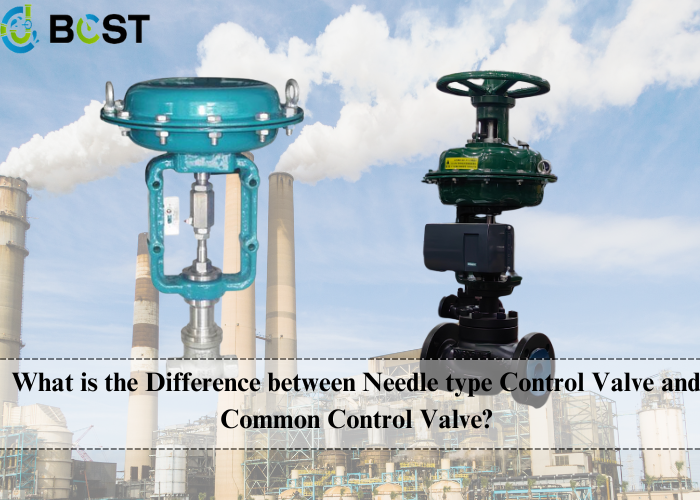
Регулирующий клапан is an important industrial control equipment, widely used in petrochemical, electric power, metallurgy, pharmaceutical and other industries, used to adjust the fluid flow, pressure, temperature and other parameters. According to its different structure and function, control valve can be divided into many types, of which needle type control valve and Common Control Valve are two common types. In this paper, we will discuss the main differences between Needle Control Valves and Common Control Valves from the aspects of design features, working principle, performance and application areas.
Ⅰ. The design features
1.Needle Регулирующий клапан
The core feature of the Needle Control Valve is its “needle structure”. Its spool is conical or needle-shaped, and the valve seat is very close, to achieve high-precision flow control. The following are the design features of Needle Control Valves:
High precision: The needle structure allows the fluid to pass through an extremely small channel, enabling precise Control of minute flow rates, and is suitable for applications with stringent flow or pressure requirements.
Хорошее уплотнение: Needle valves usually adopt metal-to-metal or metal-to-flexible material sealing form to ensure no leakage when shut off.
Wide Control range: Needle valves have a linear or nearly linear relationship between stroke change and flow rate change, with a high Control ratio, which can control a very low to medium flow rate range.
2. Common Регулирующие клапаны
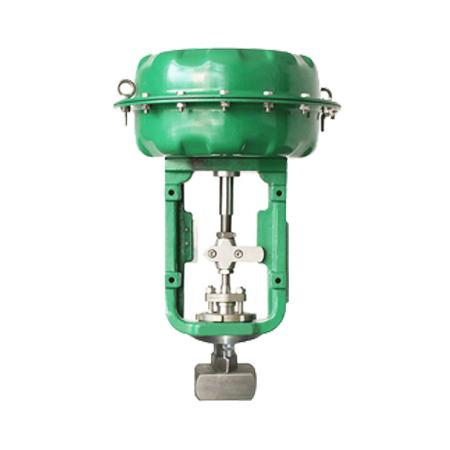
Common Control Valves usually refer to standard single-seat control valves, double-seat control valves or ball valves, etc., whose structures are more diversified compared to Needle Control Valves. Its design features include:
Variety of structures: according to different application requirements, a variety of forms such as straight-through, angle, eccentric rotary, etc. can be selected.
High flow capacity: the flow capacity (Cv value) of Common Control Valves is higher, which is suitable for handling larger flows or high differential pressure.
Relatively low cost: Because the design and manufacturing complexity is lower than needle type control valve, ordinary control valve is more economical and practical in most occasions.

Ⅱ. The working principle
1. The principle of operation of Needle Control Valve
Needle Control Valve by rotating the valve stem to drive the needle spool up and down, and gradually change the cross-sectional area of the fluid through, so as to realize the precise Control of the flow. Due to the geometric characteristics of the needle structure, the Control precision is high, and can realize linear or equal percentage characteristics of the flow change.
2. Principle of operation of Common Control Valves
Common Control Valves through the relative movement between the spool and the valve seat to change the area of the channel through which the fluid passes, regulating the flow, pressure and other parameters. According to different structures, Common Control Valves can realize different flow characteristic curves, such as fast-opening type, linear type and equal percentage type.
Ⅲ. Performance Comparison
1. Control precision
Needle Control Valve regulation accuracy is significantly higher than Common Control Valves, especially in small flow occasions. Common Control Valves in the middle and high flow range of regulation performance is better, but in the small flow occasions may be limited.
2. Flow characteristics
Needle Control Valves are suitable for linear flow characteristics, while Common Control Valves can realize fast-opening, equal percentage or linear characteristics by choosing different spool designs, which are more widely applicable.
3. Pressure loss
Needle valves have a high pressure loss at high flow rates due to their small flow paths, whereas general valves are usually designed to minimize pressure loss.
4. Долговечность и надежность
The durability of Needle Control Valves lies in their precision manufacturing process, but under frequent operation or high differential pressure conditions, their spools and seats will wear out faster. The general control valve is suitable for a wider range of conditions, its service life is relatively longer.
5. Cost
Needle type control valve due to manufacturing precision and material requirements, the cost is significantly higher than the ordinary control valve; ordinary control valve due to its mass production and design versatility and more economic advantages.
Ⅳ. Application Scenarios
1. Typical applications of Needle Control Valves
Laboratory analytical instruments: Needle Control Valves are often used to accurately control the flow of gases or liquids, such as gas chromatographs, mass spectrometers and so on.
Small flow process control: Needle Control Valves have irreplaceable advantages in small flow control situations that require high precision, such as precision chemicals, biopharmaceuticals and special materials production.
High-pressure small flow conditions: Needle Control Valves are able to cope with micro-flow control in the case of high pressure difference.
2. Typical applications of Common Control Valves
Industrial pipeline network: Common Control Valves in power plants, water treatment and large chemical installations, used to regulate the operating parameters of large flow or high pressure fluid.
Process control: In the occasions where the requirements for regulation accuracy are not high but large flow rates need to be handled, such as cooling water, steam distribution, etc., Common Control Valves are a more economical choice.
General industry: Common Control Valves are widely used for fluid control in oil, natural gas, food processing and other industries.
V. Suggestions for selection
In the actual application, the suitable type of control valve should be selected according to the specific working conditions:
When it is necessary to control small flow, high precision or high differential pressure fluid, it is recommended to prioritize the needle type control valve.
For ordinary working conditions, especially for high flow, low cost or wide flow regulation needs, Common Control Valves are more advantageous.
In the case of budget allows, it is recommended to prioritize the regulation of better performance, longer life of the control valve, comprehensive consideration of investment and operating costs.
Ⅵ. The future development trend
With the increase in the degree of industrial automation and the complexity of the process, the performance requirements of the control valve is also constantly improving. In the future, the design and manufacture of Needle Control Valves and general control valves will further develop in the following directions:
Intelligent: integration of sensors and control systems to achieve real-time monitoring and optimization of regulatory performance.
Долговечность: Extend the service life of the regulating valve by improving the material and process technology.
Precision enhancement: Needle-type regulating valves, in particular, will further improve their small flow control capability and corrosion resistance.
Energy saving: designing lower pressure drop and higher efficiency control valves to reduce energy consumption and operating costs.
Заключение
Needle Control Valves and Common Control Valves have their own advantages, and their applicability varies under different working conditions. Needle Control Valves play an irreplaceable role in specific applications by virtue of their high precision and small flow rate Control, while Common Control Valves dominate the industry with their versatility, cost-effectiveness and wide adaptability. In practical applications, engineers should combine specific needs and economic considerations to select the most suitable type of control valve to ensure efficient, safe and reliable operation of the system.

 English
 Arabic
 Russian
 French
 Spanish