
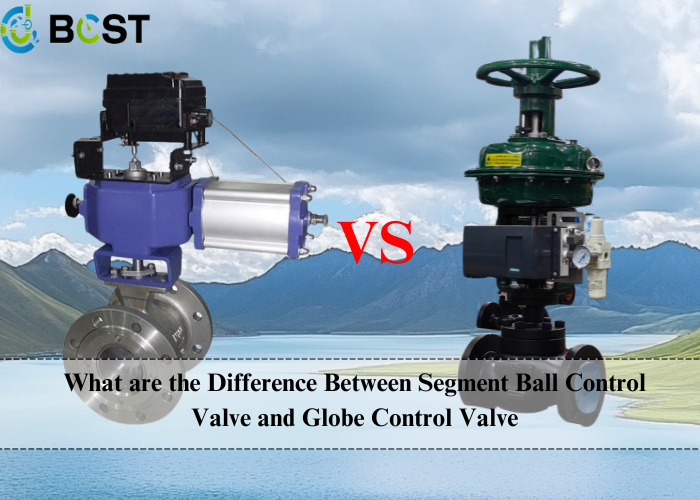
Control valves are fundamental components in a wide range of industrial processes, allowing operators to regulate the flow, pressure, and temperature of fluids within a system. Two commonly used types of control valves are the segment ball control valve and the globe control valve. While both serve the primary purpose of controlling flow, they differ significantly in terms of design, operation, performance, and application. Understanding these differences can help engineers select the most appropriate valve for specific needs in industries such as oil and gas, chemical processing, power generation, and water treatment.
1. Проектирование и строительство
The most apparent difference between segment ball control valves and globe control valves lies in their design and internal construction.Segment Ball Control Valve: This valve uses a ball with a specially shaped segment (part of a sphere) to regulate the flow of fluid. The ball typically features a flow-control port that matches the valve’s seat, which is often segmented. As the valve is adjusted, the ball rotates to control the flow. The flow path in a segment ball valve is designed to be relatively straight, which reduces turbulence and pressure drop across the valve. This design is ideal for applications requiring precise flow control with minimal energy loss.
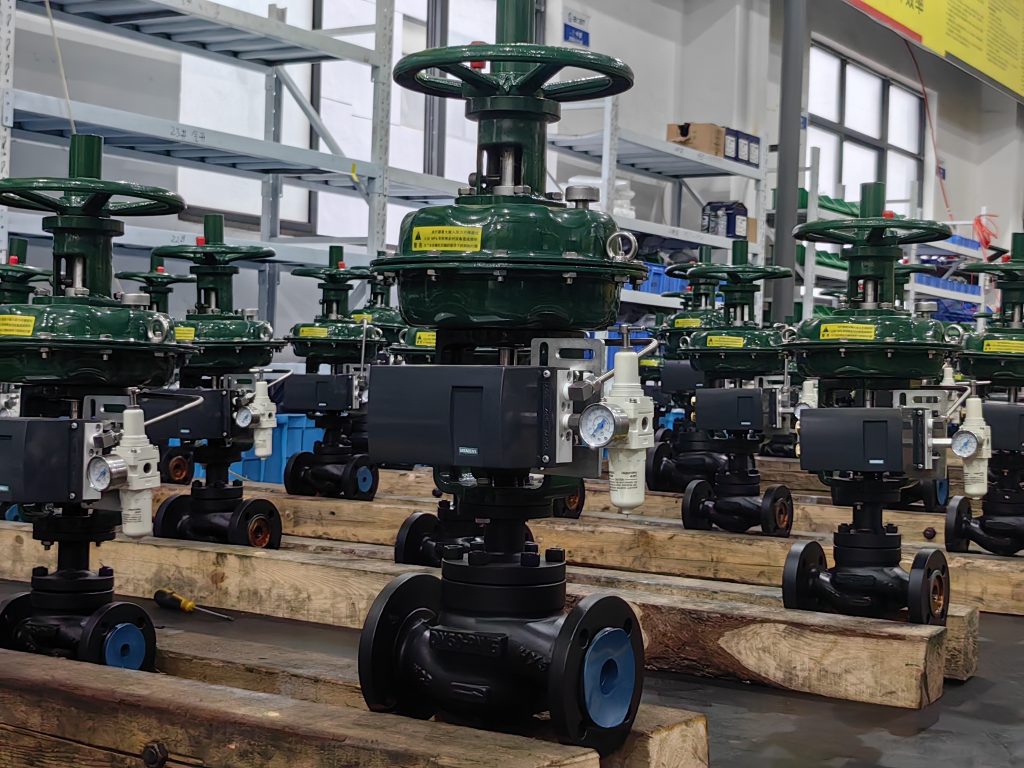
Globe Control Valve: A globe valve, on the other hand, uses a spherical body with an internal baffle and a movable disc (plug) that controls the flow. The globe valve has a more complex internal structure, with a vertical stem that connects to the valve plug. The plug moves up and down to open or close the orifice, thereby regulating the flow rate. The globe valve design is more suited for throttling services, where accurate flow regulation is required, but it also causes higher pressure drops compared to segment ball valves due to the tortuous flow path.
2. Характеристики потока
The flow characteristics of segment ball control valves and globe control valves are an essential consideration when selecting the right valve for an application.Segment Ball Control Valve: These valves are known for their equal percentage flow characteristics, which means that for each unit of valve movement, the change in flow is a constant percentage of the total flow. This feature makes segment ball valves highly effective in applications where the flow needs to be controlled across a wide range of operation, such as in cooling systems, air handling systems, and large-scale process applications. The flow is typically smoother and more predictable because the segmented ball allows for more precise control of the flow rate.
Globe Control Valve: Globe valves typically offer linear or quick-opening flow characteristics, depending on their design. Linear valves allow for a consistent relationship between valve stem travel and flow rate, making them ideal for systems requiring precise and predictable adjustments over a wide range of flow conditions. However, globe valves can experience higher pressure drops, which can be an issue when energy efficiency is a concern. Quick-opening valves are designed to provide a more immediate flow rate change with less stem movement, which is useful in applications where rapid flow adjustments are needed, such as in regulating steam or gas systems.
        3. Точность и чувствительность контроля
    Control accuracy and sensitivity are critical aspects of valve performance, particularly in applications where small adjustments to flow are necessary to maintain system stability.
Segment Ball Control Valve: Segment ball valves excel in precise flow control, especially at lower flow rates. Their unique design minimizes dead space within the valve, which allows for more accurate throttling and fine adjustments. This makes segment ball valves particularly advantageous in processes where a high degree of sensitivity and precision is required. They can also handle dirty or slurry-type fluids, as the segmented design reduces the risk of clogging or fouling compared to globe valves.
Globe Control Valve: Globe valves also provide high accuracy, but their design can introduce some drawbacks when compared to segment ball valves. The internal components, particularly the stem and plug, can be more prone to wear and tear over time, especially in high-cycle operations. Additionally, the larger pressure drop and more complicated flow path in globe valves can reduce the sensitivity of flow control, especially in applications requiring precise flow measurements.
4. Перепад давления и энергоэффективность
The pressure drop across a control valve directly impacts the efficiency of a system, as a higher pressure drop typically results in higher energy consumption.Segment Ball Control Valve: Due to their relatively straight-through design, segment ball control valves tend to minimize pressure drop and maximize energy efficiency. This is particularly important in applications where maintaining system pressure is critical, such as in large pipelines or HVAC systems. The lower pressure drop across the valve also means that less energy is required to maintain fluid flow, making segment ball valves a more energy-efficient choice for many applications.
Globe Control Valve: Globe valves are characterized by their higher pressure drop, especially in throttling applications. As the fluid passes through the intricate baffle and valve seat, significant resistance is created, which leads to a higher loss in system pressure. This can result in increased energy consumption, particularly in systems where flow needs to be controlled over a wide range of operation. In high-pressure systems or systems where energy costs are a concern, this higher pressure drop can make globe valves less desirable compared to segment ball valves.
5. Пригодность к применению
The application of segment ball and globe control valves depends largely on the specific needs of the system, including the type of fluid being controlled, the desired flow characteristics, and operational conditions.Segment Ball Control Valve: These valves are often the preferred choice in large-scale industrial applications where high flow rates are required, such as in chemical processing, power generation, and water treatment. The segment ball valve’s ability to provide smooth and precise control over a wide range of flows makes it ideal for systems that handle slurries, gases, or liquids with particulate matter. They are also well-suited for applications where low-pressure drop and energy efficiency are essential.
Globe Control Valve: Globe valves are more commonly used in applications requiring precise throttling at lower flow rates, such as in steam, air, and gas regulation. Their ability to offer fine control at low-flow conditions makes them a good choice for heating systems, cooling systems, and small-scale chemical processes. Globe valves are also ideal in situations where the fluid being controlled is relatively clean and does not contain large amounts of particulate matter.
6. Обслуживание и долговечность
Both segment ball and globe control valves are designed to provide long-term performance, but their maintenance requirements and durability can vary.Segment Ball Control Valve: Segment ball valves generally require less maintenance due to their simple design and fewer moving parts. The segmented ball design minimizes wear and tear, and the valve’s resistance to clogging ensures a longer operational life, even in challenging fluid-handling conditions. This makes segment ball valves a good choice for systems that operate in harsh conditions or where uptime is critical.
Globe Control Valve: Globe valves, while offering precise flow control, can suffer from increased wear and tear due to the friction between the valve stem, plug, and seat. Over time, this can lead to reduced performance and require more frequent maintenance. In high-pressure and high-flow applications, globe valves are more susceptible to erosion and cavitation, leading to faster degradation of internal components.
7. Заключение
In summary, the choice between a segment ball control valve and a globe control valve depends on various factors, including the nature of the application, desired flow characteristics, energy efficiency requirements, and maintenance considerations. Segment ball valves are best suited for applications requiring high flow rates, low pressure drop, and resistance to clogging, making them ideal for large-scale, industrial processes. On the other hand, globe valves excel in applications where fine throttling control is needed, particularly in smaller systems or systems handling clean fluids.Ultimately, engineers and system designers must carefully evaluate the specific requirements of their application to select the valve that offers the best balance of performance, efficiency, and durability.

 English
 Arabic
 Russian
 French
 Spanish