
Struggling to select the right control valve for your process? The wrong choice can lead to poor performance, inefficiency, and even system damage, leaving you with a constant headache.
صمامات التحكم are mainly categorized by their movement. The primary types are linear motion valves, like globe and diaphragm valves which offer precision, and rotary motion valves, such as ball, butterfly, and plug valves, which provide high flow capacity and quick shut-off.

I remember a conversation with Hassan, a very experienced Chief Engineer from Nigeria who was designing a new refinery unit. He called me, sounding overwhelmed. “Emily,” he said, “I need extreme precision for my chemical dosing lines, but I also need simple, high-capacity valves for my main transfer lines. It feels like no single valve can do it all.” He was absolutely right. The secret isn’t finding one magic valve, but understanding that different valves are specialized tools for different jobs. This realization is the first step toward mastering process control. Let’s break down the main types so you can select the right tool for your next project with complete confidence.
What Are Linear Motion Control Valves and When Should You Use Them?
You need precise, stable flow control but are concerned about pressure loss and complexity. Linear valves offer superior throttling, but how do you know if they are the right fit for your system?
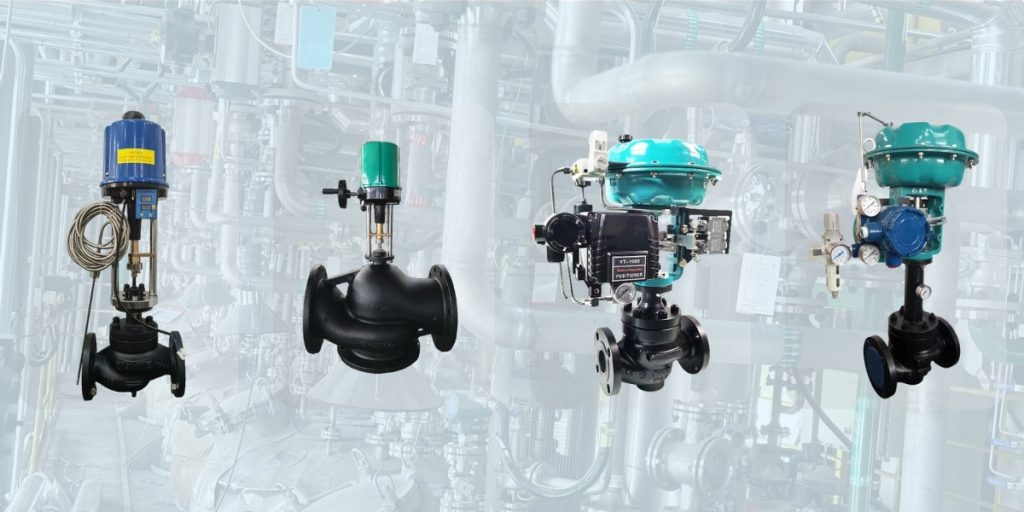
Linear motion valves use a closing member that moves in a straight line, like a globe or diaphragm valve. They are the best choice for applications needing precise throttling and regulation, such as temperature control loops or chemical injection systems.

Linear motion means the valve stem travels straight up and down to open or close the flow path. This design gives you very fine control over the amount of fluid passing through. Think of it like a precision faucet rather than a simple on/off switch. This makes them the go-to choice when accuracy is more important than maximum flow.
The most common linear control valve is the صمام الكرة الأرضية. It has an internal S-shaped passageway. Fluid flows up through a seat, and a plug or disc is moved precisely into or out of that seat to control the flow rate. This design is excellent for throttling because small movements of the stem result in small, predictable changes in flow. However, forcing the fluid through these turns causes a significant pressure drop, so they aren’t ideal for systems that need to move large volumes with minimal energy loss.
Another key type is the صمام الحجاب الحاجز. It uses a flexible diaphragm which is pressed against a solid weir in the valve body to stop flow. Its main advantage is that the process fluid never touches the valve’s moving parts (the actuator and stem). This isolation makes it perfect for handling corrosive fluids, slurries, or high-purity applications in the pharmaceutical or food industries. Their main limitation is that they typically can’t handle the high pressures or temperatures that a globe valve can.
| نوع الصمام | Primary Application | الميزة الرئيسية | Key Disadvantage |
|---|---|---|---|
| صمام الكرة الأرضية | Precise flow/pressure control (throttling) | Excellent regulation and accuracy. | High pressure drop, lower flow capacity. |
| صمام الحجاب الحاجز | Corrosive, slurry, or hygienic services. | Media is isolated from working parts. | Limited pressure and temperature ratings. |
When Are Rotary Motion Control Valves the Better Choice?
Your system demands high flow rates and fast action. Linear valves are too restrictive, and you need a simpler, more cost-effective solution. When should you turn to a rotary design instead?
Rotary motion control valves, like ball and butterfly valves, use a rotating disc or ball to control flow. They are the better choice for applications requiring high flow capacity, quick shut-off, and a simpler, more compact design.

Unlike the up-and-down movement of linear valves, rotary valves use a closure element that turns, usually through a 90-degree arc, to go from fully closed to fully open. This simple, straight-through flow path is their biggest advantage. It allows them to handle much larger flow volumes with very little pressure drop, making them highly efficient. They are the workhorses for on/off isolation and applications where you need to move a lot of fluid quickly.
الصمامات الكروية are a common rotary type. They have a spherical ball with a hole through the center. When the hole is aligned with the pipe, the valve is open. A quarter-turn rotates the solid part of the ball into the flow path, shutting it off. They provide excellent, bubble-tight shut-off and have high flow capacity, but standard ball valves can be challenging to use for precise throttling.
صمامات الفراشة are perhaps the most common rotary valve. They are simple, lightweight, and cost-effective. A circular disc is mounted on a stem in the middle of the pipe. It rotates 90 degrees to open or close the flow path. Because the disc is always in the flow, they do cause some minor pressure drop. They are fantastic for on/off services and for controlling flow in large-diameter pipes where a globe valve would be enormous and expensive. High-performance versions are specifically designed to offer improved throttling control.
Deciding Between Rotary Types:
-
For On/Off Isolation: Both ball and butterfly valves are excellent. Ball valves often provide a tighter seal, making them ideal for applications where zero leakage is critical.
-
For Throttling Control: A high-performance butterfly valve or a segmented ball valve (V-port ball valve) will offer much better control than a standard ball or butterfly valve. These designs modify the rotating element to create a more linear and predictable flow characteristic as the valve opens.
-
For Size and Cost: For large pipe diameters (above 6 inches), butterfly valves are almost always the more compact, lighter, and more cost-effective solution compared to ball valves.
خاتمة
Choosing the right control valve means matching the valve’s design to the job. Use linear valves for precision throttling and rotary valves for high-flow, on/off applications to ensure optimal process control and system reliability.
 English
 Arabic
 Russian
 French
 Spanish