
مقدمة
    The role of control valves in the steam system is crucial, especially in industrial production, where steam is not only the main medium for providing heat and power, but also an important medium in all types of processes. Therefore, the selection of appropriate control valves can ensure the precise control of steam flow, pressure and other parameters to enhance the efficiency and stability of the system. In this paper, we will discuss in detail the types of control valves suitable for steam applications, analyze their operating principles, applicable scenarios and selection criteria for engineers in the design and maintenance of steam systems to provide a theoretical basis.
        1. Working Principle and Characteristics of Steam Control Valves
    Steam as a high temperature, high pressure, gaseous media, with unique physical properties, its flow characteristics and temperature changes in the valve design and selection of special requirements.
Control valves usually include components such as valve body, valve seat, spool, actuator and feedback control system. Control valves receive control signals through the actuator to adjust the position of the spool, thereby changing the valve seat opening, and thus regulating the flow of fluid. In the steam system, the control valve not only to ensure the flow accuracy, but also need to deal with high temperature, corrosive, impact and a series of harsh working environment.
2. Types of Control Valves for Steam
According to the different needs of the steam system, there are a variety of control valves on the market for steam control, common types include:Spherical Control ValvesButterfly ValvesGlobe ValvesNeedle control valveEccentric Rotary Control Valves
2.1 Spherical Control Valves
Spherical control valve has a simple structure, good sealing, and is suitable for high-pressure steam systems. Its spool is spherical, can be rotated to adjust the flow, with high flow control accuracy, suitable for large flow, pressure fluctuations in the steam pipeline. The advantages of spherical control valve is that the fluid flow resistance is small, good corrosion resistance, and can effectively reduce turbulence in the flow of media.However, spherical control valves are not suitable for applications with a wide range of flow control and large variations in flow rate because of their relatively low adjustment accuracy. For applications where the steam flow rate does not fluctuate much, the spherical control valve is still a reliable choice.
2.2 Butterfly Valves
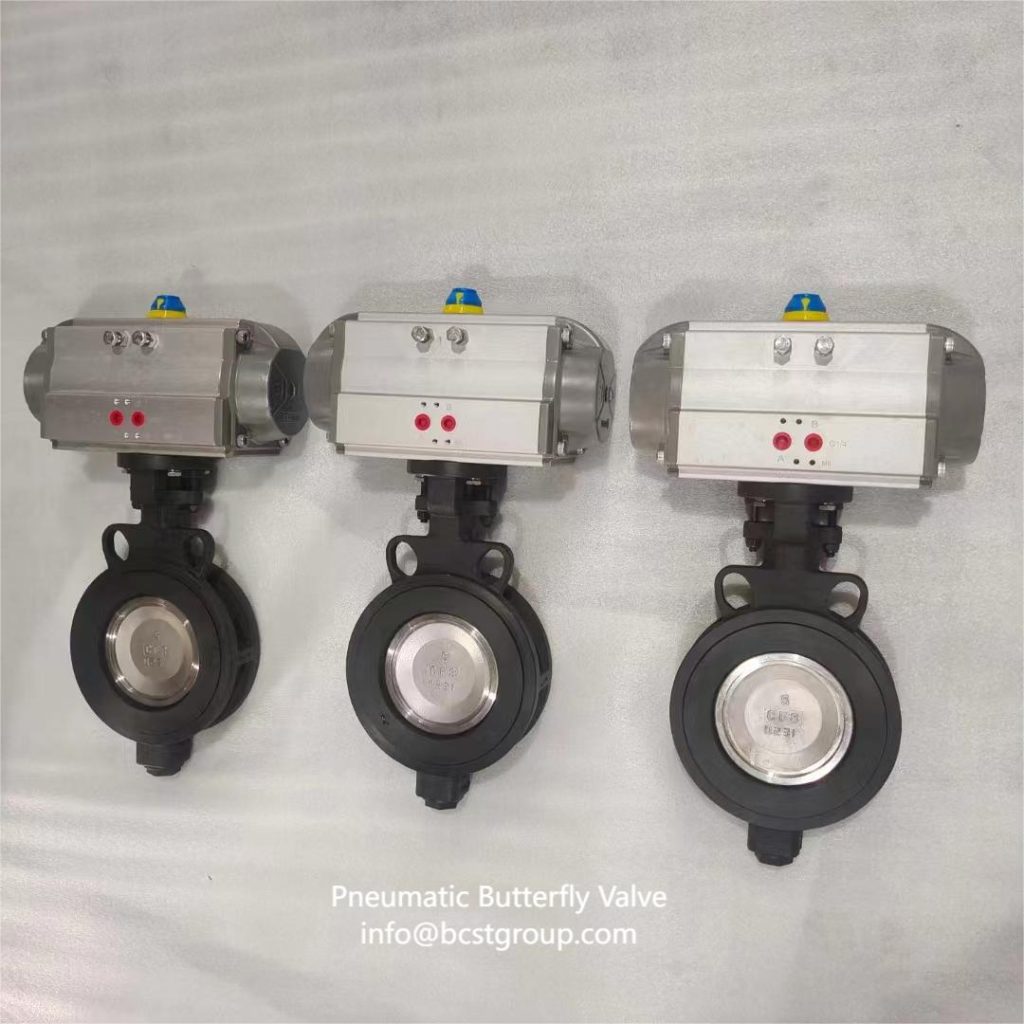 The butterfly valve is a control valve with a disc-shaped spool and is suitable for steam piping of small to medium diameter. Because of their compact structure, fast response, and low cost, butterfly valves are widely used in steam flow control where accuracy is not required. For low to medium pressure steam systems, butterfly valves can provide good flow control performance.Butterfly valves have limitations in high-temperature, high-pressure steam environments because their sealing and high-temperature resistance are poorer than those of ball valves and globe valves, making them less reliable than other types of valves in high-temperature steam applications.
2.3 Globe Valves
 The globe valve is a classic valve that is widely used in steam systems. Its main feature is a good sealing performance, can effectively prevent leakage of the medium, suitable for high pressure and high temperature working environment. Globe valve is mainly through the spool of the lift to adjust the flow, suitable for the need for high sealing performance, more fine flow adjustment occasions.Globe valves are suitable for more stable flow control and have a slower response time, so they are not suitable for steam systems with frequent flow adjustments. For some high-flow steam piping, the globe valve structure may bring large flow resistance, affecting the efficiency of the system.
2.4 Needle control valve
It is characterized by a fine needle-type spool and seat fit, able to accurately control small changes in steam flow. Needle-type control valve are particularly well suited for steam piping where precision flow control is required, and excel especially in low-flow, high-precision regulation applications.However, needle-type control valves have a limited range of flow adjustment and are generally not suitable for high-flow steam systems. Moreover, due to their special construction, needle-type control valves are expensive to maintain.
2.5 Eccentric Rotary Control Valves
Eccentric rotary control valves have good flow adjustment performance and are suitable for medium and high pressure steam systems. The valve adopts an eccentric rotary spool structure, which can effectively reduce the flow resistance and provide a larger flow adjustment range. Eccentric rotary control valves have high adjustment accuracy and are particularly suitable for steam piping where the flow demand varies greatly.The disadvantage of this type of control valve is that the structure is relatively complex and requires a high level of technical support for installation and maintenance. In addition, the sealing performance and wear resistance of eccentric rotary control valves need to be selected and optimized according to the working environment.
3. Selection Basis for Steam Control Valves
When selecting a suitable steam control valve, engineers need to comprehensively consider a variety of factors, including the operating pressure of the steam system, temperature range, flow fluctuations and corrosive properties of the medium. Common selection bases are as follows:Working Pressure and Temperature: The working pressure and temperature of steam directly affects the selection of control valves. High-temperature and high-pressure steam systems need to choose valves with high-temperature and high-pressure resistance, such as spherical control valves, globe valves.Flow control accuracy: for flow regulation requires high occasions, needle control valves and eccentric rotary control valves are more suitable, especially in low-flow, high-precision occasions. Sealing performance: the steam medium is highly corrosive and thermal, so the sealing requirements of the control valve is high. Globe valves and spherical control valves usually have better sealing performance.Flow resistance: In applications where lower flow resistance is required, globe control valves and eccentric rotary control valves are more advantageous in that they provide lower flow resistance.Life and Maintenance: The durability and maintenance requirements of control valves are directly related to the stability of the steam system. Globe and globe valves typically have a long service life and are suitable for most steam systems.
4. Common Steam control valve Failures and Maintenance
In actual operation, steam control valves may fail due to high temperatures, corrosion, wear and tear. Common failures include valve leakage, stalling, and insensitive regulation. For these problems, engineers need to regularly check the sealing of the valve, the wear of the valve seat, and the working condition of the actuator.By regularly cleaning out accumulated dirt, checking sealing surfaces and adjusting valve seat positions, control valve failures can be effectively avoided to ensure efficient operation of the steam system.
خاتمة
The selection of steam control valves involves a number of factors that need to be considered according to the specific requirements of the steam system. Spherical control valves, butterfly valves, globe valves, needle control valves and eccentric rotary control valves have their own advantages and limitations, and engineers should make reasonable choices based on actual working conditions when designing steam systems. At the same time, the correct installation, operation and maintenance is also to ensure that the long-term stable operation of the steam control valve is the key.Through scientific selection and good maintenance, you can ensure that the steam system to provide efficient heat energy at the same time, maintain good control performance, to protect production safety and energy efficiency.
 English
 Arabic
 Russian
 French
 Spanish