
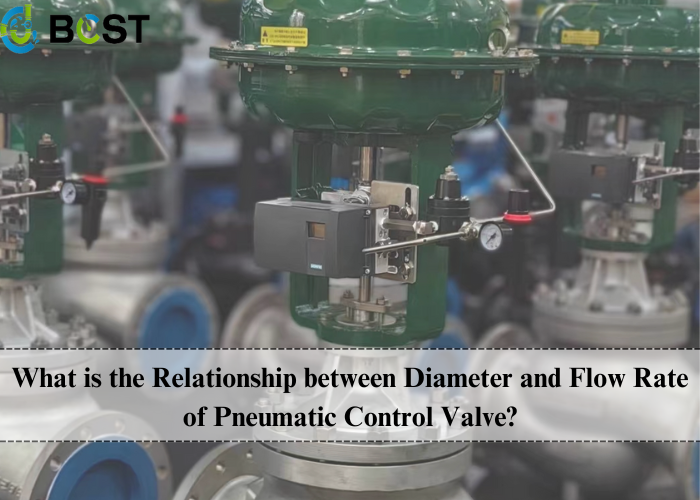
As a professional manufacturer of صمامات التحكم الهوائي, we are well aware of the importance of pneumatic control valves in industrial control systems. صمامات التحكم الهوائي ensure the stable operation of various processes by regulating the flow, pressure and temperature parameters of the medium. Among them, the relationship between the diameter and flow rate of the pneumatic control valve is a key issue that requires special attention in the selection and use process. In this article, we will discuss in detail the relationship between the diameter of the pneumatic control valve and the flow rate from a variety of perspectives, to help users better understand and apply the pneumatic control valve.
Ⅰ. The pneumatic control valve diameter classification and standards
Pneumatic control valves are usually classified according to the diameter, common diameter identification methods are DN (nominal diameter), NPS (U.S. standard pipe diameter) and ID (inside diameter). Among them, DN is the most commonly used diameter representation, widely used in international and domestic standards.
DN diameter of the specific value of a series of standards, such as G3/8“ (9.525mm), 1/2” (12.7mm), G3/4“ (19.05mm), G1” (25.4mm), etc., as well as larger diameters such as DN10, DN15, DN20, DN25, DN40, DN50, DN80, DN100 and so on. The size of the diameter directly affects the valve’s ability to regulate the flow, in general, the larger the diameter, the larger the valve can pass the flow.
Ⅱ. The concept of pneumatic control valve flow coefficient
Flow coefficient (Cv) is an important parameter to measure the ability of the pneumatic control valve flow regulation, Cv value reflects the valve in a certain pressure drop, through the unit flow capacity. the larger the value of Cv, said the valve in the same pressure drop through the larger the flow.
The specific value of flow coefficient Cv is usually obtained by experimental measurement, and its measurement standard follows ISO 5167 or other relevant international standards. The range of Cv values varies for valves of different diameters. For example, for small diameter valves, Cv value may be only 0.025 to 0.05, while for large diameter valves, Cv value can reach 1.40, 1.55 or even higher.
Ⅲ. The relationship between the diameter and flow of the pneumatic control valve
صمام التحكم الهوائي diameter and flow has a direct and important relationship. This relationship is mainly reflected in the following aspects:
- Diametersize directly affects the flow: generally speaking, the larger the diameter of the valve, the larger the flow rate allowed to pass. This is because the increase in diameter makes the medium through the valve channel area increases, thus increasing the flow.
- Flow coefficient and diameterof the relationship: flow coefficient Cv is a measure of the valve flow capacity of the key parameters, and the Cv value is closely related to the valve diameter. The larger the diameter, usually the larger the Cv value, indicating that the valve is able to pass the same pressure drop in the flow rate is also larger.
- Pressure drop on the impact of flow: in the pneumatic control valve flow regulation process, the pressure drop is a factor that can not be ignored. The size of the pressure drop directly affects the flow rate, and the Cv value of the valve is measured under a certain pressure drop. Therefore, in the selection, you need to consider the actual working pressure drop and the valve Cv value of the match to ensure that the valve can provide the required flow under actual working conditions.
- Media properties on the impact of flow: In addition to diameterand pressure drop, the properties of the medium (such as temperature, pressure, corrosivity, viscosity, etc.) will also have an impact on the flow. Therefore, when selecting the type, you need to comprehensively consider the properties of the medium, select the appropriate pneumatic control valve material and model.
Ⅳ. How to correctly match the diameter and flow of pneumatic control valve
In order to ensure that the pneumatic control valve in the actual application can be stable, accurate regulation of flow, correctly matching the valve diameter and flow is critical. Here are some practical suggestions:
Define the flow demand: Before selecting the type, you need to define the flow demand in the actual work. This includes the maximum flow rate, minimum flow rate and flow adjustment range. By knowing these requirements, the range of required valve sizes can be initially determined.
Calculate Cv value: Based on the flow requirements, the required Cv value can be calculated. Typically, a flow calculation formula (e.g., Q = Cv x √ΔP/ρ, where Q is the flow rate, ΔP is the pressure drop, and ρ is the density of the medium) can be used to back out the required Cv value.
Select the appropriate diameter: According to the calculated Cv value, you can select the appropriate valve diameter. When selecting a size, consult the valve’s Cv value table or consult the manufacturer for more detailed information.
Consider pressure drop: When selecting the diameter, it is also necessary to consider the actual working pressure drop. If the operating pressure drop is large, it may be necessary to select a valve with a larger Cv value to ensure adequate flow.
Consider the properties of the medium: the properties of the medium also has an important impact on the valve selection. For example, corrosive media may need to choose corrosion-resistant materials; high-temperature media may need to choose high-temperature valve models.
Practical test: After the selection is completed, it is best to carry out practical tests to verify the flow regulation performance of the valve. This ensures that the valve in the actual working conditions to meet the flow requirements.
Ⅴ. The pneumatic control valve diameter and flow rate of the application case
In order to better understand the relationship between pneumatic control valve diameter and flow, the following are some practical application cases:
Liquid media flow regulation: in the liquid transportation system, the pneumatic control valve is commonly used to regulate the flow. For example, in the chemical production process, the need to accurately control the liquid level in the reactor, this time you can choose the appropriate diameter of the pneumatic adjustment valve to control the flow of the feed. By adjusting the opening of the valve, precise control of the flow rate can be realized.
Steam Media Flow Control: In steam heating systems, pneumatic control valves are commonly used to adjust the flow of steam to control the heating temperature. Steam is characterized by high temperature and high pressure, so it is necessary to select a pneumatic control valve that is resistant to high temperature and high pressure. At the same time, according to the flow demand of steam, you can choose the appropriate valve diameter to ensure adequate steam supply.
Gas media flow regulation: in the gas delivery system, pneumatic control valves are also commonly used to regulate the flow. For example, in the air separation plant, the need to accurately control the flow of oxygen to ensure product quality. At this time, you can choose the appropriate diameter pneumatic control valve to control the flow of oxygen. By adjusting the valve opening and pressure drop, you can realize the precise adjustment of the flow.

Ⅵ. The pneumatic control valve diameter and flow rate selection considerations
In the selection of pneumatic control valve, in addition to considering the relationship between diameter and flow, but also need to pay attention to the following points:
Valve material: according to the properties of the medium to select the appropriate valve material.
Actuator selection: the actuator of the pneumatic adjustment valve usually has a pneumatic thin film actuator, pneumatic piston actuator and so on. When choosing the actuator, you need to consider the actual working pressure, temperature, and adjustment accuracy and other requirements.
Accessory configuration: according to the need to configure the corresponding accessories, such as positioners, limit switches, solenoid valves and so on. These accessories can improve the regulation accuracy and reliability of the valve.
Installation method: choose the appropriate installation method according to the actual need, such as horizontal installation, vertical installation or inclined installation. Different installation methods may have an impact on the flow regulation performance of the valve.
Ⅶ. Summary and outlook
Pneumatic control valves have a close relationship between the diameter and flow. Correctly matching the valve diameter and flow rate is essential to ensure that the pneumatic control valve in the actual application can be stable and accurate adjustment of the flow rate. By clarifying the flow demand, calculating the Cv value, selecting the appropriate diameter and considering the media properties and pressure drop and other factors, we can ensure that the pneumatic control valve can meet the flow demand under actual working conditions.
In the future, with the continuous development of industrial automation and intelligence, the application fields of pneumatic control valves will be more extensive. In order to meet the needs of different fields, we will continue to research and develop more advanced and intelligent pneumatic control valve products to provide users with better service and solutions. At the same time, we will also strengthen the research and exploration of the relationship between the diameter and flow rate of pneumatic control valves to provide users with more professional technical support and guidance.
As a professional manufacturer of pneumatic control valves, we are aware of the great responsibility. We will always adhere to the “quality first, customer first” principle, and constantly improve the quality of products and services, for the development of industrial automation and intelligence to contribute to our strength.


 English
 Arabic
 Russian
 French
 Spanish