

Overpressure is a hidden risk in any system. If it builds unchecked, it can rupture pipes or vessels—putting people at risk and leading to costly damage and downtime.
A pressure relief valve is your last line of defense. It opens automatically at a set pressure to release excess fluid or gas, keeping the system within safe limits. Simple and mechanical, it works when everything else doesn’t.
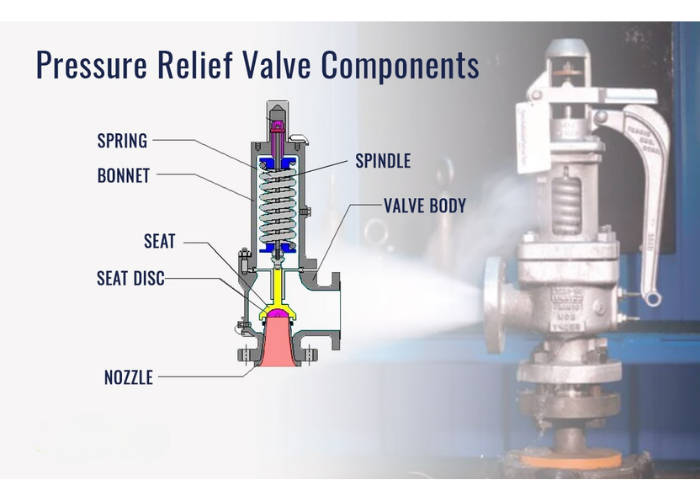
How Does a Simple Spring Stop a Plant from Exploding?
You see this simple, self-contained valve and wonder how it can reliably stop a massive tank from bursting. You might think it’s too basic to be trusted with such an important job.
A pressure relief valve works on a foolproof mechanical principle. A calibrated spring holds a seal closed. When system pressure gets high enough to overcome the spring force, the valve opens and releases pressure. It’s simple, effective, and works without any external power.
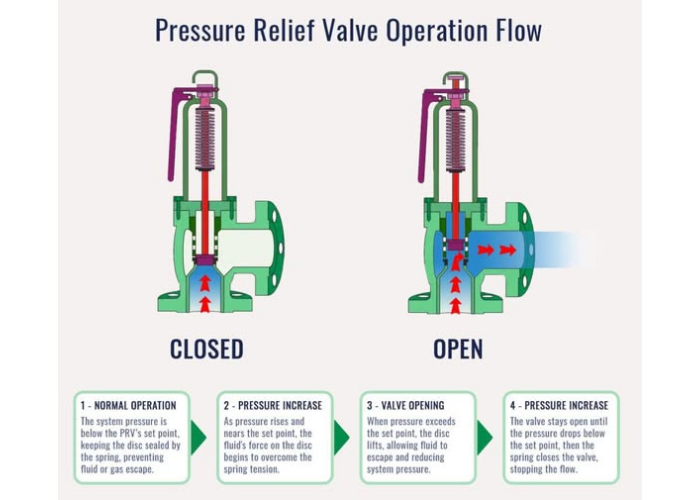
The Balance of Forces
The genius of the pressure relief valve is its simplicity. It’s a constant battle between two forces: the pressure of the fluid in your system and the force of the spring inside the valve. Understanding this balance is key to trusting its function. A pressure relief valve doesn’t need a computer to decide when to open; it obeys the laws of physics.
The Three States of Operation
- Normal Operation (Closed): During normal conditions, the system pressure is below the valve’s set pressure. The downward force of the spring is stronger than the upward force of the fluid pressure on the valve’s disc. The pressure relief valve remains tightly sealed.
- Cracking Pressure (Beginning to Open): As system pressure rises, it reaches the “cracking pressure.” At this point, the upward force from the fluid is equal to the downward force of the spring. The disc starts to lift just off the seat, and a small amount of fluid begins to trickle out.
- Full Relief (Open): If the pressure continues to rise past the set pressure, it fully compresses the spring. The disc lifts completely, opening a large path for fluid to escape. This rapidly vents the excess pressure. Once the system pressure drops back down to a safe level, the spring force takes over again and reseats the disc, sealing the pressure relief valve.
| State | System Pressure | Valve Action | الغرض |
|---|---|---|---|
| Normal | Below Set Pressure | Tightly Closed | Contain the process fluid. |
| Cracking | At Set Pressure | Disc just starts to lift, slight trickle. | The first indication of overpressure. |
| Full Relief | Above Set Pressure | Disc is fully lifted, high flow rate. | Rapidly reduce system pressure. |
This mechanical process makes the pressure relief valve incredibly reliable. It will do its job during a power outage or a control system failure because it doesn’t depend on them.
Are You Using the Right Valve? Pressure Relief Valve vs. Safety Valve
You’ve heard the terms “pressure relief valve” and “safety valve” used for the same thing. This creates confusion and you might install the wrong type of protection for your system.
While they both protect against overpressure, they are not the same. A pressure relief valve opens proportionally and is used for liquids. A safety valve “pops” open fully and is used for compressible gases like steam or air. Using the wrong one can be dangerous.
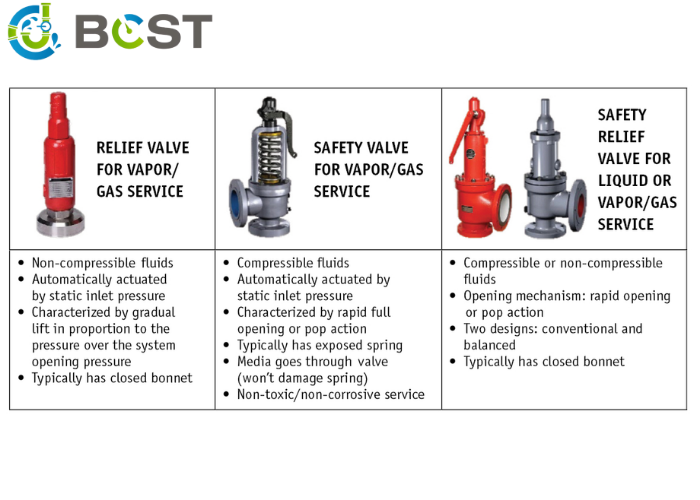
Liquids vs. Gases
Choosing the correct device is critical. The main difference lies in how they respond to overpressure, which is designed specifically for the type of fluid they are protecting against. Installing a liquid-service pressure relief valve on a steam boiler would be a catastrophic mistake.
The Key Differences
- صمام تخفيف الضغط (PRV):
- Action: Proportional opening. As the pressure increases above the set point, the valve opens further. It lets out just enough liquid to keep the pressure at bay.
- Application: Primarily for liquid service. Since liquids don’t compress, you don’t need a sudden, massive release. A gradual, controlled release works best.
- Pressure Safety Valve (PSV) or Safety Relief Valve (SRV):
- Action: “Pop” action. When it reaches its set pressure, it pops fully open almost instantly. It stays wide open until the pressure drops to a safe level, then it snaps shut.
- Application: Primarily for compressible gases, steam, or vapor. A small increase in pressure on a gas can represent a huge amount of stored energy. The pop action is needed to vent this energy very quickly. A safety relief valve can handle either liquid or gas.
| ميزة | Pressure Relief Valve (PRV) | Safety Valve (PSV) / Safety Relief Valve (SRV) |
|---|---|---|
| الاستخدام الأساسي | Liquid Service | Gas, Steam, Vapor (SRV can do liquid too) |
| فعل | Opens proportionally to the overpressure. | Pops fully open at set pressure. |
| Why? | Liquids are incompressible; a controlled release is fine. | Gases are compressible; need to vent energy fast. |
| Example | Protecting a pipeline from a positive displacement pump. | Protecting a steam boiler or compressed air tank. |
When you order a pressure protection device, you must specify the fluid. This ensures you get the right valve for the job. A reliable supplier will always ask for this information to guarantee you are installing the correct and safe device. The purpose of a pressure relief valve for liquid is fundamentally different from a safety valve for gas.
Where Should You Install a Pressure Relief Valve for Maximum Protection?
You know you need a pressure relief valve, but where exactly does it go? Placing it in the wrong location can make it completely ineffective, leaving your system unprotected.
A pressure relief valve must be installed anywhere pressure can be trapped and exceed a system’s limit. This includes directly on pressure vessels, on the discharge of positive displacement pumps, and on any line that can be blocked in and exposed to heat.
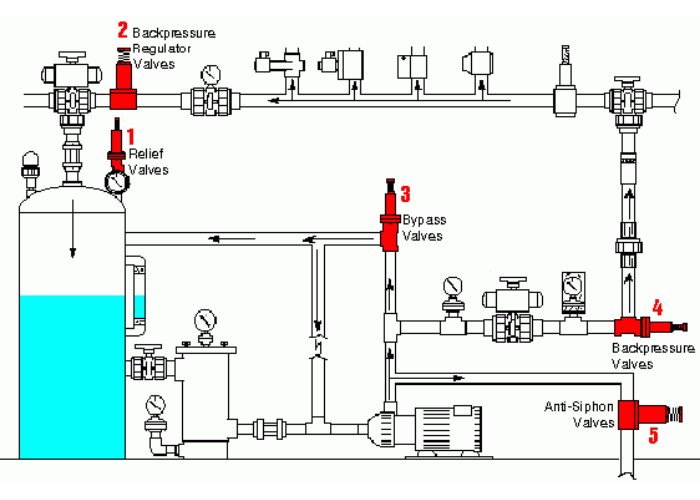
Strategic Placement is Everything
A pressure relief valve can only protect the equipment it is connected to. Its placement is not arbitrary; it’s a strategic decision based on identifying potential overpressure scenarios. Hassan always reviews piping diagrams with one question in mind: “How can this section become over-pressurized?” The answer to that question tells him where a pressure relief valve is needed.
Three Critical Installation Locations
- On Pressure Vessels and Tanks: This is the most common application. Any sealed tank or reactor that contains a pressurized fluid or could be accidentally overfilled needs a pressure relief valve mounted directly on a top nozzle. This protects the vessel itself from rupturing.
- On the Discharge of Positive Displacement Pumps: Pumps like gear pumps or piston pumps move a fixed amount of fluid with each rotation. If the discharge line is blocked (a valve is mistakenly closed), the pump will continue to build pressure until something breaks. A pressure relief valve installed right at the pump outlet will open and divert the flow, protecting the pump and the piping.
- On Lines Subject to Thermal Expansion: Imagine a pipeline full of a liquid like water, with valves closed on both ends. If that pipeline is then heated by the sun, the trapped liquid will expand. Since the liquid has nowhere to go, the pressure can increase dramatically, easily enough to rupture the pipe. A small thermal pressure relief valve is installed on these lines to bleed off this pressure safely.
In every case, the pressure relief valve must be installed before any isolation valve, ensuring that it can never be accidentally blocked off from the system it is meant to protect.
Frequently Asked Questions (FAQs)
1. What’s the difference between set and cracking pressure?
Cracking pressure is when the valve first opens. Set pressure is the pressure where it fully opens.
2. How often should a pressure relief valve be tested?
This depends on the service and regulations, but yearly testing is a common best practice.
3. Can I adjust the pressure setting of a pressure relief valve myself?
No. Adjustments must be done by a certified technician to ensure safety and compliance.
4. Why is my pressure relief valve leaking or “simmering”?
This can be caused by dirt under the seat or if the system pressure is too close to the set point.
خاتمة
The primary purpose of a pressure relief valve is to be your system’s silent, automatic guardian. It is a simple, robust device that mechanically prevents overpressure, protecting your equipment and your people.


 English
 Arabic
 Russian
 French
 Spanish