
Ⅰ. مقدمة
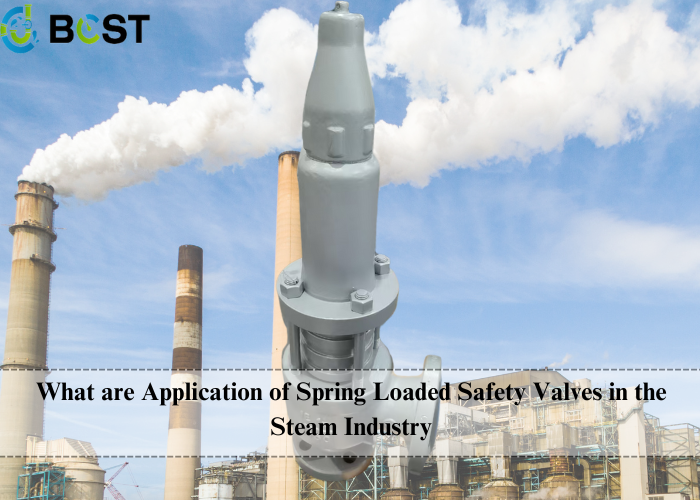
Steam systems are characterized by high temperatures and high pressures, and a malfunction can result in equipment damage, worker injury, or even catastrophic consequences. Therefore, the application of safety valves in the steam industry is particularly important. As a common type of safety valve, spring loaded safety valves are widely used in steam systems, especially in high pressure steam boilers, pipelines and other pressure vessels due to their simple structure, stable performance and easy adjustment. In this paper, we will discuss the application of spring loaded safety valves in the steam industry, the working principle, design considerations and considerations in the actual use of spring loaded safety valves from the perspective of engineering and technology.
Ⅱ. The basic principle of spring safety valve
Its main function is to protect the system from the hazards of overpressure. When the pressure in the system exceeds the set value, the spring loaded safety valve will automatically open to discharge excess steam to prevent the system pressure from continuing to rise, resulting in equipment damage or safety accidents.The basic structure of a spring loaded safety valve consists of a valve body, seat, flap, spring, bonnet and other parts. When the system pressure exceeds the set value, the valve flap is pressed open under the action of the spring force, and the steam is discharged through the valve opening to reduce the pressure. When the pressure is reduced to a safe range, the spring force causes the valve flap to close automatically, restoring normal operation of the system.
Ⅲ. Application areas of spring loaded safety valves
Spring loaded safety valves are mainly used in steam boilers, steam piping, steam equipment and other fields, especially in the following areas have an important role:
Steam boilers
In steam boilers, spring loaded safety valves are key pressure control devices. If the boiler is unable to control the pressure effectively, it may lead to serious accidents such as equipment rupture and explosion. Therefore, spring loaded safety valves are installed to avoid the buildup of excessive pressure and to ensure the safe operation of the boiler.
Steam piping
In steam piping systems, especially in high-pressure steam piping, spring-loaded safety valves prevent excessive steam pressure. In the event of piping blockage or equipment failure, spring loaded safety valves will relieve pressure in a timely manner, ensuring safe operation of the piping and system.
Steam Equipment
Various types of steam heating equipment, such as steam heat exchangers and steam turbines, also require the installation of spring loaded safety valves. Equipment in the operation process may be pressure fluctuations or equipment failure, spring loaded safety valves can be avoided to avoid the system pressure exceeds the limit, to protect the equipment from damage.

Ⅳ. Design Considerations for Spring Loaded Safety Valves
In steam systems, the design of spring loaded safety valves requires comprehensive consideration of a number of factors, including the valve's opening pressure, discharge capacity, and response speed. The following are some of the key design elements:
Setting of Opening Pressure
The opening pressure of a spring loaded safety valve is one of its most important design parameters. The opening pressure is generally set according to the maximum safe working pressure of the equipment or system. In order to ensure system safety, the opening pressure should be slightly higher than the design pressure of the equipment, but it should not be too high to prevent the valve from being able to start in time when the system pressure reaches the set value.
Discharge capacity
In order to ensure that the system pressure can be effectively reduced in a short period of time, the discharge capacity of the spring loaded safety valve must be matched to the volume of the system and the steam flow. The design needs to calculate the discharge flow rate based on the specific application to ensure that the system does not fail due to excessive pressure buildup.
Valve Material Selection
Steam systems operate in harsh environments, and valves must be able to withstand high temperature and high pressure operating conditions. Therefore, the selection of materials that are resistant to high temperatures, corrosion, and abrasion is key in the design of spring loaded safety valves. Commonly used materials include carbon steel, stainless steel, etc., depending on the actual working environment, the choice of materials also varies.
Sealing of the valve
The sealing of the spring safety valve is critical to its normal operation. The sealing performance between the valve flap and the valve seat must be good to prevent leakage. When designing, it is necessary to consider the precision of the fit between the sealing surface of the valve flap and the valve seat as well as the high temperature resistance of the sealing material.
Ease of adjustment and maintenance
Spring loaded safety valves require regular inspection and adjustment, so their design should facilitate the adjustment of spring preload. The maintainability and service intervals of the valve are also important considerations in the design. In general, the design should ensure that the valve can be convenient for pressure calibration, disassembly, cleaning and other operations.
Ⅴ. The spring safety valve selection
When selecting spring safety valves, the following aspects need to be considered:
Operating pressure range
Selection needs to ensure that the set pressure range of the safety valve is suitable for the actual application of the working pressure. The set pressure should be lower than the maximum design pressure of the equipment, and to comply with industry standards.
Medium Type
Steam, as a high-temperature and high-pressure medium, has high material requirements for safety valves. Therefore, when selecting the type, it is important to confirm that the material of the safety valve can withstand the temperature and corrosiveness of the steam.
Flow Demand
Select a safety valve with the appropriate discharge capacity based on the size of the system and steam flow demand. Too small a discharge capacity may result in pressure not being reduced in time, while too large a discharge capacity may result in unnecessary energy loss to the equipment.
Connection Methods
Connection methods for safety valves include flanged connections, threaded connections, etc., which need to be selected based on the specific design of the steam system. Different connection methods have different effects on the ease of installation and maintenance.
Ⅵ. Operation and Maintenance of Spring Loaded Safety Valves in Steam Systems
Operating Points
Spring loaded safety valves should be checked periodically for accurate opening pressure and to verify that there is no leakage. Before starting the system, ensure that the set pressure of the safety valve is as specified and that the valve is not blocked. Under normal conditions, the spring loaded safety valve should be closed and will only open automatically if the system pressure exceeds the set value.
Maintenance
In order to ensure the long-term stable operation of spring loaded safety valves, regular inspection and maintenance is very important. Inspection includes: whether there is corrosion, damage, poor sealing, etc. of the valve, whether the spring force is degraded, and whether the contact surfaces of the valve seat and valve flap are worn. Parts should be cleaned, lubricated or replaced if necessary.
Periodic calibration
Periodic calibration of the safety valve is particularly important. Through the calibration can verify whether the set pressure of the safety valve is accurate, and timely adjustment. Calibration, you can use pressure testing equipment to simulate the system over pressure, to confirm the opening performance of the safety valve.
Ⅶ. الخاتمة
Spring loaded safety valves in the steam industry has an important safety role. It can not only effectively protect the equipment from over pressure damage, but also ensure the safe and stable operation of the entire steam system at high temperature and high pressure conditions. In the process of design, selection, operation and maintenance, comprehensive consideration must be given to the system's operating pressure, steam flow, material selection and other factors to ensure the reliability and effectiveness of spring loaded safety valves. With the continuous development of technology, the performance and application of spring loaded safety valves will be further enhanced to provide a more solid guarantee for the safe production of the steam industry.


 English
 Arabic
 Russian
 French
 Spanish