
The Ultimate Guide to Your RV Gate Valves (Black & Grey Tanks)
As an RV owner, you know the freedom of the open road – but you also know that managing your RV’s waste system is a critical part of that independence. At the heart of this system are the RV gate valves. These unassuming components control the flow of waste from your black and grey water tanks, ensuring that everything stays safely contained until it’s time to dump.
Whether you’re a seasoned RVer or just bought your first rig, understanding your RV gate valve system is paramount for hygienic operation and preventing messy (and costly) problems. This ultimate guide will walk you through everything you need to know: what they are, how they work, where to find them, and how to handle common issues.

What is an RV Gate Valve?
At its core, an RV gate valve is a simple mechanism designed to control fluid flow. Imagine a thin, flat gate that slides horizontally into and out of a channel. When the gate is pushed fully in, it creates a solid barrier, holding back the contents of your waste tank. When pulled fully out, it opens the channel, allowing wastewater to flow freely. This is precisely what is a gate valve for RV wastewater management.
These valves are typically operated by a hand-pulled T-handle (or sometimes an electric switch on newer, higher-end models) located on the exterior of your RV, usually near the sewer outlet. The valve itself is integrated into the ABS or PVC plumbing underneath the vehicle.
Black Tank vs. Grey Tank Valves: Location and Function
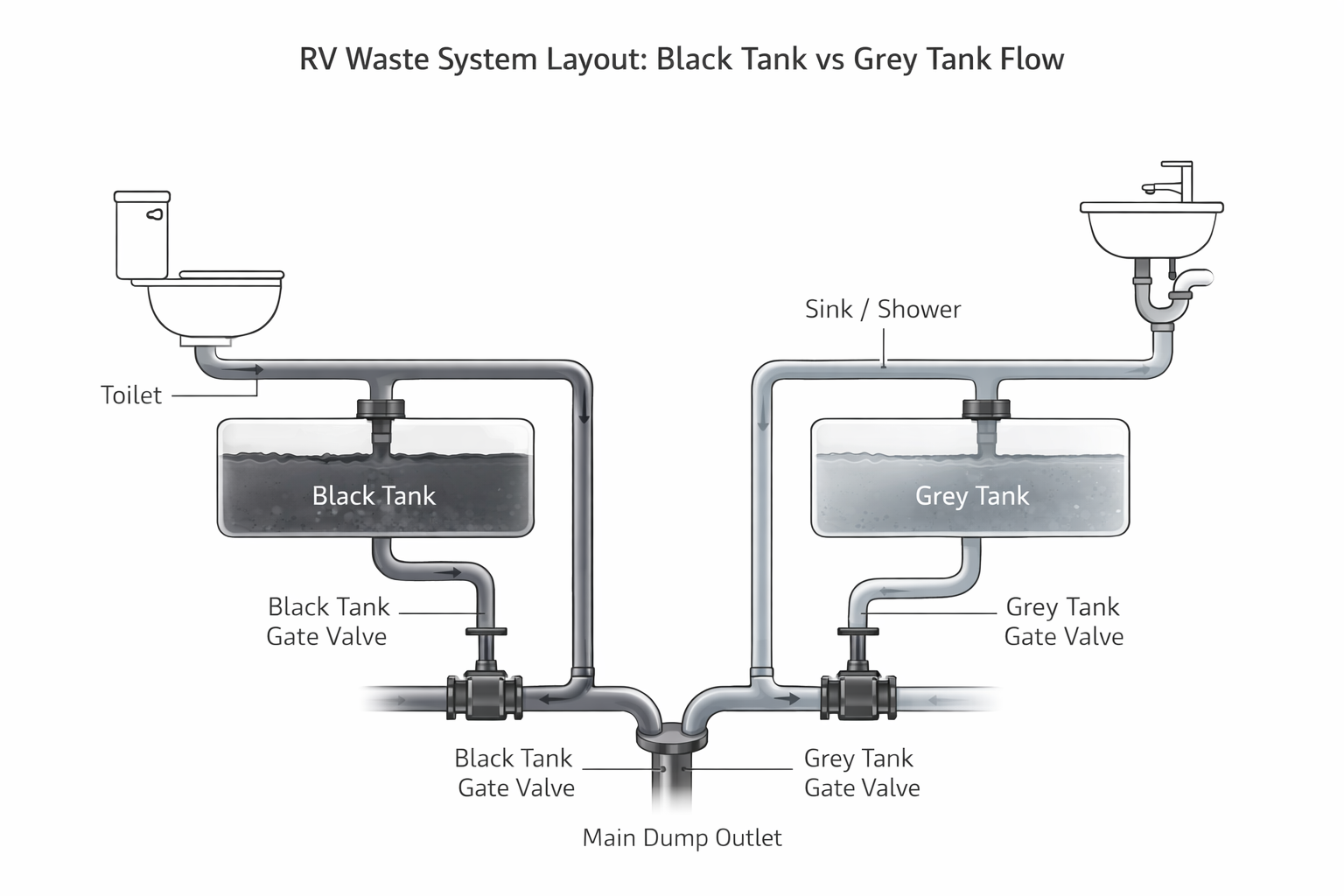
Your RV will have at least two primary gate valves, one for each waste tank. Understanding their distinct functions is crucial for proper operation and avoiding contamination.
The Black Tank Valve
- الوظيفة: Controls the discharge from your black water tank, which collects toilet waste (solids and liquids). This is the most critical valve to keep sealed and functional due to the nature of its contents.
- Location: Generally located closest to the main sewer outlet, before the grey tank valve.
- العملية: Always dump the black tank first. Keep this valve closed at all times except during dumping to allow solids to break down and to create enough liquid volume for proper flushing.
The Grey Tank Valve
- الوظيفة: Controls the discharge from your grey water tank, which collects wastewater from your sinks and shower. While less hazardous than black water, it can still contain food particles, grease, and soap scum that can cause odors if not managed properly.
- Location: Typically located after the black tank valve, further along the plumbing line, but before the main sewer outlet.
- العملية: Dump the grey tank second, after the black tank. The grey water helps rinse out the sewer hose after the black tank has been emptied, minimizing residue and odor.
How Do RV Waste Valves Work?
The operational principle of an RV waste valve assembly is straightforward. When you pull the T-handle, it retracts a blade that’s seated against rubber seals inside the valve body. This action opens the flow path. When you push the handle in, the blade slides back into place, compressing against the seals to create a watertight (and odor-tight) barrier. This simple yet effective design is how how do rv waste valves work to prevent accidental discharge.
Key components include:
- جسم الصمام: The main housing, usually made of ABS plastic, that connects into your RV’s plumbing.
- Gate/Blade: The movable component that slides to open or close the flow.
- Seals (Gaskets): Rubber rings that create a watertight seal around the blade when closed. These are crucial for preventing leaks.
- Actuator (Handle/Rod): The T-handle mechanism that connects to the blade and allows for manual operation.
- RV Gate Valve Bushing: Often nylon or plastic, providing a smooth path for the valve rod and sealing the opening around the rod.
Common Problems with RV Gate Valves
Even with proper use, these valves can encounter issues over time. Being prepared for these common problems will save you time, money, and hassle on the road.
- Leaking Gate Valve: The most frequent and frustrating issue is a slow drip from the sewer outlet, often indicating that the seals have failed or debris is preventing the blade from fully closing. This is not only unpleasant but can lead to tank odor issues. We have a complete guide to help you fix this: RV Gate Valve Leaking? A Step-by-Step Guide to Stop the Drip.
- Sticking or Hard-to-Pull Handle: If your RV gate valve handle is difficult to open or close, it usually means the blade is sticking. This can be caused by scale buildup, dried-out seals, or even a bent shaft. Ignoring this can lead to total valve failure.
- Total Valve Failure (Blade Won’t Move): Sometimes, the blade breaks or the mechanism jams completely, rendering the valve inoperable. When a valve fails, you have a choice to make regarding repair or complete replacement. We help you decide in our guide: Repair vs. Replace: Should You Use an RV Waste Valve Repair Kit or a Whole New Valve?
- Damaged Valve Body: Physical impact (e.g., hitting road debris) can damage the valve body itself, making repair impossible. In such cases, the entire RV gate valve replacement is necessary. We show you how in our Complete DIY Guide to RV Gate Valve Replacement.
- Emergency Leak Solution: If you’re on the road and need a quick, no-mess fix for a temporary leak, a twist-on valve can be a lifesaver. This simple accessory acts as a secondary gate valve to prevent spills. Learn about it here: The ‘Twist-On’ RV Sewer Valve: Your Best Friend for a Leaking Gate Valve.
Maintenance Tips to Keep Your RV Gate Valves Happy
Proactive maintenance can extend the life of your RV waste valve system and prevent many common problems.
- Lubricate Regularly: Use a specialized valve lubricant or a tank treatment that contains lubricants to keep the seals pliable and the blade sliding smoothly. Do this several times a year, or after every few dumps.
- Flush Tanks Thoroughly: After dumping your black tank, always flush it with plenty of clean water, ideally with a tank flusher or rinse wand. This reduces sludge buildup and debris that can stick in the valve seals.
- Keep Grey Tank Closed: While some RVers leave the grey tank open at full hookups, it’s generally better to keep it closed until it’s nearly full. This allows enough water to build up to effectively flush out grease and food particles, which can otherwise dry and cause issues for your rv gate valve.
- Inspect Periodically: Before and after trips, visually inspect the exterior of your gate valves and plumbing for any signs of leaks or damage.
خاتمة
Your RV gate valve system, for both black and grey tanks, is a critical component of your RV’s comfort and hygiene. By understanding how they function, their proper operation, and recognizing the early signs of trouble, you can prevent inconvenient and unpleasant issues. From basic operation to knowing when to perform an RV gate valve replacement or use an RV sewer valve twist on for emergencies, being informed empowers you to handle your RV’s waste system confidently.
Regular maintenance and prompt attention to minor problems will ensure your gate valves remain reliable, allowing you to focus on the joy of RVing, not on waste management nightmares.
Have questions or need high-quality RV gate valves?


 English
 Arabic
 Russian
 French
 Spanish